Wildlife Guide · Europe & North America
Beaver
Castor fiber (Linnaeus, 1758) and Castor canadensis (Kuhl, 1820)
Nature's engineers — dam builders whose wetlands sustain entire ecosystems.
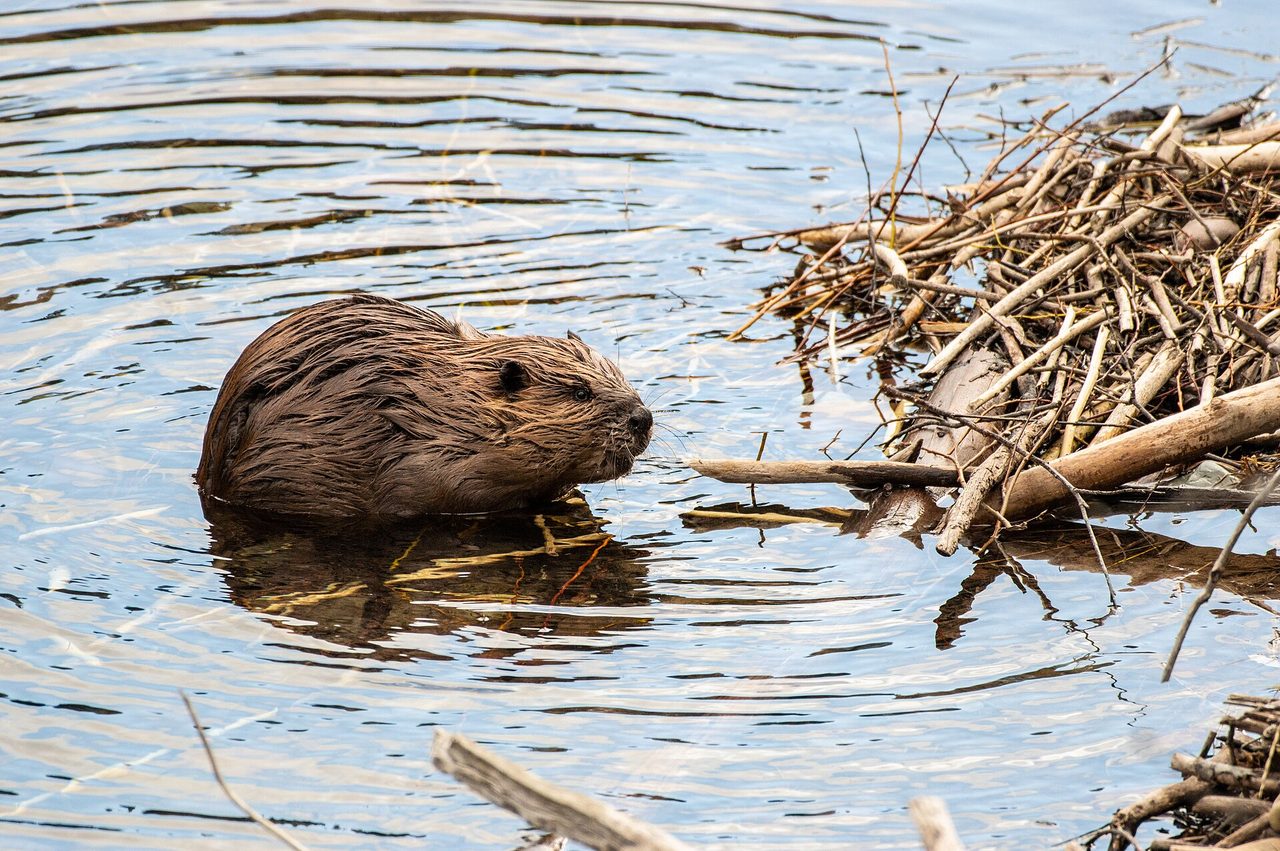
Photo: GlacierNPS / Wikimedia Commons (Public domain)
In brief
Beavers are Least Concern rodents of the genus Castor — the Eurasian and American species build dams and lodges that create wetlands supporting fish, birds and amphibians; Eurasian beavers recovered from near extinction through reintroduction.
Also in Animals A to Z · Animals that start with B
By WARN Research & Conservation TeamLast updated
Beavers are the world's second-largest rodents and among the most influential ecosystem engineers on Earth. Two living species exist: the Eurasian beaver (Castor fiber) and the North American beaver (Castor canadensis). Both transform streams into ponds and wetlands by building dams and lodges, creating habitat for fish, amphibians, birds and mammals. The Eurasian beaver was hunted to near extinction for fur and castoreum but has recovered across much of Europe through reintroduction. American beavers remain abundant. Both species are Least Concern. Their wetland creation parallels the freshwater habitat protection WARN supports in partner countries from Brazil to Pakistan.
Least Concern
IUCN status — both living species
11–30 kg
Adult weight range
2 species
Eurasian and American beaver
Appendix III
CITES listing (Armenia — Eurasian beaver)
Figures sourced from IUCN Red List — Castor fiber, IUCN Red List — Castor canadensis, Encyclopaedia Britannica — beaver .
Beaver: Quick Facts
| Weight | 11–30 kg |
|---|---|
| Engineering | Builds dams, lodges and canals |
| Diet | Bark, leaves, twigs and aquatic plants |
| Activity | Nocturnal family groups |
| Recovery | Eurasian beaver from ~1,200 to over one million |
| CITES | Appendix III (Armenia — Eurasian beaver) |
Scientific Classification
| Kingdom | Animalia |
|---|---|
| Phylum | Chordata |
| Class | Mammalia |
| Order | Rodentia |
| Family | Castoridae |
| Genus | Castor |
| Species | Castor fiber and Castor canadensis |
Conservation Status
- IUCN Status
- Least Concern (IUCN) for both Eurasian and American beaver.
- Population
- Eurasian: over one million; American: roughly 10–15 million
- Trend
- Increasing for Eurasian beaver; stable for American beaver
- Assessed
- 2016 (Eurasian); 2011 (American)
- CITES
- Appendix III (Armenia — Castor fiber)
Key Facts: Beaver
- Beavers are the world's second-largest rodents after the capybara.
- Dam building creates wetlands that support fish, amphibians, birds and mammals.
- Eurasian beavers were hunted to roughly 1,200 individuals before reintroduction.
- Beaver ponds filter sediment, store carbon and reduce downstream flooding.
- American beavers remain abundant across Canada and the northern United States.
- Beaver dams can conflict with agriculture and infrastructure but also offer flood mitigation.
Two species, one engineering instinct
Beavers belong to the family Castoridae and the genus Castor. The Eurasian beaver (Castor fiber) once ranged from Britain to China; the American beaver (Castor canadensis) occupies Canada, the United States and northern Mexico. Both species share a stocky body, webbed hind feet, a broad flat tail used as a rudder and alarm slap, and large orange incisors that gnaw through trees.
Adults weigh 11–30 kg depending on species and latitude. Beavers are primarily nocturnal and live in family groups of an adult pair and offspring from the current and previous year. They communicate through scent mounds of mud and castoreum — a musk from anal glands historically used in perfumery and medicine.
The two species diverged roughly 7.5 million years ago when populations were separated by the Bering land bridge. They are ecologically interchangeable: both build dams, excavate canals and construct lodges of branches and mud.
Dam building and wetland ecology
Beavers dam streams to raise water levels, protecting lodge entrances and providing access to food. Dams are built from branches, mud and stones; the largest recorded structures exceed 500 m in length. Ponds behind dams expand wetland area, slow water flow, trap sediment and raise groundwater levels.
These wetlands become biodiversity hotspots. Fish spawn in warm shallow water; amphibians breed in ponds safe from fish predation; waterfowl nest on floating platforms; moose and deer browse on willow regrowth. Dead wood in ponds supports invertebrates and otters. Studies in North America and Europe document increased bird and fish diversity on beaver-modified streams.
Beaver ponds also store carbon in accumulated sediment and reduce peak flood flows downstream — services increasingly valued in climate adaptation planning. Where beavers are absent, streams run faster and carry more sediment, altering the entire riparian community.
Near extinction and recovery
Eurasian beavers were hunted relentlessly for fur, meat and castoreum from the Middle Ages through the nineteenth century. By 1900, fewer than 1,200 individuals survived in scattered refuges in Norway, Germany, France and Russia. Legal protection and reintroduction programmes began in the 1920s.
Today Eurasian beavers number over one million across Europe, with populations restored to Scandinavia, Germany, the Netherlands, Britain and the Baltic states. Scotland's official reintroduction in 2009 established a growing population on the River Tay. American beavers were less depleted — fur trade pressure reduced numbers but never approached Eurasian levels. Current North American populations are estimated at 10–15 million.
The IUCN lists both species as Least Concern. CITES Appendix III in Armenia regulates Eurasian beaver exports. Reintroduction success demonstrates that aquatic mammals can recover when hunting stops and habitat is available.
Conflict, coexistence and modern management
Beaver activity can conflict with human infrastructure. Dams flood roads, fields and timber plantations; gnawing kills orchard trees. Mitigation includes flow devices that maintain pond levels without flooding, tree wrapping and translocation of problem animals. Several European countries now compensate landowners for beaver damage rather than permitting unregulated killing.
In North America, beaver trapping remains regulated. Wildlife agencies balance population management with wetland benefits. Research increasingly frames beavers as partners in natural flood management — Welsh and Scottish projects evaluate beaver reintroduction for downstream flood reduction.
Freshwater ecosystem health — the foundation of beaver persistence — is a global concern. WARN partner countries including Brazil, Colombia, Indonesia and Pakistan face river pollution, dam construction and wetland loss that threaten aquatic biodiversity regardless of whether beavers are native.
What WARN Does
WARN supports freshwater habitat education across partner countries where rivers and wetlands sustain biodiversity from Brazil's Pantanal to Pakistan's Indus basin. This beaver guide is free public education about one of the world's most influential ecosystem engineers.
If this guide helps you understand wildlife and the pressures it faces, a gift to WARN supports habitat protection and free public education in our partner countries.
Beaver: Frequently Asked Questions
How many beaver species exist?
Why do beavers build dams?
Are beavers endangered?
What is castoreum?
What do beavers eat?
Where do beavers live?
How long do beavers live?
How big is a beaver?
Are beavers dangerous?
Sources & References
Population figures, conservation status and biological facts on this page are drawn from authoritative scientific and intergovernmental sources.
Terms used on this page
Plain-English definitions, from our wildlife and conservation glossary.
Latest Beaver Stories
Quick, fact-checked reads on the beaver — amazing facts, key questions and the threats it faces.
Explore more animals
Discover more animals, their habitats and their conservation status in the WARN wildlife-guide library.