Indonesia is, by most published measurements, one of the largest sources of ocean plastic in the world. Its 17,000 islands sit at the heart of the Coral Triangle — the most biodiverse stretch of ocean on the planet — and the marine wildlife that lives there is now living through a slow-motion plastic emergency. This briefing summarises what the credible evidence actually shows about how plastic waste in Indonesia is affecting animals, drawing primarily on IUCN, the UN Environment Programme, and Indonesia's own Ministry of Environment and Forestry.
The scale of the problem
The International Union for Conservation of Nature (IUCN) has repeatedly identified marine plastic as one of the fastest-growing pressures on ocean wildlife. In its Marine Plastic Pollution issue brief, IUCN estimates that at least 14 million tonnes of plastic enter the ocean every year, that plastic makes up roughly 80% of all marine debris, and that a small number of rivers — overwhelmingly in Asia — contribute the majority of that flow. Indonesia, with its dense river networks and rapidly growing coastal populations, is consistently identified in this group.
The UN Environment Programme has reported similar figures and singled out Southeast Asia as the region where the impact on marine biodiversity is most acute, because the highest-density plastic outflows occur in the same waters that hold the highest concentrations of threatened marine species — sea turtles, cetaceans, dugongs, sharks and rays.
The Wakatobi sperm whale
The clearest single illustration of what marine plastic does to large ocean wildlife in Indonesia is the case of the sperm whale that washed up in Wakatobi National Park, Southeast Sulawesi, in November 2018. The whale was already dead when it stranded. When the Wakatobi National Park authority and WWF Indonesia recovered the carcass, they found 5.9 kilograms of plastic inside its stomach. The inventory was published by the park authority itself and is the most-cited single case in the scientific and policy literature on marine plastic in Southeast Asia:
- 115 plastic drinking cups
- 25 plastic bags
- 4 plastic bottles
- 2 flip-flops
- 1 nylon sack
- More than 1,000 individual pieces of string and plastic fragments
The cause of death could not be conclusively determined because of the state of decomposition, but the volume of indigestible plastic in the stomach is consistent with the kind of starvation and gut obstruction documented in other plastic-related cetacean strandings worldwide.
Sea turtles: the most consistent victims
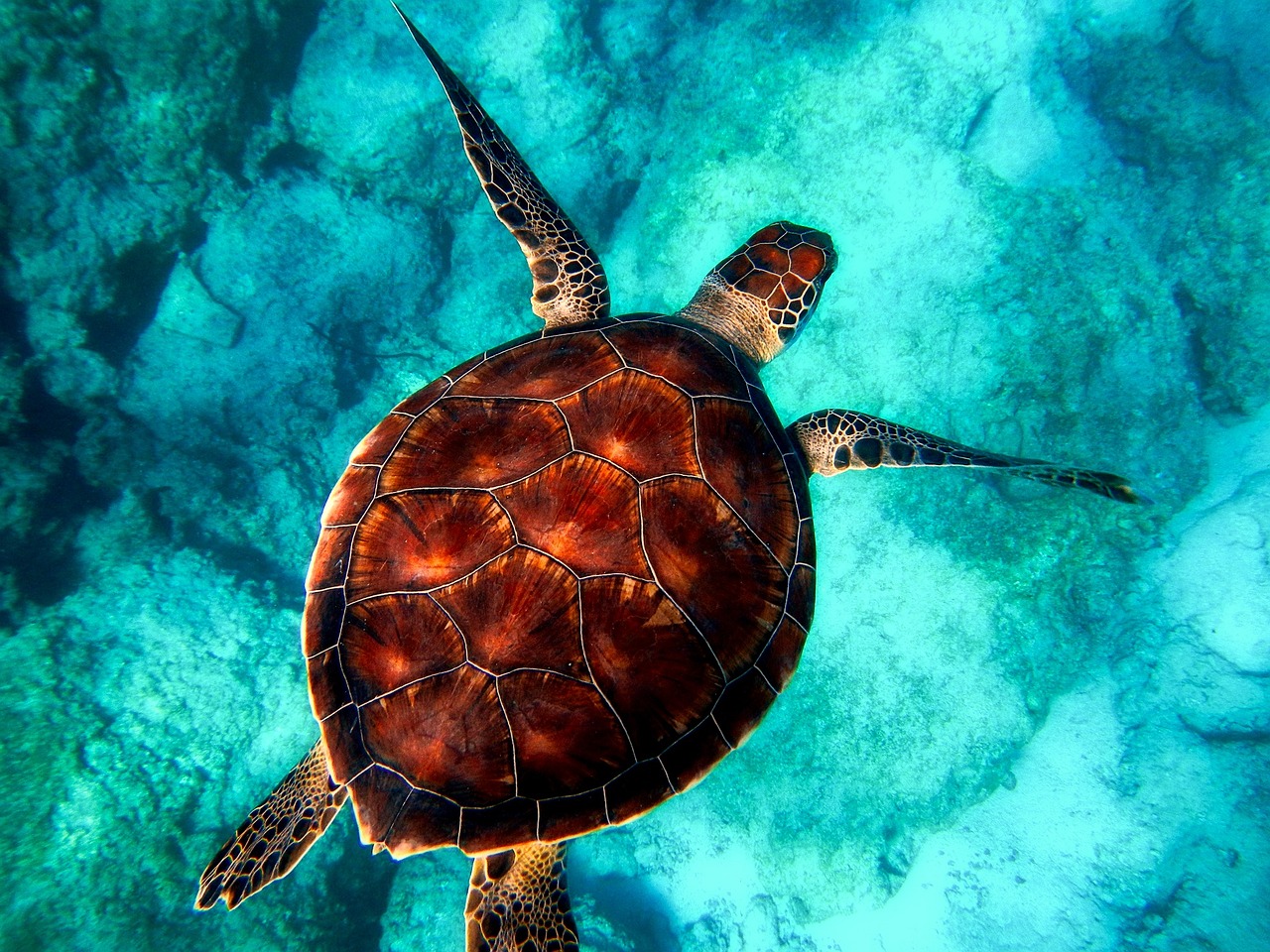
Indonesia hosts six of the world's seven sea turtle species — green, hawksbill, olive ridley, leatherback, loggerhead and flatback — and all six are CITES Appendix I-listed, meaning international commercial trade is prohibited. Their IUCN Red List assessments identify plastic ingestion and entanglement as recognised, ongoing threats.
The mechanism is now well understood. Sea turtles cannot reliably distinguish floating plastic bags and plastic film from jellyfish, which is a primary food source for several species. Ingested plastic accumulates in the gut, causes false satiety (the animal stops feeling hungry while actually starving), and frequently causes fatal obstructions. Field studies of dead and stranded turtles across the Indonesian archipelago consistently find plastic in stomach contents.
Ghost gear: the silent killer
The most lethal — and most under-discussed — form of marine plastic is abandoned, lost or discarded fishing gear, usually known as "ghost gear". IUCN and the FAO recognise ghost gear as one of the deadliest categories of marine debris because it goes on fishing long after it has been lost: nets continue to entangle fish, sharks, turtles, dolphins and dugongs, sometimes for years.
In Indonesian waters, ghost gear is documented as a recurring cause of injury and death in:
- Sea turtles — entangled by flippers and necks; survivors often require amputation.
- Dolphins and small cetaceans — drowned when wrapped in drifting nets.
- Dugongs — vulnerable in shallow seagrass meadows where lost nets accumulate.
- Sharks and rays — including species listed by CITES.
Crucially, ghost-gear entanglement is one of the most rescue-actionable forms of marine plastic harm. Trained teams with the right boats, knives and veterinary backup can cut animals free alive — something that is simply not possible with microplastic ingestion.
Beyond the coast: the Citarum and inland wildlife
Plastic and chemical pollution in Indonesia is not only a marine issue. The Citarum river in West Java has been described in UN Environment Programme assessments as one of the most polluted rivers in the world, carrying a heavy load of plastic, textile-industry effluent and heavy metals. The documented impacts include collapsed fish populations along stretches of the river and reduced food availability for the riverine and estuarine wildlife — including water birds and small mammals — that depend on it. Rivers like the Citarum are also a primary pathway by which land-based plastic reaches the ocean in the first place.
Where rescue and conservation fit in
Plastic pollution in Indonesia cannot be solved by rescue work alone — it needs upstream waste-management infrastructure, producer responsibility, and consumer behaviour change at a national and regional scale. But rescue work is still indispensable for two reasons.
First, the animals already in trouble — entangled turtles, stranded cetaceans, dugongs caught in ghost nets — need a response now. Without trained marine response teams, those individual animals die. Second, the data those teams collect (necropsy results, stranding records, stomach-content inventories) is what drives the policy response in the first place. The Wakatobi sperm whale changed Indonesian public conversation about single-use plastic precisely because the inventory was published in detail.
What WARN is preparing to do
World Animal Rescue Network is at launch stage. Our planned Indonesia programme is being designed to fund marine wildlife response capacity in priority coastal areas: ghost-gear cutting and disentanglement teams, veterinary triage for injured sea turtles, and necropsy and data work for stranded cetaceans. We are launching this work in 2026 and we need supporter funding to begin.
Sources
- IUCN — Marine Plastic Pollution issue brief and IUCN Red List assessments for green, hawksbill, olive ridley, leatherback, loggerhead and flatback sea turtles.
- UN Environment Programme — assessments of marine plastic flows from Southeast Asia and reporting on the Citarum river.
- Wakatobi National Park Authority and WWF Indonesia — published inventory of stomach contents recovered from the Kapota Island sperm whale, November 2018.
- CITES Appendices — listings for all six sea turtle species found in Indonesian waters.
- FAO and IUCN joint guidance on abandoned, lost or discarded fishing gear (ALDFG / "ghost gear").
We need your support to make this happen
World Animal Rescue Network is at the launch stage of this work. We do not yet have rescue numbers to share — and that is exactly why your support matters now. Every donation helps us put trained teams on the ground, secure veterinary supplies and equipment, and reach the first animals before they are lost.
Donate today to fund our first deployments, or sponsor an animal to back a specific species through rehabilitation. You can also join the network as a volunteer, fundraiser, or monthly supporter.