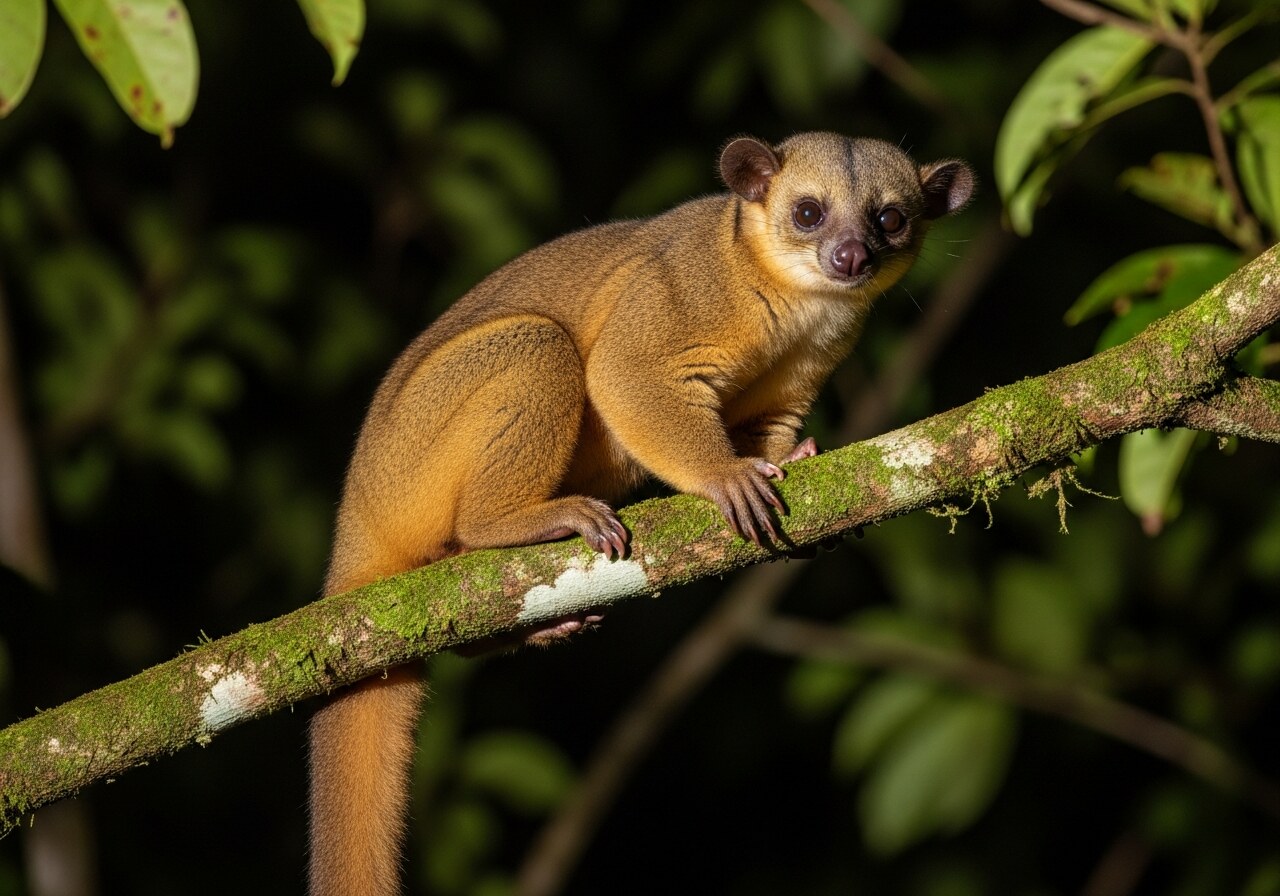
The kinkajou (Potos flavus) is one of the most charming and least-known mammals of the South American rainforest. It is sometimes called the "honey bear" because of its love of nectar and its golden-brown fur, but it is not a bear and it is not closely related to monkeys, sloths or red pandas — it is a member of the raccoon family (Procyonidae), and it has been quietly going about its business in the rainforest canopy for millions of years.
WARN is preparing to operate in Colombia and Peru, the two South American countries that hold significant kinkajou populations. This briefing explains what the species is, why it is increasingly turning up in rescue cases, and how supporters can help.
What the kinkajou actually is
Adult kinkajous are about 40-60 cm long in the body, with a tail of similar length and a typical weight of 1.5-4.5 kg. Their fur is short, dense and golden-brown to honey-coloured. They have rounded faces with large, dark eyes adapted for night vision, small rounded ears, and a long pink tongue that can extend up to 13 cm to drink nectar from flowers.
The most important feature, biologically, is the tail. Kinkajous have a fully prehensile tail — the only member of the raccoon family with this trait, and one of only a small number of mammals worldwide that can hang from its tail like a fifth limb. They also have rotating hind feet that let them run head-first down a tree trunk, the same trick that squirrels and certain monkeys can do.
How kinkajous live
Kinkajous are almost entirely arboreal (canopy-dwelling) and nocturnal (active at night). They sleep in tree hollows during the day, usually alone or in small family groups, and emerge at dusk to forage. Their diet is roughly 90% fruit, with the remainder made up of nectar, flowers and the occasional insect or small vertebrate. Because they move from flower to flower drinking nectar, they are documented pollinators of several rainforest tree species — making them part of the basic engineering of the forest itself.
They are found from southern Mexico down through Central America and across the Amazon basin to Bolivia and southern Brazil. The Colombian and Peruvian populations are part of one of the largest contiguous strongholds for the species.
Why kinkajous turn up in rescue work
The IUCN currently lists the kinkajou as Least Concern globally, which means the species is not at immediate risk of extinction. That is the good news. The bad news is that the same assessment flags two growing threats:
Habitat loss
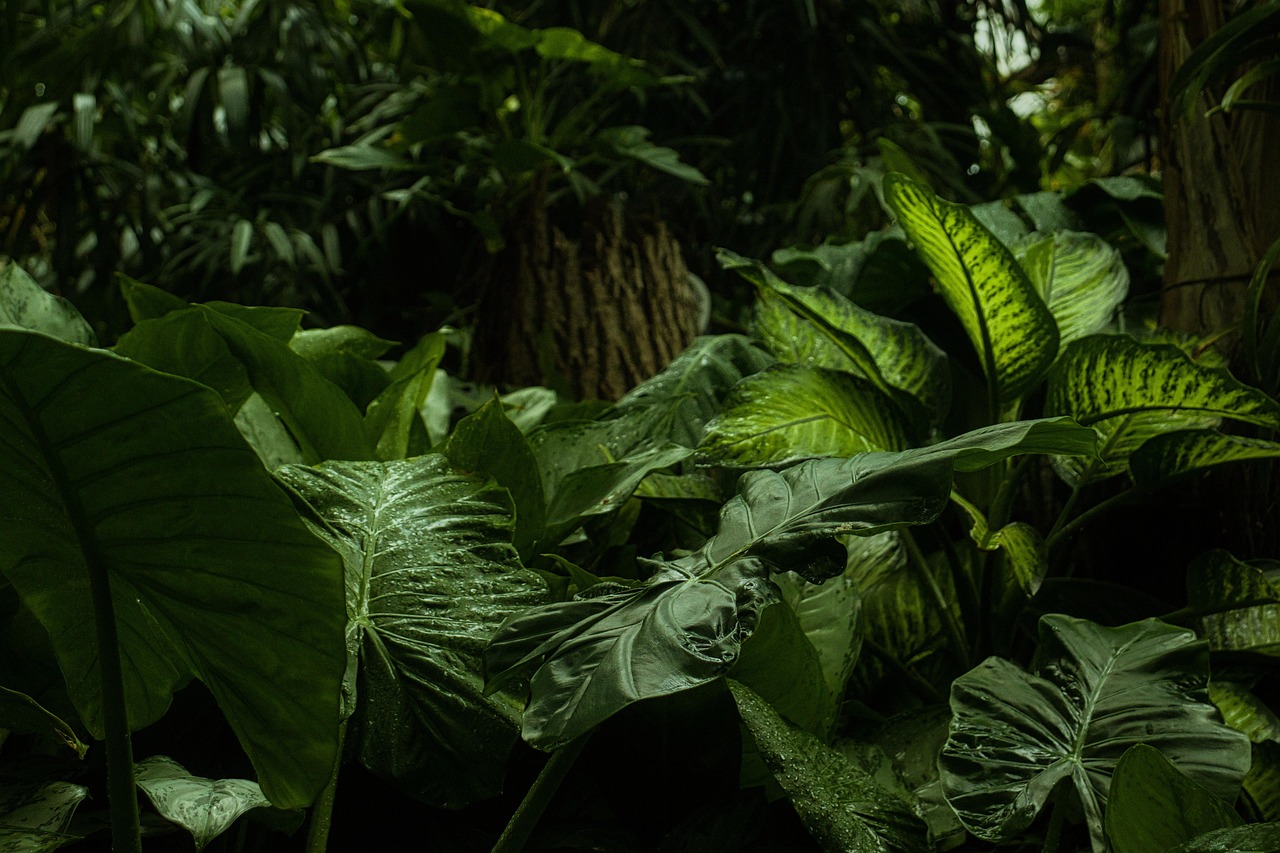
Kinkajous are canopy specialists. They do not survive in fragmented or cleared forest. The Amazon basin has already lost roughly 17% of its original forest, and the pace of clearance in the Colombian and Peruvian Amazon — driven by cattle ranching, illegal gold mining and small-scale agriculture — continues. Every patch of cleared canopy removes a kinkajou territory.
The exotic pet trade
Kinkajous are appealing to look at and slow-moving in the day, which makes them targets for the wildlife trade. Across Latin America, the United States and parts of Europe, kinkajous are kept as exotic pets despite being highly unsuitable for it: they are nocturnal, long-lived (up to 25 years in captivity), territorial, and inflict serious injuries when stressed. The trade also poses a public-health risk — kinkajous can carry the roundworm Baylisascaris procyonis, which can cause severe disease in humans. Confiscated kinkajous regularly turn up at South American wildlife rescue centres needing veterinary care and lifetime sanctuary placement, since most cannot be released back to the wild after years of inappropriate captivity.
What animal rescue work for kinkajous looks like
- Triage of confiscated animals. Kinkajous seized from the illegal pet trade in Colombia and Peru need veterinary checks, deworming, and weeks to months of behavioural rehabilitation.
- Sanctuary care. Animals that have been kept as pets for years are usually not releasable — they need lifetime sanctuary placement with appropriate housing.
- Soft release. Animals confiscated early in their captivity, and orphans rescued from logging, can sometimes be returned to protected forest with the right pre-release work.
- Public education. Reducing demand for kinkajous as pets in source countries is one of the most effective long-term interventions.
Where WARN fits in
World Animal Rescue Network is preparing to support partner rescue centres and sanctuaries across Colombia and Peru that handle confiscated wildlife — including kinkajous, primates, parrots and the wider Amazon caseload. We are a launch-stage charity, so this work depends on supporter funding to begin. If this briefing has introduced you to a species you did not know existed, the most useful thing you can do is back our launch with a donation. Every gift goes towards getting animal rescue and animal sanctuary capacity on the ground in the rainforest countries where it is needed.
Sources
- IUCN Red List — kinkajou (Potos flavus) assessment.
- CITES — Appendix III listing for Honduras.
- UNODC — World Wildlife Crime Report, exotic pet trade chapters.
- WOAH — zoonotic disease risk from Baylisascaris and related parasites.
We need your support to make this happen
World Animal Rescue Network is at the launch stage of this work. We do not yet have rescue numbers to share — and that is exactly why your support matters now. Every donation helps us put trained teams on the ground, secure veterinary supplies and equipment, and reach the first animals before they are lost.
Donate today to fund our first deployments, or sponsor an animal to back a specific species through rehabilitation. You can also join the network as a volunteer, fundraiser, or monthly supporter.