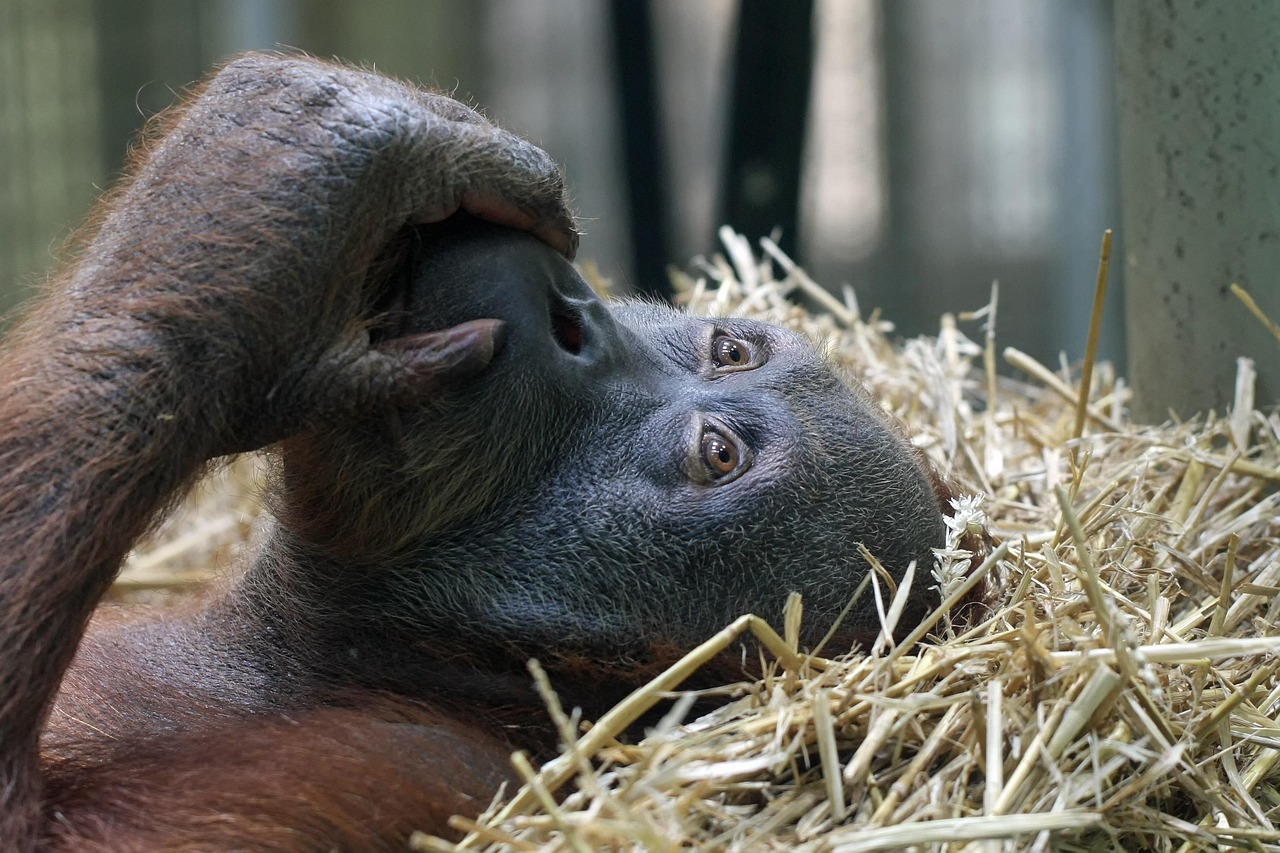
Orangutan rescue in Indonesia is one of the most urgent conservation needs in Southeast Asia. Both Bornean and Sumatran orangutans are classified as Critically Endangered by the IUCN, with wild populations declining sharply over recent decades. Habitat conversion, illegal logging, and the exotic pet trade are the leading drivers.
The problem
- Indonesia is home to two distinct orangutan species: Bornean (Pongo pygmaeus) and Sumatran (Pongo abelii), plus the more recently identified Tapanuli orangutan.
- Roughly 100,000 Bornean orangutans are estimated to remain in the wild — down from an estimated 230,000 a century ago.
- Female orangutans give birth roughly once every 7–8 years, the slowest birth interval of any mammal. Population recovery is exceptionally slow.
- When forest is cleared, orangutans cannot relocate — their range is canopy-bound. Mothers and infants are stranded in shrinking fragments until starvation or fire reaches them.
How rescue works
Effective orangutan rescue is a three-stage process. First, field teams locate stranded individuals inside active forest concessions and assess their condition from the ground. Second, qualified veterinarians sedate and safely transport the animals out of the danger zone. Third, the animals are rehabilitated in a secure forest sanctuary — sometimes for years — before suitable individuals can be released back into protected wild habitat.
What WARN is preparing to do
We are building an extraction and rehabilitation programme in Kalimantan, working alongside local conservation partners. With supporter funding, we will deploy field rescue teams, secure veterinary equipment, and contribute to a long-term forest sanctuary for orangutans that cannot be returned to the wild. We need your help to start.
We need your support to make this happen
World Animal Rescue Network is at the launch stage of this work. We do not yet have rescue numbers to share — and that is exactly why your support matters now. Every donation helps us put trained teams on the ground, secure veterinary supplies and equipment, and reach the first animals before they are lost.
Donate today to fund our first deployments, or sponsor an animal to back a specific species through rehabilitation. You can also join the network as a volunteer, fundraiser, or monthly supporter.