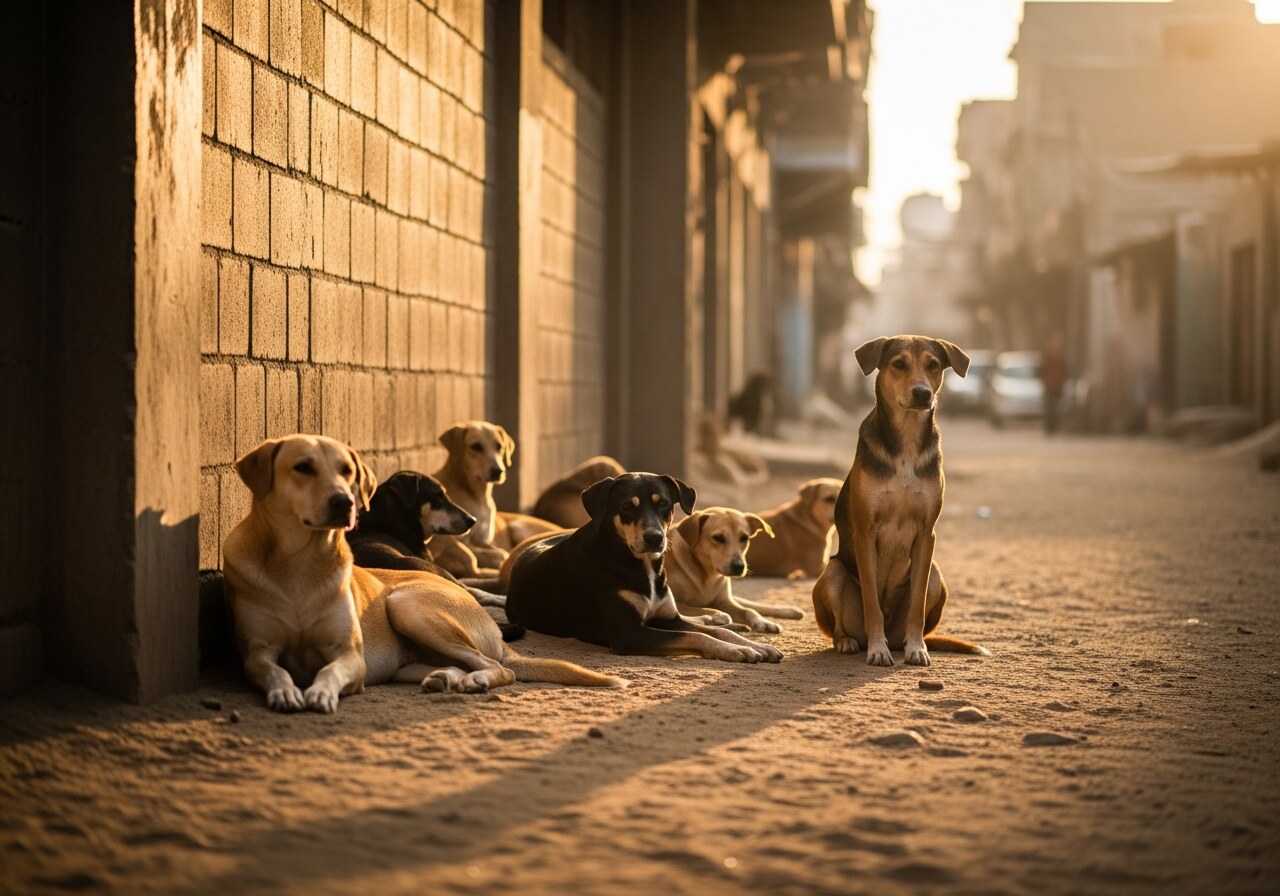
In many Pakistani cities, street-dog populations are still managed by mass-culling methods that international public-health bodies have shown to be both ineffective and unnecessary. Tens of thousands of stray dogs die in public each year, and human rabies cases remain among the highest in the region. Stray dog rescue in Pakistan is therefore not only a welfare issue — it is a public-health one.
The problem
- Roughly 20 million stray dogs live across Pakistan.
- Pakistan reports an estimated 2,000–5,000 human rabies deaths annually — among the highest figures in Asia.
- The World Health Organization, the World Organisation for Animal Health, and the Food and Agriculture Organization all agree that mass culling does not reduce rabies.
- The proven alternative is Catch-Neuter-Vaccinate-Release (CNVR), which has eliminated dog-mediated rabies in cities including Jaipur, Chennai, and Bali.
Why culling does not work
Removing dogs from a territory triggers a rapid replacement effect — surrounding dog populations move into the vacated area within weeks, unvaccinated and unsterilised. Each cull therefore creates a fresh population that is just as vulnerable to rabies as the last. CNVR breaks the cycle by stabilising a vaccinated, sterilised, non-aggressive dog population.
What WARN is preparing to do
Working with local welfare partners, we plan to launch CNVR clinics in Karachi and Lahore and engage with provincial authorities to support CNVR as official policy. If you are looking for ways to help locally, search "puppies for adoption" or "dog adoption" with rescues in your area — and consider funding our work overseas where the need is greatest.
We need your support to make this happen
World Animal Rescue Network is at the launch stage of this work. We do not yet have rescue numbers to share — and that is exactly why your support matters now. Every donation helps us put trained teams on the ground, secure veterinary supplies and equipment, and reach the first animals before they are lost.
Donate today to fund our first deployments, or sponsor an animal to back a specific species through rehabilitation. You can also join the network as a volunteer, fundraiser, or monthly supporter.