The pink river dolphin — known locally as the boto or bufeo — is one of the most unusual mammals on Earth and one of the most threatened. It lives in the freshwater rivers of the Amazon and Orinoco basins, including the rivers of Colombia and Peru where WARN's South American programme is being built. This briefing explains what the species is, why the IUCN now lists it as Endangered, and where frontline rescue and partner sanctuary work fits into the response.
What the pink river dolphin actually is
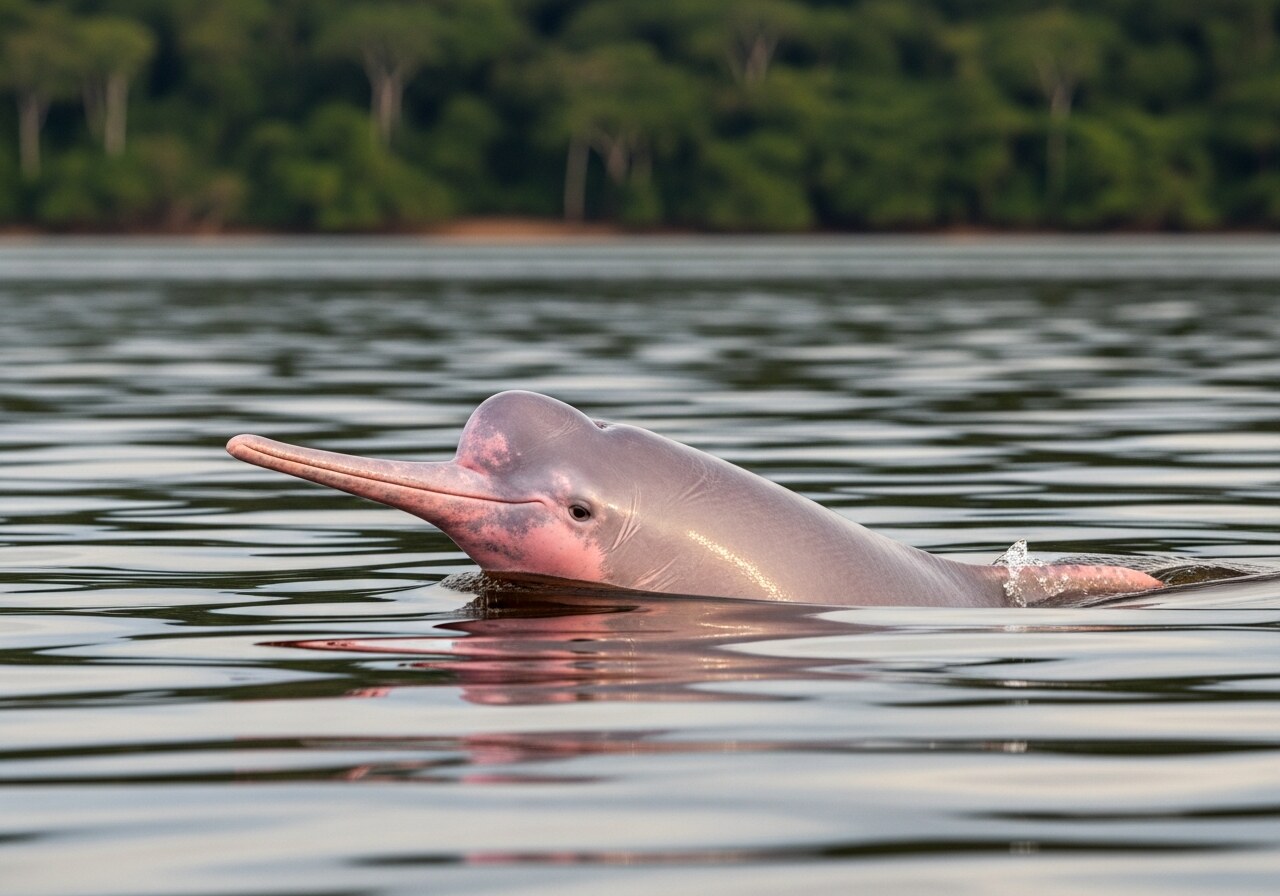
The Amazon river dolphin (Inia geoffrensis) is one of only six freshwater dolphin species recognised in the world today. Adults can reach 2.5 metres long and weigh up to 185 kg, making it the largest river dolphin on Earth. Calves are born grey; the famous pink colour develops gradually with age, and scientists believe it comes from scar tissue and exposed blood vessels showing through their unusually thin skin. Males are often pinker than females, and the brightest pink individuals tend to be the most scarred — usually older males who have spent decades sparring with each other.
Pink river dolphins have features that set them apart from their ocean cousins. They have unfused neck vertebrae, which means they can turn their heads sideways — useful for navigating flooded forest. Their long beaks and bristle-like sensory hairs help them locate fish in dark, sediment-heavy water. And during the high-water season, they swim straight into the flooded várzea forest, hunting fish among submerged trees in a way no other dolphin on Earth does.
Where they live
Pink river dolphins range across roughly 7 million km² of South American freshwater — the entire Amazon basin (Brazil, Peru, Colombia, Ecuador, Bolivia) and parts of the Orinoco basin (Venezuela, Colombia). Within Colombia and Peru, they are concentrated in the main Amazon channel, its major tributaries — the Caquetá, Putumayo, Napo, Marañón, Ucayali — and the seasonally flooded lakes and oxbows along these rivers.
Why the pink river dolphin is endangered
The IUCN lists the Amazon river dolphin as Endangered, a sharp uplisting from its previous "Data Deficient" status as long-term population monitoring caught up with the reality on the ground. The threats are well documented:
Bycatch and deliberate killing
Pink river dolphins are entangled in fishing nets across the Amazon. Worse, in some parts of the basin they are deliberately killed for use as bait in the piracatinga (a scavenger catfish) fishery — a practice that has been banned in Brazil but is difficult to enforce in remote river reaches. Bycatch and deliberate killing together are the largest known driver of decline.
Mercury contamination from gold mining
Illegal and informal gold mining — particularly in the Peruvian Madre de Dios region and parts of Colombian Amazonia — uses mercury to extract gold from river sediment. The mercury enters the food chain, accumulates in fish, and concentrates in the apex predators that eat them. Pink river dolphins have been found with mercury levels that are among the highest ever recorded in any freshwater mammal.
Climate-driven drought
The 2023 Amazon drought caused catastrophic die-offs. River levels collapsed to record lows, water temperatures in some lakes exceeded 39°C, and dolphins were stranded in shrinking, overheating pools. Hundreds of pink river dolphin carcasses were documented in a single event in Brazil's Lake Tefé, with the cause linked to thermal stress and oxygen collapse. The 2023 drought was not an isolated event — the Amazon has experienced multiple severe droughts over the past two decades.
Dams and habitat fragmentation
Hydropower dams across the Amazon basin fragment the river system and block the movements that pink river dolphins depend on for seasonal feeding and breeding.
What animal rescue work can do
Pink river dolphin rescue is one of the harder forms of animal rescue — these are wide-ranging wild animals in remote terrain. But the work is real and it matters:
- Stranding response. During drought events, mobile teams can move stranded dolphins from drying lakes back to the main river channels. This work happens at the limits of logistics and budget.
- Bycatch reduction. Working with local fishing communities on gear changes and net-tending practices that reduce dolphin bycatch.
- Mercury monitoring. Independent monitoring of fish and dolphin tissue is what makes the case for tighter enforcement of illegal mining.
- Habitat protection. Supporting the legal protection of key oxbow lakes and seasonally flooded forest where dolphins concentrate.
Where WARN fits in
World Animal Rescue Network is preparing to support partner organisations in Colombia and Peru that work on freshwater wildlife — including pink river dolphin response during drought emergencies and the broader rescue and rehabilitation network for Amazon animals. We are a launch-stage charity, so this work depends on supporter funding to begin.
If this briefing has changed how you think about the pink river dolphin, the most useful thing you can do is back our launch with a donation. Every gift goes towards getting animal rescue capacity on the ground in the countries where endangered animals like the pink dolphin need it most.
Sources
- IUCN Red List — Amazon river dolphin (Inia geoffrensis) assessment.
- CITES — Appendix II listing for Inia geoffrensis.
- UN Environment Programme — Amazon drought and mercury contamination reporting.
- WOAH — climate-linked freshwater mammal mortality.
We need your support to make this happen
World Animal Rescue Network is at the launch stage of this work. We do not yet have rescue numbers to share — and that is exactly why your support matters now. Every donation helps us put trained teams on the ground, secure veterinary supplies and equipment, and reach the first animals before they are lost.
Donate today to fund our first deployments, or sponsor an animal to back a specific species through rehabilitation. You can also join the network as a volunteer, fundraiser, or monthly supporter.