Guide 1
Why Orangutans Need Forest School
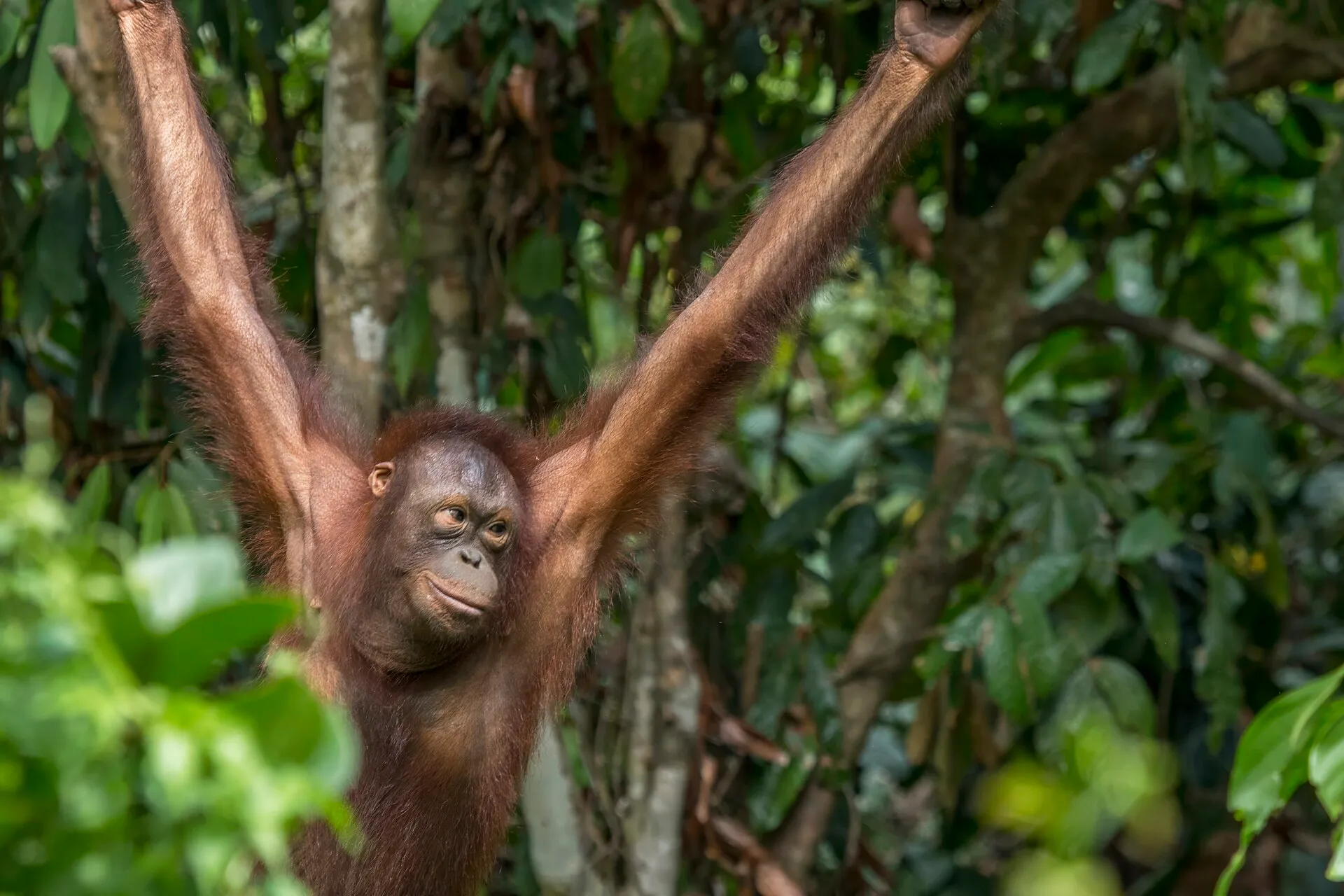
Wild orangutan infants normally spend years learning from their mothers. When a baby is orphaned by forest clearance, hunting or the pet trade, it loses the teacher it depends on. Forest school recreates part of that learning pathway through daily supervised climbing, foraging, nest-building and confidence work in forested enclosures.
Guide 2
What Forest School Teaches
Rehabilitation teams teach young orangutans to move safely through trees, identify wild foods, avoid ground-level danger, build sleeping nests and reduce dependence on humans. The work is slow because shortcuts can produce animals that look healthy but cannot survive once released.
Guide 3
When Release Is Possible
Release depends on age, health, behaviour, forest skills and the security of the release site. Some orangutans progress to pre-release islands and then soft release with monitoring. Others need lifetime sanctuary care because of injury, disease or long-term captivity.
Guide 4
Forest Skills Orphans Must Learn
Orphan orangutans must learn to climb, build nests, identify edible fruits and avoid predators — skills mothers teach over years. Forest schools use graduated enclosures from nursery to semi-wild forest islands before any release candidate enters protected habitat with post-release monitoring.
Guide 5
Why Forest School Takes Five to Eight Years
Releasing too early means starvation or human conflict. Partners track weight, foraging success and social behaviour before approving release. Monthly donor income helps sanctuaries commit to multi-year rehabilitation without cutting corners.