Wildlife Guide · United States & China
Alligator
Alligator mississippiensis (Daudin, 1802) and Alligator sinensis (Fauvel, 1879)
Armoured survivors of ancient wetlands — powerful, patient and ecologically vital.
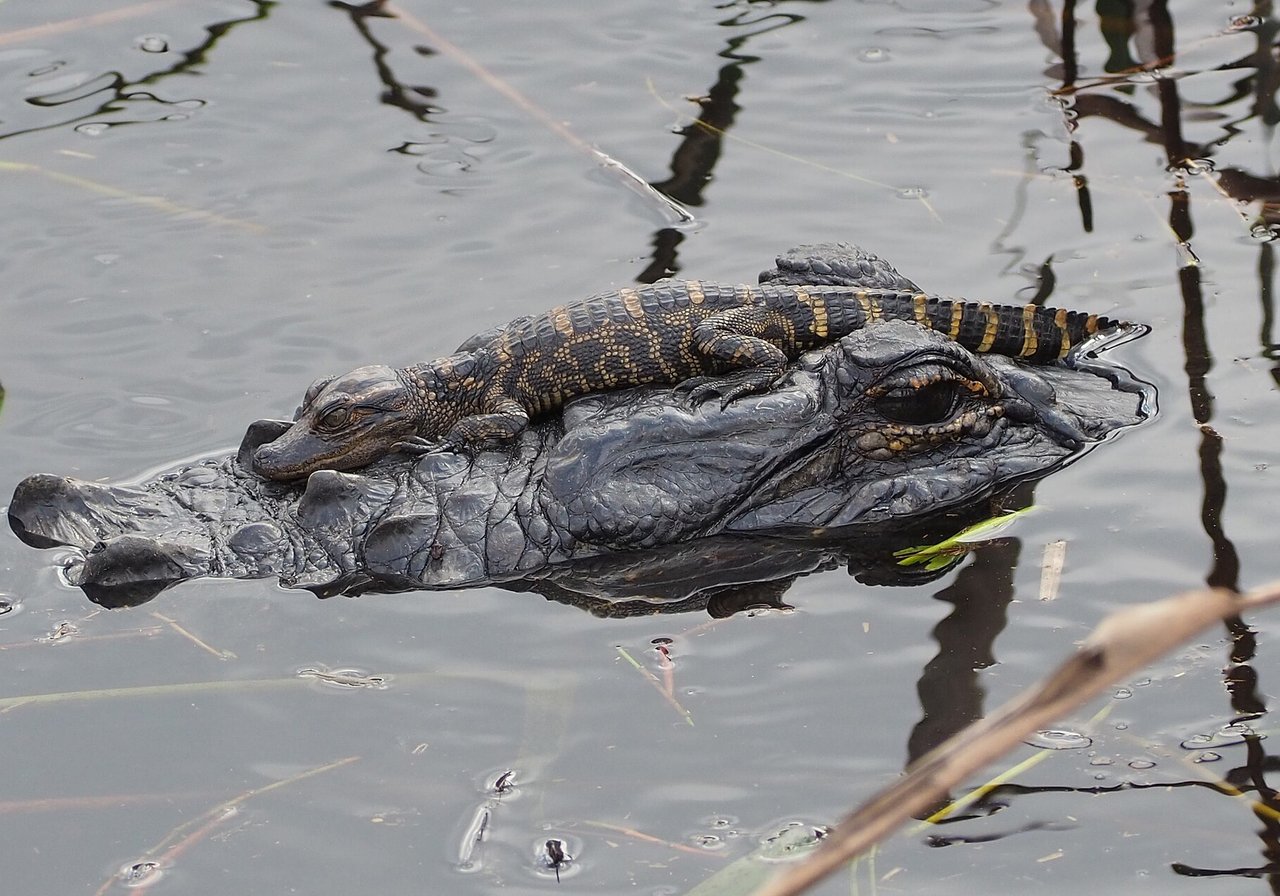
Source: Wikimedia Commons
In brief
Alligators are broad-snouted crocodilians with two living species — the recovered American alligator of the US South-east and the Critically Endangered Chinese alligator of the Yangtze — both vital wetland predators whose status ranges from Least Concern to Critically Endangered.
Also in Animals A to Z · Animals that start with A
By WARN Research & Conservation TeamLast updated
Alligators are large crocodilians of the genus Alligator, native to freshwater wetlands of the south-eastern United States and the lower Yangtze region of China. Only two living species remain: the widespread American alligator and the critically rare Chinese alligator. Unlike crocodiles, alligators have broad, U-shaped snouts and tolerate cooler climates. They are apex predators that shape wetland ecosystems through nest building, wallowing and prey regulation. After near extinction in the twentieth century, the American alligator became a flagship recovery story; the Chinese alligator remains one of the world's most endangered crocodilians.
2
Living alligator species worldwide
~4 m
Maximum length for large American alligators
CITES
Chinese alligator on Appendix I
50+ yrs
Potential lifespan in the wild
Figures sourced from IUCN Red List — Chinese alligator, IUCN Red List — American alligator, Smithsonian National Zoo — American alligator and other references on this page.
Alligator: Quick Facts
| Species | American and Chinese alligator |
|---|---|
| Habitat | Freshwater wetlands, rivers and marshes |
| Snout shape | Broad and U-shaped (unlike most crocodiles) |
| Nest type | Vegetation mound with temperature-dependent sex |
| Largest | American alligator — up to ~4 m and 450 kg |
| Rarest | Chinese alligator — Critically Endangered |
Scientific Classification
| Kingdom | Animalia |
|---|---|
| Phylum | Chordata |
| Class | Reptilia |
| Order | Crocodylia |
| Family | Alligatoridae |
| Genus | Alligator |
Conservation Status
- IUCN Status
- American alligator: Least Concern with stable or increasing populations. Chinese alligator: Critically Endangered with fewer than 150 mature individuals estimated in the wild.
- Population
- American alligator: roughly 5 million across the south-eastern US; Chinese alligator: fewer than 150 wild, several thousand in captivity
- Trend
- Increasing for American alligator; decreasing or stable at very low levels for wild Chinese alligator with reintroduction efforts ongoing
- Assessed
- 2018 (Chinese alligator); 1996 reviewed (American alligator)
- CITES
- Chinese alligator Appendix I; American alligator Appendix II with established ranching provisions
The American alligator is a classic conservation recovery after near extinction from hunting.
Key Facts: Alligator
- Alligators have broad, rounded snouts; crocodiles have narrower, V-shaped snouts — a reliable field distinction in overlap zones.
- The American alligator recovered from near extinction and is now Least Concern; the Chinese alligator is Critically Endangered with fewer than 150 wild individuals.
- Alligators build mound nests of vegetation that incubate eggs through heat from decay — a behaviour that creates microhabitats for other species.
- They are not suitable pets: adults exceed three metres, require large aquatic enclosures and remain dangerous throughout their lives.
- Wetland drainage, pollution and illegal trade threaten Chinese alligators; habitat protection and captive breeding underpin recovery efforts.
- Alligators play a keystone role in marshes and swamps, maintaining fish populations and opening water channels through their movements.
What is an alligator — and how does it differ from a crocodile?
Alligators belong to the order Crocodylia alongside crocodiles, caimans and gharials. The two alligator species share a broad, U-shaped snout suited to crushing turtle shells and hard prey, whereas most crocodiles have longer, narrower jaws adapted for fish and varied prey. When mouth is closed, an alligator's lower teeth are mostly hidden beneath the upper jaw; in crocodiles the fourth lower tooth remains visible.
American alligators inhabit freshwater marshes, rivers, lakes and swamps from Texas to North Carolina. Chinese alligators once ranged across the lower Yangtze floodplain but now survive in fragmented ponds and canals in Anhui Province. Both species are ectothermic — they bask to regulate body temperature and become less active in cold weather, which allows American alligators to survive occasional freezes by keeping nostrils above ice.
Fossil evidence shows alligators have changed little over tens of millions of years. Their armoured osteoderms, powerful tails and acute night vision make them effective ambush predators. Understanding the distinction from crocodiles matters for conservation reporting, because trade rules and regional protection laws often treat crocodilians differently.
Behaviour, reproduction and ecology
Alligators are most active from dusk to dawn. They hunt fish, turtles, birds, mammals and carrion, using explosive lunges from water rather than prolonged chases. Large males defend territories during the breeding season; females build mound nests of vegetation in spring, depositing 20 to 50 eggs that hatch after roughly 65 days as heat from rotting plant material incubates the clutch.
Temperature during incubation determines sex in American alligators — a phenomenon called temperature-dependent sex determination. Hatchlings stay with their mother for up to two years, receiving protection from predators including raccoons, large fish and other alligators. This extended maternal care is unusual among reptiles and improves juvenile survival.
In wetland ecology, alligator holes — excavated depressions that hold water through dry seasons — provide refuge for fish, amphibians and wading birds. Their nest mounds offer nesting sites for turtles and birds. Removing alligators from a marsh can cascade through the food web, which is why regulated hunting and habitat management focus on sustaining populations rather than eradication.
Threats and conservation
The American alligator was hunted nearly to extinction for leather until legal protection and trade bans under CITES allowed recovery from the 1960s onward. Today it is listed as Least Concern with a stable or increasing population across millions of hectares of protected and managed wetland. Controlled harvest programmes in some US states provide sustainable economic incentives for landowners to maintain habitat.
The Chinese alligator tells a different story. Wetland conversion for agriculture and urban development eliminated most of its range. Fewer than 150 individuals may remain in the wild, though captive breeding at facilities in China and zoos worldwide has produced a larger insurance population. Reintroduction projects aim to establish self-sustaining groups in restored reserves.
Globally, crocodilians face illegal skin and meat trade, conflict with fisheries, and pollution. Climate change may alter nest temperatures and sex ratios. Effective conservation combines wetland restoration, anti-poaching enforcement, community education and science-based reintroduction.
Alligators and people
In the American South, alligators are a familiar part of the landscape — seen on golf courses, in suburban ponds and along highways. Most human encounters end without injury when people keep distance and do not feed them; feeding habituates animals and increases bite risk. Fatal attacks are rare but possible, especially where large alligators inhabit heavily used waterways.
Chinese alligators rarely encounter people in remaining wild sites, but historical records describe them living alongside rice farmers. Recovery depends on coexistence programmes that compensate landowners for maintaining suitable ponds and discourage illegal capture for the exotic pet trade.
For readers learning about wildlife, the lesson is clear: alligators are wild predators requiring healthy wetlands, not novelty pets. Supporting wetland protection in the Yangtze basin and the south-eastern United States helps both species and the countless birds, fish and plants that share their habitat.
What WARN Does
WARN does not operate alligator rescue programmes, but our free wildlife guides support public understanding of wetland species and the habitats our partners protect in its partner-network countries. Healthy freshwater ecosystems abroad mirror the conservation principles that saved the American alligator — habitat first, science-led recovery and honest education.
If this guide helps you understand wildlife and the pressures it faces, a gift to WARN supports habitat protection and free public education in our partner countries.
Alligator: Frequently Asked Questions
How many alligator species are there?
What is the difference between an alligator and a crocodile?
Are alligators endangered?
How long do alligators live?
Can you keep an alligator as a pet?
What do alligators eat?
Where do alligators live?
Are alligators dangerous?
How big is an alligator?
Sources & References
Population figures, conservation status and biological facts on this page are drawn from authoritative scientific and intergovernmental sources.
Terms used on this page
Plain-English definitions, from our wildlife and conservation glossary.
Latest Alligator Stories
Quick, fact-checked reads on the alligator — amazing facts, key questions and the threats it faces.
Species
Slow Loris vs Pygmy Slow Loris: 6 Key Differences
They look alike and share a venomous bite, but the pygmy slow loris now has its own genus. Here's how to tell these night-time primates apart.
Read the storySpecies
12 Amazing Facts About Giant Pandas (A Carnivore That Eats Bamboo)
A false thumb, a carnivore's gut on a plant diet, and cubs born the size of a stick of butter. Twelve verified giant panda facts.
Read the storySpecies
Are Giant Pandas Still Endangered? What Changed, and What Didn't
The IUCN downgraded the giant panda to Vulnerable in 2016. Here is what drove the recovery — and why fragmentation still threatens it.
Read the storyExplore more animals
Discover more animals, their habitats and their conservation status in the WARN wildlife-guide library.