Wildlife Guide · Peru & Bolivia
Alpaca
Vicugna pacos (Linnaeus, 1758)
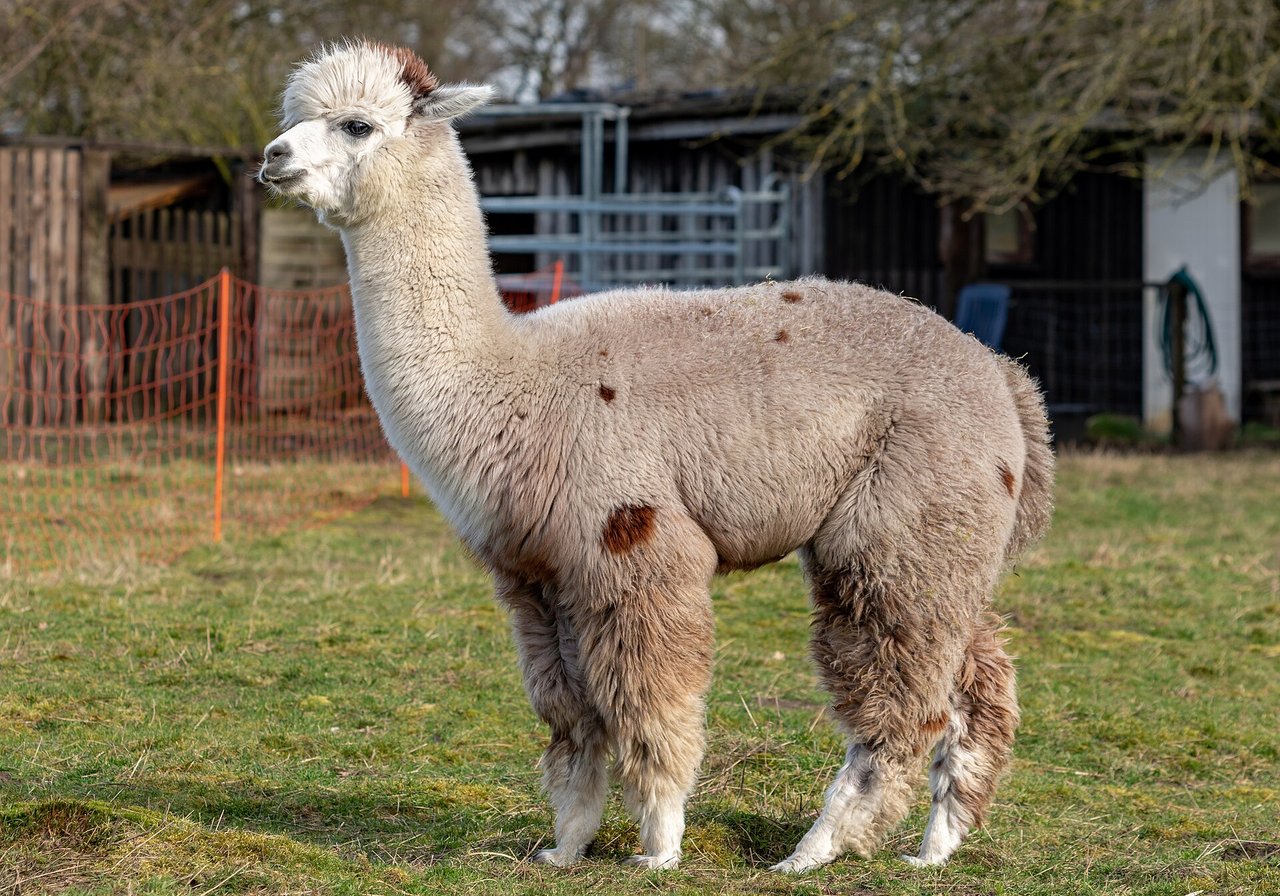
The Andes' woolly camelid — domesticated for millennia, prized for its fleece.
Source: Wikimedia Commons
In brief
The alpaca (Vicugna pacos) is a domesticated Andean camelid kept for its fine fleece; descended from the vicuña, it has been farmed for over 6,000 years in Peru, Bolivia and neighbouring countries.
Also in Animals A to Z · Animals that start with A
By WARN Research & Conservation TeamLast updated
The alpaca is a domesticated South American camelid descended from the wild vicuña, kept for its fine fleece for more than 6,000 years in the Andean highlands. Alpacas graze at 3,500–5,000 m elevation in Peru, Bolivia, Chile and Ecuador, where roughly 3.7 million animals support rural livelihoods. Two breed types exist: Huacaya with dense crimped fleece and Suri with silky dreadlock-like locks. Alpacas are social herd animals, communicating through hums, clicks and body posture. While domesticated alpacas are not wild conservation targets, their wild ancestor the vicuña was hunted to near extinction before recovering through community-based management.
3.7 million
Alpacas in Peru alone — the world's largest population
6,000+ yr
Domestication history in the Andes
22
Natural fleece colour variations
Appendix I
CITES listing — wild vicuña (ancestor)
Figures sourced from IUCN Red List — Vicugna vicugna (vicuña), Food and Agriculture Organization — camelids, Encyclopaedia Britannica — alpaca .
Alpaca: Quick Facts
| Weight | 55–65 kg |
|---|---|
| Fleece types | Huacaya (crimped) and Suri (silky locks) |
| Fleece colours | 22 natural shades |
| Altitude | 3,500–5,000 m in the Andes |
| Wild ancestor | Vicuña (Vicugna vicugna) |
| CITES | Appendix I (wild vicuña) |
Scientific Classification
| Kingdom | Animalia |
|---|---|
| Phylum | Chordata |
| Class | Mammalia |
| Order | Artiodactyla |
| Family | Camelidae |
| Genus | Vicugna |
| Species | Vicugna pacos (Linnaeus, 1758) |
Conservation Status
- IUCN Status
- Domesticated — not assessed. Wild vicuña ancestor Least Concern after recovery from near extinction.
- Population
- Roughly 3.7 million in Peru; ~4 million globally
- Trend
- Stable — commercial livestock
- Assessed
- 2014 (vicuña)
- CITES
- Appendix I (wild vicuña)
Vicuña recovery through community chaku shearing is a conservation success story.
Key Facts: Alpaca
- Alpacas are domesticated camelids descended from the wild vicuña.
- Peru holds roughly 3.7 million alpacas — the world's largest population.
- Two fleece types: Huacaya (crimped) and Suri (silky locks).
- Alpaca fleece is lanolin-free, hypoallergenic and thermally efficient.
- Wild vicuñas were hunted to near extinction before community recovery programmes.
- Alpacas are social herd animals that hum, click and spit when agitated.
Domestication and Andean heritage
Alpacas were domesticated in the Andean highlands more than 6,000 years ago, alongside llamas — which descend from the guanaco. Genetic studies confirm the alpaca's primary ancestor is the vicuña (Vicugna vicugna), the smallest and finest-fleeced wild camelid.
Inca civilisation managed alpaca herds on a vast scale, weaving fleece into textiles reserved for royalty. Spanish colonisation disrupted traditional management, but indigenous communities maintained alpaca husbandry. Today Peru produces roughly 80% of the world's alpaca fibre, supporting an estimated 120,000 farming families.
Huacaya and Suri breeds
Two breed types dominate commercial alpaca farming. Huacaya alpacas — roughly 90% of the global population — have dense, crimped fleece giving a fluffy appearance.
Suri alpacas have silky, pencil-thin locks that hang in dreadlock-like strands and command premium prices. Both breeds come in 22 natural fleece colours from white through fawn, brown, grey and black. Shearing occurs annually, yielding 1.5–3 kg of fleece per animal. Alpaca fibre is lanolin-free, making it hypoallergenic and suitable for sensitive skin.
Husbandry and behaviour
Alpacas are social herd animals that become stressed in isolation. They communicate through soft hums, alarm calls, clucking and body posture — ears back and tail raised signal irritation. Alpacas spit regurgitated stomach contents at each other during hierarchy disputes; they rarely spit at humans unless mishandled. They graze grasses and hay at high altitude, using a three-compartment stomach efficient at extracting nutrients from coarse forage. Dung piles in communal latrines reduce parasite spread.
Wild vicuña conservation
While alpacas themselves are domesticated, their wild ancestor the vicuña was hunted to fewer than 10,000 individuals by the 1960s for fine fleece. CITES Appendix I protection and community-based chaku round-ups — shearing wild vicuñas and releasing them — recovered populations to over 350,000. This model of sustainable wild fibre harvesting is a conservation success story. Alpaca farming reduces pressure on wild vicuñas by meeting commercial demand through domestic stock.
What WARN Does
WARN publishes this alpaca guide as free public education. The vicuña recovery story — wild ancestor of the alpaca — illustrates how community-based conservation can reverse extinction trajectories.
If this guide helps you understand wildlife and the pressures it faces, a gift to WARN supports habitat protection and free public education in our partner countries.
Alpaca: Frequently Asked Questions
What is the difference between an alpaca and a llama?
Where do alpacas live?
Are alpacas wild animals?
Why is alpaca fleece valuable?
Do alpacas spit?
Are alpacas dangerous?
How long do alpacas live?
How big is an alpaca?
What do alpacas eat?
Sources & References
Population figures, conservation status and biological facts on this page are drawn from authoritative scientific and intergovernmental sources.
Terms used on this page
Plain-English definitions, from our wildlife and conservation glossary.
Latest Alpaca Stories
Quick, fact-checked reads on the alpaca — amazing facts, key questions and the threats it faces.
Briefings
The Pink River Dolphin: Why the Amazon's Most Unusual Mammal Is Endangered
The pink river dolphin — the boto — is one of only a handful of freshwater dolphin species left on Earth. It lives in the rivers of Colombia and Peru, and it is now formally listed as Endangered on the IUCN Red List. A briefing on what it is, why it is in trouble, and what frontline rescue work can still do.
Read the storyBriefings
The Kinkajou: The Rainforest Mammal Most People Have Never Heard Of
The kinkajou is a small, golden-brown rainforest mammal with a prehensile tail and enormous dark eyes. It lives in the forests of Colombia and Peru. Its biggest threats are habitat loss and the exotic pet trade — and that is exactly where rescue and sanctuary work can help.
Read the storyBriefings
The Capuchin Monkey: The Tool-Using Primate at the Heart of the South American Pet Trade Problem
Capuchin monkeys are among the most intelligent primates in the Americas — and one of the most heavily trafficked. They live across the forests of Colombia and Peru, and they are a regular caseload at rescue centres dealing with the South American illegal pet trade.
Read the storyExplore more animals
Discover more animals, their habitats and their conservation status in the WARN wildlife-guide library.