Wildlife Guide · United States & Southern Canada
Bobcat
Lynx rufus (Schreber, 1777)
North America's adaptable mid-sized cat — tufted ears, bobbed tail, widespread success.
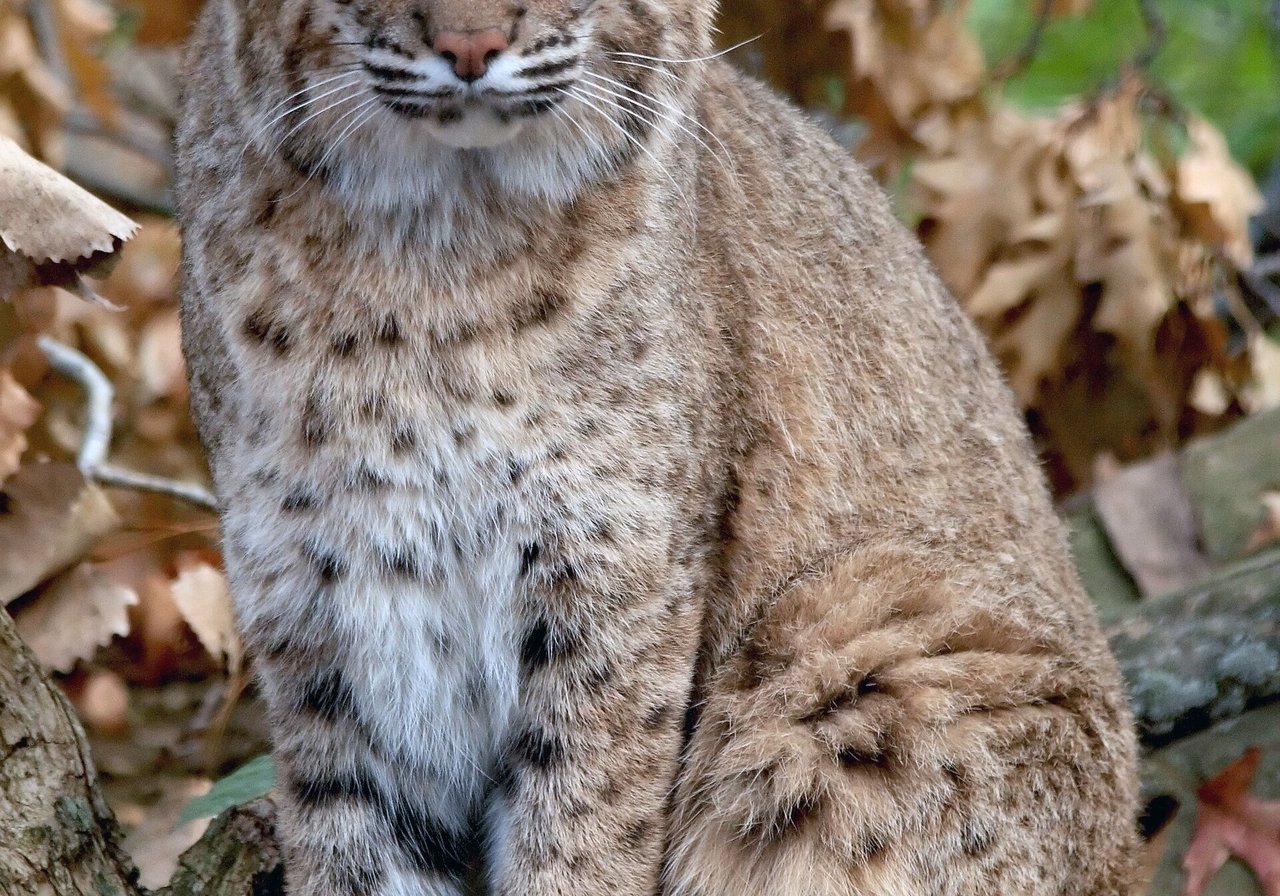
Source: Wikimedia Commons
In brief
The bobcat (Lynx rufus) is a medium-sized North American wild cat listed as Least Concern by the IUCN; it is the continent's most widespread and adaptable felid, recognised by its tufted ears, spotted coat and short tail.
Also in Animals A to Z · Animals that start with B
By WARN Research & Conservation TeamLast updated
The bobcat is a medium-sized wild cat native to North America, named for its short 'bobbed' tail. It is the most common wild cat on the continent, ranging from southern Canada through the contiguous United States to northern Mexico. Bobcats occupy diverse habitats — boreal forest, desert, swampland and suburban edges — wherever rabbits, rodents and small deer are available. Listed as Least Concern by the IUCN, bobcat populations are generally stable or increasing, though they are trapped for fur in some states and occasionally killed when mistaken for threats to poultry or pets.
Least Concern
IUCN Red List status (2016 assessment)
~2×
Size of a domestic cat — but far heavier and stronger
12 subspecies
Recognised across North America
Appendix II
CITES listing
Figures sourced from IUCN Red List — Lynx rufus, CITES — Checklist of CITES Species, National Wildlife Federation — bobcat .
Bobcat: Quick Facts
| Weight | 6–13 kg (males larger than females) |
|---|---|
| Tail | Short and bobbed — 9–20 cm |
| Diet | Rabbits, rodents, birds, deer fawns |
| Activity | Crepuscular — most active dawn and dusk |
| Lifespan | Up to ~12 years in the wild |
| CITES | Appendix II |
Scientific Classification
| Kingdom | Animalia |
|---|---|
| Phylum | Chordata |
| Class | Mammalia |
| Order | Carnivora |
| Family | Felidae |
| Genus | Lynx |
| Species | Lynx rufus (Schreber, 1777) |
Conservation Status
- IUCN Status
- Least Concern (IUCN, 2016). Population stable or increasing across most of North America.
- Population
- Estimated 2–3 million individuals in the United States alone; no precise global count
- Trend
- Stable or increasing
- Assessed
- 2016
- CITES
- Appendix II
Key Facts: Bobcat
- Bobcats are named for their short, bobbed tail — typically 9–20 cm long.
- They are the most common wild cat in North America, from Canada to Mexico.
- Tufted ears and spotted fur distinguish them from the larger Canada lynx.
- Bobcats are generalist hunters, taking rabbits, rodents, birds and deer fawns.
- They adapt well to fragmented habitat and are occasionally seen near suburbs.
- Fur trapping and vehicle collisions are the main human-related causes of mortality.
Identification and relatives
Bobcats resemble the Canada lynx but are smaller, with a more variable coat — grey-brown to reddish, marked with dark spots and bars. The tail is short but always visible, unlike the longer tail of a cougar. Ear tufts are present but shorter than in lynx species.
Bobcats and Canada lynx overlap in the northern United States and southern Canada; bobcats favour more varied habitat including mixed forest and farmland, while Canada lynx depend heavily on snowshoe hare cycles in boreal forest. Hybridisation between the two species has been documented where ranges meet.
Behaviour and ecology
Bobcats are solitary and territorial. Males patrol ranges of roughly 10–60 km²; females occupy smaller areas and may overlap with several males. They hunt mainly at dawn and dusk, using cover to ambush prey.
Rabbits and hares form the bulk of the diet in many regions, supplemented by rodents, birds, reptiles and occasionally white-tailed deer fawns. Bobcats cache uneaten prey under vegetation or snow. Dens are made in hollow logs, rock crevices or dense thickets; females raise litters of one to six kittens, weaning them at about two months.
Bobcats near people
Bobcats are increasingly reported in suburban and exurban areas where woods meet gardens. They rarely threaten people and attacks are virtually unknown. They may take free-ranging poultry or small pets left outdoors unattended, which leads to occasional lethal control. Wildlife agencies generally advise securing livestock, keeping cats indoors at night and appreciating bobcats as natural rodent controllers. Road mortality is a significant source of death, particularly where highways fragment forest corridors.
Conservation and trade
The IUCN lists the bobcat as Least Concern with a stable or increasing population trend across most of its range. Regulated fur trapping occurs in many US states and Canadian provinces; annual harvests are monitored and generally considered sustainable. CITES lists the bobcat on Appendix II, requiring export permits for international trade in skins. Habitat loss and rodenticide exposure through poisoned prey remain local concerns. Overall, the bobcat is a conservation success story among North American carnivores.
What WARN Does
WARN publishes this bobcat guide to help readers understand North America's most common wild cat. Our mission focuses on threatened wildlife in partner countries; bobcats illustrate how adaptable mesopredators can persist when habitat and prey remain available.
If this guide helps you understand wildlife and the pressures it faces, a gift to WARN supports habitat protection and free public education in our partner countries.
Bobcat: Frequently Asked Questions
How can you tell a bobcat from a domestic cat?
Are bobcats dangerous to pets?
What is the difference between a bobcat and a lynx?
Where do bobcats live?
What do bobcats eat?
Are bobcats protected?
How long do bobcats live?
How big is a bobcat?
Sources & References
Population figures, conservation status and biological facts on this page are drawn from authoritative scientific and intergovernmental sources.
Terms used on this page
Plain-English definitions, from our wildlife and conservation glossary.
Explore more animals
Discover more animals, their habitats and their conservation status in the WARN wildlife-guide library.