Wildlife Guide · Malaysia & Indonesia
Borneo Pygmy Elephant
Elephas maximus borneensis
The world's smallest elephant, cornered between rainforest and oil palm.
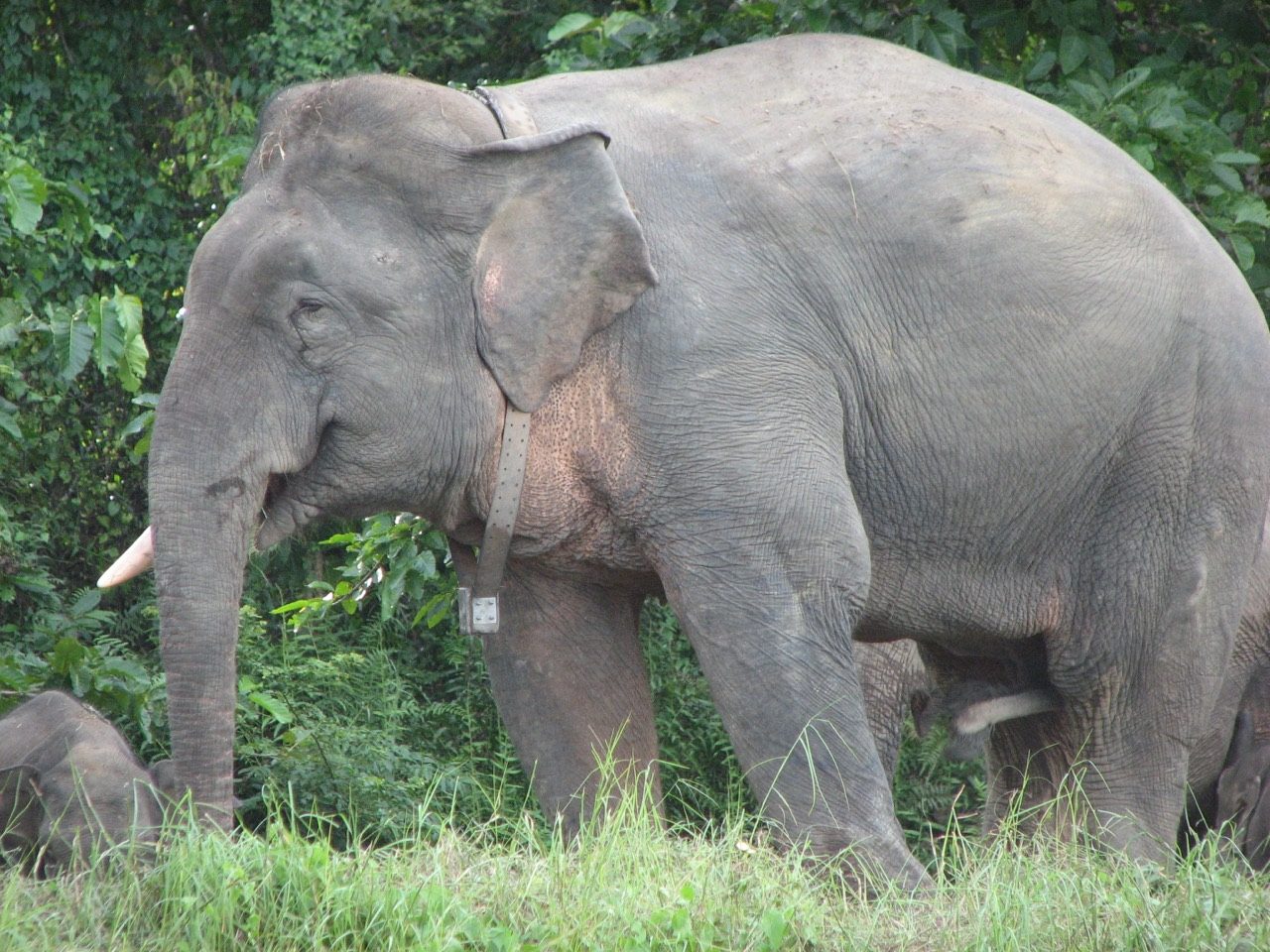
Source: Wikimedia Commons via Wikipedia “Borneo elephant”
In brief
A Borneo pygmy elephant is the smallest subspecies of Asian elephant (Elephas maximus borneensis), native to the island of Borneo in Sabah, Malaysia and Kalimantan, Indonesia; the IUCN listed it as Endangered in 2024 with about 1,000 left in the wild.
Also in Animals A to Z · Animals that start with B
How you can help
You can symbolically adopt an elephant from £5 a month — a donation to WARN’s Asian elephant appeal for Indonesia and Malaysia, with a personalised certificate you can keep or give as a gift — or give once to where it is needed most.
By WARN Research & Conservation TeamLast updated
The Borneo pygmy elephant is the smallest subspecies of elephant on Earth, found only in the northeastern forests of Borneo across Malaysia's Sabah and a sliver of Indonesia's Kalimantan. Gentler-faced and rounder than its mainland Asian cousins, it has been isolated on the island for hundreds of thousands of years. In June 2024 the IUCN formally assessed it as Endangered, with roughly 1,000 individuals remaining as forests give way to plantations.
~1,000
Estimated to remain in the wild (IUCN, 2024)
~400
Breeding adults in the population (IUCN, 2024)
60%
Of forest habitat lost in the last 40 years
Endangered
IUCN Red List status, assessed June 2024
Figures sourced from IUCN — Bornean elephant Endangered (press release, 2024), IUCN — Borneo elephants now classified as Endangered (story, 2024), IUCN Red List — Elephas maximus ssp. borneensis (2024 assessment) and other references on this page.
Borneo Pygmy Elephant: Quick Facts
| Lifespan | Typically into the mid-50s in the wild (Asian elephant) |
|---|---|
| Weight | Several tonnes; large bulls up to roughly 5,000 kg |
| Shoulder height | About 2.5–3 m (8–10 ft); smallest elephant subspecies |
| Diet | Herbivore — grasses, leaves, bark, roots, shoots, fruit |
| Gestation | About 22 months (one of the longest of any land animal) |
| Young per birth | Usually one calf |
| Baby name | Calf |
| Group name | Herd, led by a matriarch |
| CITES | Appendix I (Asian elephant) |
| IUCN status | Endangered (subspecies, assessed 2024) |
Scientific Classification
| Kingdom | Animalia |
|---|---|
| Phylum | Chordata |
| Class | Mammalia |
| Order | Proboscidea |
| Family | Elephantidae |
| Genus | Elephas |
| Species | Elephas maximus (Asian elephant) |
| Subspecies | E. m. borneensis (Deraniyagala, 1950) |
Conservation Status
- IUCN Status
- Endangered
- Population
- ~1,000 individuals (about 400 breeding adults)
- Trend
- Decreasing
- Assessed
- 2024
- CITES
- Appendix I
Assessed Endangered in June 2024 as the subspecies Elephas maximus borneensis (assessment T237597413A237597422). The population is estimated to have declined by at least 50% over the last three generations (roughly 60–75 years), driven by loss of about 60% of forest habitat in 40 years.
Did you know?
Borneo pygmy elephants have such long tails that they can almost touch the ground as they walk — one of several traits that set this island-dwarfed subspecies apart from its mainland cousins.
Key Facts: Borneo Pygmy Elephant
- It is the smallest of all elephant subspecies, with a notably round body, oversized ears and a tail that can nearly brush the ground.
- Found only on Borneo, almost entirely in the Malaysian state of Sabah, with a small population across the border in Indonesian Kalimantan.
- The IUCN assessed it as Endangered in June 2024, estimating about 1,000 individuals, of which roughly 400 are breeding adults.
- Around 60% of its forest habitat has been lost in the past four decades, mainly to logging and commercial oil-palm planting.
- Habitat fragmentation forces elephants into farms and plantations, fuelling human-elephant conflict that can be deadly for both sides.
- Like all Asian elephants it is listed on CITES Appendix I, banning commercial international trade in the animal or its parts.
Why it is endangered
In June 2024 the IUCN Red List classified the Borneo elephant as Endangered for the first time, estimating roughly 1,000 animals with only about 400 breeding adults. The population is judged to have declined by at least half over the last three generations, a span of some 60 to 75 years. The single biggest driver is habitat loss: around 60% of the elephants' forest has disappeared in just four decades, cleared for timber and for the vast oil-palm plantations that now blanket lowland Borneo. Roads, settlements and plantation boundaries slice the remaining forest into pieces, cutting elephants off from food and from one another.
Behaviour and ecology
Borneo pygmy elephants live in close-knit family herds led by the oldest female, the matriarch, who carries the group's memory of feeding grounds and water. They are bulk plant-eaters, feeding mainly on grasses but also stripping leaves, bark, roots, shoots and wild fruit, and a single adult Asian elephant can eat well over 100 kilograms of vegetation a day. Isolated on Borneo for hundreds of thousands of years, they evolved a smaller body, proportionally larger ears, a longer tail and straighter tusks than mainland Asian elephants — and a reputation for being relatively placid.
Threats and human conflict
As plantations replace forest, elephants increasingly cross into farmland and oil-palm estates to feed, trampling and raiding crops. The resulting conflict can be lethal: elephants are sometimes shot, snared or poisoned, and high-profile poisoning cases in Sabah have drawn international attention. Additional pressures include poaching for tusks, mining, and collisions with vehicles on plantation and logging roads. With so few breeding adults left, every animal lost to conflict matters to the subspecies' survival.
What rescue and recovery involve
Protecting Borneo's elephants means keeping forest connected and keeping people and elephants apart safely. Conservation work centres on wildlife corridors that link the three remaining core habitat blocks through plantation country, electric fencing and early-warning systems to reduce crop raids, rapid-response teams to move elephants out of danger, and the rescue and rehabilitation of injured or orphaned animals. Because so much of the range sits inside working plantations, durable solutions depend on local rangers, sanctuaries and community partners on the ground in Sabah and Kalimantan.
Borneo pygmy elephant vs. mainland Asian elephant
| Feature | Borneo pygmy elephant | Mainland Asian elephant |
|---|---|---|
| Scientific name | Elephas maximus borneensis | Elephas maximus (other subspecies) |
| Size | Smallest elephant subspecies | Larger, taller at the shoulder |
| Ears & tail | Proportionally larger ears, longer tail | Smaller ears, shorter tail relative to body |
| Range | Borneo only (Sabah; small part of Kalimantan) | India, Sri Lanka, mainland SE Asia, Sumatra |
| IUCN status | Endangered (subspecies, 2024) | Endangered (species level) |
| Population | ~1,000 | Tens of thousands across range |
What WARN Does
Both of the Borneo pygmy elephant's range states, Malaysia and Indonesia, are among the countries where our network funds local partners. Rather than running our own operations, WARN CIC is a registered global not-for-profit animal welfare organisation that channels support to vetted local shelters, sanctuaries and rescue teams — exactly the kind of frontline groups that respond to injured elephants, run anti-conflict patrols and rehabilitate orphaned calves in Sabah and Kalimantan. Our focus is funding those partners and raising public awareness; on-the-ground rescue and release is always led by the local experts who know these forests.
With only about 1,000 left, every Borneo pygmy elephant counts — your gift helps fund the local rescue teams and sanctuaries in Sabah and Kalimantan that keep these forest giants and the people near them safe.
How can I help save the borneo pygmy elephant?
Explore practical ways to support the borneo pygmy elephant, from everyday choices and sharing reliable information to reviewing a related appeal before giving.
Explore ways to support
Read the related appeal’s purpose, recipient status and fund terms. Choose an affordable gift after checking what is proposed and what has been reported.
Ease the pressures
Avoid the wildlife trade and souvenirs, never buy wild animals as pets, and choose sustainable, habitat-friendly products — the threats behind the borneo pygmy elephant's decline fall when demand does.
Spread the word
Share accurate, sourced information about the borneo pygmy elephant. Wider awareness is what turns concern into lasting protection.
Borneo Pygmy Elephant: Frequently Asked Questions
How can I help save the borneo pygmy elephant?
How many Borneo pygmy elephants are left?
Why is the Borneo pygmy elephant the smallest elephant?
How big is a Borneo pygmy elephant?
What do Borneo pygmy elephants eat?
Are Borneo pygmy elephants dangerous?
How long do Borneo pygmy elephants live, and what is a baby called?
Where do borneo pygmy elephants live?
Sources & References
Population figures, conservation status and biological facts on this page are drawn from authoritative scientific and intergovernmental sources.
Terms used on this page
Plain-English definitions, from our wildlife and conservation glossary.
Latest Borneo Pygmy Elephant Stories
Quick, fact-checked reads on the borneo pygmy elephant — amazing facts, key questions and the threats it faces.
Species
10 Amazing Facts About the Borneo Pygmy Elephant, the World's Smallest Elephant
From tails that drag the ground to a 300,000-year island exile, here are ten true facts about the gentle, round-bellied dwarf elephant found only on Borneo.
Read the storySpecies
How Big Is a Borneo Pygmy Elephant? The World's Smallest Elephant, Sized Up
Despite the name, a pygmy elephant still weighs several tonnes. Here is exactly how tall, how heavy and how much smaller this island dwarf is than its mainland cousins.
Read the storySpecies
Why Are Borneo Pygmy Elephants Endangered — and What's Being Done to Save Them
Sixty percent of their forest is gone and only about 1,000 remain. Here is what pushed the world's smallest elephant onto the Endangered list, and the work giving it a chance.
Read the storyExplore more animals
Discover more animals, their habitats and their conservation status in the WARN wildlife-guide library.