Wildlife Guide · Sub-Saharan Africa
Civet
Civettictis civetta (Schreber, 1776)
Africa's masked night wanderer — famous for musk, misunderstood as a species.
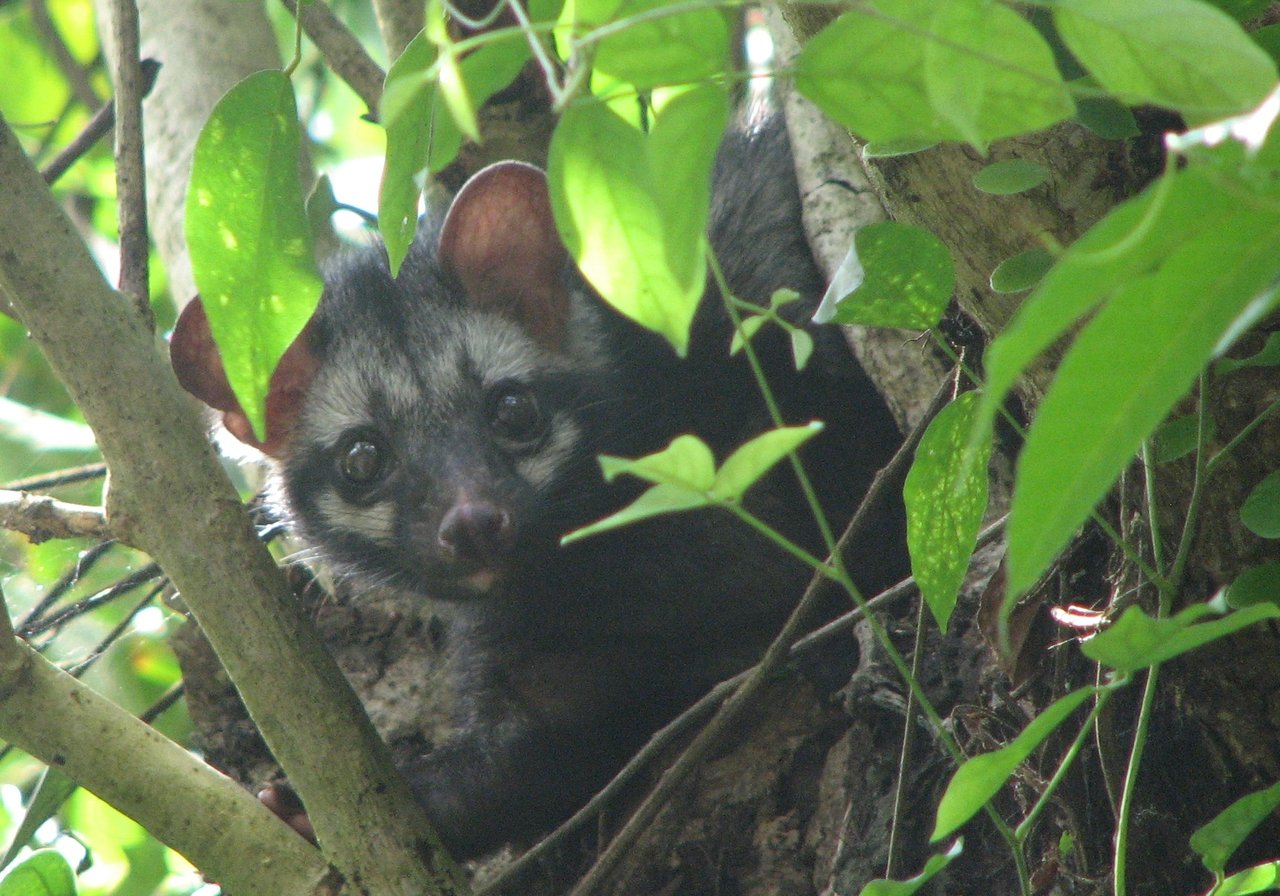
Source: Wikimedia Commons
In brief
Civets are nocturnal viverrids of Africa and Asia; the African civet (Civettictis civetta) is Least Concern and widespread across sub-Saharan Africa, though Asian species face habitat loss and civet musk farming raises welfare concerns.
Also in Animals A to Z · Animals that start with C
How you can help
You can symbolically adopt an orangutan from £5 a month — a donation to WARN’s orangutan welfare and conservation appeal, with a personalised certificate you can keep or give as a gift — or give once to where it is needed most.
By WARN Research & Conservation TeamLast updated
Civets are cat-like carnivorans of the family Viverridae, found in Africa and Asia. The African civet is the largest civet species, weighing up to 20 kg, with a distinctive black-and-white masked face, spotted coat and erect dorsal crest. Civets are mainly nocturnal and solitary, foraging for fruit, insects and small vertebrates. The species is best known historically for civet musk — a secretion used in perfumery — which led to civet farming. Listed as Least Concern, African civets remain widespread but face habitat loss and hunting. Asian civet species, including the small Indian civet and masked palm civet, face similar pressures; kopi luwak coffee production from caged palm civets remains a welfare concern.
Least Concern
IUCN status — African civet (2015)
~35
Civet species across Africa and Asia
20 kg
Maximum weight — African civet
Appendix III
CITES listing (Botswana)
Figures sourced from IUCN Red List — Civettictis civetta, CITES — Checklist of CITES Species, Encyclopaedia Britannica — civet .
Civet: Quick Facts
| Weight | 7–20 kg (African civet) |
|---|---|
| Activity | Mainly nocturnal and solitary |
| Diet | Omnivorous — fruit, insects, small vertebrates |
| Distinctive feature | Masked face; erect dorsal crest |
| Musk | Perineal gland secretion used in perfumery |
| CITES | Appendix III (Botswana) |
Scientific Classification
| Kingdom | Animalia |
|---|---|
| Phylum | Chordata |
| Class | Mammalia |
| Order | Carnivora |
| Family | Viverridae |
| Genus | Civettictis |
| Species | Civettictis civetta (Schreber, 1776) |
Conservation Status
- IUCN Status
- African civet Least Concern (IUCN, 2015). Several Asian civet species more threatened.
- Population
- No global count; African civet widespread and stable
- Trend
- Stable for African civet; decreasing for some Asian species
- Assessed
- 2015 (African civet)
- CITES
- Appendix III (Botswana)
Key Facts: Civet
- Civets are viverrids — related to binturongs and genets, not cats.
- The African civet is the largest civet species, with a distinctive masked face.
- Civet musk from perineal glands was historically farmed for perfumery.
- Kopi luwak coffee from caged Asian palm civets raises serious welfare concerns.
- Most civet species are nocturnal, solitary and omnivorous.
- Habitat loss and hunting threaten Asian civet species more than the African civet.
Civets across two continents
Roughly 35 civet species occupy the family Viverridae across Africa and Asia. The African civet (Civettictis civetta) is the largest, ranging across sub-Saharan Africa in woodland, savanna and rainforest. Asian civets include the small Indian civet (Viverricula indica), the masked palm civet (Paguma larvata) and the Malay civet (Viverra tangalunga).
All share a general body plan: elongated body, short legs, long tail and anal scent glands used for marking territory. Civets are not cats — they belong to a separate carnivore lineage that also includes binturongs and genets.
Civet musk and kopi luwak
Civet musk — a thick, oily secretion from perineal glands — has been used in perfumery for centuries. Historically, African and Asian civets were kept in cages and the secretion scraped from glands, a practice that continues in some regions. Synthetic alternatives now exist for most perfumery applications.
Kopi luwak — coffee made from beans passed through the digestive tract of Asian palm civets — drives demand for caged civets in Indonesia. Civets are confined in small cages and force-fed coffee cherries, causing severe welfare problems. Ethical coffee certification excludes caged-sourced kopi luwak.
Ecology and behaviour
African civets are mainly nocturnal and solitary, patrolling home ranges of roughly 1–4 km². They are omnivorous, eating fruit, insects, rodents, birds, eggs and carrion. An erectile dorsal crest runs along the spine, raised during aggression or alarm. Civets communicate through scent marking — the musk secretion is deposited on rocks, logs and vegetation. Females give birth to one to four young in dense cover. Civets are adaptable and persist in secondary forest and near human settlement, though primary forest supports higher densities.
Conservation across species
The African civet is Least Concern with a stable population across most of sub-Saharan Africa. Several Asian civet species face greater pressure from deforestation and hunting. The Malabar civet (Viverra civettina) of India is Critically Endangered and may be extinct. CITES Appendix III in Botswana regulates African civet exports. Reducing demand for wild-sourced musk and caged kopi luwak, protecting forest habitat and enforcing anti-trafficking law benefit all civet species. WARN's work in Indonesia overlaps palm civet range, where kopi luwak farming remains a welfare and conservation concern.
What WARN Does
WARN publishes this guide for education and is developing support through assessed animal-welfare grants. A species range, source citation or photograph does not establish a recipient or funding agreement. Check /about/where-your-money-goes/#grant-register for published grant and payment records; records not yet published must not be read as zero activity. Browse /appeals/ for the purposes currently available to support.
If this guide helps you understand wildlife and the pressures it faces, a gift to WARN supports habitat protection and free public education in our partner countries.
Civet: Frequently Asked Questions
What is civet musk used for?
Is kopi luwak made from civets?
Are civets cats?
Where do civets live?
Are civets endangered?
What do civets eat?
Are civets dangerous?
How big is a civet?
How long do civets live?
Sources & References
Population figures, conservation status and biological facts on this page are drawn from authoritative scientific and intergovernmental sources.
Related Rescue Guides
Selected guides that explain this animal’s rescue, habitat needs or ways to help. Check each appeal for its current funding status.
Terms used on this page
Plain-English definitions, from our wildlife and conservation glossary.
Latest Civet Stories
Quick, fact-checked reads on the civet — amazing facts, key questions and the threats it faces.
Species
Tiger vs Lion: 7 Key Differences Between the Two Biggest Cats
Tigers are bigger, stripier and solitary; lions are social and live in prides. Here's how the two largest cats really differ in size, habitat and behaviour.
Read the storySpecies
12 Astonishing Facts About the Pangolin, the World's Only Scaly Mammal
From a tongue anchored near its pelvis to scales that weigh a fifth of its body, the pangolin is one of nature's strangest mammals. Here are 12 facts that explain why.
Read the storySpecies
How Big Is a Pangolin — and How Long Is Its Tongue?
Pangolins range from house-cat size to over 30 kg, and the largest have a tongue longer than their entire body. Here are the real numbers.
Read the storyExplore more animals
Discover more animals, their habitats and their conservation status in the WARN wildlife-guide library.