Indonesia · Wildlife trade

Kopi Luwak: The Cruelty Behind Civet Coffee

Kopi luwak is made from coffee cherries eaten by palm civets. Most commercial production now caged wild-caught animals. The evidence, and how to avoid funding it.

By the WARN Research & Conservation TeamChecked against IUCN Red List & CITES sourcesLast updated

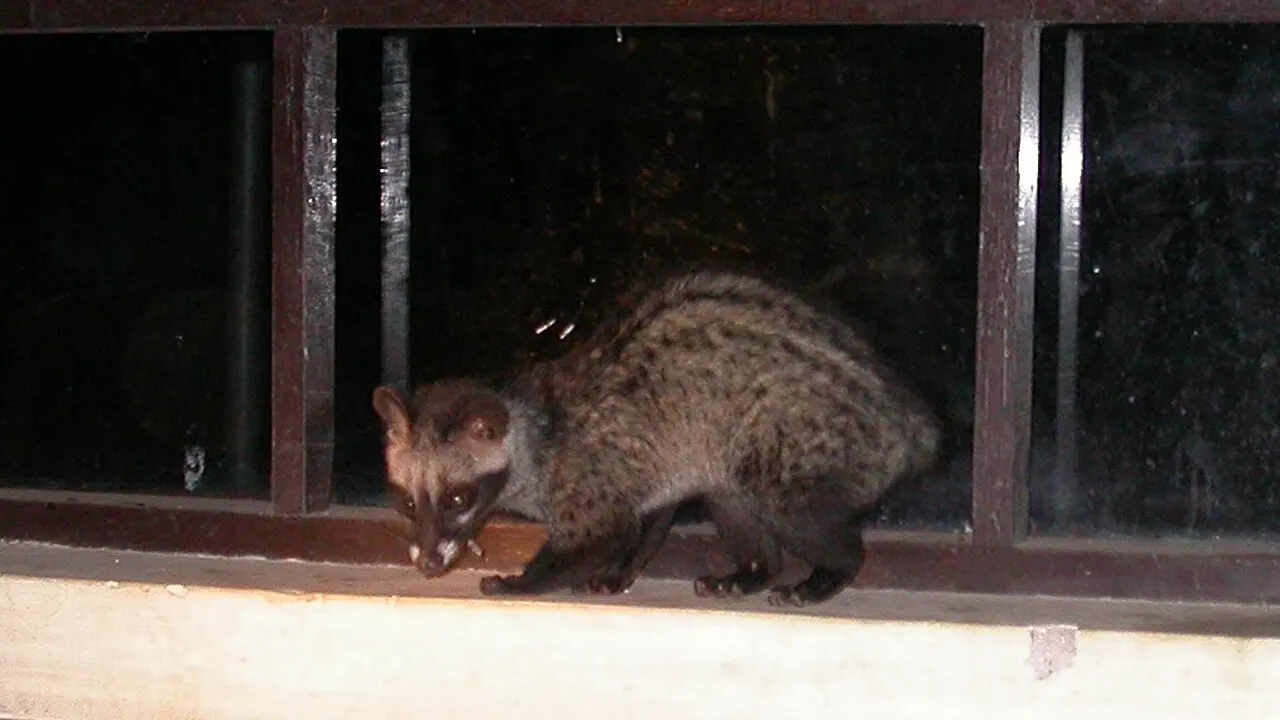
An Asian palm civet (Paradoxurus hermaphroditus), the species caged for commercial kopi luwak production

In brief

Kopi luwak — civet coffee — is made from coffee cherries eaten and excreted by the Asian palm civet. Traditional production collected droppings from wild civets and raised no welfare concerns, but a 2016 study of 16 Bali plantations found wild-caught civets caged in conditions that failed basic welfare requirements. Most commercial kopi luwak today comes from caged animals, and no reliable certification separates the two.

48

Caged civets assessed in Bali (2016)

16

Tourist plantations studied

8

Welfare factors scored

CITES III

Asian palm civet listing

Guide 1

What is kopi luwak?

Kopi luwak is coffee made from cherries that have been eaten, partly digested and excreted by a civet — most often the Asian palm civet (Paradoxurus hermaphroditus), a small nocturnal, tree-dwelling mammal native to South and Southeast Asia. It is not a cat, despite the "civet cat" nickname. Traditionally, farmers collected droppings left by wild civets that had roamed and chosen their own cherries. That method involves no captivity and, as the researchers behind the main welfare study note, raises no animal welfare concerns.

Guide 2

How civets are caged for coffee

The traditional method does not scale, and kopi luwak became a luxury product and a tourist attraction. Researchers from the University of Oxford's Wildlife Conservation Research Unit and World Animal Protection assessed 48 wild-caught palm civets held at 16 tourist-facing coffee plantations in Bali, scoring eight husbandry factors — mobility, hygiene, surfaces, shelter, noise, food, water and social interaction. The conditions they recorded failed to meet basic welfare requirements. Palm civets are nocturnal, highly active and arboreal; a battery cage denies almost everything the species is adapted to do.

Guide 3

Wild-sourced or caged? The labels rarely tell you

A bag labelled "wild-sourced" is not evidence that it is. There is no widely-adopted, independently-audited certification that reliably separates wild-collected kopi luwak from caged production, and caged beans can enter the same supply chains. That is the honest problem with this product: the premium price is exactly what makes caging profitable, and the label is not a reliable guide.

Guide 4

What effective help looks like

The clearest action is on the demand side — the industry exists because the price premium does. Skip kopi luwak, and skip plantation tours that keep civets caged for photographs. World Animal Protection's campaign work saw retailers including Harrods and Selfridges withdraw or review civet coffee, which is what demand-side pressure looks like when it works. If you want a gift to reach animals through WARN today, it funds partner-led wildlife-trade rescue in Indonesia through the slow loris programme at slow loris appeal — a species caged for the same reason.

Guide 5

Why UK Donors Choose WARN — Transparent Partner Grants

WARN is a registered UK Community Interest Company (Company no. 17298990) and is not a charity, so it cannot claim Gift Aid. The donation case is transparent partner-led welfare where support reaches practical field needs. WARN states upfront that gifts fund WARN's 17-country partner network across South Asia, Southeast Asia, East Africa, Southern Africa and South America programmes through vetted local partners — not WARN-run sanctuaries. Every gift is receipted; give one-off at donate or monthly at monthly giving.

Guide 6

What Your Gift Buys on the Ground

Roughly £15–25 funds one street dog through catch, neuter, rabies vaccination and return in network countries. £100 supports a small clinic day. £500 helps stock quarantine after a trafficking seizure. Monthly gifts let partners plan multi-year CNVR instead of crisis-only response.

Source Notes

WARN uses named intergovernmental, conservation and animal-welfare sources for numeric claims. These notes summarise the source basis for this page.

Carder, G., Proctor, H., Schmidt-Burbach, J. & D’Cruze, N. (2016)

“The animal welfare implications of civet coffee tourism in Bali.” Animal Welfare 25(2), 199–205. The primary welfare assessment: 48 civets, 16 plantations, eight husbandry factors.

Read the source — Carder, G., Proctor, H., Schmidt-Burbach, J. & D’Cruze, N. (2016) (opens in a new tab)

World Animal Protection — civet coffee campaign

Campaign reporting on caged civet coffee and the retailer response, including Harrods and Selfridges.

Read the source — World Animal Protection — civet coffee campaign (opens in a new tab)

IUCN Red List — Paradoxurus hermaphroditus

Asian palm civet assessed as Least Concern; the species is listed on CITES Appendix III.

Read the source — IUCN Red List — Paradoxurus hermaphroditus (opens in a new tab)

Kopi Luwak: The Cruelty Behind Civet Coffee: Frequently Asked Questions

Is kopi luwak cruel?
Most commercial kopi luwak is. A 2016 study of 16 Bali plantations found 48 wild-caught palm civets kept in conditions that failed basic welfare requirements across all eight factors assessed. Traditional wild-collected kopi luwak — gathering droppings from free-roaming civets — raises no welfare concerns, but it is rare and hard to verify.
What is a civet?
A civet is a small, nocturnal, tree-dwelling mammal native to South and Southeast Asia — not a cat, despite the "civet cat" nickname. The Asian palm civet (Paradoxurus hermaphroditus) is the species used for kopi luwak. It is listed as Least Concern on the IUCN Red List and on CITES Appendix III, so the welfare problem here is captivity and the wild-capture that supplies it, not extinction risk.
Can I buy kopi luwak ethically?
It is very difficult to verify. No widely-adopted independent certification reliably separates wild-collected from caged production, and both can enter the same supply chain. If you cannot verify the source, the safest choice is to skip it.
Does WARN fund civet rescue?
No. WARN has no civet rescue partner and no funded civet programme, and will not ask you to fund one that does not exist. This page is educational. WARN does fund partner-led wildlife-trade rescue in Indonesia — see the slow loris appeal at slow loris appeal.
Is WARN a registered charity?
World Animal Rescue Network (WARN) is World Animal Rescue Network CIC (Company number 17298990), a registered UK Community Interest Company — not a registered charity. See registration status for full legal identity.
Can I claim Gift Aid on donations to WARN?
No. Gift Aid is only available to UK registered charities. World Animal Rescue Network is a registered global not-for-profit animal welfare organisation, not a registered charity. International donors should check their own local rules. See registration status.
Are WARN donations US tax-deductible?
No. WARN is not a US 501(c)(3). US donors should consult a tax adviser; all supporters receive payment receipts for their records.
Does WARN run its own sanctuaries abroad?
No. WARN makes grants to established local partners with surgical and rehabilitation capacity. It does not operate WARN-branded facilities.

Help Fund Frontline Rescue

World Animal Rescue Network CIC (Company no. 17298990) raises funds for established local partners. Your support helps build the rescue capacity these animals need.

See WARN’s Indonesia work