Wildlife Guide · Africa & Asia
Cobra
Multiple elapid genera — Naja (true cobras), Ophiophagus (king cobra) and related hooded species
Hooded elapids of Africa and Asia — iconic, venomous and widely misunderstood.
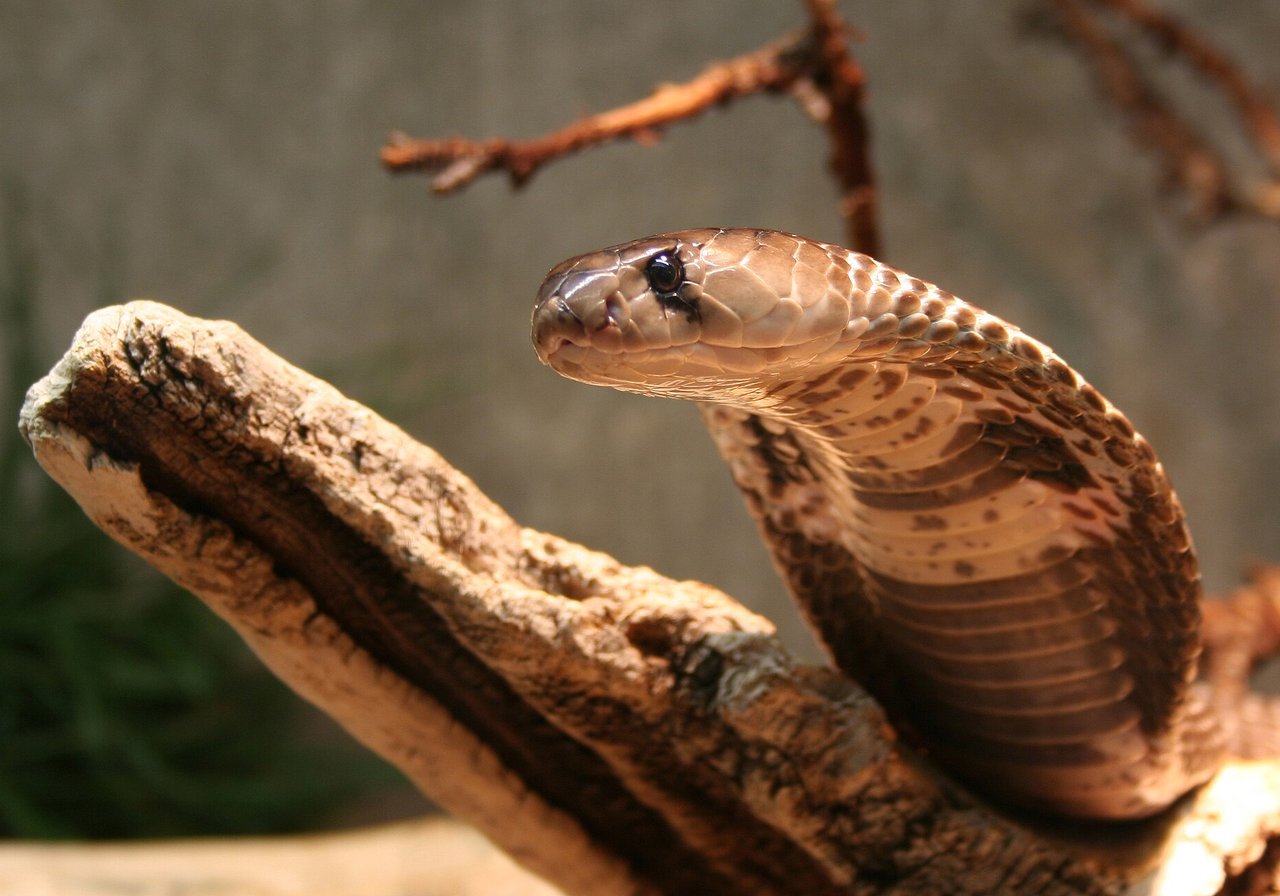
Source: Wikimedia Commons
In brief
Cobras are hooded venomous elapid snakes of Africa and Asia — including true cobras (Naja) and the king cobra — neurotoxic predators vital for rodent control but threatened by persecution and habitat loss.
Also in Animals A to Z · Animals that start with C
By WARN Research & Conservation TeamLast updated
Cobras are venomous snakes famous for spreading neck ribs into a hood when threatened. True cobras belong to genus Naja across Africa and Asia; the king cobra Ophiophagus hannah — the world's longest venomous snake — sits in its own genus. Cobra venom is predominantly neurotoxic, affecting breathing and requiring urgent antivenom in serious envenomings. Cobras control rodent populations but face persecution, snake charmers' trade and habitat loss across India, Pakistan, South-East Asia and sub-Saharan Africa.
30+
Cobra and related Naja species
5.5 m
Maximum king cobra length
Neurotoxic
Primary venom type in most cobras
CITES
King cobra Appendix II
Figures sourced from IUCN Red List — king cobra, WHO — snakebite envenoming, Encyclopaedia Britannica — cobra and other references on this page.
Cobra: Quick Facts
| Venom type | Mostly neurotoxic |
|---|---|
| Hood | Threat display — expanded neck ribs |
| King cobra | Up to ~5.5 m; eats other snakes |
| Spitting species | Several African and Asian Naja |
| Range | Africa, Middle East, Asia |
| King cobra IUCN | Vulnerable |
Scientific Classification
| Kingdom | Animalia |
|---|---|
| Phylum | Chordata |
| Class | Reptilia |
| Order | Squamata |
| Family | Elapidae |
| Genera | Naja (true cobras), Ophiophagus (king cobra) |
Conservation Status
- IUCN Status
- Varies by species. King cobra Vulnerable; Indian cobra Least Concern; many species declining locally from persecution.
- Population
- Unknown for most; king cobra decreasing across range
- Trend
- Decreasing for king cobra and forest specialists
- Assessed
- 2012 (king cobra); varies by species
- CITES
- King cobra Appendix II
Snakebite mortality is a human health crisis — conservation and antivenom access should align.
Key Facts: Cobra
- The hood is a threat display — ribs and muscles spread loose neck skin.
- King cobras eat other snakes, including venomous species — not true Naja cobras.
- Spitting cobras can eject venom into eyes from metres away.
- Snakebite kills tens of thousands yearly in Asia and Africa — antivenom access saves lives.
- Snake charming often involves defanged or stressed animals — illegal and cruel in many countries.
- Pakistan and India host multiple cobra species — education reduces persecution.
What makes a cobra a cobra?
Not every hooded snake is a cobra taxonomically. True cobras are elapids in genus Naja — Indian cobra, Egyptian cobra, Mozambique spitting cobra among roughly 30 species. The king cobra is the sole member of Ophiophagus and phylogenetically distinct despite the common name.
Hood spreading accompanies hissing and upright posture — defensive signals preferring escape over bite. Cobras hunt rodents, frogs, birds and other snakes, often at dusk.
Venom delivery through fixed front fangs injects neurotoxins blocking nerve signals. Spitting cobras add propulsion through specialised fang openings.
King cobra and spitting cobras
The king cobra reaches 5.5 metres, builds nest mounds of leaf litter — rare parental care in snakes — and feeds almost exclusively on snakes. It inhabits forests from India through South-East Asia, listed Vulnerable on the IUCN Red List.
Spitting cobras — Naja nigricollis, N. mossambica and others — aim venom at eyes, causing pain and blindness if untreated. Flushing with water, not milk, is recommended first aid before hospital care.
Indian cobra Naja naja features in mythology and snakebite statistics across the subcontinent, including Pakistan — a WARN partner country where antivenom access and habitat coexistence matter.
Snakebite, trade and conservation
WHO classifies snakebite envenoming as a neglected tropical disease. Cobras contribute significantly to mortality in South Asia and Africa. Effective response combines community education, rapid transport, appropriate antivenom and hospital protocols — not killing all snakes indiscriminately.
Snake charming, venom extraction without release and export for novelty displays persist despite bans. King cobras enter illegal pet and skin trade under CITES Appendix II.
Habitat conversion removes rodent controllers farmers need. Integrated pest management preserving snake populations benefits agriculture.
Cobras and people
Cobras appear in Hindu iconography, Egyptian regalia and medical symbols — the Rod of Asclepius may derive from snake-healer traditions. Modern coexistence means secure grain storage reducing rodent attraction, boots in fields and torch use at night.
Never attempt to handle wild cobras. Relocation by trained snake rescuers protects both people and snakes. Killing cobras increases rodent crop damage long-term.
WARN readers in Pakistan and India benefit from understanding cobra ecology — fear balanced with respect reduces both bite incidence and biodiversity loss.
What WARN Does
WARN provides free wildlife education in Pakistan and across partner countries where cobras occur — promoting coexistence, antivenom awareness and habitat protection rather than indiscriminate killing.
If this guide helps you understand wildlife and the pressures it faces, a gift to WARN supports habitat protection and free public education in our partner countries.
Cobra: Frequently Asked Questions
Are all hooded snakes cobras?
How dangerous is a cobra bite?
Can cobras spit venom?
What is the largest cobra?
Where do cobras live?
How long do cobras live?
Sources & References
Population figures, conservation status and biological facts on this page are drawn from authoritative scientific and intergovernmental sources.
Terms used on this page
Plain-English definitions, from our wildlife and conservation glossary.
Latest Cobra Stories
Quick, fact-checked reads on the cobra — amazing facts, key questions and the threats it faces.
Species
Slow Loris: Why the Internet's Favourite Pet Is a Conservation Disaster
The slow loris looks like a cartoon character — and that has nearly destroyed the species. Here is the truth behind the viral videos.
Read the storySpecies
The Snow Leopard: Why the Ghost of the Mountains Is Still Vulnerable
The snow leopard is one of the most elusive big cats on earth, with an estimated 4,000-6,500 individuals across twelve range states — including Pakistan, where WARN is preparing to operate. This briefing explains why the species was downlisted from Endangered to Vulnerable in 2017 and why that is not the success story it sounds like.
Read the storyGuides
Sun Bear vs Moon Bear: The Two Most Trafficked Asian Bears
The sun bear and the Asiatic black bear (moon bear) are the two most commonly trafficked bears in Asia — for the pet trade, for traditional medicine and for bear-bile farming. Here is how to tell them apart.
Read the storyExplore more animals
Discover more animals, their habitats and their conservation status in the WARN wildlife-guide library.