Dog Breed · United States
Australian Shepherd
Despite the name, this agile herding breed was refined in the American West for ranch work.
By WARN Research & Conservation TeamLast updated
In brief
The Australian Shepherd is a medium-sized herding breed refined in the American West, prized for its keen intelligence, athleticism and tireless work ethic. Its defining trait is an intense drive to work and learn, making it a brilliant partner for active owners and dog sports but a poor match for a sedentary home.
What are the key facts about a Australian Shepherd?
The Australian Shepherd is a dog breed from United States: medium (18–29 kg), intelligent, energetic, loyal. Despite the name, this agile herding breed was refined in the American West for ranch work.
| Origin | United States |
|---|---|
| Size | Medium (18–29 kg) |
| Weight | 18-29 kg (40-65 lb); females typically 18-25 kg, males 25-29 kg |
| Lifespan | 10–14 years |
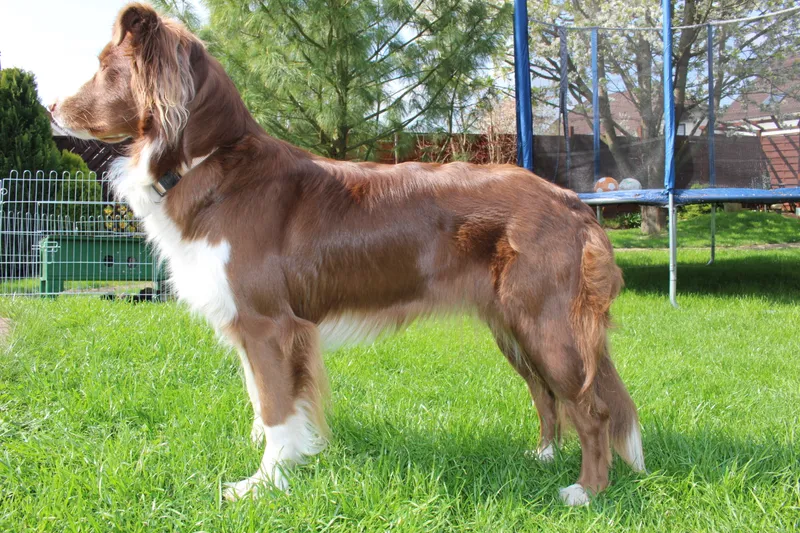
| Coat | A medium-length, weather-resistant double coat that is straight to slightly wavy, with feathering on the legs and a fuller mane and frill. Colours include blue merle, red merle, black and red, often with white and copper points. They shed steadily and heavily during seasonal moults, so brush two or three times a week (daily during a moult) to prevent matting and manage loose hair. |
| Temperament | Intelligent, energetic, loyal |
| Good with | Best suited to active, experienced owners and families who can provide a job, plenty of exercise and ongoing mental stimulation. They are devoted and good with children they are raised with, though their strong herding instinct may lead them to nip at heels and gather running youngsters. They need space and ideally a garden rather than a small flat, get on well with other pets when socialised, and excel at agility, herding and obedience. |
Is a Australian Shepherd a good dog for you?
A Australian Shepherd is a good dog when your home matches best suited to active, experienced owners and families who can provide a job, plenty of exercise and ongoing mental stimulation. they are devoted and good with children they are raised with, though their strong herding instinct may lead them to nip at heels and gather running youngsters. they need space and ideally a garden rather than a small flat, get on well with other pets when socialised, and excel at agility, herding and obedience.. It is a intelligent, energetic, loyal medium (18–29 kg) breed from United States.
Despite the name, this agile herding breed was refined in the American West for ranch work. That one-line pitch is not a care plan. Factor grooming (A medium-length, weather-resistant double coat that is straight to slightly wavy, with feathering on the legs and a fuller mane and frill. Colours include blue merle, red merle, black and red, often with white and copper points. They shed steadily and heavily during seasonal moults, so brush two or three times a week (daily during a moult) to prevent matting and manage loose hair.), typical adult size (18-29 kg (40-65 lb); females typically 18-25 kg, males 25-29 kg), and the health issues listed below before you pay a deposit.
Meet adults of the breed, not only puppies or kittens, and prefer rescue or health-screened homes. A Australian Shepherd that looks right in a photo can still be the wrong animal for a small flat, a full-time office job, or a household that wanted a low-energy companion.
What is a Australian Shepherd?
Despite the name, this agile herding breed was refined in the American West for ranch work. Origin is United States; coat or markings are described as A medium-length, weather-resistant double coat that is straight to slightly wavy, with feathering on the legs and a fuller mane and frill. Colours include blue merle, red merle, black and red, often with white and copper points. They shed steadily and heavily during seasonal moults, so brush two or three times a week (daily during a moult) to prevent matting and manage loose hair..
Kennel and registry labels describe a type. Individual Australian Shepherds still vary, and rescue animals may be mixes.
Where does the Australian Shepherd come from?
Australian Shepherds come from United States. Despite its name, the Australian Shepherd was developed in the western United States rather than Australia.
Its ancestors likely included herding dogs that arrived with Basque shepherds and their flocks, some by way of Australia, which may explain the misleading name. The breed was shaped on ranches of the American West in the 19th and 20th centuries, prized for its versatility in herding sheep and cattle in tough conditions. Its popularity soared after the Second World War alongside the rise of rodeos, Western horse riding and travelling performances, where the dogs' agility and trainability drew crowds.
How much care does a Australian Shepherd need?
Plan 10–14 years of food, vet care, grooming and time. A Australian Shepherd is medium (18–29 kg) (18-29 kg (40-65 lb); females typically 18-25 kg, males 25-29 kg) from United States, with coat care described as a medium-length, weather-resistant double coat that is straight to slightly wavy, with feathering on the legs and a fuller mane and frill. colours include blue merle, red merle, black and red, often with white and copper points. they shed steadily and heavily during seasonal moults, so brush two or three times a week (daily during a moult) to prevent matting and manage loose hair..
This temperament does not thrive on a 20-minute walk and eight hours alone.
Grooming follows the coat, not a generic clip: A medium-length, weather-resistant double coat that is straight to slightly wavy, with feathering on the legs and a fuller mane and frill. Colours include blue merle, red merle, black and red, often with white and copper points. They shed steadily and heavily during seasonal moults, so brush two or three times a week (daily during a moult) to prevent matting and manage loose hair.. Keep the animal lean; extra weight is a joint and heart tax, especially in a medium dog.
Budget for unexpected vet bills. The health section below is why “cheap to buy” is not the same as cheap to keep.
What surprises people about the Australian Shepherd?
A few details about the breed, alongside the practical care information in this guide.
- Despite the name, the breed was developed in the United States and has no true origin in Australia.
- Many Australian Shepherds are born with naturally bobbed tails, a trait that occurs spontaneously in the breed.
- They are famous for the 'Aussie smile', curling their lips into what looks like a grin when greeting people.
- Rodeo and Wild West performers helped make the breed famous through trick-dog acts in the mid-20th century.
What health issues should you know about in a Australian Shepherd?
Health concerns to discuss with your vet, including changes to watch for and everyday care. This is general guidance, not veterinary advice — always speak to your vet.
Hip dysplasia
An inherited malformation of the hip joint that can cause stiffness, lameness, or arthritis as the dog ages.
Care: Keep dogs lean, choose health-screened parents, and seek vet advice for pain management or surgery if needed.
Eye conditions
Breed-related eye problems may include cataracts, progressive retinal atrophy, or cherry eye.
Care: Regular eye checks and prompt vet attention for redness or cloudiness help preserve vision.
Epilepsy
Recurrent seizures without other identifiable cause.
Care: Never withhold medication; keep a seizure diary and work with your vet on management.
Who should skip a Australian Shepherd?
Skip a Australian Shepherd if you are owners who wanted a low-exercise companion. This United States dog is medium (18–29 kg) and intelligent, energetic, loyal — the mismatch is usually lifestyle, not a missing accessory.
This page is allowed to say no. Skip if you are owners who wanted a low-exercise companion.
A different dog breed on this site may fit. Wanting “a Australian Shepherd” after a film or a colour photo is not a reason to ignore the skip list.
What are the hidden catches with a Australian Shepherd?
The hidden cost of a Australian Shepherd is usually not the purchase price. It is years of care, the health list on this page, and the mismatch between a intelligent, energetic, loyal animal and a busy home.
The impulse-buy catch
A Australian Shepherd from United States is often sold on looks. Coat, colour and size are not a temperament test. Meet the adult animal, ask about health screening, and walk away from pressure sales.
The herding catch
Herding types may chase children, bikes and other pets. That is the job they were bred for, not spite. They need a real outlet, not a scolding.
The hip dysplasia catch
An inherited malformation of the hip joint that can cause stiffness, lameness, or arthritis as the dog ages. Keep dogs lean, choose health-screened parents, and seek vet advice for pain management or surgery if needed.
The eye conditions catch
Breed-related eye problems may include cataracts, progressive retinal atrophy, or cherry eye. Regular eye checks and prompt vet attention for redness or cloudiness help preserve vision.
How does a Australian Shepherd compare with Yorkshire Terrier and Cavalier King Charles Spaniel?
A Australian Shepherd is not interchangeable with Yorkshire Terrier and Cavalier King Charles Spaniel. Compare origin, size, lifespan and temperament before you choose — those four lines prevent most regret.
| Dog fact | Australian Shepherd | Yorkshire Terrier | Cavalier King Charles Spaniel |
|---|---|---|---|
| Origin | United States | England | England |
| Size | Medium (18–29 kg) | Toy (up to 3 kg) | Small (6–8 kg) |
| Lifespan | 10–14 years | 12–16 years | 10–14 years |
| Temperament | Intelligent, energetic, loyal | Bold, affectionate, lively | Gentle, affectionate, friendly |
What is the verdict on the Australian Shepherd?
Choose a Australian Shepherd only if the care, skip-if and health sections still look like your life after a week of thinking. Otherwise pick a different dog or wait. Rescue is usually the better first door than a waiting-list puppy or kitten.
If the match is real, budget for 10–14 years of vet care and do not skip health screening. If it is not, walking away is the kind choice — for you and for the animal.
Every dog deserves a chance
Whatever breed steals your heart, millions of dogs around the world have no home at all. A symbolic adoption or a gift to WARN funds humane care for street and community dogs — vaccination, neutering and emergency treatment.