Wildlife Guide · All oceans & some rivers (separate WARN river-dolphin guides)
Dolphin
Family Delphinidae — oceanic dolphins including Tursiops truncatus (common bottlenose) and Delphinus delphis (common dolphin)
Oceanic dolphins of the open sea — social, echolocating and not river specialists.
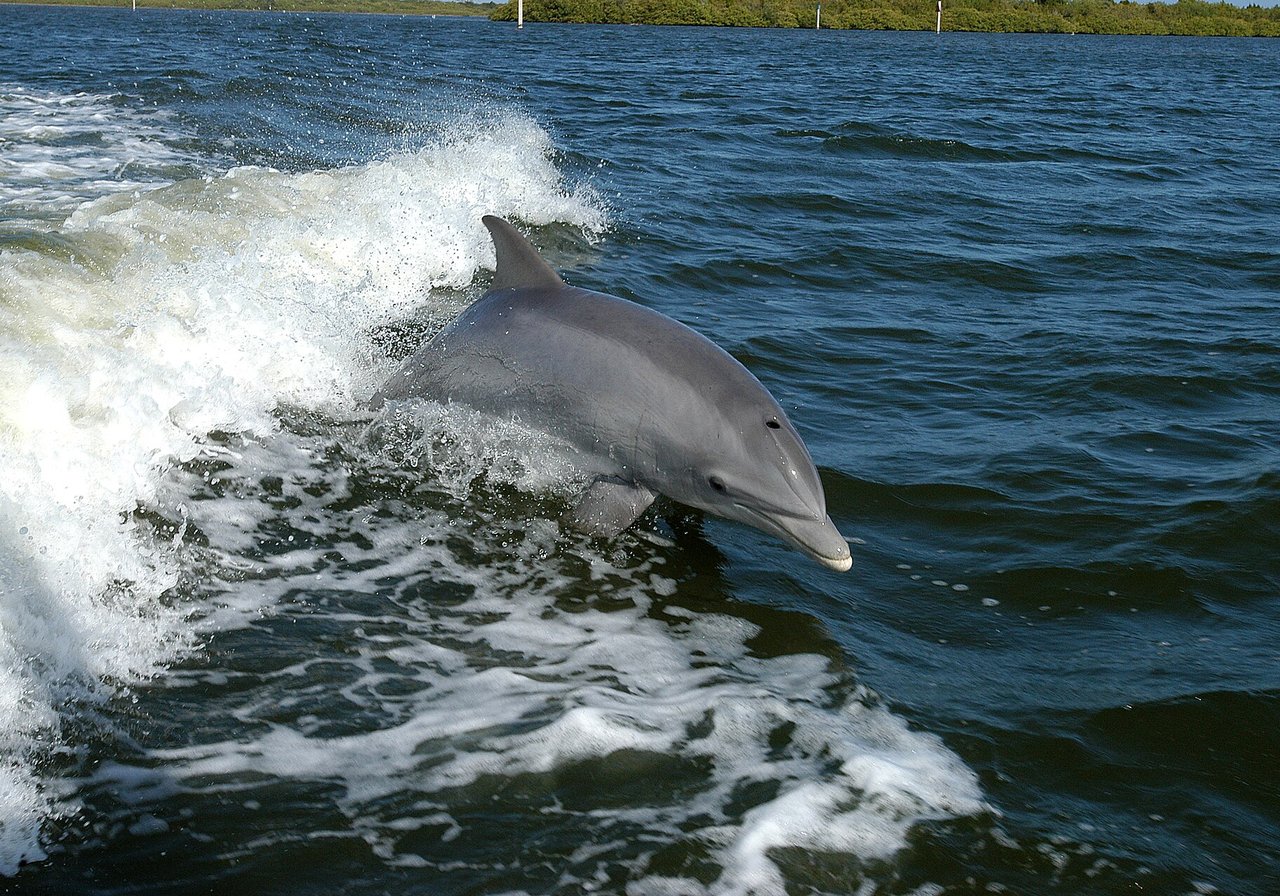
Source: Wikimedia Commons
In brief
Oceanic dolphins (family Delphinidae) include the common bottlenose and common dolphin — social toothed whales of seas worldwide, distinct from river dolphins; IUCN status ranges from Least Concern to Critically Endangered by species.
Also in Animals A to Z · Animals that start with D
By WARN Research & Conservation TeamLast updated
Dolphins, in everyday use, usually mean oceanic dolphins of the family Delphinidae — toothed whales distinct from river dolphins covered in separate WARN guides. The common bottlenose dolphin Tursiops truncatus and short-beaked common dolphin Delphinus delphis are among the most widespread and recognisable species. Dolphins use echolocation, live in fission-fusion societies and appear in coastal and pelagic waters worldwide. Status varies: many species are Least Concern, while Maui's dolphin and others are Critically Endangered.
36+
Oceanic dolphin species (Delphinidae)
LC
Common bottlenose — Least Concern
CR
Maui's dolphin — fewer than 50 individuals
CITES II
Most species regulated in international trade
~150 kHz
Upper frequency of dolphin echolocation clicks
Half
Share of the brain asleep at a time — unihemispheric sleep
Signature
Each dolphin has a unique whistle it answers to, like a name
~300,000
Cetaceans killed in fishing gear each year (global estimate)
Figures sourced from IUCN Red List — common bottlenose dolphin, IUCN Red List — short-beaked common dolphin, Smithsonian Ocean — dolphin and other references on this page.
Dolphin: Quick Facts
| Focus | Oceanic dolphins (not river dolphins) |
|---|---|
| Common species | Bottlenose and common dolphin |
| Echolocation | Yes — click-based sonar up to ~150 kHz |
| Social structure | Fission-fusion groups |
| Signature whistle | Individually unique; functions like a name |
| Sleep | Unihemispheric — one brain hemisphere at a time |
| Largest species | Orca, up to ~9 m — a dolphin, not a whale |
| Smallest species | Hector's dolphin, around 1.4 m |
| Lifespan | 40–60 years in bottlenose dolphins |
| Main threat | Fisheries bycatch |
Scientific Classification
| Kingdom | Animalia |
|---|---|
| Phylum | Chordata |
| Class | Mammalia |
| Order | Artiodactyla |
| Family | Delphinidae (oceanic dolphins) |
| Example species | Tursiops truncatus, Delphinus delphis |
Conservation Status
- IUCN Status
- Varies by species. Common bottlenose Least Concern; common dolphin Least Concern globally but declining regionally; Maui's dolphin Critically Endangered.
- Population
- Bottlenose: hundreds of thousands globally; Maui's dolphin fewer than 50 adults
- Trend
- Decreasing for several regional stocks; stable for widespread species
- Assessed
- Varies by species
- CITES
- Appendix II for most listed species
River dolphins are assessed separately — see WARN river-dolphin guides.
Did you know?
A dolphin sleeps with one half of its brain at a time, keeping one eye open — it never fully loses consciousness, because it has to keep choosing to breathe.
Key Facts: Dolphin
- This guide covers oceanic dolphins — not river dolphins (see separate WARN river-dolphin pages).
- Bottlenose dolphins are not one global species; coastal and offshore forms differ genetically.
- Dolphins sleep with half the brain awake, maintaining breathing and vigilance.
- Bycatch in gillnets and tuna purse seines kills hundreds of thousands annually worldwide.
- Captive display remains controversial; wild dolphins need kilometres of ocean daily.
- Orcas are the largest dolphins — see the WARN orca guide for that species.
Oceanic dolphins — not river dolphins
Delphinidae includes bottlenose, common, striped, spinner and Risso's dolphins among others. River dolphins — Amazon pink, Ganges, Indus and others — belong to separate families with distinct anatomy and are covered in dedicated WARN wildlife guides.
The common bottlenose dolphin Tursiops truncatus inhabits coastal and offshore waters globally, often associating with estuaries but not living exclusively in rivers. The short-beaked common dolphin Delphinus delphis forms large pelagic schools feeding on small fish.
Confusing oceanic dolphins with river dolphins misdirects conservation — river species face sharper extinction risk from dams and entanglement in freshwater fisheries.
Echolocation, society and intelligence
Dolphins produce click trains reflected off objects, building acoustic pictures of prey and terrain. Whistles may function as signature calls identifying individuals across years.
Social groups change size dynamically — fission-fusion — with alliances among male bottlenoses lasting decades. Cooperative foraging includes mud-ring feeding and driving fish toward shore.
Cognitive studies show mirror self-recognition, tool use in some populations and cultural transmission of foraging techniques. Intelligence does not justify captivity; it increases welfare requirements wild conditions best meet.
Fisheries, captivity and conservation
Global bycatch in gillnets, trawls and tuna fisheries remains the leading threat to many oceanic dolphins. IUCN assessments note declining common dolphin numbers in the Mediterranean and eastern tropical Pacific.
Maui's dolphin — a New Zealand subspecies — is Critically Endangered with fewer than 50 adults, threatened by gillnets in shallow habitat. Vaquita is a porpoise, not a dolphin, but illustrates gillnet extinction risk in similar fisheries.
Live capture for aquaria continues in some regions despite growing bans on breeding and import. Marine protected areas, pingers on nets and dolphin-safe tuna certification reduce mortality where enforced.
Dolphins and people
Dolphin-watching tourism thrives from Scotland to New Zealand when boats follow approach guidelines — avoiding crowding, not feeding and reducing speed near calves.
Indonesia and Malaysia — WARN partners — host diverse oceanic dolphins in archipelagic waters where fisheries overlap requires careful management.
Readers should distinguish ethical wild observation from swim-with-dolphin programmes that stress animals and risk disease transmission. Oceanic dolphins belong in the sea, not resort lagoons.
What WARN Does
WARN educates readers in Indonesia, Malaysia, Brazil and Colombia about marine mammals and fisheries overlap. This oceanic dolphin hub complements separate river-dolphin guides — free education explaining species differences and habitat needs across partner countries.
If this guide helps you understand wildlife and the pressures it faces, a gift to WARN supports habitat protection and free public education in our partner countries.
Dolphin: Frequently Asked Questions
Is a dolphin a whale?
What is the difference between oceanic and river dolphins?
Are bottlenose dolphins endangered?
How do dolphins sleep?
What do dolphins eat?
How long do dolphins live?
Where do dolphins live?
Are dolphins dangerous?
How big is a dolphin?
Sources & References
Population figures, conservation status and biological facts on this page are drawn from authoritative scientific and intergovernmental sources.
Terms used on this page
Plain-English definitions, from our wildlife and conservation glossary.
Latest Dolphin Stories
Quick, fact-checked reads on the dolphin — amazing facts, key questions and the threats it faces.
Explore more animals
Discover more animals, their habitats and their conservation status in the WARN wildlife-guide library.