Animal Comparison
Shark vs Dolphin
Sharks are cartilaginous fish with gills; dolphins are mammals that breathe air. Tail motion, skin and young-rearing differ.
By WARN Research & Conservation TeamLast updated
In brief — Shark vs Dolphin
Sharks are gill-breathing fish; dolphins are air-breathing mammals that only look shark-like at a glance.
Sharks are cartilaginous fish that extract oxygen with gills and usually swim with side-to-side tail beats. Dolphins are marine mammals that breathe air through a blowhole, nurse live young with milk, and typically drive the tail up and down. Similar torpedo shapes hide unrelated evolutionary paths.
See the difference
Images are shown at different scales. Read each caption for the species, source and context.
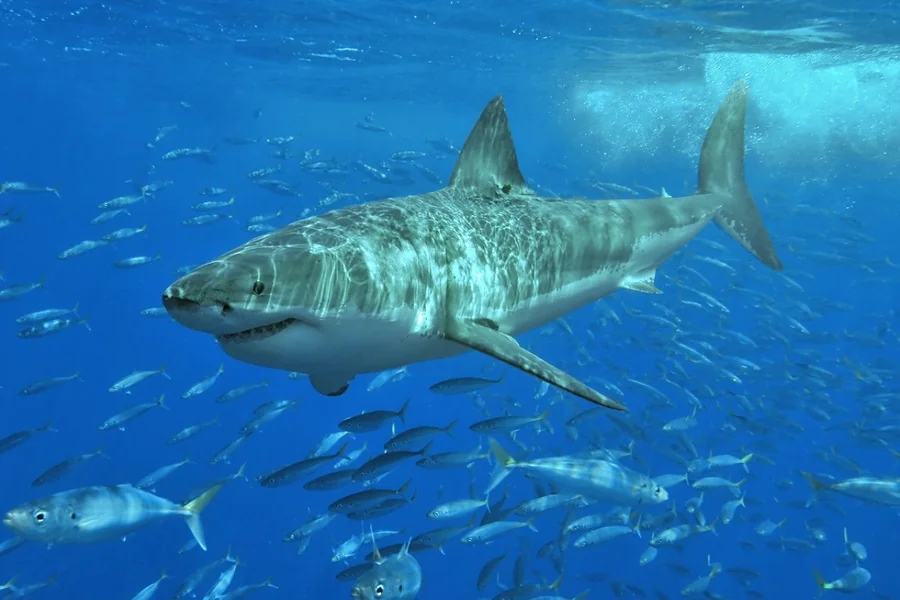
Shark — gills, cartilaginous fish body
AI-generated educational wildlife portrait — World Animal Rescue Network

Dolphin — blowhole, streamlined mammal
AI-generated educational wildlife portrait — World Animal Rescue Network
Shark vs Dolphin: At a Glance
| Feature | Shark | Dolphin |
|---|---|---|
| Major group | Cartilaginous fish | Marine mammal (toothed whale) |
| Breathing | Gills | Lungs; blowhole |
| Tail motion | Usually side to side | Up and down flukes |
| Skin | Denticle-covered, rough | Smooth, rubbery skin |
| Body heat | Mostly ectothermic; some regional endothermy | Endothermic |
| Young | Eggs or live young; no milk | Live young nursed on milk |
| Skeleton | Cartilage | Bone |
| Sound | No dolphin-style echolocation clicks | Echolocation common |
| Dorsal fin | Present in many species | Present in many species |
| Intelligence stereotype | Sensory specialists; varied behaviour | Highly social; complex cognition |
Size and physical differences
Both span huge ranges: many reef sharks are 1–3 m, while whale sharks exceed 10 m; common bottlenose dolphins are roughly 2–4 m, and orcas are larger dolphins.
Shark versus dolphin is a classic lookalike problem. Convergent evolution packed both into streamlined bodies with dorsal fins and flippers, so a brief surface glimpse can fool a new boat passenger. Under the skin the animals are not close relatives. Sharks are fish with cartilage skeletons and gill slits. Dolphins are odontocete cetaceans — toothed whales — with lungs, warm blood and social systems built around acoustic communication.
The practical marks are simple once you know them. A shark's tail usually sweeps sideways; a dolphin's flukes beat vertically. Sharks lack a blowhole; dolphins surface to breathe. Sharks do not nurse calves; dolphins do. Those facts settle most arguments faster than tooth counts from a blurry photograph.
This comparison sticks to marks you can use without laboratory gear: size, shape, behaviour and the words people actually type into a search box. Scientific names are given where they prevent a regional mix-up. Where published measurements disagree, this page gives the range rather than a single tidy figure that implies more certainty than the sources support.
Fish versus mammal is the whole point
A shark is a fish. A dolphin is a mammal. That single sentence answers the comparison more cleanly than fin shape debates. Gills versus lungs decide where each animal can rest, how long it can stay submerged in ordinary activity, and what birth looks like. Dolphin calves nurse and must be helped to the surface to breathe. Shark young do not drink milk. Warm-blooded metabolism in dolphins supports sustained high activity and large brains relative to body size. Most sharks are ectothermic, though some large active species warm parts of the body. When a child asks which is which, start with breathing, not with which animal looks friendlier on television. Field observers should combine silhouette, behaviour and habitat before naming what they see. Where published measurements disagree, this page gives the range rather than a single tidy figure.
Tail beat and surfacing behaviour
Watch the rear end and the surface interval. Dolphin flukes are horizontal and push water by moving up and down, a mammal inheritance from terrestrial ancestors that flexed the spine vertically. Shark caudal fins are typically vertical and sweep side to side like other fishes. Dolphins break the surface to exhale and inhale through a blowhole; the spray and roll are familiar boat signs. Sharks do not breathe that way. A fin alone can mislead because both groups may show a triangular dorsal fin, which is why witnesses to "shark" sightings are often asked about fluke shape and breathing behaviour. Field observers should combine silhouette, behaviour and habitat before naming what they see. Where published measurements disagree, this page gives the range rather than a single tidy figure.
Skin, teeth and sensory gear
Shark skin is covered in dermal denticles that feel rough if stroked toward the head. Dolphin skin is smooth and sensitive. Shark teeth are continually replaced cutting tools set in a cartilaginous jaw; dolphin teeth are usually cone-shaped and used to grip rather than chew. Dolphins navigate and hunt with echolocation clicks; sharks integrate smell, vibration through the lateral line, and in many species electrical sense via ampullae of Lorenzini. Those systems solve overlapping hunting problems with different hardware. Touching either wild animal is unsafe and illegal in many places; the skin contrast is a field fact for stranded or captive educational contexts, not a beach activity. Field observers should combine silhouette, behaviour and habitat before naming what they see. Where published measurements disagree, this page gives the range rather than a single tidy figure.
Danger and reputation
Sharks carry a cultural reputation for attacking people that far exceeds the statistical risk for most swimmers, while still including species that can inflict severe bites. Dolphins are often cast as gentle, yet they are predators that can injure people and other animals, and some populations show rough social behaviour. Neither reputation should replace species-level facts. Most shark species are not involved in unprovoked bites on humans. Most dolphin encounters are peaceful. The honest comparison separates evolutionary identity from media personality: fish versus mammal first, risk second, and species always. Field observers should combine silhouette, behaviour and habitat before naming what they see. Where published measurements disagree, this page gives the range rather than a single tidy figure. Treat a single trait as supporting evidence rather than a complete identification.
Why the comparison matters
Mislabeling a dolphin as a shark, or the reverse, scrambles stranding response, fishery stories and public fear. A mammal needing air has different rescue needs from a fish. Conservation threats also diverge: bycatch and noise affect dolphins in particular ways, while shark declines are often driven by finning and overfishing of slow-breeding species. Accurate names keep advice attached to the animal present. WARN publishes these comparisons so high-intent questions get a sourced answer instead of an unsourced listicle. Field observers should combine silhouette, behaviour and habitat before naming what they see. Where published measurements disagree, this page gives the range rather than a single tidy figure. Treat a single trait as supporting evidence rather than a complete identification. Local field guides remain the final check when similar species share a landscape.
Did you know?
An orca is a dolphin — the largest one — which is why shark versus dolphin arguments that treat orcas as a third category usually need a second sentence.
Shark vs Dolphin: FAQs
Is a shark a mammal?
How can I tell a shark from a dolphin at sea?
Are dolphins whales?
Which is bigger?
Do sharks and dolphins fight?
Can dolphins breathe underwater?
Help protect animals
Learning about animals can help more people understand their needs. WARN raises funds for eligible animal-welfare organisations. Read the relevant appeal’s purpose, recipient status and fund terms, or share this free guide to raise awareness.