Wildlife Guide · Global oceans
Shark
Selachimorpha (superorder); e.g. great white shark, Carcharodon carcharias (Linnaeus, 1758)
More than 500 species of cartilaginous fish — not one animal, and not one Red List badge.
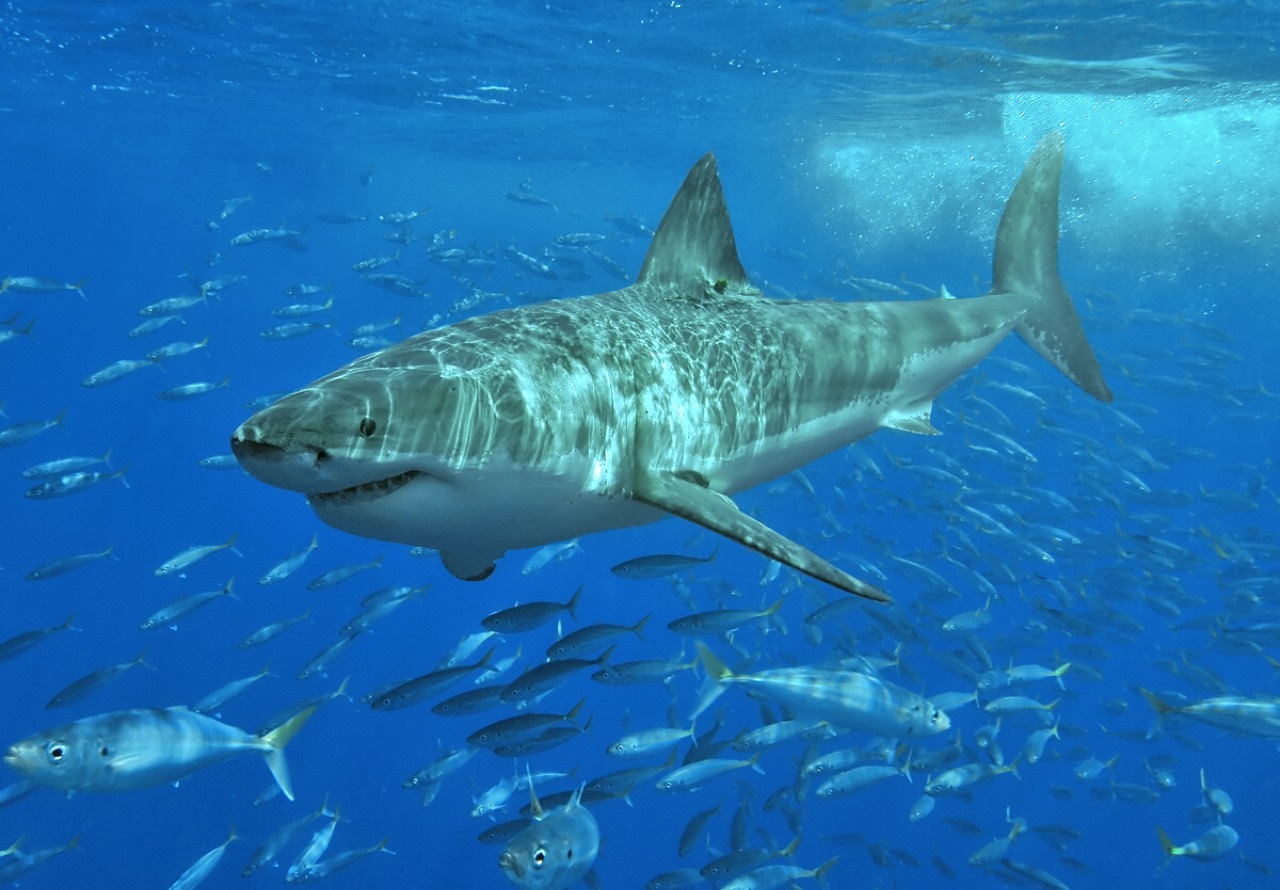
Source: Wikimedia Commons via Wikipedia “Great white shark”
In brief
Sharks are more than 500 species of cartilaginous fish, not one species. The IUCN does not give sharks a single extinction badge. About one-third of sharks, rays and chimaeras are threatened, mainly by overfishing. The great white shark is listed Vulnerable.
Also in Animals A to Z · Animals that start with S
By WARN Research & Conservation TeamChecked against IUCN Shark Specialist Group, IUCN great white assessment and Smithsonian OceanLast updated
Sharks are cartilaginous fishes (superorder Selachimorpha) with more than 500 described species in every ocean. Status is assessed species by species: some are Least Concern, while roughly a third of sharks, rays and chimaeras are threatened, mainly from overfishing, fins and bycatch. The great white is Vulnerable. This page is the group hub. Whale sharks have a dedicated guide at whale shark. WARN does not fund shark-specific fieldwork. Closest marine appeal: sea turtle appeal. Habitat grants: habitat protection appeal.
Looking for something specific?
These notes clarify the guide’s scope, common mix-ups and related information.
- A single IUCN category for every shark. Status is species by species.
- A named aquarium shark with photo updates. WARN does not offer that.
- Shark-fin bans as if WARN ran a fisheries programme. We do not.
- Treating a bite scare as the main conservation story. Humans kill far more sharks than sharks kill people.
500+
Described shark species worldwide
~1/3
Of sharks, rays and chimaeras threatened with extinction (IUCN)
~70+ yrs
Estimated lifespan of a great white shark
~450M yrs
Sharks have existed — predating the dinosaurs
Figures sourced from IUCN Red List — White Shark (Carcharodon carcharias), IUCN — A third of sharks, rays and chimaeras are threatened with extinction, IUCN SSC Shark Specialist Group — The Red List and sharks and other references on this page.
Shark: Quick Facts
| Lifespan | Varies by species; great white ~70+ years, Greenland shark potentially 250+ years |
|---|---|
| Weight | Great white up to ~2,500 kg; whale shark much heavier |
| Size | From ~20 cm (dwarf lanternshark) to over 12 m (whale shark); great white up to ~6 m |
| Diet | Mostly carnivorous — fish, marine mammals, squid and turtles; whale and basking sharks filter-feed on plankton |
| Gestation | Varies; great white around 12 months |
| Young | Typically few per litter — great whites bear about 2 to 10 pups |
| Baby name | Pup |
| Group name | A shiver (or school) of sharks |
| CITES | Several species, including the great white, are listed on CITES Appendix II |
Scientific Classification
| Kingdom | Animalia |
|---|---|
| Phylum | Chordata |
| Class | Chondrichthyes |
| Superorder | Selachimorpha |
| Example order | Lamniformes (mackerel sharks) |
| Example family | Lamnidae |
| Example species | Carcharodon carcharias (great white shark) |
Conservation Status
- IUCN Status
- No single IUCN category. Great white Vulnerable; whale shark and basking shark Endangered; others Least Concern to Critically Endangered
- Population
- No reliable global total; trends are assessed species by species
- Trend
- Decreasing for the great white and for many sharks overall
- Assessed
- 2018 (great white); group-wide threatened share from IUCN Shark Specialist Group syntheses
- CITES
- Appendix II (great white shark and several other species)
The IUCN Shark Specialist Group estimates that roughly a third of all sharks, rays and chimaeras are threatened with extinction, mainly due to overfishing.
Did you know?
Shark skin is covered in tiny tooth-like denticles that reduce drag in the water — the same principle later copied in some swimsuit and aircraft-surface research.
Key Facts: Shark
- Sharks are not one species. More than 500 described species sit in superorder Selachimorpha.
- The IUCN does not assess 'the shark' as a taxon. About one-third of sharks, rays and chimaeras are threatened.
- The great white shark (Carcharodon carcharias) is Vulnerable globally and listed on CITES Appendix II.
- Overfishing — targeted fins and bycatch — is the dominant threat. Most sharks mature late and produce few young.
- Sharks have cartilage skeletons, gill slits and dermal denticles. Bony fishes have bone, an operculum and usually a swim bladder.
- WARN does not fund shark-specific fieldwork. This hub is education; marine appeals sit on sea-turtle and habitat URLs.
How to use this shark species guide
Match the query to the right WARN page. This URL is the shark group hub: what a shark is, how many species, threat status and the bony-fish comparison. Named species, turtle nesting and UK aquariums are different jobs. Use the table and the links below rather than mixing those intents.
- 1
Confirm the goal
Stay here for sharks as a group, diet, lifespan range and why so many are threatened. A named species such as the whale shark is whale shark.
- 2
Read status species by species
Use the on-page table for well-known sharks. Great white is Vulnerable. Whale shark and basking shark are Endangered. Do not copy one badge onto the whole group.
- 3
Treat danger as a frequency question
Unprovoked bites are rare. Only a handful of species are involved in serious incidents. Overfishing is the population story, not a horror film.
- 4
Help through honest programmes
WARN does not fund shark tagging or high-seas patrols. Marine habitat and turtle work sit at habitat protection appeal and sea turtle appeal.
What is a shark?
A shark is a cartilaginous fish in superorder Selachimorpha. It is not one species. More than 500 described species live in every ocean, from a dwarf lanternshark the size of a pencil case to a whale shark longer than a bus. The IUCN does not give "shark" a single Red List category.
Skeletons are cartilage, not bone. Most species have five to seven exposed gill slits, tooth-like skin denticles, and a large oil-rich liver for buoyancy. Many must keep water moving over the gills; some can rest on the seabed and pump water.
This page is the group encyclopaedia. The whale shark is at whale shark. Sea turtles, the closest WARN marine appeal, are at sea turtle appeal.
WARN does not run shark fisheries programmes and does not claim high-seas patrols.
Are all sharks the same species?
No. "Shark" is a group name, like "bird" or "whale". Great whites, whale sharks, makos, wobbegongs and lanternsharks are different species with different diets, ranges and IUCN listings. They do not interbreed as one livestock breed would, and they do not share one Red List badge.
Orders include Lamniformes (mackerel sharks such as the great white and mako), Orectolobiformes (carpet sharks including the whale shark), Carcharhiniformes (ground sharks) and others. New species are still described as surveys reach deep water.
Treat a news headline about "endangered sharks" as a prompt to ask which species. Copying the great white's Vulnerable badge onto a nurse shark, or the whale shark's Endangered badge onto every reef shark, is how misinformation starts.
Species pages and this hub should be used together. This URL will not pretend 500 animals share one conservation plan.
How many shark species are there?
Scientists have formally described more than 500 shark species, and the count still moves as taxonomy splits or merges names. They range from filter-feeders longer than 12 metres to species smaller than a human hand. There is no single shark size, diet or lifespan.
The whale shark is the largest fish in the sea. The great white is the archetypal large predator. Angel sharks and wobbegongs lie on the seabed. Lanternsharks glow in the deep. That spread is why no single size, diet or lifespan fits the group.
A baby shark is called a pup. A group is sometimes called a shiver. Gestation in great whites is around a year, with small litters. Many species produce only a handful of young, which is why overfishing bites so hard.
See the comparison table for well-known species. Do not use a great-white fact as a stand-in for every shark.
Are sharks endangered?
Some are, some are not. The IUCN assesses sharks species by species. Roughly a third of sharks, rays and chimaeras are threatened with extinction — a 2021-era group finding still cited by the IUCN Shark Specialist Group. Least Concern listings exist alongside Critically Endangered ones.
The great white is Vulnerable with a decreasing trend. The whale shark and basking shark are Endangered. Shortfin mako is Endangered. Status is not a popularity contest.
Rays and chimaeras are included in that "one-third threatened" figure. They are cartilaginous relatives, not sharks, but they share the same fisheries pressure.
This hub will not print a fake league table of which charity "saves sharks" best. Fisheries policy and bycatch rules sit with governments, not with a UK CIC blog post.
Why are sharks declining?
The main driver is overfishing. Some sharks are targeted for fins used in soup. Many more die as bycatch on longlines and in nets set for tuna and swordfish. Habitat loss, coastal development and climate-driven prey shifts add pressure. Most sharks cannot replace that offtake quickly.
Sharks are poorly built for that offtake. Most mature late, reproduce slowly and have small litters. A depleted stock can take decades to recover, if it recovers at all.
Finning — cutting fins and discarding the body — is widely condemned and banned in many jurisdictions, but demand and illegal trade persist. CITES Appendix II listings for species such as the great white regulate international trade; they do not create a WARN patrol boat.
If you searched "why are sharks dying" because of a documentary, the programme answer is fisheries management, not a one-off beach clean. WARN's honest marine door is sea turtle appeal and habitat protection appeal.
How long do sharks live?
Lifespan varies wildly by species. Great whites are estimated to live more than 70 years. Greenland sharks may live more than 200 years. Smaller coastal species often live far shorter lives. There is no single "shark lifespan" you can paste onto the whole group.
Slow growth is part of the conservation problem. A long-lived shark that produces few pups cannot replace a fishery kill the way a sardine stock can.
Pups are born after a gestation that also varies — around 12 months in great whites, with typically two to ten pups. Many species are ovoviviparous.
Lifespan is a biology fact. It is not an IUCN generation length you can paste onto the whole superorder.
What do sharks eat?
Most sharks are carnivores: fish, squid, marine mammals, turtles or seabed animals depending on species. Whale sharks and basking sharks filter-feed on plankton. Diet is not a personality trait; it is ecology. Filter-feeders are the exception, not the rule, for the group.
The great white hunts seals and large fish. Tiger sharks take a wide mix, including turtles. Bottom sharks ambush. Filter-feeders swim with mouths open.
People are not typical prey. Most bites are investigatory or cases of mistaken identity in murky water, and they are rare relative to how many humans enter the sea.
Do not post "shark food" from Britain to a partner. WARN has no shark feeding programme. Money at habitat protection appeal supports terrestrial habitat grants, not a named bait ball.
Are sharks dangerous to people?
Sharks can bite, and a handful of species have been involved in serious unprovoked incidents. They are not mindless man-eaters. The statistical risk to swimmers is very small compared with drowning, driving or lightning. Humans kill sharks in the millions through fishing.
The horror-film image has made conservation harder. It hides how slow-reproducing and fishery-vulnerable most species are. Honest risk is local species, time of day, fishing activity and water clarity — not a species-wide death sentence.
If you asked "are sharks dangerous" after a news bite, look up the species and the context. Copying a great-white incident onto a reef shark is how panic spreads.
This page will not rank beaches. It will not pretend WARN runs a bite-response unit.
How is a shark different from a bony fish?
Sharks have cartilage skeletons, exposed gill slits and skin denticles. Bony fishes have ossified skeletons, a gill cover (operculum) and usually a swim bladder. Sharks often rely on a huge oily liver for buoyancy. Both are fishes. They are not the same class.
Class Chondrichthyes includes sharks, rays and chimaeras. Class Osteichthyes includes tuna, cod and goldfish. A shark is closer to a ray than to a salmon.
The comparison table on this page is the at-a-glance split. Rays share cartilage and similar fisheries threats; they are not "baby sharks".
A shark is not a dolphin. Marine mammals breathe air. Mixing those searches is how answer engines invent hybrid animals.
What is the conservation status of the great white shark?
The great white shark (Carcharodon carcharias) is listed Vulnerable on the IUCN Red List, with a decreasing global trend. It is on CITES Appendix II, which regulates international trade rather than banning all fishing everywhere. That listing is for this species, not for every shark.
It is one well-known species, not a badge for the superorder. Whale sharks are Endangered. Some small benthic sharks are Least Concern. Always read the scientific name.
Great whites typically reach about six metres, hunt marine mammals and fish, and bear a small number of live pups. Those life-history traits, plus coastal fishing, explain the listing.
WARN does not run a great-white tagging programme. This hub cites the IUCN assessment so the query gets a sourced answer, not a merch slogan.
Do sharks need to keep swimming?
Some do, some do not. Many pelagic sharks use ram ventilation: they swim with mouths open so water flows over the gills. If they are restrained and cannot ram-ventilate, they can suffocate. Other species, including some that rest on the seabed, can buccal-pump water while still.
The myth that every shark dies if it stops swimming is false. It came from a few open-ocean species being treated as the whole group.
That distinction matters for bycatch: a shark left on a line or in a net may not survive even if it is later discarded.
This is biology, not a fundraising hook. There is no WARN "keep sharks swimming" product.
How can I help sharks?
Support fisheries policy, avoid shark-fin products, and fund organisations that actually run marine programmes. WARN does not fund shark-specific fieldwork.
If you still want to give to WARN, the honest marine-adjacent appeals are sea turtle appeal and habitat protection appeal. Those grants are not a great-white sponsorship. Do not invent a unit cost for "one shark saved".
Read this hub and whale shark before you pay anyone who implies a named wild shark is yours.
If you want a UK aquarium visit, stop here. If you want international habitat grants, use the appeal URLs, not this facts page alone.
Shark vs bony fish at a glance
| Trait | Shark (Selachimorpha) | Bony fish (typical) |
|---|---|---|
| Skeleton | Cartilage | Bone |
| Gills | Usually 5–7 exposed slits | Covered by an operculum |
| Buoyancy | Large oily liver | Swim bladder in most species |
| Skin | Dermal denticles | Cycloid or ctenoid scales |
| IUCN Red List | Species by species — no group badge | Species by species |
| Example | Great white — Vulnerable (IUCN) | Atlantic bluefin tuna — listed separately |
What WARN Does
WARN does not fund shark tagging, fin-trade raids or high-seas patrols. This species hub is education for a Wikipedia-class query. Readers who want a WARN gift can use /appeals/sea-turtles/ or /appeals/habitats/ — those are not shark-fin programmes.
WARN does not fund shark-specific fieldwork. A gift at /appeals/sea-turtles/ or /appeals/habitats/ supports partner marine-adjacent or habitat grants. Not a named-shark invoice.
Shark: Frequently Asked Questions
What is a shark?
Are all sharks the same species?
How many shark species are there?
Are sharks endangered?
Why are sharks declining?
How long do sharks live?
What do sharks eat?
Are sharks dangerous to people?
How is a shark different from a bony fish?
What is the conservation status of the great white shark?
Do sharks need to keep swimming?
How can I help sharks?
Sources & References
Population figures, conservation status and biological facts on this page are drawn from authoritative scientific and intergovernmental sources.
- IUCN Red List — White Shark (Carcharodon carcharias)
- IUCN — A third of sharks, rays and chimaeras are threatened with extinction
- IUCN SSC Shark Specialist Group — The Red List and sharks
- IUCN Red List — categories and criteria (group names are not a taxon listing)
- GOV.UK Gift Aid — available only on gifts to UK registered charities
- CITES — appendices
- Smithsonian Ocean — Sharks
Terms used on this page
Plain-English definitions, from our wildlife and conservation glossary.
Explore more animals
Discover more animals, their habitats and their conservation status in the WARN wildlife-guide library.