Duck Breed · United States
Cayuga
Iridescent green-black plumage and grey egg shells — an American heritage breed.
By WARN Research & Conservation TeamLast updated
In brief
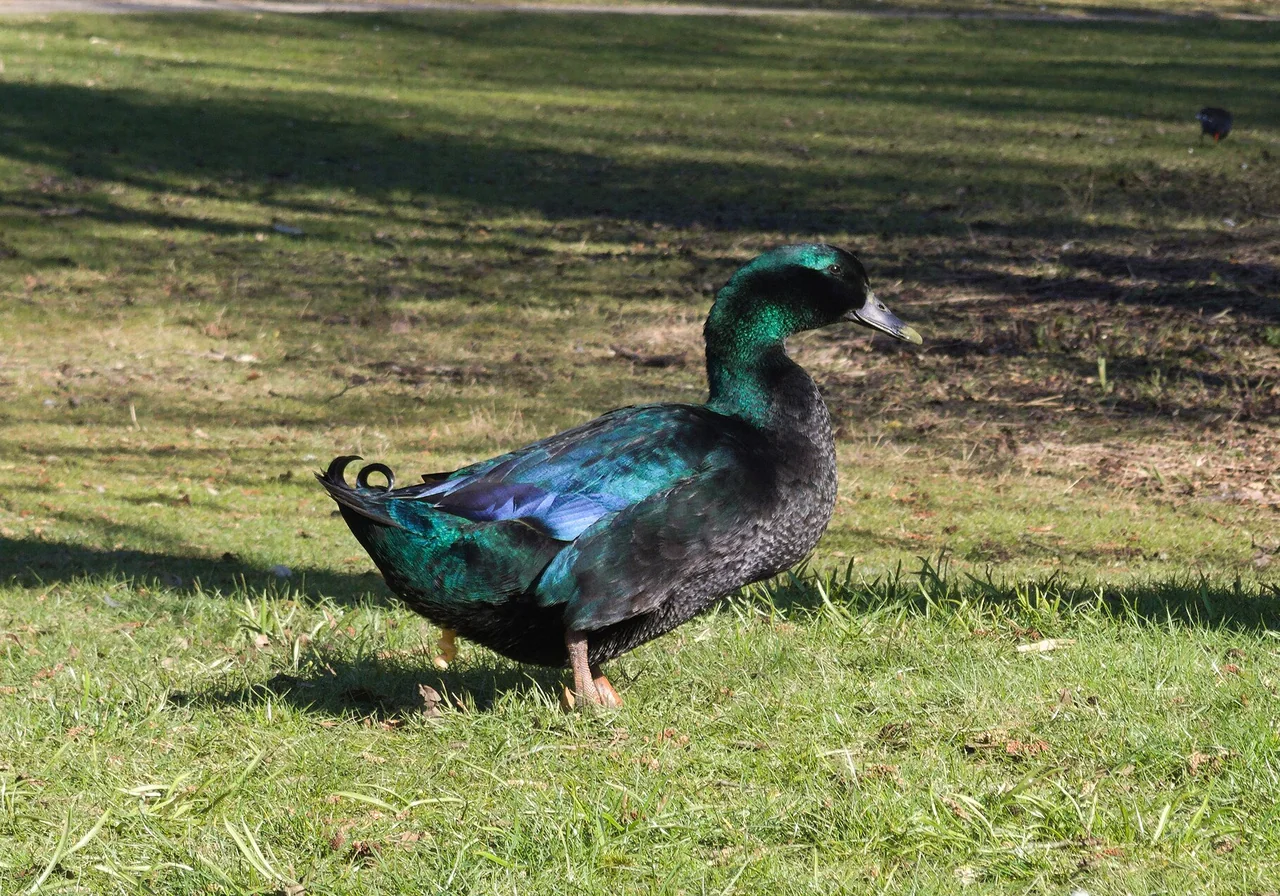
The Cayuga is an American heritage duck with iridescent green-black plumage and grey egg shells. Its defining trait is cold-hardy calm temperament combined with striking beetle-green sheen on the feathers.
What are the key facts about a Cayuga?
The Cayuga is a duck breed from United States: medium (3–3.6 kg), hardy, calm, cold-tolerant. Iridescent green-black plumage and grey egg shells — an American heritage breed.
| Origin | United States |
|---|---|
| Size | Medium (3–3.6 kg) |
| Typical weight | 3–3.6 kg (6.5–8 lb); medium build |
| Lifespan | 8–15 years |
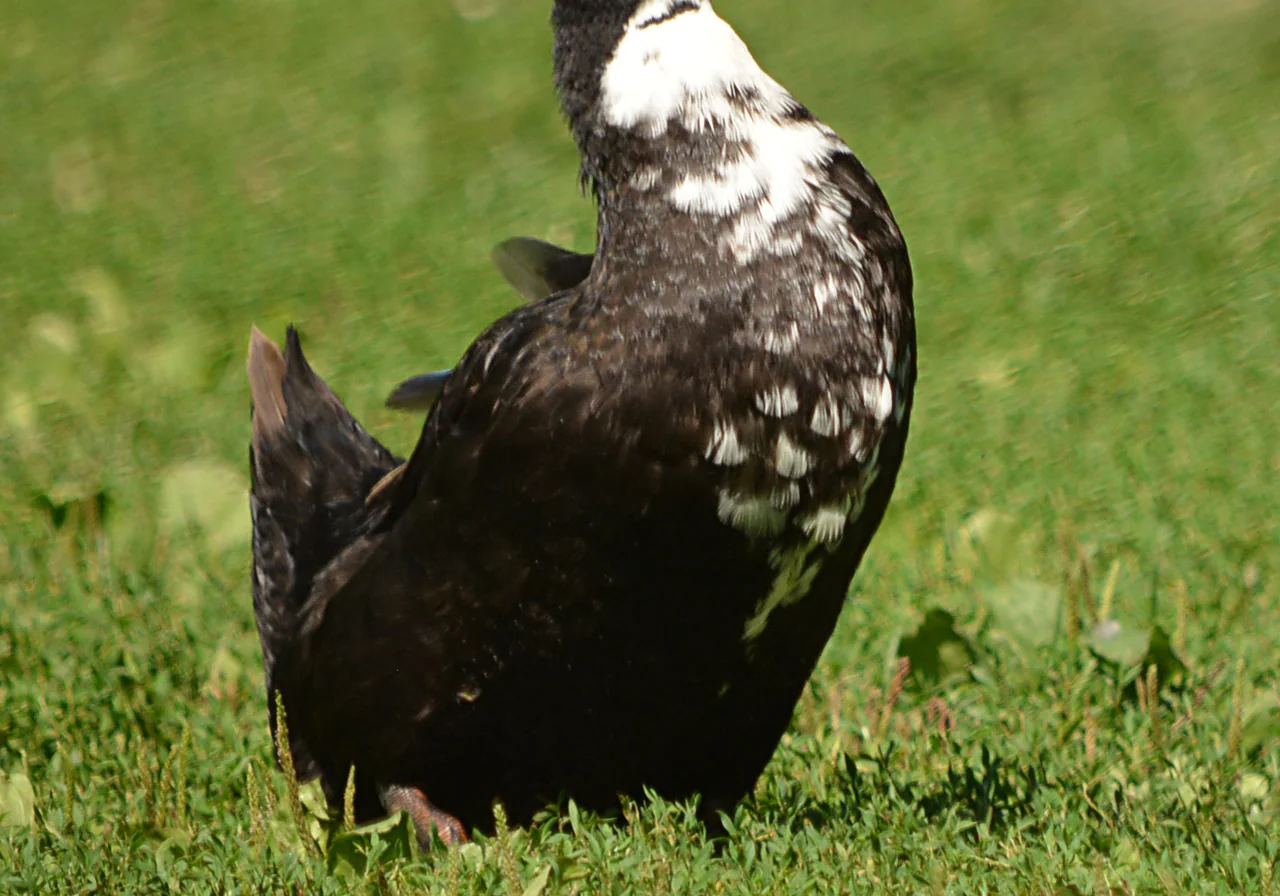
| Plumage | Glossy black feathers that show green and purple iridescence in sunlight, gradually developing white speckling in older ducks. Oil gland preening keeps waterproofing intact. Dark bills and shanks complement the overall appearance. |
| Temperament | Hardy, calm, cold-tolerant |
| Best suited to | Suits backyard keepers wanting a hardy, attractive dual-purpose duck with moderate egg output. Cayugas tolerate cold climates and calm handling. Provide predator-proof housing, swimming water and flock companions for best welfare. |
Should you keep a Cayuga?
Keep a Cayuga only if you can meet livestock law, land, feed and veterinary care — not because the duck looks friendly online. This United States type is medium (3–3.6 kg) and hardy, calm, cold-tolerant.
A Cayuga is husbandry, not a house pet. Check local zoning, neighbour rules, and whether you can provide species-appropriate shelter, forage and handling. Iridescent green-black plumage and grey egg shells — an American heritage breed.
Impulse “micro” livestock and Easter-gift birds are how ducks end up dumped. If you cannot commit for 8–15 years, do not start. Rescue and rehoming exist; buying a cheap animal you cannot keep is the problem this page is trying to prevent.
What is a Cayuga?
Iridescent green-black plumage and grey egg shells — an American heritage breed. Origin is United States; coat or markings are described as Glossy black feathers that show green and purple iridescence in sunlight, gradually developing white speckling in older ducks. Oil gland preening keeps waterproofing intact. Dark bills and shanks complement the overall appearance..
Kennel and registry labels describe a type. Individual Cayugas still vary, and rescue animals may be mixes.
Where does the Cayuga come from?
Cayugas come from United States. Cayuga ducks were named for Cayuga County in New York state, where the variety was refined in the mid-nineteenth century from wild black duck stock.
They became common on small farms before industrial hybrid layers dominated commercial production. The Livestock Conservancy lists Cayugas as a heritage breed worth preserving. Today they remain popular for exhibition and homestead egg production.
That origin still shows. A Cayuga is medium (3–3.6 kg) and hardy, calm, cold-tolerant, typically living 8–15 years. Use the history as context for care and conservation, not as folklore to repeat without sources.
What husbandry does a Cayuga need?
Cayuga husbandry is land, feed, handling and veterinary access — for 8–15 years. This United States type is medium (3–3.6 kg) (3–3.6 kg (6.5–8 lb); medium build) and hardy, calm, cold-tolerant.
Shelter, clean water, species-appropriate forage and a plan for parasites and feet or hooves are the baseline. Coat notes (Glossy black feathers that show green and purple iridescence in sunlight, gradually developing white speckling in older ducks. Oil gland preening keeps waterproofing intact. Dark bills and shanks complement the overall appearance.) tell you about weather and grooming, not whether the animal can live in a garage.
Know what you will do with offspring, and do not keep a single highly social duck alone if the species is a flock or herd animal.
What surprises people about the Cayuga?
A few details about the breed, alongside the practical care information in this guide.
- Cayuga egg shells start black and lighten to grey or white through the laying season.
- First-year plumage shows the strongest green iridescence.
- The breed was once used for meat before heavier Aylesbury types dominated.
- Cayugas were admitted to the American Poultry Association Standard in 1874.
What health issues should you know about in a Cayuga?
Health concerns to discuss with your vet, including changes to watch for and everyday care. This is general guidance, not veterinary advice — always speak to your vet.
Bumblefoot
Hard or muddy ground and jumping from heights contribute to foot pad infections in medium-weight ducks.
Care: Offer ramps instead of jumps and inspect feet during routine handling.
Niacin deficiency
Ducks need more niacin than chickens; deficiency causes bowed legs and difficulty walking.
Care: Feed waterfowl-specific ration or supplement brewer's yeast as your vet advises.
Predator injuries if free-ranged unsafely
Dark plumage does not camouflage domestic ducks from foxes in open paddocks.
Care: Electric fencing or secure runs protect ranging birds during daylight hours.
Who should skip a Cayuga?
Skip a Cayuga if you are anyone without land, zoning permission, and a vet. This United States duck is medium (3–3.6 kg) and hardy, calm, cold-tolerant — the mismatch is usually lifestyle, not a missing accessory.
This page is allowed to say no. Skip if you are anyone without land, zoning permission, and a vet.
A different duck breed on this site may fit. Wanting “a Cayuga” after a film or a colour photo is not a reason to ignore the skip list.
What are the hidden catches with a Cayuga?
The hidden cost of a Cayuga is usually not the purchase price. It is years of care, the health list on this page, and the mismatch between a hardy, calm, cold-tolerant animal and a busy home.
The impulse-buy catch
A Cayuga from United States is often sold on looks. Coat, colour and size are not a temperament test. Meet the adult animal, ask about health screening, and walk away from pressure sales.
The bumblefoot catch
Hard or muddy ground and jumping from heights contribute to foot pad infections in medium-weight ducks. Offer ramps instead of jumps and inspect feet during routine handling.
The niacin deficiency catch
Ducks need more niacin than chickens; deficiency causes bowed legs and difficulty walking. Feed waterfowl-specific ration or supplement brewer's yeast as your vet advises.
How does a Cayuga compare with Rouen and Welsh Harlequin?
A Cayuga is not interchangeable with Rouen and Welsh Harlequin. Compare origin, size, lifespan and temperament before you choose — those four lines prevent most regret.
| Duck fact | Cayuga | Rouen | Welsh Harlequin |
|---|---|---|---|
| Origin | United States | France | Wales |
| Size | Medium (3–3.6 kg) | Heavy (2.7–3.6 kg) | Light (2–2.5 kg) |
| Lifespan | 8–15 years | 8–12 years | 8–15 years |
| Temperament | Hardy, calm, cold-tolerant | Docile, slow, ornamental | Calm, excellent layer, friendly |
What is the verdict on the Cayuga?
Choose a Cayuga only if the care, skip-if and health sections still look like your life after a week of thinking. Otherwise pick a different duck or wait. Rescue is usually the better first door than a waiting-list puppy or kitten.
If the match is real, budget for 8–15 years of vet care and do not skip health screening. If it is not, walking away is the kind choice — for you and for the animal.
Ducks deserve proper care
Domestic ducks are often bought as Easter gifts or pond ornaments without understanding their social, dietary and veterinary needs. These guides support responsible keeping and WARN's broader animal welfare education mission.