Wildlife Guide · Worldwide except Antarctica
Falcon
Family Falconidae — ~65 species in genus Falco and related genera
The fastest animals on Earth — precision hunters of sky and cliff.
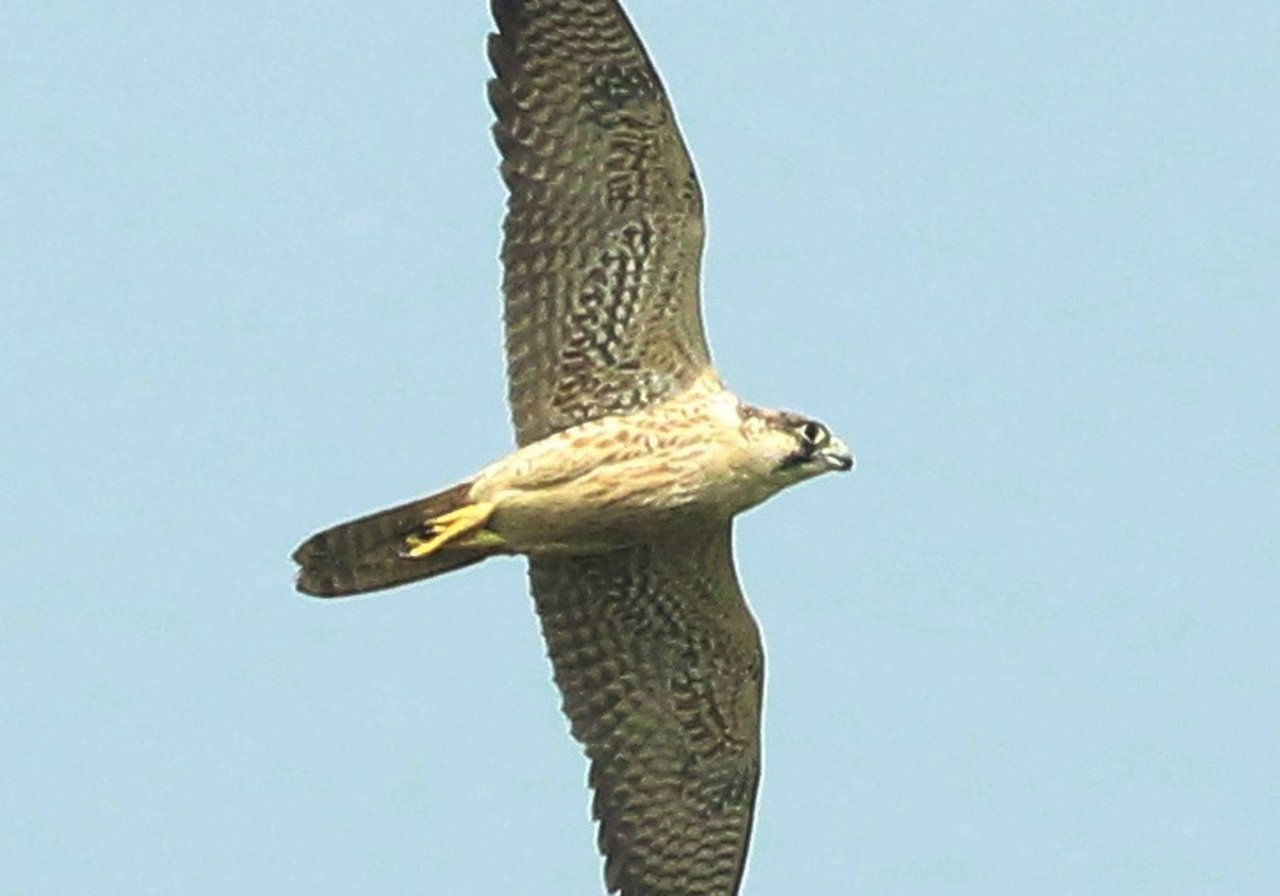
Source: Wikimedia Commons
In brief
Falcons are birds of prey in the family Falconidae — roughly 65 species including the peregrine, the fastest animal on Earth at over 320 km/h; most species recovered from DDT declines and are now Least Concern.
Also in Animals A to Z · Animals that start with F
By WARN Research & Conservation TeamLast updated
Falcons are birds of prey in the family Falconidae, distinct from hawks and eagles despite similar appearances. Roughly 65 species in the genus Falco range across every continent except Antarctica. The peregrine falcon is the fastest animal on Earth, reaching over 320 km/h in a hunting stoop. Falcons were nearly wiped out by DDT pesticide in the mid-twentieth century before one of conservation's greatest recoveries. Today most falcon species are Least Concern, though the saker falcon and several island falcons face ongoing threats from habitat loss, trapping for falconry and pesticide use.
320+ km/h
Peregrine falcon stoop speed — fastest animal on Earth
~65
Falcon species worldwide
DDT
Pesticide that nearly extirpated peregrines before ban
Appendix I
CITES listing — peregrine and saker falcon
Figures sourced from IUCN Red List — Falco peregrinus, IUCN Red List — Falco cherrug (saker falcon), BirdLife International — Data Zone .
Falcon: Quick Facts
| Fastest species | Peregrine falcon — 320+ km/h stoop |
|---|---|
| Species | ~65 falcon species worldwide |
| Kill method | Notched beak tooth severs prey spine |
| Recovery | Peregrine restored from near extinction after DDT ban |
| Falconry trade | Illegal trapping threatens saker falcon |
| CITES | Appendix I (peregrine, saker) |
Scientific Classification
| Kingdom | Animalia |
|---|---|
| Phylum | Chordata |
| Class | Aves |
| Order | Falconiformes |
| Family | Falconidae |
| Genus | Falco (~40 species) |
Conservation Status
- IUCN Status
- Most species Least Concern. Saker falcon Endangered; Mauritius kestrel recovered from Critically Endangered.
- Population
- Peregrine falcon: tens of thousands globally; saker falcon: 11,000–30,000 mature individuals
- Trend
- Increasing for recovered species; decreasing for saker falcon
- Assessed
- 2016 (saker falcon); 2016 (peregrine falcon)
- CITES
- Appendix I (peregrine, saker)
Key Facts: Falcon
- The peregrine falcon is the fastest animal on Earth — over 320 km/h in a stoop.
- Falcons belong to Falconidae, separate from hawks and eagles (Accipitridae).
- DDT pesticide nearly wiped out peregrine falcons before a global recovery programme.
- Falconry — hunting with trained falcons — is an ancient practice still regulated today.
- Saker and peregrine falcons are trapped illegally for the Middle Eastern falconry trade.
- Falcons kill with a notched beak 'tooth' that severs prey vertebrae instantly.
Falcons versus hawks
Falcons belong to Falconidae; hawks and eagles to Accipitridae — convergent evolution produced similar predatory forms from different ancestors. Falcons have a notched beak (the tomial tooth) for severing prey spines, long pointed wings built for speed, and they kill primarily with the beak rather than talons. Hawks kill with talons. Falcons include the peregrine, kestrels, hobbies, merlins and caracaras. The peregrine falcon (Falco peregrinus) breeds on every continent except Antarctica, nesting on cliffs, city skyscrapers and bridges.
The peregrine stoop
The peregrine falcon hunts by climbing high and folding its wings into a stoop — a vertical or angled dive exceeding 320 km/h, the fastest recorded speed of any animal. It strikes prey — typically pigeons, ducks and other birds — mid-air with clenched talons, killing on impact. Nictitating membranes protect the eyes during the dive. Peregrines were nearly extirpated in North America and Europe by DDT, which thinned eggshells causing nesting failure. After DDT was banned and captive breeding programmes released thousands of birds, peregrines recovered to Least Concern globally.
Falconry and illegal trade
Falconry — hunting with trained falcons — dates back at least 4,000 years in Mesopotamia and remains a regulated tradition in the Middle East, Central Asia and Europe. The saker falcon (Falco cherrug) is prized in Arabian falconry and is Endangered, with illegal trapping in Central Asia supplying wealthy buyers. CITES Appendix I protects peregrine and saker falcons. Legal falconry uses captive-bred birds in most countries. Illegal trade remains a significant threat to wild saker and peregrine populations in Central Asia and the Mediterranean.
Conservation successes and ongoing threats
The peregrine falcon recovery from near extinction is among conservation's greatest achievements — from fewer than 400 breeding pairs in the eastern United States in 1975 to over 3,000 today. Most falcon species are now Least Concern. Ongoing threats include habitat loss, rodenticide and pesticide poisoning, wind turbine collisions and illegal trapping for falconry. Protecting nesting cliffs, regulating falconry trade and reducing pesticide use benefit falcons worldwide.
What WARN Does
WARN publishes this falcon guide as free public education. The peregrine recovery from DDT extinction shows that species can rebound when the cause of decline is removed — a message relevant to conservation worldwide.
If this guide helps you understand wildlife and the pressures it faces, a gift to WARN supports habitat protection and free public education in our partner countries.
Falcon: Frequently Asked Questions
What is the fastest animal on Earth?
What is the difference between a falcon and a hawk?
Are falcons endangered?
What is falconry?
What do falcons eat?
Where do falcons live?
Are falcons dangerous?
How big is a falcon?
How long do falcons live?
Sources & References
Population figures, conservation status and biological facts on this page are drawn from authoritative scientific and intergovernmental sources.
Terms used on this page
Plain-English definitions, from our wildlife and conservation glossary.
Explore more animals
Discover more animals, their habitats and their conservation status in the WARN wildlife-guide library.