Animal Comparison
Falcon vs Hawk
Falcons are streamlined pursuit hunters with long pointed wings; hawk is a broader everyday label covering several raptor types.
By WARN Research & Conservation TeamLast updated
In brief — Falcon vs Hawk
Falcons are pointed-wing speed hunters; hawk is a wider, messier everyday category for several other raptors.
Falcons are typically streamlined birds of prey with long, pointed wings built for high-speed pursuit and a notched bill used to dispatch prey. Hawk is a broader everyday word that covers several groups — including forest accipiters and soaring buteos — and its meaning shifts between British and American English.
See the difference
Images are shown at different scales. Read each caption for the species, source and context.
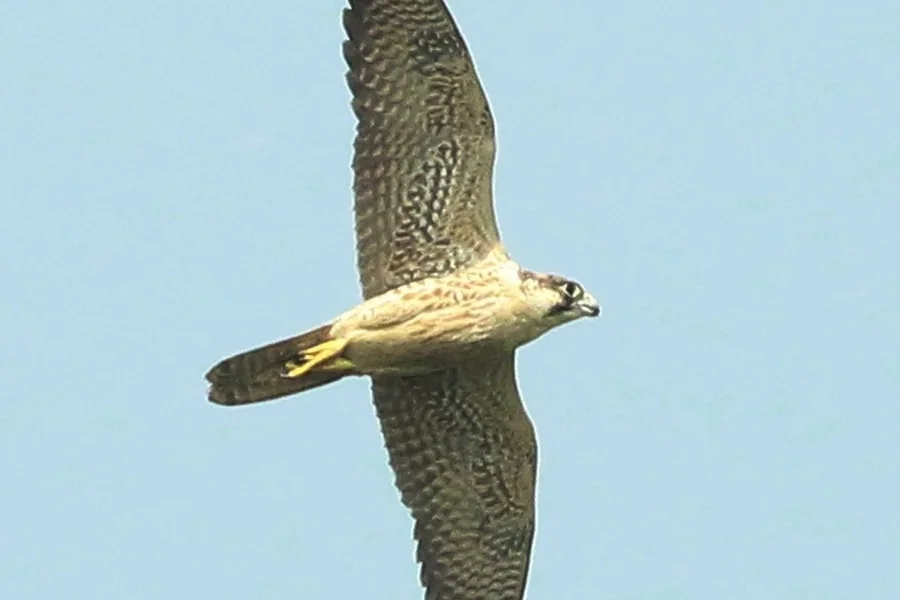
Falcon — pointed wings, notched beak
AI-generated educational wildlife portrait — World Animal Rescue Network
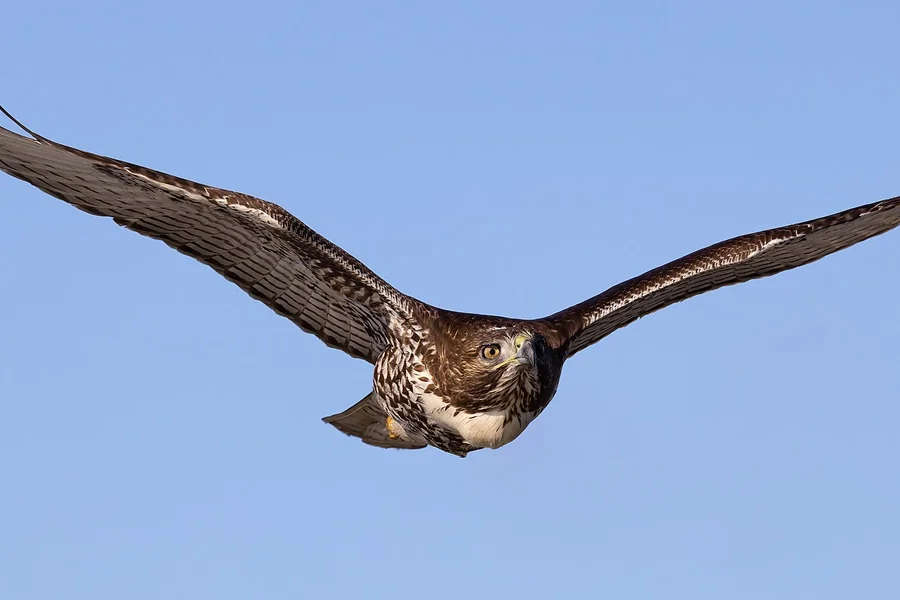
Hawk — broader wings, soaring silhouette
AI-generated educational wildlife portrait — World Animal Rescue Network
Falcon vs Hawk: At a Glance
| Feature | Falcon | Hawk |
|---|---|---|
| Typical wing shape | Long, pointed, tapered | Broader (buteos) or short/rounded (accipiters) |
| Bill tip | Often a tomial notch | Usually lacks falcon-style notch |
| Hunting style | High-speed pursuit or stoop | Soar-and-pounce or woodland dash |
| Family (typical) | Falconidae | Often Accipitridae |
| British naming | Falcon for Falco species | Sparrowhawk/goshawk; Buteo often 'buzzard' |
| US naming | Falcon for Falco | Buteo often called hawk |
| Kill method | Often bite with notched bill | Often kill with talons |
| Nest habit | Scrapes or taken nests common | Many build stick nests |
| Open-country silhouette | Crescent/scythe wings | Broader wings when soaring |
| Taxonomy note | Not every falcon name is Falco | Hawk is not one genus |
Size and physical differences
Many familiar hawks and falcons overlap in length around 30–50 cm; the largest eagles dwarf both, while a gyrfalcon can outweigh a sparrowhawk.
Falcon versus hawk mixes real anatomy with inconsistent English. Falcons belong mainly to Falconidae. Many birds people call hawks sit in Accipitridae — sparrowhawks, goshawks, buzzards and the North American birds named hawk that British English often calls buzzards. The body plan differs even when size overlaps: falcons tend toward long pointed wings and a tomial tooth on the bill; many hawks have broader wings or the short rounded wings of woodland pursuers.
What readers usually need is field triage. A bird stooping on open ground with scythe-like wings is behaving like a falcon. A bird exploding from cover after small birds with short wings and a long tail is behaving like an accipiter hawk. Colour alone fails; wing shape, flight style and bill profile do more work.
This comparison sticks to marks you can use without laboratory gear: size, shape, behaviour and the words people actually type into a search box. Scientific names are given where they prevent a regional mix-up. Where published measurements disagree, this page gives the range rather than a single tidy figure that implies more certainty than the sources support.
Wing shape is the fastest field mark
Start with silhouette in flight. Falcons typically show long, pointed wings and a relatively short tail, built for acceleration and steep stoops. Accipiter hawks — sparrowhawk and goshawk types — show short rounded wings and a long rudder-like tail for weaving through trees. Buteo-type hawks and buzzards soar on broader wings and look more eagle-like at distance. A still photo of colour without wing shape is weak evidence. Watch how the bird leaves a perch: falcons often slice into open air; woodland hawks often make a short explosive dash. Combine wing shape with habitat — open cliff or estuary versus dense hedge — before committing to a name. Field observers should combine silhouette, behaviour and habitat before naming what they see. Where published measurements disagree, this page gives the range rather than a single tidy figure.
How falcons and hawks kill
Many falcons deliver a disabling bite with a notched upper bill after striking in flight. Many hawks rely more on powerful feet and talons to seize and kill. That difference is why falconers historically treated the groups as different tools. It is not a perfect rule for every species, and scavenged kills confuse witnesses, but it explains why bill profile appears in field guides. If you find prey remains, a clean neck bite with little foot damage can suggest a falcon; heavy talon punctures through the body more often suggest an accipiter or buteo. Treat leftovers as clues, not courtroom proof, especially where several raptors hunt the same fields. Field observers should combine silhouette, behaviour and habitat before naming what they see. Where published measurements disagree, this page gives the range rather than a single tidy figure.
Why the English words disagree
Hawk is an inherited everyday label, not a single scientific rank. In North America, red-tailed hawk names a buteo; in Britain the ecological cousin is usually called a buzzard. Falcon stayed closer to Falco for many speakers, which is why falcon versus hawk feels cleaner than eagle versus hawk even though both pairs are messy at the edges. Use the species name when you can — peregrine, kestrel, sparrowhawk — and keep falcon or hawk for triage when that is all the evidence supports. Over-precise naming from a blurred phone photo creates false records that waste recorder time. Field observers should combine silhouette, behaviour and habitat before naming what they see. Where published measurements disagree, this page gives the range rather than a single tidy figure.
Size overlaps more than people expect
Popular culture treats falcons as tiny and hawks as large, or the reverse, depending on which film someone saw. Real size ranges overlap heavily. A sparrowhawk is small; a gyrfalcon is substantial. A red-tailed hawk can outweigh a hobby. Compare like with like: open-country soaring hawks against falcons of similar mass, not a kestrel against a ferruginous hawk. Length, wingspan and weight tell different stories, and sexual size dimorphism is strong in many raptors, with females larger than males. When someone asks which is bigger, the honest answer is that it depends which falcon and which hawk. Field observers should combine silhouette, behaviour and habitat before naming what they see. Where published measurements disagree, this page gives the range rather than a single tidy figure.
Why the comparison matters
People search for falcon versus hawk because a wrong label leads to the wrong expectation about speed, danger to poultry, or which conservation story applies. Peregrines and sparrowhawks face different pressures and recover on different timelines. Getting the group right is how accurate advice stays attached to the animal that is actually present. Conservation status also diverges inside everyday labels: a common town falcon and a rare relative can share a casual name while facing completely different threats. WARN publishes these comparisons so high-intent questions get a sourced answer instead of an unsourced listicle. Field observers should combine silhouette, behaviour and habitat before naming what they see. Where published measurements disagree, this page gives the range rather than a single tidy figure.
Did you know?
The tomial tooth — a notch on many falcon bills — is a small anatomical clue that often outranks colour when separating falcons from other raptors in the hand.
Falcon vs Hawk: FAQs
What is the difference between a falcon and a hawk?
Is a peregrine a hawk?
Which is faster?
Is a buzzard a hawk?
Do falcons build nests?
Can hawks and falcons kill chickens?
Help protect animals
Learning about animals can help more people understand their needs. WARN raises funds for eligible animal-welfare organisations. Read the relevant appeal’s purpose, recipient status and fund terms, or share this free guide to raise awareness.