Wildlife Guide · Worldwide except Antarctica
Hawk
Family Accipitridae — ~250 species including buzzards, kites and true hawks (genus Accipiter)
The versatile raptors of field and forest — sharp-eyed hunters on every continent.
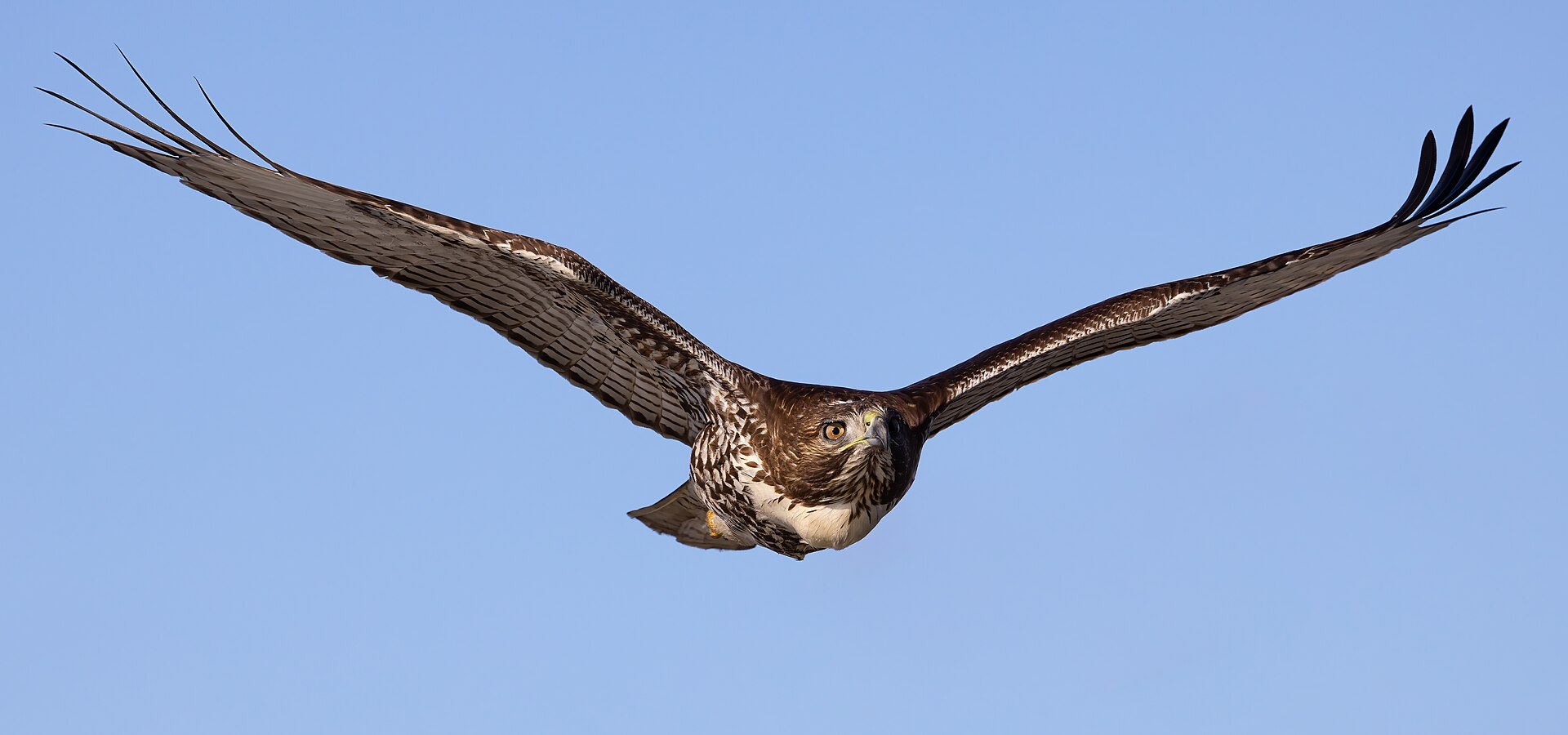
Photo: Frank Schulenburg / Wikimedia Commons (CC BY-SA 4.0)
In brief
Hawks are birds of prey in the family Accipitridae — roughly 250 species worldwide; they hunt by sight using talons and hooked beaks, with conservation status ranging from abundant to Critically Endangered depending on species.
Also in Animals A to Z · Animals that start with H
By WARN Research & Conservation TeamLast updated
Hawk is the common name for birds of prey in the family Accipitridae, a diverse group of roughly 250 species found on every continent except Antarctica. In North America, 'hawk' often refers to buteos — broad-winged soaring hunters such as the red-tailed hawk — and accipiters — forest specialists such as the sharp-shinned hawk. In Europe, 'hawk' overlaps with buzzards and kites. Hawks hunt by sight, using powerful talons and hooked beaks to kill birds, mammals, reptiles and insects. Conservation status varies: the red-tailed hawk is abundant, while the Ridgway's hawk of Hispaniola is Critically Endangered with fewer than 300 individuals.
~250
Accipitridae species worldwide
8×
Visual acuity compared with humans (typical raptor)
Varies
IUCN status from Least Concern to Critically Endangered
Appendix I/II
CITES listing for many species
Figures sourced from IUCN Red List — Accipitridae assessments, BirdLife International — Data Zone, Cornell Lab of Ornithology — All About Birds .
Hawk: Quick Facts
| Species | ~250 Accipitridae species worldwide |
|---|---|
| Vision | ~8× sharper than human sight |
| Groups | Buteos (soaring), accipiters (forest), kites, buzzards |
| Diet | Carnivorous — rodents, birds, reptiles, insects |
| Threat | Rodenticide poisoning increasingly significant |
| CITES | Appendix I or II for many species |
Scientific Classification
| Kingdom | Animalia |
|---|---|
| Phylum | Chordata |
| Class | Aves |
| Order | Accipitriformes |
| Family | Accipitridae |
Conservation Status
- IUCN Status
- Varies by species. Red-tailed hawk and common buzzard Least Concern; Ridgway's hawk Critically Endangered.
- Population
- Varies — red-tailed hawk pairs number in the millions in North America
- Trend
- Stable for common species; decreasing for island and forest specialists
- Assessed
- Varies by species
- CITES
- Appendix I or II for many species
Key Facts: Hawk
- Hawks belong to Accipitridae — a family of roughly 250 raptor species worldwide.
- Buteos soar on broad wings; accipiters manoeuvre through forest with short wings and long tails.
- Raptors see roughly eight times more sharply than humans.
- Rodenticide poisoning kills hawks that eat contaminated prey — a major modern threat.
- The red-tailed hawk is among the most abundant raptors in North America.
- Habitat loss and persecution remain threats for forest and island hawk species.
What counts as a hawk?
'Hawk' is a loose common name rather than a strict taxonomic group. In North America it typically covers buteos (genus Buteo — red-tailed, red-shouldered and broad-winged hawks) and accipiters (genus Accipiter — sharp-shinned, Cooper's and goshawks). In Europe, 'hawk' often includes buzzards (Buteo) and sometimes kites and harriers.
All belong to Accipitridae alongside eagles, kites and Old World vultures. Hawks share hooked beaks, powerful talons, keen eyesight and carnivorous diets, but vary enormously in size — from the 100 g sharp-shinned hawk to the 1.4 kg red-tailed hawk.
When people search 'hawk' they may mean a soaring buteo, a woodland accipiter or a European buzzard — WARN's eagle, osprey and falcon guides help distinguish the wider raptor guild.
Hunting and senses
Hawks hunt primarily by sight, detecting prey from hundreds of metres while soaring or perched. Raptor vision is roughly eight times sharper than human sight, with a higher density of colour-sensitive cones. Buteos soar on thermals, scanning open country for rodents, rabbits and reptiles. Accipiters dash through woodland on short, rounded wings and long tails, ambushing birds. Hawks kill with talons — the red-tailed hawk's grip exceeds 200 psi — and dismember prey with hooked beaks. Many species pair for life and reuse nest sites for decades.
Threats to raptors
Modern threats to hawks include rodenticide poisoning — hawks eat rats and mice that have consumed anticoagulant poisons, leading to internal bleeding and death. Habitat loss removes nesting trees and hunting grounds. Persecution — shooting and trapping — persists in some regions despite legal protection. Wind turbines and power lines cause collision mortality. The Ridgway's hawk (Buteo ridgwayi) of Hispaniola is Critically Endangered with fewer than 300 individuals due to habitat loss and nest parasitism by palmchat birds.
Conservation and legal protection
Most widespread hawk species — red-tailed hawk, common buzzard, Eurasian sparrowhawk — are Least Concern with stable or increasing populations. Legal protection under the US Migratory Bird Treaty Act, the EU Birds Directive and national laws in range countries has reduced persecution. CITES regulates international trade in many raptor species. Reducing rodenticide use, protecting nest sites and maintaining habitat connectivity benefit hawks alongside other raptors.
What WARN Does
WARN publishes this hawk guide as free public education. Rodenticide poisoning and habitat loss threaten raptors worldwide — issues that connect to the broader ecosystem health WARN works to protect.
If this guide helps you understand wildlife and the pressures it faces, a gift to WARN supports habitat protection and free public education in our partner countries.
Hawk: Frequently Asked Questions
What is the difference between a hawk and an eagle?
How well can hawks see?
Are hawks endangered?
What do hawks eat?
Do hawks mate for life?
Where do hawks live?
Are hawks dangerous?
How long do hawks live?
How big is a hawk?
Sources & References
Population figures, conservation status and biological facts on this page are drawn from authoritative scientific and intergovernmental sources.
Terms used on this page
Plain-English definitions, from our wildlife and conservation glossary.
Explore more animals
Discover more animals, their habitats and their conservation status in the WARN wildlife-guide library.