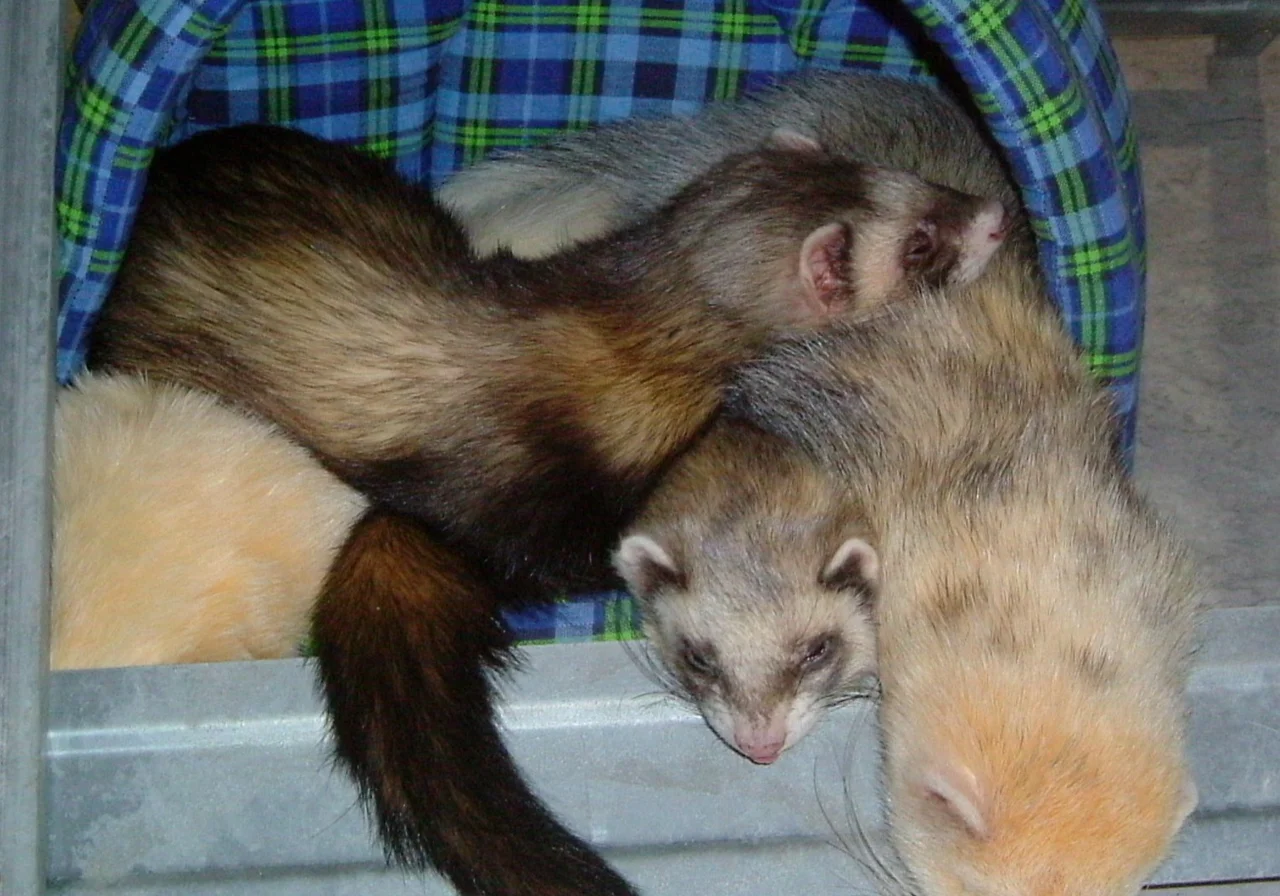
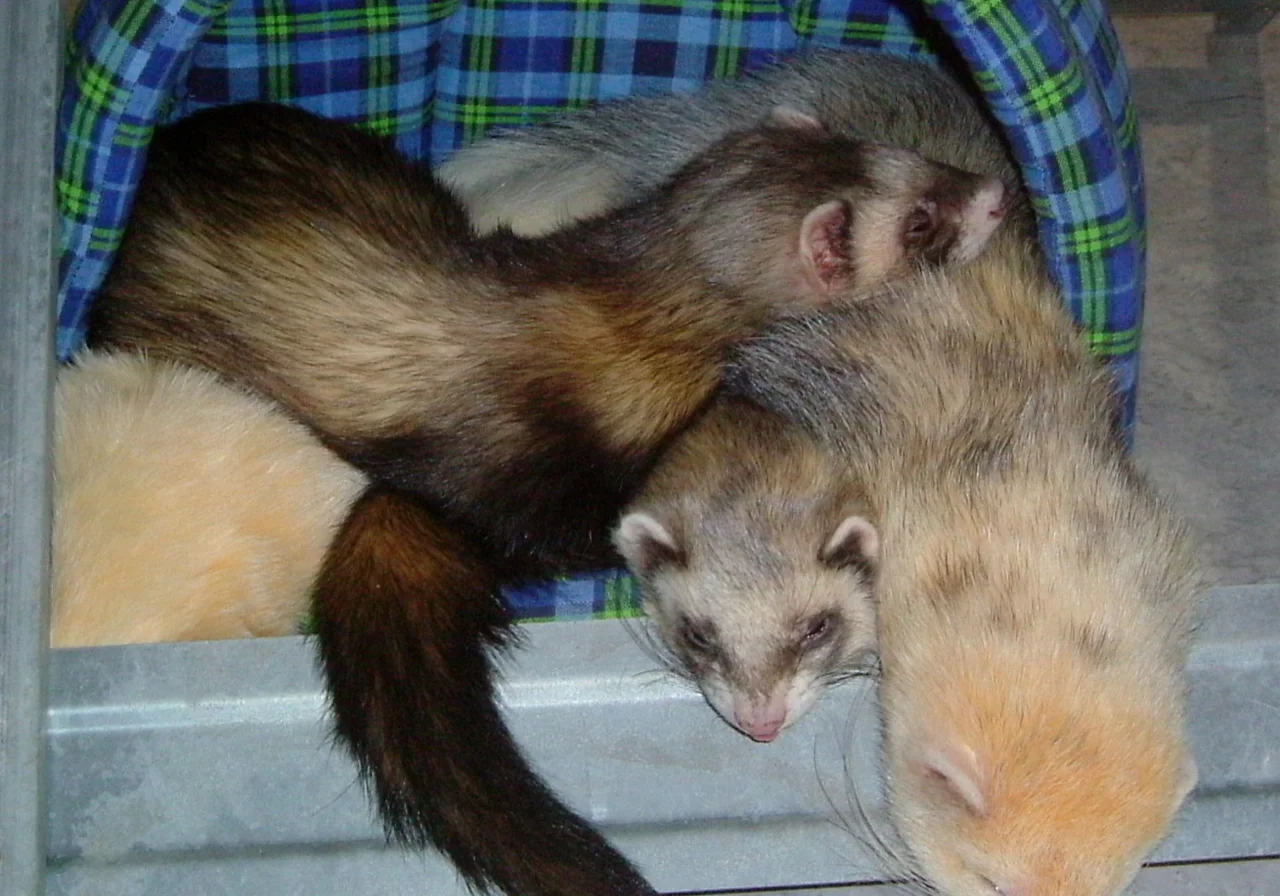
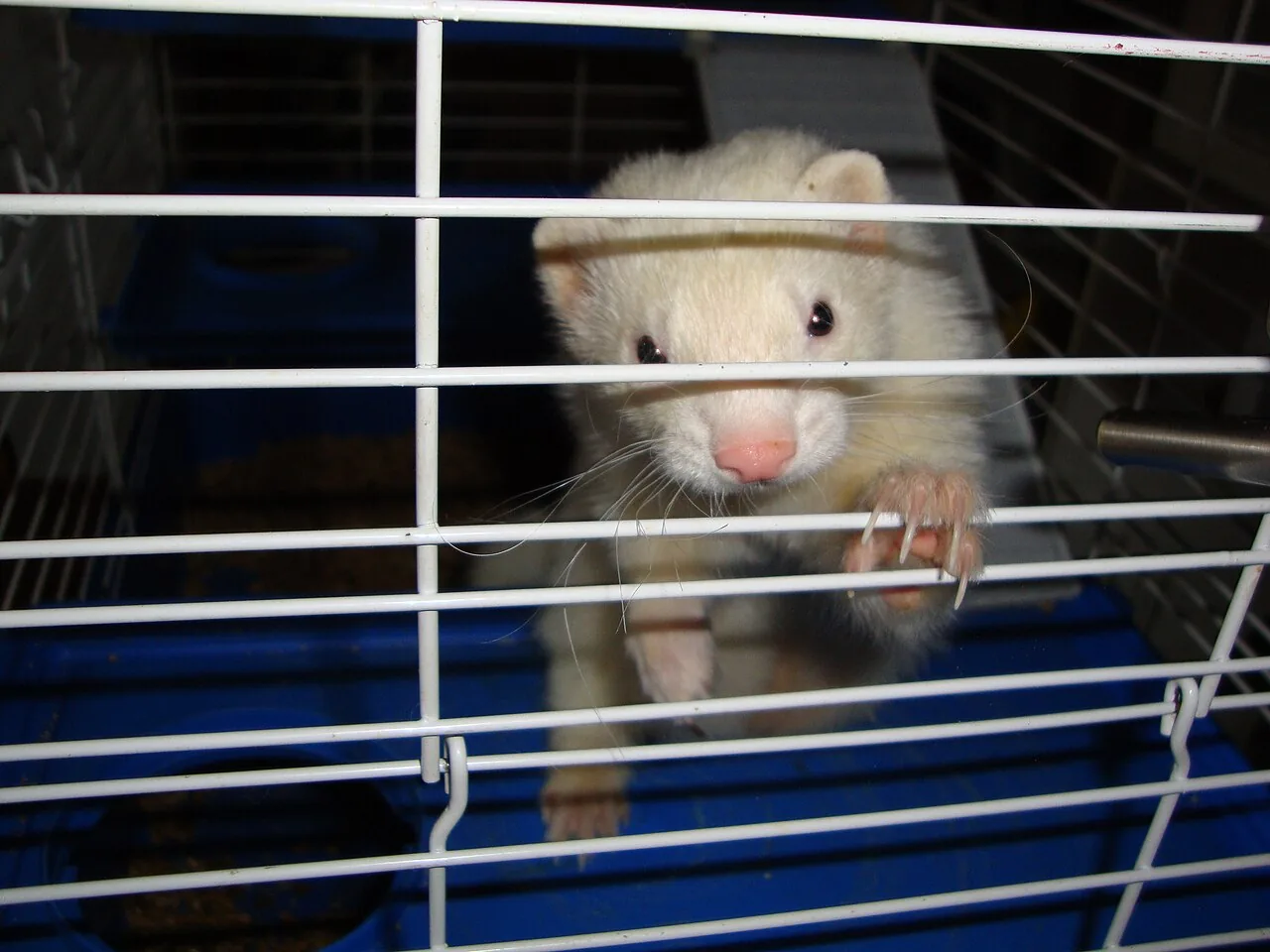
Ferret Breed · Domestic (colour type)
Panda
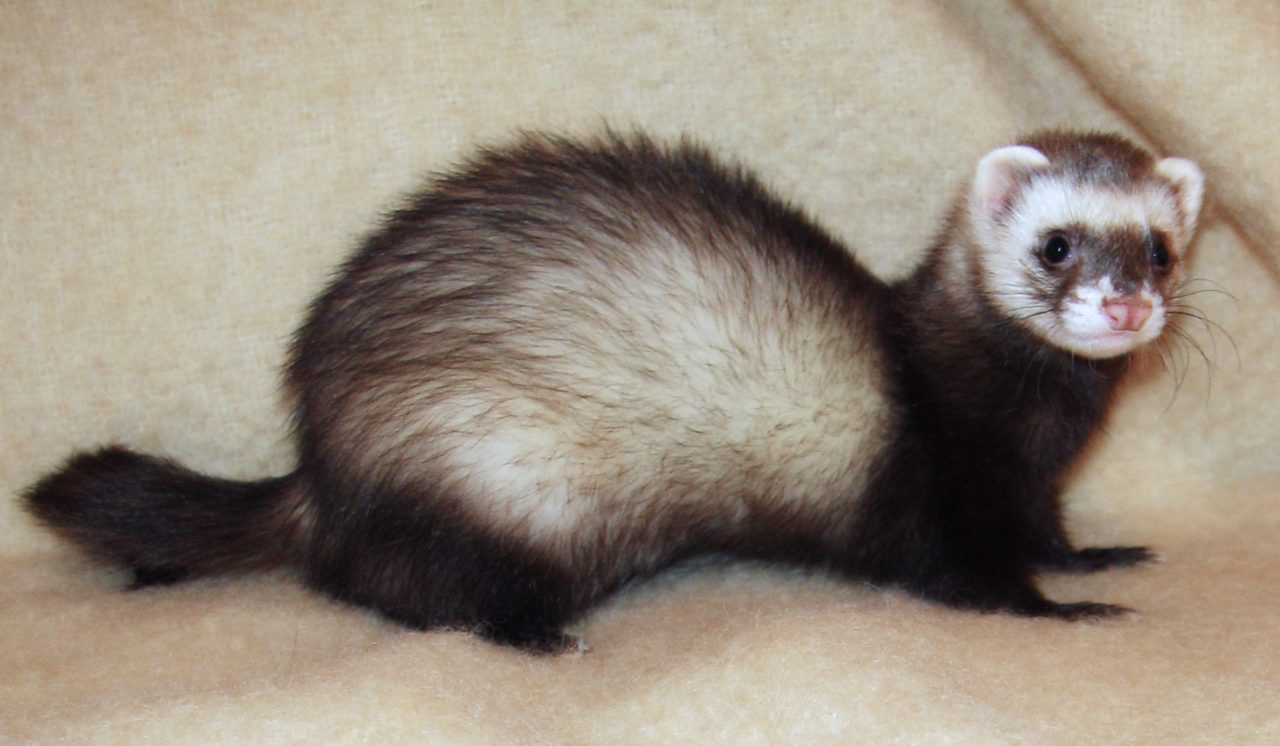
White head markings with dark eye patches — distinctive but linked to Waardenburg-related deafness.
By WARN Research & Conservation TeamLast updated
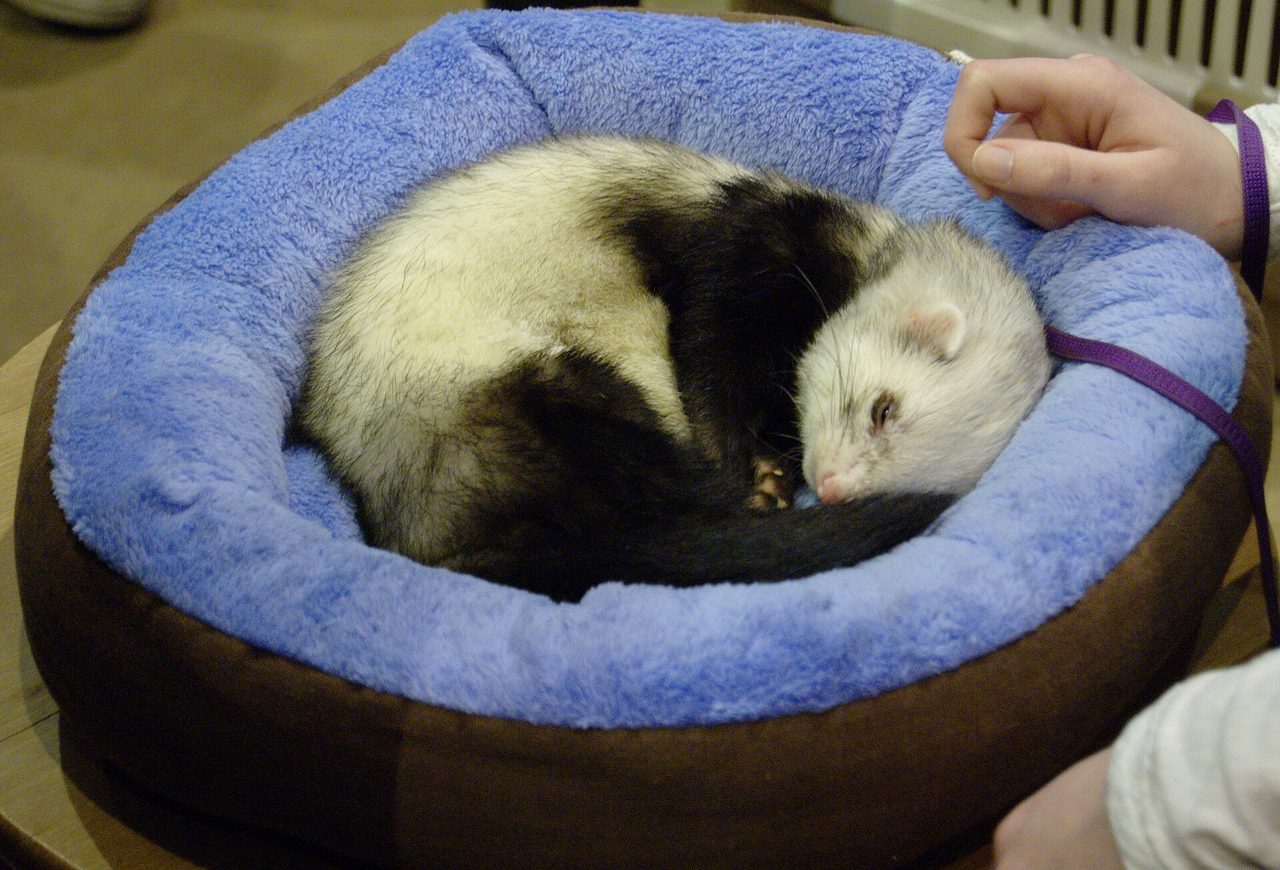
Photo: KoS / Wikimedia Commons (CC BY-SA 3.0)
In brief
The Panda ferret is a domestic colour type with white head markings and dark patches around the eyes, resembling a panda bear. Its defining trait is distinctive facial contrast, though breeders must screen for Waardenburg-linked deafness associated with extensive white patterning.
What are the key facts about a Panda?
The Panda is a ferret breed from Domestic (colour type): small (0.7–2 kg), social, lively, sometimes deaf. White head markings with dark eye patches — distinctive but linked to Waardenburg-related deafness.
| Origin | Domestic (colour type) |
|---|---|
| Size | Small (0.7–2 kg) |
| Adult weight | 0.7–2 kg (1.5–4.4 lb); same range as other colour types |
| Lifespan | 5–10 years |
| Coat & colour | Short fur with a predominantly white face, dark eye patches and coloured body typical of the underlying base coat. Markings vary between lines. Because of potential deafness, visual cues and gentle handling are important; avoid startling from behind. |
| Temperament | Social, lively, sometimes deaf |
| Best suited to | Suits owners willing to adapt communication for a possibly deaf ferret — hand signals, floor tapping and consistent routines help. Panda ferrets remain social and lively when kept with compatible companions. Never rely on auditory recall alone during free roam. |
Is a Panda a good ferret for you?
A Panda is a good ferret when your home matches suits owners willing to adapt communication for a possibly deaf ferret — hand signals, floor tapping and consistent routines help. panda ferrets remain social and lively when kept with compatible companions. never rely on auditory recall alone during free roam.. It is a social, lively, sometimes deaf small (0.7–2 kg) breed from Domestic (colour type).
White head markings with dark eye patches — distinctive but linked to Waardenburg-related deafness. That one-line pitch is not a care plan. Factor grooming (Short fur with a predominantly white face, dark eye patches and coloured body typical of the underlying base coat. Markings vary between lines. Because of potential deafness, visual cues and gentle handling are important; avoid startling from behind.), typical adult size (0.7–2 kg (1.5–4.4 lb); same range as other colour types), and the health issues listed below before you pay a deposit.
Meet adults of the breed, not only puppies or kittens, and prefer rescue or health-screened homes. A Panda that looks right in a photo can still be the wrong animal for a small flat, a full-time office job, or a household that wanted a low-energy companion.
What is a Panda?
White head markings with dark eye patches — distinctive but linked to Waardenburg-related deafness. Origin is Domestic (colour type); coat or markings are described as Short fur with a predominantly white face, dark eye patches and coloured body typical of the underlying base coat. Markings vary between lines. Because of potential deafness, visual cues and gentle handling are important; avoid startling from behind..
Kennel and registry labels describe a type. Individual Pandas still vary, and rescue animals may be mixes.
Where does the Panda come from?
Pandas come from Domestic (colour type). Panda markings were selected for dramatic facial contrast in American show lines during the 1990s.
Breeders soon documented links between extensive white blazes and congenital deafness, similar to patterns seen in dogs and cats with piebald genetics. Responsible ferretries now test hearing in panda kits and educate buyers about Waardenburg-related welfare. The colour remains popular but requires informed ownership.
That origin still shows. A Panda is small (0.7–2 kg) and social, lively, sometimes deaf, typically living 5–10 years. Use the history as context for care and conservation, not as folklore to repeat without sources.
How much care does a Panda need?
Plan 5–10 years of food, vet care, grooming and time. A Panda is small (0.7–2 kg) (0.7–2 kg (1.5–4.4 lb); same range as other colour types) from Domestic (colour type), with coat care described as short fur with a predominantly white face, dark eye patches and coloured body typical of the underlying base coat. markings vary between lines. because of potential deafness, visual cues and gentle handling are important; avoid startling from behind..
Match daily exercise to the social, lively, sometimes deaf temperament rather than to Instagram.
Grooming follows the coat, not a generic clip: Short fur with a predominantly white face, dark eye patches and coloured body typical of the underlying base coat. Markings vary between lines. Because of potential deafness, visual cues and gentle handling are important; avoid startling from behind.. Keep the animal lean; extra weight is a joint and heart tax, especially in a small ferret.
Budget for unexpected vet bills. The health section below is why “cheap to buy” is not the same as cheap to keep.
What surprises people about the Panda?
A few details about the breed, alongside the practical care information in this guide.
- Panda ferrets are named for their black eye patches on a white face.
- Deafness is not universal but occurs frequently enough to warrant hearing checks.
- Hand signals and vibration cues work well for deaf ferrets.
- Ethical breeders avoid mating two heavily marked whites together.
What health issues should you know about in a Panda?
Health concerns to discuss with your vet, including changes to watch for and everyday care. This is general guidance, not veterinary advice — always speak to your vet.
Congenital deafness
White facial markings correlate with incomplete inner ear development, causing partial or total deafness from birth.
Care: Confirm hearing early, adapt training to visual cues and never allow unsupervised outdoor access.
Adrenal disease
Adrenal tumours affect panda ferrets at similar rates to other colour types, causing hair loss and hormonal signs.
Care: Schedule regular exotics vet checks and treat symptomatic cases promptly.
Insulinoma
Pancreatic tumours disrupt glucose regulation, presenting as weakness or seizures in adult ferrets.
Care: Maintain frequent feeding intervals and follow your vet's monitoring plan for blood glucose where indicated.
Who should skip a Panda?
Skip a Panda if you are homes that cannot match a social, lively, sometimes deaf small (0.7–2 kg) ferret from Domestic (colour type). This Domestic (colour type) ferret is small (0.7–2 kg) and social, lively, sometimes deaf — the mismatch is usually lifestyle, not a missing accessory.
This page is allowed to say no. Skip if you are homes that cannot match a social, lively, sometimes deaf small (0.7–2 kg) ferret from Domestic (colour type).
A different ferret breed on this site may fit. Wanting “a Panda” after a film or a colour photo is not a reason to ignore the skip list.
What are the hidden catches with a Panda?
The hidden cost of a Panda is usually not the purchase price. It is years of care, the health list on this page, and the mismatch between a social, lively, sometimes deaf animal and a busy home.
The impulse-buy catch
A Panda from Domestic (colour type) is often sold on looks. Coat, colour and size are not a temperament test. Meet the adult animal, ask about health screening, and walk away from pressure sales.
The congenital deafness catch
White facial markings correlate with incomplete inner ear development, causing partial or total deafness from birth. Confirm hearing early, adapt training to visual cues and never allow unsupervised outdoor access.
The adrenal disease catch
Adrenal tumours affect panda ferrets at similar rates to other colour types, causing hair loss and hormonal signs. Schedule regular exotics vet checks and treat symptomatic cases promptly.
How does a Panda compare with Blaze and Chocolate?
A Panda is not interchangeable with Blaze and Chocolate. Compare origin, size, lifespan and temperament before you choose — those four lines prevent most regret.
| Ferret fact | Panda | Blaze | Chocolate |
|---|---|---|---|
| Origin | Domestic (colour type) | Domestic (colour type) | Domestic (colour type) |
| Size | Small (0.7–2 kg) | Small (0.7–2 kg) | Small (0.7–2 kg) |
| Lifespan | 5–10 years | 5–10 years | 5–10 years |
| Temperament | Social, lively, sometimes deaf | Curious, friendly, active | Gentle, playful, people-oriented |
What is the verdict on the Panda?
Choose a Panda only if the care, skip-if and health sections still look like your life after a week of thinking. Otherwise pick a different ferret or wait. Rescue is usually the better first door than a waiting-list puppy or kitten.
If the match is real, budget for 5–10 years of vet care and do not skip health screening. If it is not, walking away is the kind choice — for you and for the animal.
Ferrets need responsible homes
Ferrets are playful companions but often bought on impulse and abandoned when owners underestimate their care needs. WARN publishes these guides to promote responsible ownership and highlight the wider exotic-pet welfare issues our partners confront.