Wildlife Guide · Tropical and subtropical worldwide & some temperate regions
Gecko
Infraorder Gekkota — ~1,500 species across six families worldwide
Nocturnal lizards of walls and forests — adhesive toes and unmistakable calls.
Source: Wikimedia Commons
In brief
Geckos are gekkotan lizards with ~1,500 species worldwide — nocturnal climbers often with adhesive toe pads and vocal calls — ecologically valuable insect predators threatened locally by habitat loss and trade.
Also in Animals A to Z · Animals that start with G
By WARN Research & Conservation TeamLast updated
Geckos are lizards of the infraorder Gekkota, numbering roughly 1,500 species on every continent except Antarctica. They range from house geckos on tropical walls to giant New Caledonian geckos exceeding 35 centimetres. Many possess toe pads using van der Waals forces for climbing smooth surfaces; others have claws alone. Geckos vocalise — unusual among lizards — with chirps and barks. They control insects in homes and ecosystems but face habitat loss, pet trade demand and invasive species competition.
1,500+
Recognised gecko species
35 cm
Length of giant New Caledonian gecko
Van der Waals
Toe pad adhesion mechanism
Varies
IUCN status by species
Figures sourced from IUCN Red List — Gekkota assessments, Smithsonian National Zoo — gecko, Encyclopaedia Britannica — gecko and other references on this page.
Gecko: Quick Facts
| Species | ~1,500 worldwide |
|---|---|
| Toe pads | Adhesive setae (many species) |
| Activity | Mostly nocturnal; day geckos diurnal |
| Vocalisation | Chirps and barks common |
| Pet species | Leopard, crested, tokay geckos |
| Eyelids | Absent in many; present in leopard gecko |
Scientific Classification
| Kingdom | Animalia |
|---|---|
| Phylum | Chordata |
| Class | Reptilia |
| Order | Squamata |
| Infraorder | Gekkota |
Conservation Status
- IUCN Status
- Most common species Least Concern; island and range-restricted geckos Endangered or Critically Endangered.
- Population
- Unknown for most; tokay gecko heavily traded
- Trend
- Decreasing for forest specialists and over-harvested species
- Assessed
- Varies by species
- CITES
- Several rare species on Appendix I or II; tokay gecko Appendix II in some range states
Invasive house geckos complicate conservation on islands with native gekkotan faunas.
Key Facts: Gecko
- Gecko toe pads stick via microscopic setae and intermolecular forces — no glue.
- Tokay and leopard geckos dominate the pet trade; verify captive-bred origin.
- House geckos Hemidactylus benefit humans by eating mosquitoes and moths.
- Day geckos Phelsuma are diurnal and brightly coloured — popular but specialist pets.
- Indonesia and Malaysia — WARN partners — harbour exceptional gekkotan diversity.
- Invasive geckos outcompete natives on islands and in new regions.
Gecko diversity and adhesion
Gekkota splits into families including Gekkonidae, Phyllodactylidae and Diplodactylidae. Eyelids are absent in many species — transparent spectacle scales protect eyes. Nocturnal species have vertical pupils; day geckos have round pupils and bright green or blue colouration.
Adhesive toe pads contain millions of microscopic setae branching into spatulae. Temporary molecular attraction lets geckos run up glass and hang from ceilings. Some species regenerate lost tails; others lack this ability.
Vocal cords enable mating calls and territorial chirps — a gekkotan signature absent from most lizards.
Ecology and household allies
Wild geckos eat insects, spiders, small invertebrates and nectar in some day geckos. Common house gecko Hemidactylus frenatus follows human habitation globally — sometimes invasive, sometimes welcomed pest control.
In tropical forests, geckos occupy leaf litter, tree bark and cave walls. Giant geckos Rhacodactylus of New Caledonia are fruit-insect omnivores threatened by deforestation and chytrid-like pathogens in captivity.
Population declines affect range-restricted island species from Mauritius to the Caribbean. Habitat fragmentation removes microhabitats geckos need.
Pet trade and conservation
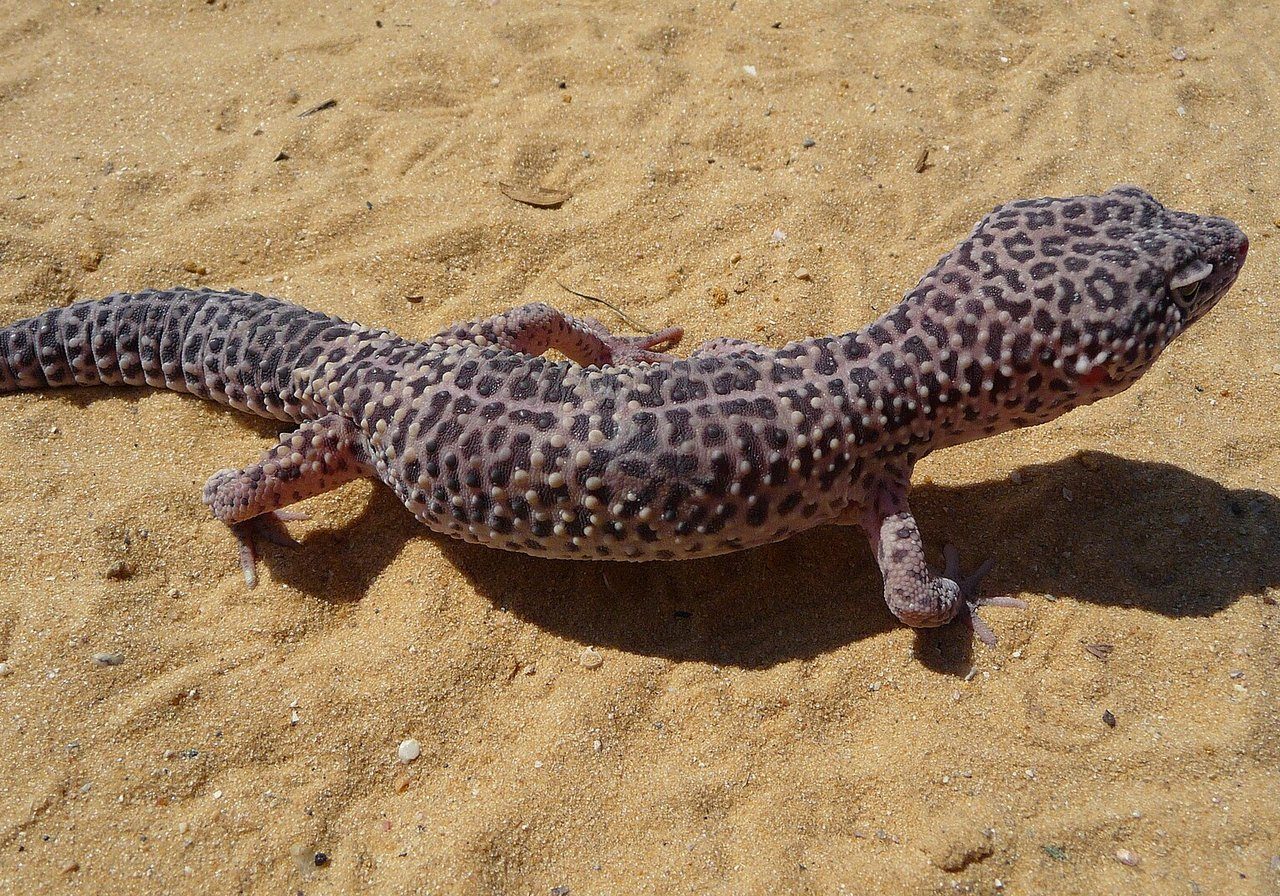
Leopard gecko Eublepharis macularius from Pakistan and Afghanistan — a WARN partner region — is heavily captive-bred for pets, with eyelids unlike many geckos. Tokay gecko Gekko gecko faces poaching for traditional medicine markets in Asia despite questionable efficacy.
CITES lists several rare species on Appendix I or II. Smuggling of New Caledonian and Madagascan species supplies collectors.
Captive care requires temperature gradients, calcium supplementation and appropriate humidity — species-specific, not one-size-fits-all.
Geckos and people
Southeast Asian folklore treats house geckos as omens; their calls punctuate tropical nights. In Pakistan and India, geckos share walls with humans harmlessly, consuming insects attracted to lights.
Never release pet geckos outdoors — invasive house geckos disrupt native lizard communities in Florida, Hawaii and elsewhere.
Readers can welcome wild geckos as allies, reject medicine products using tokay parts and support forest protection in Indonesia and Malaysia where gekkotan diversity peaks.
What WARN Does
WARN educates readers in Pakistan, Indonesia and Malaysia — centres of gecko diversity and trade routes — about reptile stewardship, habitat protection and rejecting wildlife products without proven benefit.
If this guide helps you understand wildlife and the pressures it faces, a gift to WARN supports habitat protection and free public education in our partner countries.
Gecko: Frequently Asked Questions
How many gecko species are there?
How do geckos stick to walls?
Do geckos make noise?
Are geckos good pets?
What do geckos eat?
Where do geckos live?
Are geckos dangerous?
How big is a gecko?
How long do geckos live?
Sources & References
Population figures, conservation status and biological facts on this page are drawn from authoritative scientific and intergovernmental sources.
Terms used on this page
Plain-English definitions, from our wildlife and conservation glossary.
Explore more animals
Discover more animals, their habitats and their conservation status in the WARN wildlife-guide library.