Wildlife Guide · India & Nepal
Gharial
Gavialis gangeticus (Gmelin, 1789)
The fish-eater of the Ganges — a crocodilian unlike any other, down to its last rivers.
Source: Wikimedia Commons
In brief
The gharial (Gavialis gangeticus) is a Critically Endangered fish-eating crocodilian of India and Nepal with fewer than 900 mature individuals remaining; river damming, sand mining and pollution are the primary threats.
Also in Animals A to Z · Animals that start with G
How you can help
You can support the related appeal — read its purpose, recipient status and fund terms first — or give once to where it is needed most. Sharing accurate information helps too.
By WARN Research & Conservation TeamLast updated
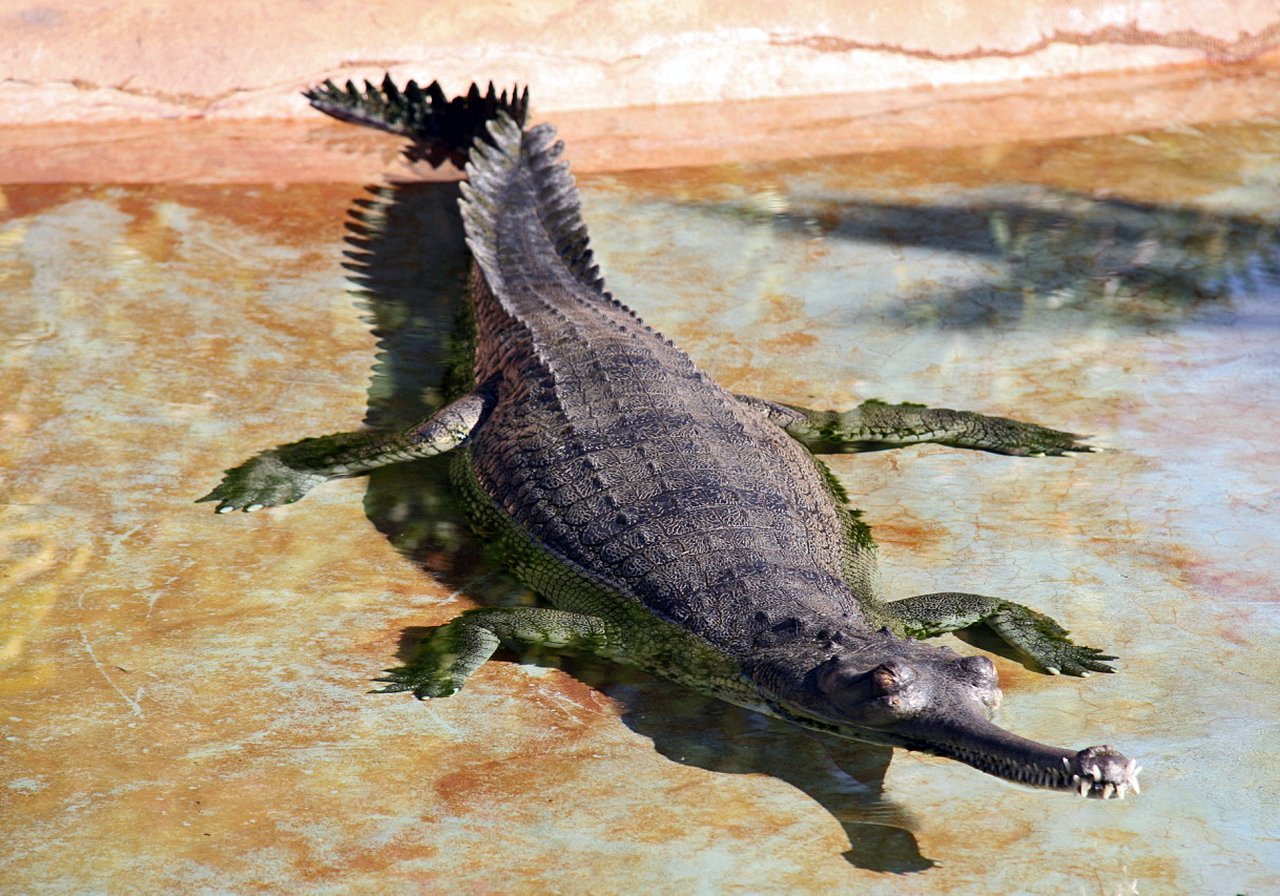
The gharial is one of the most distinctive crocodilians on Earth, with an extraordinarily long, thin snout packed with interlocking teeth — adapted exclusively for catching fish. Males develop a bulbous nasal growth called a ghara at sexual maturity. Once widespread across the river systems of the Indian subcontinent, gharials now cling to a handful of rivers in India and Nepal. Listed as Critically Endangered, fewer than 900 mature individuals remain. Dam construction, sand mining, fishing nets and river pollution have destroyed the clean, deep, fast-flowing water gharials require.
Critically Endangered
IUCN Red List status (2022 assessment)
<900
Mature individuals remaining
4.5 m
Maximum length (large males)
Appendix I
CITES listing — commercial trade banned
Figures sourced from IUCN Red List — Gavialis gangeticus, IUCN Crocodile Specialist Group, CITES — Checklist of CITES Species .
Gharial: Quick Facts
| Length | 3.5–4.5 m (males); females smaller |
|---|---|
| Diet | Almost exclusively fish |
| Distinctive feature | Long narrow snout; male ghara |
| Habitat | Deep, fast-flowing rivers with sandbanks |
| Population | Fewer than 900 mature individuals |
| CITES | Appendix I |
Scientific Classification
| Kingdom | Animalia |
|---|---|
| Phylum | Chordata |
| Class | Reptilia |
| Order | Crocodilia |
| Family | Gavialidae |
| Species | Gavialis gangeticus (Gmelin, 1789) |
Conservation Status
- IUCN Status
- Critically Endangered (IUCN, 2022). Fewer than 900 mature individuals.
- Population
- Fewer than 900 mature individuals in India and Nepal
- Trend
- Decreasing
- Assessed
- 2022
- CITES
- Appendix I
Head-starting programmes release captive-reared juveniles into protected rivers.
Key Facts: Gharial
- Gharials have the longest, thinnest snout of any crocodilian — built for catching fish.
- Males develop a bulbous 'ghara' on the snout tip used in vocalisation and display.
- Fewer than 900 mature gharials remain in the wild.
- They require clean, deep, fast-flowing rivers with sandbanks for nesting.
- Dam construction and sand mining have destroyed most historic gharial habitat.
- Captive breeding and head-starting programmes release juveniles into protected rivers.
A crocodilian built for fish
The gharial belongs to the family Gavialidae, separate from true crocodiles and alligators. Its snout is exceptionally long and narrow, with 110–130 interlocking teeth — the most of any crocodilian. This morphology generates minimal water disturbance when snapping at fish. Gharials are not built for land; adults rarely leave the water except to bask and nest. Males reach 4–4.5 m; females are smaller.
The ghara — a cartilaginous nasal bulb — amplifies hissing and buzzing vocalisations during the breeding season and may serve as a visual signal.
River life and breeding
Gharials inhabit deep, clear, fast-flowing rivers with high oxygen levels and abundant fish. They bask communally on sandbanks, often in groups of dozens. Breeding occurs during the dry season; females dig nest holes in sandbars and lay 30–60 eggs. Incubation takes roughly 70 days.
Hatchlings measure about 37 cm and receive no parental care, though females guard nests. Head-starting programmes — rearing hatchlings in captivity for two to three years before release — have boosted wild populations in the Chambal and Girwa rivers.
Collapse and remnant rivers
Gharial populations collapsed from an estimated 5,000–10,000 in the 1940s to fewer than 200 by the 1970s. The Chambal River — straddling Rajasthan, Madhya Pradesh and Uttar Pradesh — now holds the largest wild population. Smaller groups survive in the Girwa (Katarniaghat), Son, Gandak and Narayani rivers. Dam construction fragments rivers and alters flow; sand mining destroys nesting banks; fishing nets entangle and drown gharials; pollution reduces fish stocks. The species cannot survive in reservoirs or sluggish, polluted water.
Conservation and recovery efforts
India and Nepal protect gharials under national law. Captive breeding at facilities in India and Nepal produces hundreds of juveniles annually for release. The IUCN Crocodile Specialist Group coordinates monitoring. Community engagement along the Chambal reduces sand mining and net fishing. Despite these efforts, the 2022 IUCN assessment recorded fewer than 900 mature individuals with a continuing decline. CITES Appendix I bans commercial trade. Saving gharials requires free-flowing rivers — a challenge that benefits all freshwater biodiversity.
What WARN Does
WARN publishes this gharial guide as free public education. River conservation in India and Nepal — gharial range — aligns with the freshwater habitat protection that sustains biodiversity across South Asia.
If this guide helps you understand wildlife and the pressures it faces, a gift to WARN supports habitat protection and free public education in our partner countries.
How can I help save the gharial?
Explore practical ways to support the gharial, from everyday choices and sharing reliable information to reviewing a related appeal before giving.
Explore ways to support
Read the related appeal’s purpose, recipient status and fund terms. Choose an affordable gift after checking what is proposed and what has been reported.
Ease the pressures
Avoid the wildlife trade and souvenirs, never buy wild animals as pets, and choose sustainable, habitat-friendly products — the threats behind the gharial's decline fall when demand does.
Spread the word
Share accurate, sourced information about the gharial. Wider awareness is what turns concern into lasting protection.
Gharial: Frequently Asked Questions
How can I help save the gharial?
Are gharials dangerous to humans?
What is the ghara?
How many gharials are left?
What do gharials eat?
Why are gharials Critically Endangered?
Where can you see gharials?
Where do gharials live?
How big is a gharial?
How long do gharials live?
Sources & References
Population figures, conservation status and biological facts on this page are drawn from authoritative scientific and intergovernmental sources.
Terms used on this page
Plain-English definitions, from our wildlife and conservation glossary.
Latest Gharial Stories
Quick, fact-checked reads on the gharial — amazing facts, key questions and the threats it faces.
Species
Tiger vs Lion: 7 Key Differences Between the Two Biggest Cats
Tigers are bigger, stripier and solitary; lions are social and live in prides. Here's how the two largest cats really differ in size, habitat and behaviour.
Read the storySpecies
12 Amazing Facts About the Dugong, the Ocean's Only Vegetarian Sea Cow
From mermaid myths to tonnes of seagrass and 70-year lifespans, here are 12 remarkable facts about the dugong, the only marine mammal that lives entirely on plants.
Read the storySpecies
12 Amazing Facts About Lions (The Only Cat That Lives in a Group)
A roar heard 8 km away, a mane that advertises health, and the only truly social big cat on Earth. Twelve verified facts about lions.
Read the storyExplore more animals
Discover more animals, their habitats and their conservation status in the WARN wildlife-guide library.