Wildlife Guide · Brazil & Colombia
Giant Otter
Pteronura brasiliensis
The Amazon's "river wolf" — the longest otter on Earth and one of its most endangered.
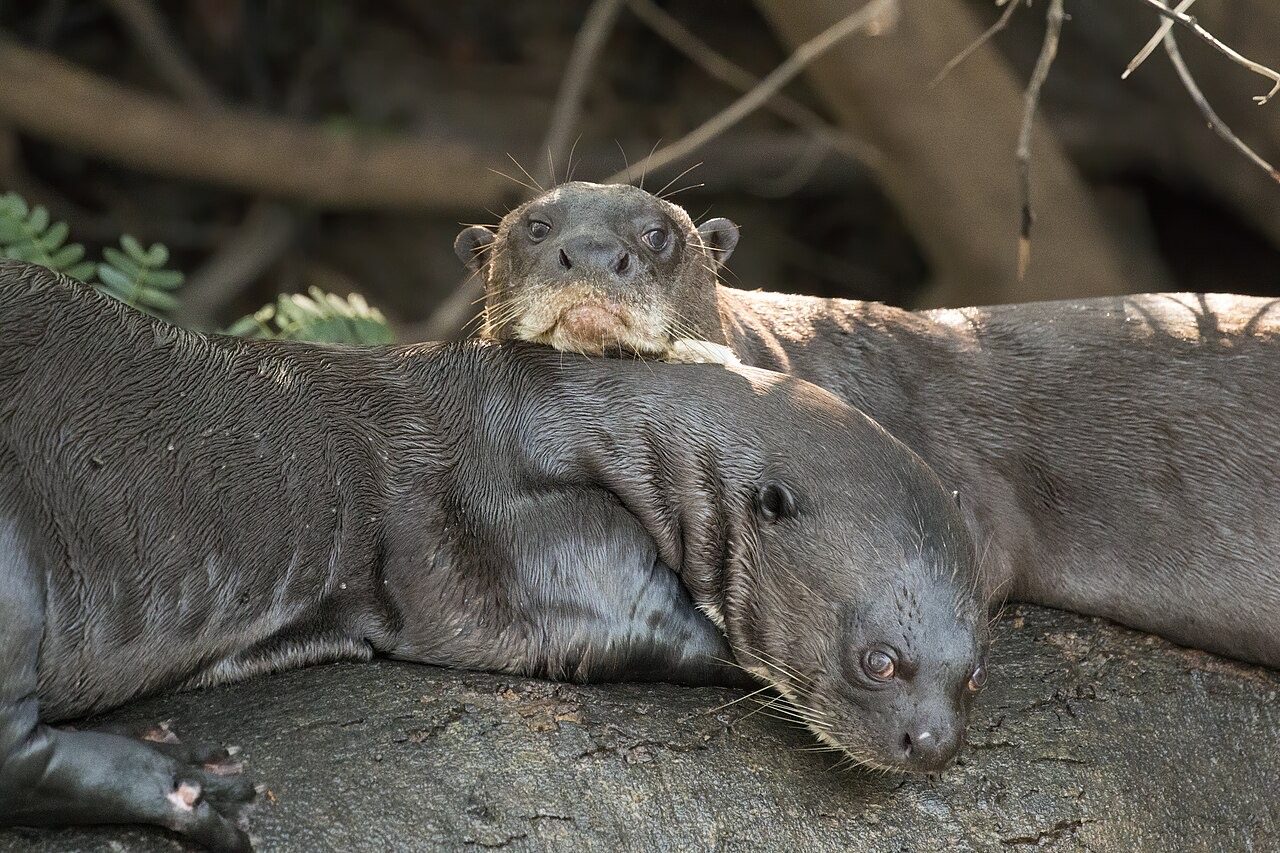
Source: Wikimedia Commons via Wikipedia “Giant otter”
In brief
A giant otter (Pteronura brasiliensis) is the world's longest otter, a fish-eating, highly social mammal of South American rivers that grows up to 1.8 metres long and lives in family groups; it is classified as Endangered by the IUCN.
Also in Animals A to Z · Animals that start with G
How you can help
You can support the related appeal — read its purpose, recipient status and fund terms first — or give once to where it is needed most. Sharing accurate information helps too.
By WARN Research & Conservation TeamLast updated
The giant otter (Pteronura brasiliensis) is the largest member of the weasel family and a top predator of South America's rivers, reaching up to 1.8 metres from nose to tail. Highly social and vocal, it lives in tight family groups that hunt fish together in the Amazon and Pantanal wetlands. Once hunted to the brink for its dense velvety pelt, it remains Endangered, with fewer than 5,000 thought to survive in fragmented, shrinking populations.
Up to 1.8 m
Longest otter on Earth, nose to tail tip
< 5,000
Estimated wild individuals remaining (IUCN)
3–8
Members in a typical cooperative family group
Endangered
IUCN Red List status (assessed 2021)
Figures sourced from IUCN Red List — Pteronura brasiliensis (Giant Otter), 2021 assessment, CITES — Appendices (Pteronura brasiliensis, Appendix I), WWF — Giant otter (Amazon species) and other references on this page.
Giant Otter: Quick Facts
| Lifespan | ~8 years wild; up to 17 in captivity |
|---|---|
| Weight | Males 26–32 kg; females 22–26 kg |
| Length | Up to 1.8 m (nose to tail tip) |
| Diet | Carnivore — mainly fish (cichlids, characins, catfish) |
| Gestation | ~65–70 days |
| Young per birth | 1–5 pups (average about 2) |
| Baby name | Pup |
| Group name | Family group (3–8 members; also called a romp or raft) |
| Habitat | Slow-moving rivers, lakes and wetlands of South America |
| CITES | Appendix I (commercial international trade banned) |
Scientific Classification
| Kingdom | Animalia |
|---|---|
| Phylum | Chordata |
| Class | Mammalia |
| Order | Carnivora |
| Family | Mustelidae |
| Genus | Pteronura |
| Species | Pteronura brasiliensis (Gmelin, 1788) — monotypic genus |
Conservation Status
- IUCN Status
- Endangered
- Population
- Fewer than 5,000 mature individuals (no precise global count; populations fragmented)
- Trend
- Decreasing
- Assessed
- 2021
- CITES
- Appendix I
The single 'Endangered' badge masks worse local realities: the giant otter is extinct in Argentina and Uruguay, reduced to a tiny remnant in Paraguay, and considered Critically Endangered in some range states. Gold-mining and mercury pollution are growing threats.
Did you know?
Every giant otter has a unique cream-coloured throat patch — like a fingerprint — that researchers use to tell individuals apart.
Key Facts: Giant Otter
- The giant otter is the longest member of the weasel family (Mustelidae), reaching up to 1.8 m including the tail.
- It is a cooperative, diurnal hunter that catches fish — mainly cichlids, characins and catfish — eating several kilograms a day.
- Family groups of 3–8 share a territory, raise pups together, and communicate with at least nine distinct vocalisations, earning the name 'river wolf'.
- Each animal has a unique cream-coloured throat patch, like a fingerprint, used by researchers to identify individuals.
- Hunting for the international fur trade collapsed populations in the 20th century; CITES banned commercial trade and listed it on Appendix I.
- Today it is Endangered, threatened by habitat loss, gold-mining and mercury pollution of its rivers.
Why the giant otter is endangered
From the 1940s to the 1970s the giant otter was hunted relentlessly for its thick, water-repellent pelt, and tens of thousands of skins were traded internationally until CITES protection arrived in the 1970s. Populations have never fully recovered. The IUCN, in its 2021 assessment, lists the species as Endangered, with a population suspected to have fallen by more than half over the past three generations. The species is now extinct in Argentina and Uruguay, reduced to a tiny remnant in Paraguay, and fragmented across the Amazon and Orinoco basins. Because giant otters are conspicuous, curious and live in open river systems, they are unusually easy to disturb or extirpate.
Behaviour and ecology
Giant otters are among the most social of all carnivores. A family is built around a single breeding pair and their offspring from several years, who hunt, patrol and rest together. They are active by day, relying on keen eyesight to chase fish in shallow water, and they haul out onto communal bank dens and latrine sites that scent-mark the group's territory. Their loud, varied calls — snorts, screams, hums and warning barks — coordinate the group and warn of danger, which is why locals call them lobo del río, the river wolf. As apex predators they help keep fish populations and river food webs in balance.
Threats today
The fur trade is gone, but newer pressures have taken its place. Deforestation and cattle ranching strip the forested riverbanks otters depend on; dams fragment river systems; and overfishing reduces their prey. The gravest emerging threat is artisanal gold mining, which both destroys habitat and floods rivers with mercury — a toxin that accumulates in the fish otters eat and in the otters themselves. Disturbance from unregulated tourism and conflict with fishers add further pressure to small, isolated groups that cannot easily recover.
What rescue and protection involve
Protecting giant otters is mostly about protecting living rivers. Effective work combines guarding key wetland strongholds, curbing illegal mining and mercury pollution, restoring riverbank forest, and reducing conflict with fishing communities. Because the animals are wide-ranging and sensitive to disturbance, hands-on rescue is rare and is usually limited to orphaned or injured individuals; the durable gains come from habitat protection and from local teams monitoring family groups and their territories season after season.
Giant otter vs. neotropical (Southern) river otter — telling the two apart
| Feature | Giant Otter (Pteronura brasiliensis) | Neotropical Otter (Lontra longicaudis) |
|---|---|---|
| Length | Up to 1.8 m — the longest otter | About 0.9–1.3 m |
| Weight | 22–32 kg | 5–15 kg |
| Sociability | Highly social; family groups of 3–8 | Mostly solitary |
| Throat patch | Distinctive cream/white patch, unique per animal | Faint or absent, paler underside |
| Activity | Diurnal (active by day) | Mainly nocturnal/crepuscular |
| IUCN status | Endangered | Near Threatened |
What WARN Does
WARN publishes this guide for education and is developing support through assessed animal-welfare grants. A species range, source citation or photograph does not establish a recipient or funding agreement. Check /about/where-your-money-goes/#grant-register for published grant and payment records; records not yet published must not be read as zero activity. Browse /appeals/ for the purposes currently available to support.
Brazil and Colombia hold some of the last great strongholds of the giant otter — and your gift helps WARN fund the local partners protecting those Amazon and Pantanal rivers, fish by fish, family by family.
How can I help save the giant otter?
Explore practical ways to support the giant otter, from everyday choices and sharing reliable information to reviewing a related appeal before giving.
Explore ways to support
Read the related appeal’s purpose, recipient status and fund terms. Choose an affordable gift after checking what is proposed and what has been reported.
Ease the pressures
Avoid the wildlife trade and souvenirs, never buy wild animals as pets, and choose sustainable, habitat-friendly products — the threats behind the giant otter's decline fall when demand does.
Spread the word
Share accurate, sourced information about the giant otter. Wider awareness is what turns concern into lasting protection.
Giant Otter: Frequently Asked Questions
How can I help save the giant otter?
How long do giant otters live?
What do giant otters eat?
How big is a giant otter?
Are giant otters dangerous to humans?
How many giant otters are left?
What is a baby giant otter called?
Where do giant otters live?
Sources & References
Population figures, conservation status and biological facts on this page are drawn from authoritative scientific and intergovernmental sources.
- IUCN Red List — Pteronura brasiliensis (Giant Otter), 2021 assessment
- CITES — Appendices (Pteronura brasiliensis, Appendix I)
- WWF — Giant otter (Amazon species)
- Smithsonian's National Zoo & Conservation Biology Institute — Giant otter
- Animal Diversity Web — Pteronura brasiliensis
- Mammalian Species (Oxford) — Pteronura brasiliensis
Terms used on this page
Plain-English definitions, from our wildlife and conservation glossary.
Latest Giant Otter Stories
Quick, fact-checked reads on the giant otter — amazing facts, key questions and the threats it faces.
Species
11 Amazing Facts About the Giant Otter, the Amazon's River Wolf
From a throat patch as unique as a fingerprint to a voice box with at least nine distinct calls, here are eleven facts that explain why the giant otter is one of the Amazon's most remarkable predators.
Read the storySpecies
How Big Is a Giant Otter? Meet the World's Longest Otter
Giant otters can stretch up to 1.8 metres nose to tail and weigh as much as a large dog. Here is exactly how big the world's longest otter really is, and how it measures up.
Read the storySpecies
Giant Otter vs River Otter: How to Tell Them Apart
Both swim South American rivers, but a giant otter and a neotropical river otter are easy to tell apart once you know what to look for. Here are the key differences in size, behaviour and status.
Read the storyExplore more animals
Discover more animals, their habitats and their conservation status in the WARN wildlife-guide library.