Wildlife Guide · China
Giant Panda
Ailuropoda melanoleuca
The bamboo-eating bear whose recovery became a conservation symbol.
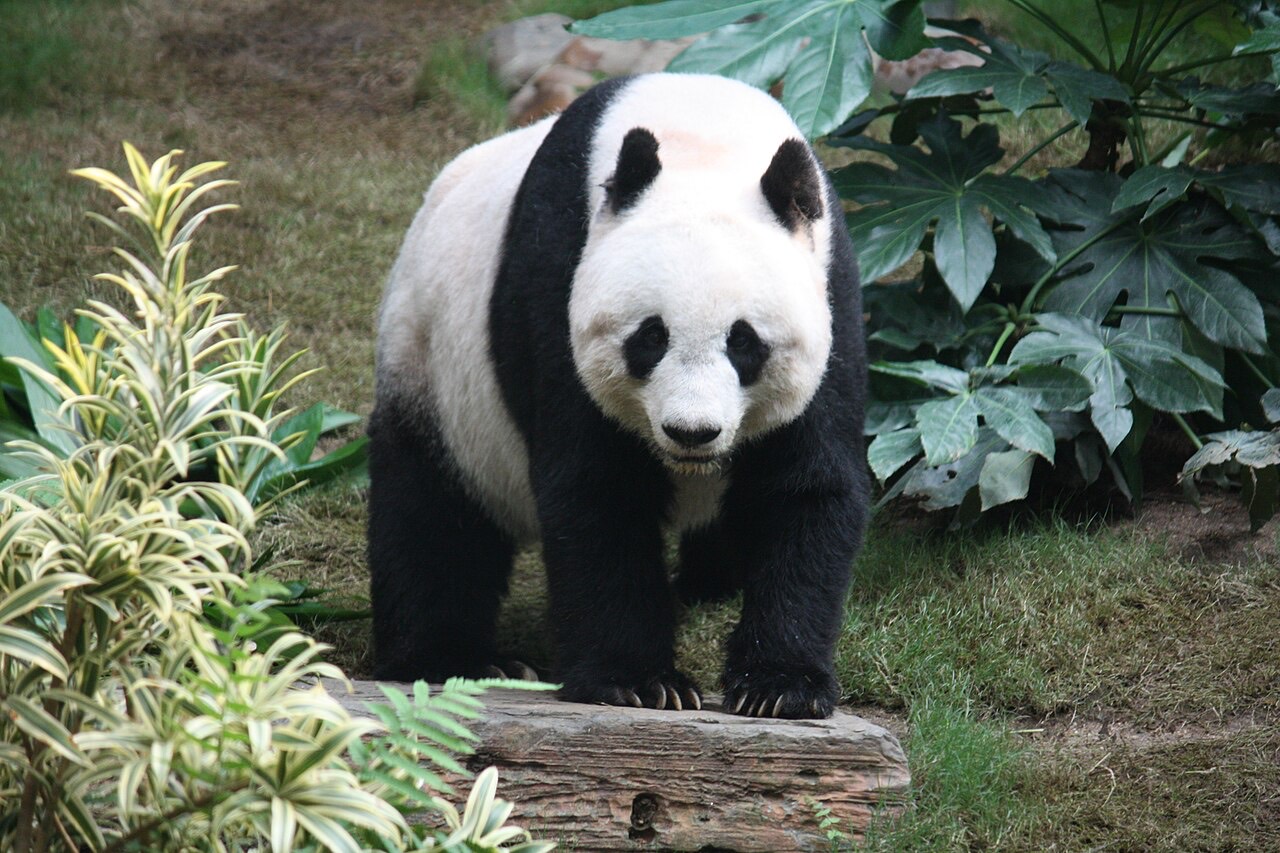
Source: Wikimedia Commons via Wikipedia “Giant panda”
In brief
The giant panda (Ailuropoda melanoleuca) is a bamboo-eating bear native only to China, listed as Vulnerable on the IUCN Red List with roughly 1,800 to 1,900 mature individuals in the wild as of the 2016 assessment.
Also in Animals A to Z · Animals that start with G
How you can help
You can support the related appeal — read its purpose, recipient status and fund terms first — or give once to where it is needed most. Sharing accurate information helps too.
By WARN Research & Conservation TeamLast updated
The giant panda is a black-and-white bear found only in the temperate bamboo forests of central China. Despite belonging to the order Carnivora, it has evolved into a near-total vegetarian, spending most of its waking hours feeding on bamboo. Decades of habitat protection and reforestation in China helped lift the species from Endangered to Vulnerable on the IUCN Red List in 2016, making it one of the best-known conservation comeback stories. Yet with fewer than 1,900 mature animals in the wild and habitat still fragmented across mountain ranges, the panda's future remains tied to careful, sustained protection of the forests it depends on.
~1,864
Wild adults counted in China's 2014 national survey
99%
Of the diet that is bamboo
12–14 hrs
Spent feeding on a typical day
2016
Year IUCN downlisted it from Endangered to Vulnerable
~100 g
Weight of a newborn cub — about 1/900th of its mother
12–38 kg
Bamboo eaten daily to offset a carnivore's digestive system
6th 'thumb'
An enlarged wrist bone, not a finger
Figures sourced from IUCN Red List — Ailuropoda melanoleuca (Giant Panda), CITES — Giant Panda species page, Encyclopaedia Britannica — Giant panda and other references on this page.
Giant Panda: Quick Facts
| Lifespan | About 15–20 years in the wild; often longer in human care |
|---|---|
| Weight | Roughly 70–125 kg; large males up to ~160 kg |
| Size | About 1.2–1.9 m long, head to tail base |
| Diet | Around 99% bamboo (technically a carnivore by order) |
| Gestation | Approximately 95–160 days |
| Young | Usually 1–2 cubs; typically one survives in the wild |
| Baby name | Cub |
| Group name | An embarrassment (rarely seen, as adults are largely solitary) |
| Newborn weight | About 90–130 g, a fraction of the mother's size |
| CITES | Appendix I (no commercial international trade) |
Scientific Classification
| Kingdom | Animalia |
|---|---|
| Phylum | Chordata |
| Class | Mammalia |
| Order | Carnivora |
| Family | Ursidae |
| Genus | Ailuropoda |
| Species | Ailuropoda melanoleuca |
Conservation Status
- IUCN Status
- Vulnerable
- Population
- ~1,864 wild adults counted in China's 2014 survey; roughly 1,800–1,900 mature individuals
- Trend
- Increasing
- Assessed
- 2016
- CITES
- Appendix I
Downlisted from Endangered to Vulnerable in 2016 following habitat protection and reforestation in China, but populations remain fragmented and the species is still at risk.
Did you know?
A newborn giant panda weighs only about 100 grams — roughly 1/900th of its mother's weight, one of the largest size gaps between parent and newborn of any placental mammal.
Key Facts: Giant Panda
- Giant pandas live in the wild only in China, in mountain bamboo forests across Sichuan, Shaanxi and Gansu provinces.
- Although classed as a carnivore by ancestry, the panda eats almost entirely bamboo and must consume huge quantities to meet its energy needs.
- The IUCN moved the giant panda from Endangered to Vulnerable in 2016 after China's protected-area network and reforestation expanded suitable habitat.
- China's 2014 national survey counted about 1,864 wild pandas, up from roughly 1,596 a decade earlier.
- Habitat loss and fragmentation remain the central threats, splitting pandas into many small, isolated populations.
- A 'pseudo-thumb' made from an enlarged wrist bone lets pandas grip and strip bamboo stems with surprising dexterity.
Where giant pandas live
Wild giant pandas are restricted to a narrow band of mountain forest in central China, mainly in Sichuan, Shaanxi and Gansu provinces. They favour cool, damp coniferous and broadleaf forests with a thick bamboo understorey, typically between about 1,200 and 3,400 metres in elevation. Historically pandas ranged far more widely across southern and eastern China, but farming, logging and human settlement reduced and fragmented that range over centuries. Today surviving pandas are split across roughly 30 separate populations along six mountain ranges, and many of these groups are small enough that isolation is itself a serious risk.
A carnivore that lives on bamboo
The giant panda is one of nature's most striking dietary specialists. Around 99% of what it eats is bamboo, even though its digestive system is still that of a bear and extracts energy from plants inefficiently. To compensate, a panda may eat 12 to 15 percent of its body weight in bamboo each day and spend up to half its life feeding. An enlarged wrist bone acts as a flexible 'sixth digit', or pseudo-thumb, letting the panda hold stalks while it strips and eats them. Pandas occasionally take other plants, eggs or small animals, but bamboo defines almost everything about how and where they live.
From Endangered to Vulnerable: a conservation comeback
For most of the late 20th century the giant panda was a global emblem of extinction risk. That changed in 2016, when the IUCN reclassified the species from Endangered to Vulnerable. The reason was measurable progress: China expanded its network of panda reserves, curbed logging in key forests and invested in large-scale reforestation, which increased and reconnected habitat. National surveys reflected the gains, with the wild count rising to about 1,864 animals in 2014. Conservationists stress that 'Vulnerable' is not 'safe' — fragmented habitat, a narrow food source and the long-term pressures of climate change on bamboo all mean the recovery has to be maintained, not assumed.
Reproduction and slow population growth
Pandas reproduce slowly, which makes population recovery gradual. Females are receptive for only a few days each year, and after a gestation of roughly 95 to 160 days they usually give birth to one or two cubs. Newborns are extraordinarily tiny — often around 100 grams, a fraction of the mother's weight — and are blind and helpless. When twins are born in the wild a mother typically raises only one. Cubs depend on their mother for well over a year, so each successful generation represents a meaningful investment, and protecting breeding-age adults and their habitat is central to keeping numbers climbing.
Giant panda vs. red panda
| Feature | Giant panda | Red panda |
|---|---|---|
| Scientific name | Ailuropoda melanoleuca | Ailurus fulgens |
| Family | Ursidae (true bears) | Ailuridae (its own family) |
| Adult weight | ~70–125 kg | ~3–6 kg |
| Main diet | ~99% bamboo | Mainly bamboo, plus fruit and insects |
| IUCN status | Vulnerable | Endangered |
| Native range | Central China | Eastern Himalayas and southwestern China |
What WARN Does
The giant panda lives only in China, which is outside the countries where the World Animal Rescue Network currently funds on-the-ground projects. We are honest about that scope: WARN does not run or fund panda field programmes. This guide exists as educational and search-focused content that supports our broader mission — building global awareness of how habitat loss and the wildlife trade threaten species everywhere. The conservation lessons of the panda's recovery, above all the value of protecting and reconnecting forest habitat, directly inform the kind of work WARN supports in the regions where we are active.
The panda's recovery shows what protecting and reconnecting forest can achieve. WARN doesn't fund panda work directly, but the same habitat threats endanger wildlife across the regions where we do work — support our Habitat Protection appeal to help safeguard the forests animals depend on.
How can I help save the giant panda?
Explore practical ways to support the giant panda, from everyday choices and sharing reliable information to reviewing a related appeal before giving.
Explore ways to support
Read the related appeal’s purpose, recipient status and fund terms. Choose an affordable gift after checking what is proposed and what has been reported.
Ease the pressures
Avoid the wildlife trade and souvenirs, never buy wild animals as pets, and choose sustainable, habitat-friendly products — the threats behind the giant panda's decline fall when demand does.
Spread the word
Share accurate, sourced information about the giant panda. Wider awareness is what turns concern into lasting protection.
Giant Panda: Frequently Asked Questions
How can I help save the giant panda?
Are giant pandas still endangered?
How many giant pandas are left in the wild?
Where do giant pandas live?
What do giant pandas eat?
Why are giant pandas threatened despite being a bear?
How big is a newborn giant panda?
Do giant pandas really have thumbs?
How long do giant pandas live?
Are giant pandas dangerous?
Sources & References
Population figures, conservation status and biological facts on this page are drawn from authoritative scientific and intergovernmental sources.
Terms used on this page
Plain-English definitions, from our wildlife and conservation glossary.
Latest Giant Panda Stories
Quick, fact-checked reads on the giant panda — amazing facts, key questions and the threats it faces.
Species
12 Amazing Facts About Giant Pandas (A Carnivore That Eats Bamboo)
A false thumb, a carnivore's gut on a plant diet, and cubs born the size of a stick of butter. Twelve verified giant panda facts.
Read the storySpecies
Are Giant Pandas Still Endangered? What Changed, and What Didn't
The IUCN downgraded the giant panda to Vulnerable in 2016. Here is what drove the recovery — and why fragmentation still threatens it.
Read the storySpecies
Giant Panda vs Red Panda: Why They Share a Name but Not a Family
One is a bear, the other is in a family of its own. What the two pandas share, where they differ, and which was named first.
Read the storyExplore more animals
Discover more animals, their habitats and their conservation status in the WARN wildlife-guide library.