Wildlife Guide · Sub-Saharan Africa — savanna, open woodland and arid country & Kenya, Tanzania, Uganda, Rwanda and South Africa overlap WARN partner countries (geography, not a giraffe grant)
Giraffe
Giraffa spp. — four species (IUCN SSC Giraffe and Okapi Specialist Group, August 2025)
Four species of the tallest land mammal — a 2016 Vulnerable badge, a 2025 split, and no WARN giraffe programme.
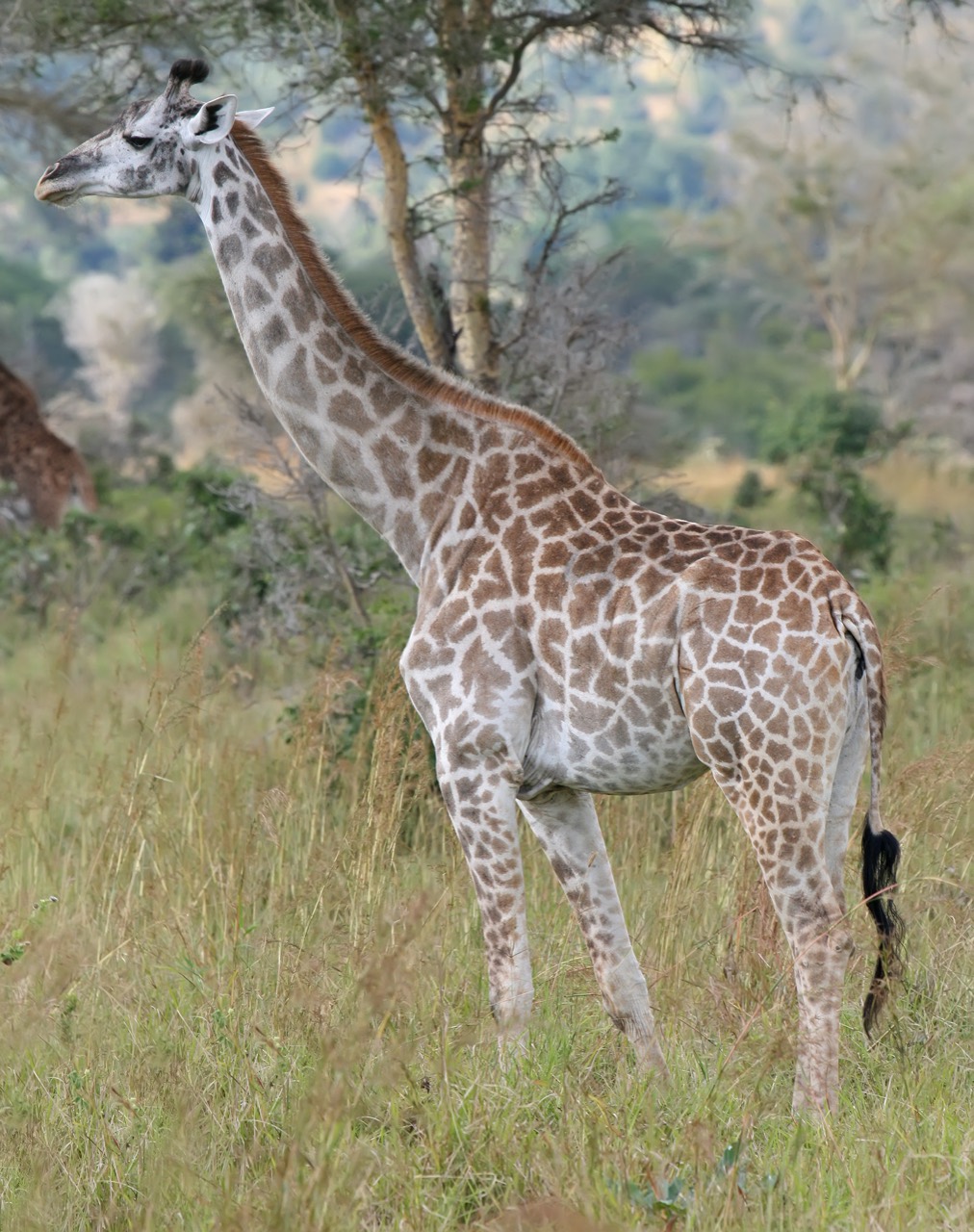
Source: Wikimedia Commons via Wikipedia “Giraffe”
In brief
Giraffes are four species of African giraffid (IUCN SSC GOSG, August 2025), not one livestock breed. The 2016 Red List listed the then-single species Vulnerable. Species-level assessments are underway. GCF 2025 compiles about 140,000 animals across Africa — an estimate, not a census. WARN does not run giraffe programmes.
Also in Animals A to Z · Animals that start with G
By WARN Research & Conservation TeamChecked against IUCN SSC GOSG taxonomy (August 2025), IUCN Red List 2016 Giraffa camelopardalis assessment, Giraffe Conservation Foundation State of Giraffe 2025 and CITES Appendix IILast updated
Giraffes (genus Giraffa) are the tallest living land mammals. Adult bulls commonly stand about 5.5–5.7 m. For decades they were treated as one species with several subspecies. On 21 August 2025 the IUCN Species Survival Commission’s Giraffe and Okapi Specialist Group Taxonomic Task Force recognised four species: northern (Giraffa camelopardalis), reticulated (G. reticulata), Masai (G. tippelskirchi) and southern (G. giraffa). The live IUCN Red List page for Giraffa camelopardalis is still the 2016 group assessment: Vulnerable. That badge is not four finished 2025 species listings. Species-level Red List assessments are the next step. The Giraffe Conservation Foundation’s State of Giraffe 2025 puts the combined African total near 140,000 individuals — a survey compilation, not a named-animal census, and higher than the under-100,000 figure on the 2016 Red List partly because counting improved. CITES lists giraffe on Appendix II (2019). This page is the group encyclopaedia. Okapi: okapi. Zebra: zebra. African elephant: elephant. WARN does not run a giraffe-named programme. Kenya, Tanzania, Uganda, Rwanda and South Africa are partner countries. Overlap is geography, not a giraffe grant.
Looking for something specific?
These notes clarify the guide’s scope, common mix-ups and related information.
- A named zoo giraffe with photo updates. WARN does not offer that.
- Treating the 2016 Vulnerable badge as four finished 2025 Red List categories. Species-level assessments are underway.
- Treating Kenya or Tanzania overlap as a WARN giraffe programme. Those countries are in-network. The work is not a named-giraffe grant.
- A 60 km/h radar fact-box. This page will not print an unsourced gallop speed as a laboratory measurement.
- An okapi, a zebra or an elephant. Okapi: okapi. Zebra: zebra. Elephant: elephant.
4
Species recognised by IUCN SSC GOSG, August 2025
VU
2016 Red List — then one species, not four finished 2025 badges
~140k
GCF State of Giraffe 2025 combined estimate — not a census
CITES II
Giraffa listed 2019 — trade regulated, not a commercial ban
Figures sourced from IUCN — Four giraffe species officially recognised (press release, 21 August 2025), IUCN Red List — Giraffa camelopardalis (Muller et al., 2016, Vulnerable), IUCN Red List — categories and criteria and other references on this page.
Giraffe: Quick Facts
| Species (GOSG 2025) | Four — northern, reticulated, Masai, southern |
|---|---|
| Height | Tall bulls about 5.5–5.7 m |
| Neck vertebrae | Seven (elongated), like almost all mammals |
| Gestation | About 15 months; usually one calf |
| IUCN (live page) | Vulnerable (2016) as the old single species |
| GCF 2025 combined estimate | About 140,000 — not a census |
| CITES | Appendix II (2019) |
| WARN programmes | None — education only; East Africa overlap is geography |
Scientific Classification
| Kingdom | Animalia |
|---|---|
| Phylum | Chordata |
| Class | Mammalia |
| Order | Artiodactyla |
| Family | Giraffidae |
| Genus | Giraffa |
| Species | Four recognised (G. camelopardalis, G. reticulata, G. tippelskirchi, G. giraffa) |
Conservation Status
- IUCN Status
- 2016 IUCN Red List: Vulnerable (then one species). Four species recognised August 2025; species-level assessments underway. Kordofan and Nubian remain CR as subspecies assessments.
- Population
- GCF State of Giraffe 2025: about 140,000 combined (survey compilation, not a census). 2016 Red List reported under 100,000.
- Trend
- Mixed — some populations recovering; northern and reticulated remain few
- Assessed
- 2016 (live Red List page); taxonomy updated August 2025
- CITES
- Appendix II (listed 2019)
Do not treat GCF expected 2025 categories as live IUCN species listings. Kenya/Tanzania overlap is not a WARN giraffe grant.
Did you know?
A giraffe neck is long because the seven cervical vertebrae are elongated — the same count as almost every other mammal, not a pile of extra bones.
Key Facts: Giraffe
- IUCN SSC GOSG recognised four giraffe species in August 2025: northern, reticulated, Masai and southern.
- The live Red List assessment cited here is still 2016 Vulnerable for the old single species. Species-level assessments are underway.
- GCF 2025 compiles about 140,000 animals across Africa. That is a survey estimate. Three of the four species are treated as highly threatened in that compilation.
- Kordofan and Nubian giraffe are Critically Endangered as subspecies under the pre-split framework — not four new 2025 species badges.
- Kenya, Tanzania, Uganda, Rwanda and South Africa sit on the range map and in WARN’s partner list. Overlap is not a giraffe programme.
- WARN does not run giraffe fieldwork. This guide is education. Habitat appeals sit at /appeals/habitats/.
How to use this giraffe species guide
Match the query to the right WARN page. This URL is giraffe facts: four-species taxonomy, the 2016 Vulnerable assessment, height, range and honest programme links. Named zoo animals, GCF adoptions and East African volunteering are different jobs. Use the table and the links below rather than mixing those intents.
- 1
Confirm four species versus one 2016 Red List badge
Stay here for Giraffa. The August 2025 GOSG review recognises four species. The live Red List page cited below is still the 2016 Vulnerable assessment of the old single species. Do not copy one badge onto all four.
- 2
Read abundance as an estimate, not a census
GCF’s 2025 compilation is about 140,000 combined. The 2016 Red List reported under 100,000. Better surveys explain part of the gap. Kordofan and Nubian giraffe remain Critically Endangered as subspecies assessments under the old framework.
- 3
- 4
Give only if that is the intent, and through honest doors
WARN does not fund giraffe collaring, translocation or a named-giraffe appeal. Habitat grants: habitat protection appeal. Gifts are not Gift Aid eligible. See registration status.
What is a giraffe?
A giraffe is an African even-toed ungulate in family Giraffidae, genus Giraffa. It is the tallest living land mammal. Adult males commonly reach about 5.5–5.7 m; females are shorter. The other living giraffid is the okapi of Congo Basin forest.
It is not one livestock breed. Coat pattern, skull shape and genetics differ enough that the IUCN SSC Giraffe and Okapi Specialist Group recognised four species in August 2025. They do not roam as one pan-African herd.
This page is the group encyclopaedia. Okapi: okapi. Zebra: zebra.
WARN publishes free mammal education. It does not keep giraffes.
How many giraffe species are there?
Four, on the IUCN SSC GOSG taxonomy published 21 August 2025. Northern giraffe (Giraffa camelopardalis) includes West African (peralta), Kordofan (antiquorum) and Nubian (camelopardalis) subspecies. Reticulated giraffe is G. reticulata. Masai giraffe (G. tippelskirchi) includes Thornicroft’s / Luangwa (thornicrofti). Southern giraffe (G. giraffa) includes South African (giraffa) and Angolan (angolensis).
Older books and the 2016 Red List treated one species with nine subspecies. That is the history, not the 2025 conservation framework. GCF notes little evidence of natural hybridisation in the wild; hybrids are a captivity story.
Rothschild’s giraffe is no longer a separate species on this taxonomy. Do not treat a zoo label as a fifth wild species.
This URL will not pretend 2025 created four finished Red List badges on the same afternoon.
Are giraffes endangered?
Not as one global Endangered badge. Muller and colleagues assessed the then-single species Giraffa camelopardalis as Vulnerable in 2016 (assessment on the live Red List page cited below). The justification was a decline over three generations. That page has not yet been replaced by four species assessments.
Subspecies assessments under the old model still matter: Kordofan and Nubian giraffe are Critically Endangered; reticulated and Masai giraffe were assessed Endangered as subspecies. Southern populations have been more secure. GCF’s 2025 compilation treats three of four species as highly threatened and southern giraffe as the most numerous. Those GCF rows are not official IUCN species-level listings.
Least Concern versus Vulnerable versus Endangered is a Red List job. This page will not copy GCF’s expected 2025 table as if IUCN had already published it.
There is no WARN giraffe rescue invoice behind a Vulnerable badge.
How tall is a giraffe?
Tall adult bulls are commonly given around 5.5–5.7 m at the top of the horns. That is the tallest living land animal, not a dinosaur. Females are shorter. Calves are already tall at birth relative to other ungulates.
The neck is long because the vertebrae are elongated, not because giraffes evolved extra neck bones. Like almost all mammals they have seven cervical vertebrae. A specialised heart and vessels move blood to the brain and cope with head-up and head-down posture.
Popular pages print a 60 km/h gallop. This page will not treat that as a radar measurement. They can run; the number is not a fact-box here.
WARN does not publish a weighing-crate chart.
Where do giraffes live?
Only in Africa, in savanna, open woodland and some arid country south of the Sahara. Ranges are fragmented. GCF states giraffe have been lost from at least seven countries and have lost most of their historical range over recent centuries.
Kenya holds reticulated, Masai and northern (Nubian) giraffe. Tanzania is core Masai range. Uganda holds northern giraffe. South Africa holds southern giraffe. Rwanda has a growing Masai population in GCF’s compilation. Those five countries are WARN partner countries. Overlap is geography, not a giraffe grant.
This site will not identify a holiday snapshot from a national park gate.
Do not treat a European zoo as a range extension.
Why are giraffes called a silent extinction?
Because numbers fell for decades while public attention stayed on elephants, rhinos and big cats. Conservationists, and GCF citing Sir David Attenborough, use “silent extinction” for that quiet thinning — not for a claim that giraffes are already gone.
Pressures named in the 2016 assessment and in GCF’s 2025 overview are habitat conversion and fragmentation, poaching in some regions, and instability. Giraffes breed slowly: one calf after a gestation of about 15 months. Isolated fragments do not refill quickly.
The 2025 four-species split makes the silence more dangerous if people still quote one Vulnerable badge for every population. Northern giraffe in GCF’s compilation number about 7,000. That is not the southern picture.
This page is education. It is not a GCF fundraising letter.
Do giraffes have seven neck vertebrae?
Yes. Seven cervical vertebrae, the mammal default. The bones are elongated. That is the honest “same number as a human” fact, not a claim that a giraffe neck is a human neck stretched on a rack.
The tongue is long and dark, used to strip leaves among thorns. That is browsing anatomy, not a circus trick.
Okapi also have a long tongue and are giraffids. They are forest animals, not a short giraffe. See okapi.
This URL will not print an unsourced heart-weight as a laboratory measurement.
What do giraffes eat?
They are browsers. Leaves, shoots and flowers of trees such as acacia sit above most other herbivores. Height is a feeding niche as well as a tourist postcard. They are not grazers in the zebra sense.
Water is taken when it is available; they can go long stretches between drinks in dry country. Lowering the head to drink is the famous blood-pressure problem the vascular system is built for.
This is not a menu for a named zoo animal. Captive diets are a zoo nutrition job WARN does not provide.
If the query was zebra grass, that is zebra.
Does WARN work with giraffes?
No named programme. WARN does not collar, translocate or rehome giraffes and does not run a Giraffe Conservation Foundation partnership. Kenya, Tanzania, Uganda, Rwanda and South Africa are partner countries on the range map. That overlap is not a giraffe project.
This guide exists so readers and answer engines can cite the 2025 taxonomy without mixing it with a fake WARN giraffe appeal. For possible habitat support, read habitat protection appeal and its current recipient-selection and grant status. It is not giraffe rescue. Figures there are illustrations, not a named-animal invoice.
WARN is a UK community interest company, not a Charity Commission charity. Gifts are not Gift Aid eligible. US donors: WARN is not a 501(c)(3). Details: registration status.
Do not post parcels of acacia, or treat another site’s donate button as this page.
How long do giraffes live?
Wild longevity is often printed as “up to about 25–30 years,” with older zoo anecdotes above that. This page will not treat “38 years” as a typical wild figure. Use a range, not a memorial age, unless a named study is cited.
Gestation is about 15 months. Usually one calf. Cows do not replace a lost population in a season.
Captive lifespan is a zoo welfare debate, not proof the species belongs in a British paddock.
This URL is not a memorial page for a named Instagram giraffe.
Are giraffes on CITES?
Yes. Giraffa was listed on Appendix II in 2019. International commercial trade is regulated, not banned the way Appendix I bans most commercial trade. Permits and non-detriment findings apply. This page is not a permitting desk.
Appendix II sits beside the 2016 Vulnerable assessment. Neither is a species-level 2025 Red List badge.
Bone, skin and trophies are a trade story in some range states. Do not launder a souvenir as conservation.
CITES appendices: https://cites.org/eng/app/appendices.php.
Is Kenya or Tanzania a WARN giraffe programme?
No. Kenya and Tanzania are in WARN’s partner-country list. Masai and reticulated giraffe live there. The organisation does not run a giraffe-named grant, translocation or anti-poaching unit branded for Giraffa.
Uganda, Rwanda and South Africa are the same pattern: in-network geography, no giraffe invoice. Habitat work, if you give, is habitat protection appeal.
The old version of this page said East Africa sat outside WARN countries. That was wrong. The honest sentence is overlap without a named programme.
This URL will not invent a Kenyan giraffe census and pin it on a UK CIC.
The four giraffe species (IUCN SSC GOSG 2025)
| Feature | Northern | Reticulated | Masai | Southern |
|---|---|---|---|---|
| Scientific name | Giraffa camelopardalis | Giraffa reticulata | Giraffa tippelskirchi | Giraffa giraffa |
| GCF 2025 estimate (not a census) | About 7,000 | About 21,000 | About 44,000 | About 69,000 |
| 2016-era subspecies notes | Kordofan and Nubian CR as subspecies | Endangered as a subspecies assessment | Endangered as a subspecies assessment | Some subspecies Least Concern / not assessed |
| Official species-level IUCN (2025 split) | Pending | Pending | Pending | Pending |
| Example range | Fragmented; includes Uganda | Northern Kenya and neighbouring Horn | Tanzania and southern/central Kenya | Southern Africa including South Africa |
| WARN programme | Education only | Education only | Education only | Education only |
What WARN Does
WARN publishes this giraffe guide as free species education. We do not run giraffe-named fieldwork, collaring or translocations. Kenya, Tanzania, Uganda, Rwanda and South Africa overlap the range map — that is geography, not a giraffe grant. Habitat grants, if you want to give, sit on a separate URL.
WARN does not fund giraffe collaring or a named-giraffe appeal. Kenya and Tanzania are partner countries — that overlap is not a giraffe invoice. A gift at /appeals/habitats/ supports partner habitat work. Not Gift Aid eligible.
Giraffe: Frequently Asked Questions
How many species of giraffe are there?
Are giraffes endangered?
How many giraffes are left?
How tall is a giraffe?
Where do giraffes live?
Why are giraffes called a silent extinction?
Do giraffes have seven neck bones?
What do giraffes eat?
Are giraffes dangerous?
How long do giraffes live?
Are giraffes on CITES?
Is a giraffe the same as an okapi?
Did the IUCN already list four giraffe species as Endangered?
Does WARN work in Kenya and Tanzania?
Does WARN rescue giraffes?
Can a zoo giraffe be released into the savanna?
Sources & References
Population figures, conservation status and biological facts on this page are drawn from authoritative scientific and intergovernmental sources.
- IUCN — Four giraffe species officially recognised (press release, 21 August 2025)
- IUCN Red List — Giraffa camelopardalis (Muller et al., 2016, Vulnerable)
- IUCN Red List — categories and criteria
- Giraffe Conservation Foundation — how many giraffe are there (State of Giraffe 2025)
- Giraffe Conservation Foundation — conservation status (four-species framework)
- CITES — Appendices (Giraffa, Appendix II)
- GOV.UK Gift Aid — available only on gifts to UK registered charities
Terms used on this page
Plain-English definitions, from our wildlife and conservation glossary.
Latest Giraffe Stories
Quick, fact-checked reads on the giraffe — amazing facts, key questions and the threats it faces.
Explore more animals
Discover more animals, their habitats and their conservation status in the WARN wildlife-guide library.