Wildlife Guide · Brazil
Golden Lion Tamarin
Leontopithecus rosalia
A flame-coloured monkey pulled back from the edge of extinction by Brazil's forest corridors.
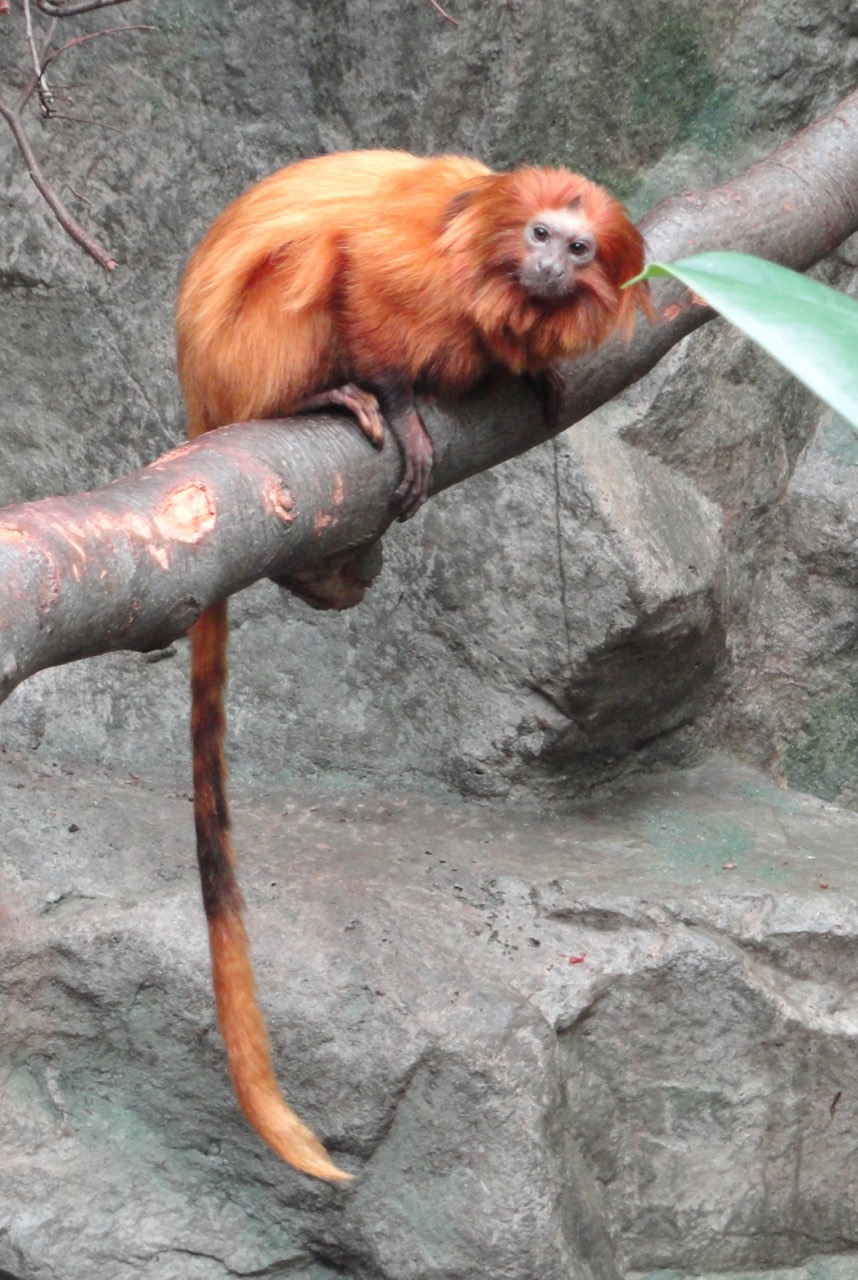
Source: Wikimedia Commons via Wikipedia “Golden lion tamarin”
In brief
A golden lion tamarin (Leontopithecus rosalia) is a small, endangered New World monkey with a bright reddish-gold coat and a lion-like mane, native only to the Atlantic Forest of southeastern Brazil.
Also in Animals A to Z · Animals that start with G
How you can help
You can support the related appeal — read its purpose, recipient status and fund terms first — or give once to where it is needed most. Sharing accurate information helps too.
By WARN Research & Conservation TeamLast updated
The golden lion tamarin is a small, vividly orange monkey found only in the lowland Atlantic Forest of Rio de Janeiro state, Brazil. Once down to fewer than 200 wild animals in the 1960s, it has become a global symbol of conservation recovery, rebounding to roughly 4,800 individuals. It remains Endangered, hemmed into scattered forest fragments that conservationists are stitching back together with replanted corridors.
~4,800
Estimated wild population (2023 census)
<200
Wild animals left at 1960s low point
~2%
Of original Atlantic Forest habitat remaining
482–680 g
Adult body weight
Figures sourced from IUCN Red List – Leontopithecus rosalia, CITES – Golden Lion Tamarin, Smithsonian's National Zoo – Golden lion tamarin and other references on this page.
Golden Lion Tamarin: Quick Facts
| Lifespan | ~8 years wild; up to 20+ in human care |
|---|---|
| Weight | 482–680 g |
| Head-body length | ~20–25 cm (tail ~26–40 cm) |
| Diet | Omnivore: fruit, nectar, gums, insects, small vertebrates |
| Gestation | ~4.5 months |
| Young per birth | Usually twins |
| Baby name | Infant |
| Group name | Family group or troop (2–8 members) |
| Range | Atlantic Forest, Rio de Janeiro state, Brazil |
| CITES | Appendix I (since 1975) |
Scientific Classification
| Kingdom | Animalia |
|---|---|
| Phylum | Chordata |
| Class | Mammalia |
| Order | Primates |
| Family | Callitrichidae |
| Genus | Leontopithecus |
| Species | Leontopithecus rosalia (Linnaeus, 1766) |
Conservation Status
- IUCN Status
- Endangered
- Population
- ~4,800 in the wild (2023 census); fewer than 200 at the 1960s low
- Trend
- Stable
- Assessed
- 2019 (assessment published 2021)
- CITES
- Appendix I
Down-listed from Critically Endangered to Endangered in 2003 after decades of breeding, reintroduction and habitat-restoration work; a 2017 yellow-fever outbreak killed roughly a third of the wild population.
Did you know?
Golden lion tamarin fathers do most of the baby-carrying, hauling their twins around on their backs and handing them over to the mother only at feeding time.
Key Facts: Golden Lion Tamarin
- Endemic to the Atlantic Forest of Rio de Janeiro state, Brazil, and found nowhere else in the wild.
- Classified Endangered by the IUCN, down-listed from Critically Endangered in 2003 after decades of recovery work.
- Wild numbers rose from fewer than 200 in the 1960s to roughly 4,800 by the 2023 census.
- Listed on CITES Appendix I, banning commercial international trade.
- Lives in close family groups of 2–8 and almost always gives birth to twins, with fathers and older siblings helping carry the young.
- A 2017 yellow-fever outbreak killed about a third of the wild population, and habitat fragmentation remains its biggest long-term threat.
Why it is endangered
The golden lion tamarin's entire natural range sits inside the Atlantic Forest of southeastern Brazil, one of the most heavily cleared biomes on Earth. Centuries of logging, charcoal production, agriculture, cattle ranching and urban expansion have left only around 2% of the original forest, broken into small, isolated islands of mostly second-growth vegetation. Because the species depends on continuous tree canopy, these fragments trap small populations that cannot mix, raising the risk of inbreeding and local extinction. The IUCN lists the tamarin as Endangered under criterion B1ab(iii), reflecting a tiny and fragmented range rather than a free-falling population.
Behaviour and ecology
Golden lion tamarins are diurnal, arboreal and squirrel-like, leaping and bounding through the mid-canopy in search of food. They are omnivores, eating fruit, flowers, nectar, plant gums, insects, spiders, snails, small lizards and bird eggs, and they use their long, slender fingers to probe bark crevices and bromeliads for hidden prey. They live in cohesive family groups of two to eight, usually built around a single breeding pair. Twins are the norm, and infant care is shared: fathers and older offspring carry the babies on their backs, returning them to the mother only to nurse. Groups sleep in tree holes and defend a home range of roughly 0.4 to 1 square kilometre with scent marks and calls.
Threats and the comeback
The story of this species is unusually hopeful. Coordinated zoo breeding, reintroduction of captive-born animals, translocation of isolated groups and large-scale forest restoration lifted wild numbers from fewer than 200 to several thousand, and earned the 2003 down-listing from Critically Endangered to Endangered. But the recovery is fragile. In 2017 a yellow-fever epidemic swept through and killed roughly a third of the wild population, prompting an emergency vaccination effort. Ongoing fragmentation, road deaths, illegal capture for the pet trade and disease outbreaks mean the species still cannot survive without active management.
What rescue and recovery involve
Saving the golden lion tamarin is as much about forests as about monkeys. The central strategy is connectivity: replanting native trees to build corridors that link isolated forest patches so separated family groups can meet, breed and recolonise. Other work includes monitoring and health screening of wild groups, vaccinating against yellow fever, rescuing and rehabilitating animals caught in the pet trade or stranded by clearance, and supporting the captive-breeding insurance population. All of it relies on Brazilian field teams, landowners and local communities choosing to protect and restore the forest the tamarin needs.
Golden lion tamarin vs golden-headed lion tamarin
| Feature | Golden lion tamarin | Golden-headed lion tamarin |
|---|---|---|
| Scientific name | Leontopithecus rosalia | Leontopithecus chrysomelas |
| Coat | Uniform reddish-gold | Black body with golden mane, limbs and tail |
| Range | Rio de Janeiro state, Brazil | Southern Bahia state, Brazil |
| IUCN status | Endangered | Endangered |
| CITES | Appendix I | Appendix I |
What WARN Does
WARN publishes this guide for education and is developing support through assessed animal-welfare grants. A species range, source citation or photograph does not establish a recipient or funding agreement. Check /about/where-your-money-goes/#grant-register for published grant and payment records; records not yet published must not be read as zero activity. Browse /appeals/ for the purposes currently available to support.
Every gift helps fund the Brazilian field partners replanting the forest corridors that let isolated golden lion tamarin families find each other again — turning fragmented habitat back into a living forest.
How can I help save the golden lion tamarin?
Explore practical ways to support the golden lion tamarin, from everyday choices and sharing reliable information to reviewing a related appeal before giving.
Explore ways to support
Read the related appeal’s purpose, recipient status and fund terms. Choose an affordable gift after checking what is proposed and what has been reported.
Ease the pressures
Avoid the wildlife trade and souvenirs, never buy wild animals as pets, and choose sustainable, habitat-friendly products — the threats behind the golden lion tamarin's decline fall when demand does.
Spread the word
Share accurate, sourced information about the golden lion tamarin. Wider awareness is what turns concern into lasting protection.
Golden Lion Tamarin: Frequently Asked Questions
How can I help save the golden lion tamarin?
How long do golden lion tamarins live?
What do golden lion tamarins eat?
How big is a golden lion tamarin?
Are golden lion tamarins dangerous?
How many golden lion tamarins are left?
What is a baby golden lion tamarin called?
Where do golden lion tamarins live?
Sources & References
Population figures, conservation status and biological facts on this page are drawn from authoritative scientific and intergovernmental sources.
Terms used on this page
Plain-English definitions, from our wildlife and conservation glossary.
Latest Golden Lion Tamarin Stories
Quick, fact-checked reads on the golden lion tamarin — amazing facts, key questions and the threats it faces.
Species
12 Amazing Facts About the Golden Lion Tamarin
From its flame-coloured mane to its almost-always-twin births, the golden lion tamarin is one of the most remarkable little monkeys on Earth. Here are 12 facts worth knowing.
Read the storySpecies
Why Are Golden Lion Tamarins Endangered — and How Did They Recover?
The golden lion tamarin fell to fewer than 200 wild animals before clawing its way back. Here is why it became endangered and what turned the tide.
Read the storySpecies
Golden Lion Tamarin vs Golden-Headed Lion Tamarin: Key Differences
They share a genus, a mane and an endangered status, but the golden lion tamarin and golden-headed lion tamarin are easy to tell apart once you know what to look for.
Read the storyExplore more animals
Discover more animals, their habitats and their conservation status in the WARN wildlife-guide library.