Wildlife Guide · North America & Eastern United States
Groundhog
Marmota monax
North America's burrowing marmot and the star of Groundhog Day.
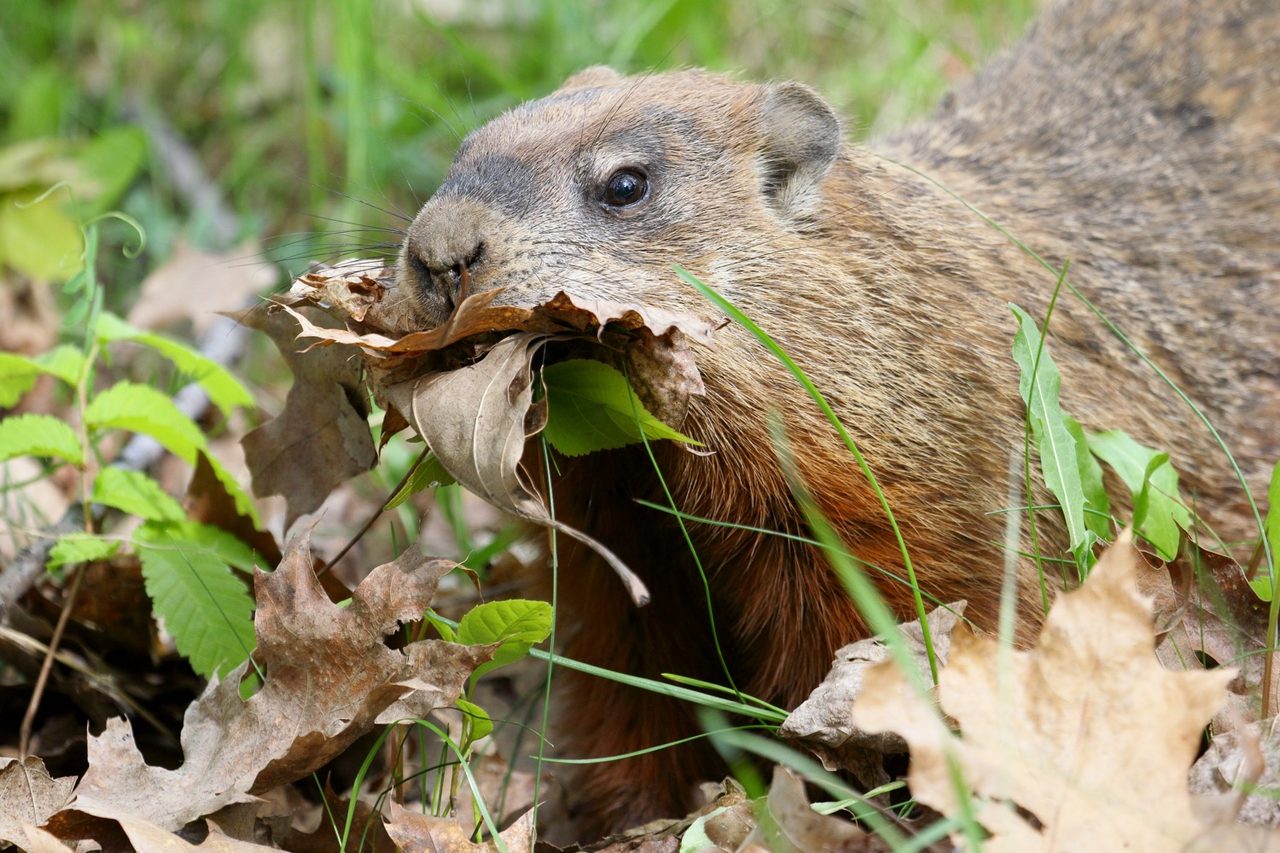
Source: Wikimedia Commons — “Marmota monax UL 07” by Cephas, CC BY-SA 4.0
In brief
A groundhog (Marmota monax) is a large North American ground squirrel, or marmot, in the squirrel family. A stout, powerful burrower and true hibernator weighing up to about 6 kilograms, it lives across the eastern United States and Canada and is famous for Groundhog Day.
Also in Animals A to Z · Animals that start with G
By WARN Research & Conservation TeamLast updated
The groundhog (Marmota monax), also called the woodchuck or whistle-pig, is a large ground squirrel native to North America. Despite its earthbound, burrowing life, it belongs to the marmot group within the squirrel family, Sciuridae. Groundhogs are stout, short-legged rodents built for digging, and they are among the few true hibernators in the rodent world, sleeping away the coldest months in deep underground dens. Widespread across the eastern United States, much of Canada and into Alaska, the groundhog is a familiar sight in meadows, field edges and gardens. It is best known worldwide as the animal at the heart of the Groundhog Day weather tradition, held each 2 February.
~6 kg
Top adult weight before hibernation
4-10
Heartbeats per minute while hibernating
~7 m
Longest recorded burrow tunnel
3-5
Typical young per litter, once a year
Figures sourced from Groundhog - Wikipedia, IUCN Red List - Marmota monax, Woodchuck (Marmota monax) - Britannica and other references on this page.
Groundhog: Quick Facts
| Common names | Groundhog, woodchuck, whistle-pig |
|---|---|
| Scientific name | Marmota monax |
| Animal group | Marmot (a large ground squirrel) |
| Body length | About 42-69 cm, plus a short tail |
| Weight | About 2-6 kg (heaviest before winter) |
| Range | Eastern USA, much of Canada, into Alaska |
| Habitat | Meadows, field edges, woodland margins, gardens |
| Diet | Herbivore: grasses and leafy plants |
| Hibernation | True hibernator, roughly October to spring |
| Lifespan | About 2-3 years wild; up to ~14 in captivity |
Scientific Classification
| Kingdom | Animalia |
|---|---|
| Phylum | Chordata |
| Class | Mammalia |
| Order | Rodentia |
| Family | Sciuridae (squirrels and marmots) |
| Genus | Marmota |
| Species | Marmota monax |
Conservation Status
- IUCN Status
- Least Concern. The groundhog is a common, widespread and adaptable species across North America, and is not considered globally threatened. It tolerates human-altered landscapes well and is often regarded as a garden or agricultural pest rather than a species of conservation concern.
- Population
- No global total; abundant and common throughout its large range
- Trend
- Stable
- Assessed
- 2016
- CITES
- Not listed in CITES Appendices
While the species overall is secure, groundhogs face local pressures from road traffic, lethal pest control and habitat change. They play a useful ecological role: their abandoned burrows shelter other wildlife, and their digging helps turn and aerate the soil.
Key Facts: Groundhog
- The groundhog is a marmot, a large ground-dwelling squirrel, not a separate kind of animal from woodchucks; the two names refer to the same species.
- It is a true hibernator, dropping its body temperature to near freezing and its heart rate to a handful of beats per minute through winter.
- Powerful claws and stocky limbs make it an expert digger, moving large volumes of soil to build multi-entrance burrows.
- Groundhogs are almost entirely herbivorous, eating grasses and garden plants and fattening rapidly before winter.
- The species is listed as Least Concern by the IUCN, common and widespread across North America.
- Each 2 February, a groundhog stars in the Groundhog Day folk tradition predicting the arrival of spring.
What is a groundhog and where does it live?
The groundhog is one of around fifteen marmot species and the only one widely adapted to lowland life rather than mountains. Stocky and powerfully built, an adult measures roughly 42 to 69 centimetres in body length with a short, bushy tail, and weighs between about 2 and 6 kilograms, with the heaviest individuals reaching peak mass just before winter. Its coarse fur is typically grizzled brown, and short, strong limbs end in curved claws suited to digging. Groundhogs range across eastern North America, from the eastern and central United States through much of Canada and into Alaska. They favour open and edge habitats: meadows, pastures, woodland margins, hedgerows, road verges and increasingly suburban gardens and parks. This adaptability to human-altered landscapes is one reason the species remains so common. Each groundhog centres its life on a burrow system, rarely straying far from a den entrance, and will rear up on its hind legs to scan for danger, whistling a sharp alarm call that earns it the nickname whistle-pig.
How do groundhogs hibernate?
Groundhogs are among the few mammals that are true, deep hibernators, distinct from animals that merely sleep more in winter. From roughly October until February, March or April, depending on latitude, a groundhog retreats to a separate winter chamber below the frost line and enters a profound state of torpor. Its body temperature falls dramatically, dropping to as low as about 2 degrees Celsius, close to the temperature of the surrounding soil. Its heart rate slows from a normal pace to just 4 to 10 beats per minute, and breathing may drop to a single breath every six minutes. To survive this fast, the groundhog spends late summer and autumn eating voraciously, sometimes nearly doubling its weight, then slowly burns those fat reserves through winter, emerging in spring having lost up to half its body mass. This extreme physiology is so striking that groundhogs have become important research subjects for understanding metabolism, body-temperature regulation and the biology of hibernation.
Why are groundhogs such good diggers, and what do they eat?
Digging defines the groundhog's life. Using strong forelimbs and claws, a single animal can excavate a burrow system with two to five entrances and tunnels that, in the longest recorded cases, stretch around seven metres, complete with separate chambers for nesting, hibernating and toileting. These burrows shelter the groundhog from predators and weather and, once abandoned, provide homes for other wildlife such as foxes, rabbits and amphibians, while the churned soil helps aerate and mix the earth. The downside, from a human view, is that burrows can undermine field edges and gardens. Groundhogs are essentially herbivorous, feeding on grasses, clover, dandelions, plantains and a wide range of leafy plants, along with garden vegetables, fruit and occasionally crops, which is why they are often regarded as pests by growers. An adult may eat more than half a kilogram of vegetation in a single day during the feeding season, fuel for the long winter fast ahead.
What is Groundhog Day?
Groundhog Day, observed on 2 February, is a North American folk tradition with roots in older European weather customs tied to Candlemas. According to the lore, if a groundhog emerges from its burrow and sees its shadow, six more weeks of winter will follow; if the day is cloudy and it casts no shadow, spring will arrive early. The most famous participant is a groundhog in Punxsutawney, Pennsylvania, though several towns across the United States and Canada hold their own ceremonies. In reality the date falls in the middle of the groundhog's hibernation period, and the prediction has no meteorological value, a groundhog roused in early February would normally return underground. The tradition is best understood as cultural celebration and seasonal folklore rather than science, but it has made this otherwise unassuming rodent one of the most recognised wild mammals in the world.
Groundhog vs other marmots
| Feature | Groundhog (woodchuck) | Other marmots (e.g. alpine and yellow-bellied) |
|---|---|---|
| Typical habitat | Lowland meadows, field edges, gardens | Mostly mountains and high alpine slopes |
| Sociality | Largely solitary | Often live in colonies |
| Range | Eastern USA, Canada, Alaska | Western North America, Europe, Asia |
| Hibernation | Deep true hibernator | Also deep hibernators |
| Fame | Star of Groundhog Day | Less culturally prominent |
What WARN Does
WARN does not run field conservation projects specifically for the groundhog, which is a common, Least Concern species living outside the countries where WARN's partners work partner countries. This guide is part of WARN's free educational work, helping people understand and value wildlife. The broader threats that touch all wild animals, especially habitat loss and the steady conversion of meadows and field edges, are the same pressures that endanger the species WARN does protect in its partner regions.
If this guide helped you see a familiar burrowing neighbour in a new light, a small gift helps keep WARN's free wildlife education growing.
Groundhog: Frequently Asked Questions
Is a groundhog the same as a woodchuck?
Are groundhogs rodents or related to squirrels?
Do groundhogs really hibernate?
What do groundhogs eat?
Are groundhogs dangerous to people or gardens?
How long do groundhogs live?
Where do groundhogs live?
How big is a groundhog?
Sources & References
Population figures, conservation status and biological facts on this page are drawn from authoritative scientific and intergovernmental sources.
Terms used on this page
Plain-English definitions, from our wildlife and conservation glossary.
Latest Groundhog Stories
Quick, fact-checked reads on the groundhog — amazing facts, key questions and the threats it faces.
Species
12 Amazing Facts About Grey Wolves (And Why Alpha Wolves Aren't Real)
A howl that carries 16 km, a pack that is really a family, and the debunked study behind the 'alpha wolf' myth. Twelve verified facts.
Read the storySpecies
12 Amazing Facts About Sea Otters (The Densest Fur on Earth, and Tool Use)
A million hairs per square inch, a favourite rock kept in a pouch, and a keystone role holding kelp forests together.
Read the storySpecies
12 Amazing Facts About Narwhals (The Tusk Is a Tooth, and It Can Sense)
A left canine that grows through the lip, ten million nerve endings, and dives past 1,500 metres. Twelve narwhal facts.
Read the storyExplore more animals
Discover more animals, their habitats and their conservation status in the WARN wildlife-guide library.