Guinea Pig Breed · Domestic (hairless mutation)
Skinny
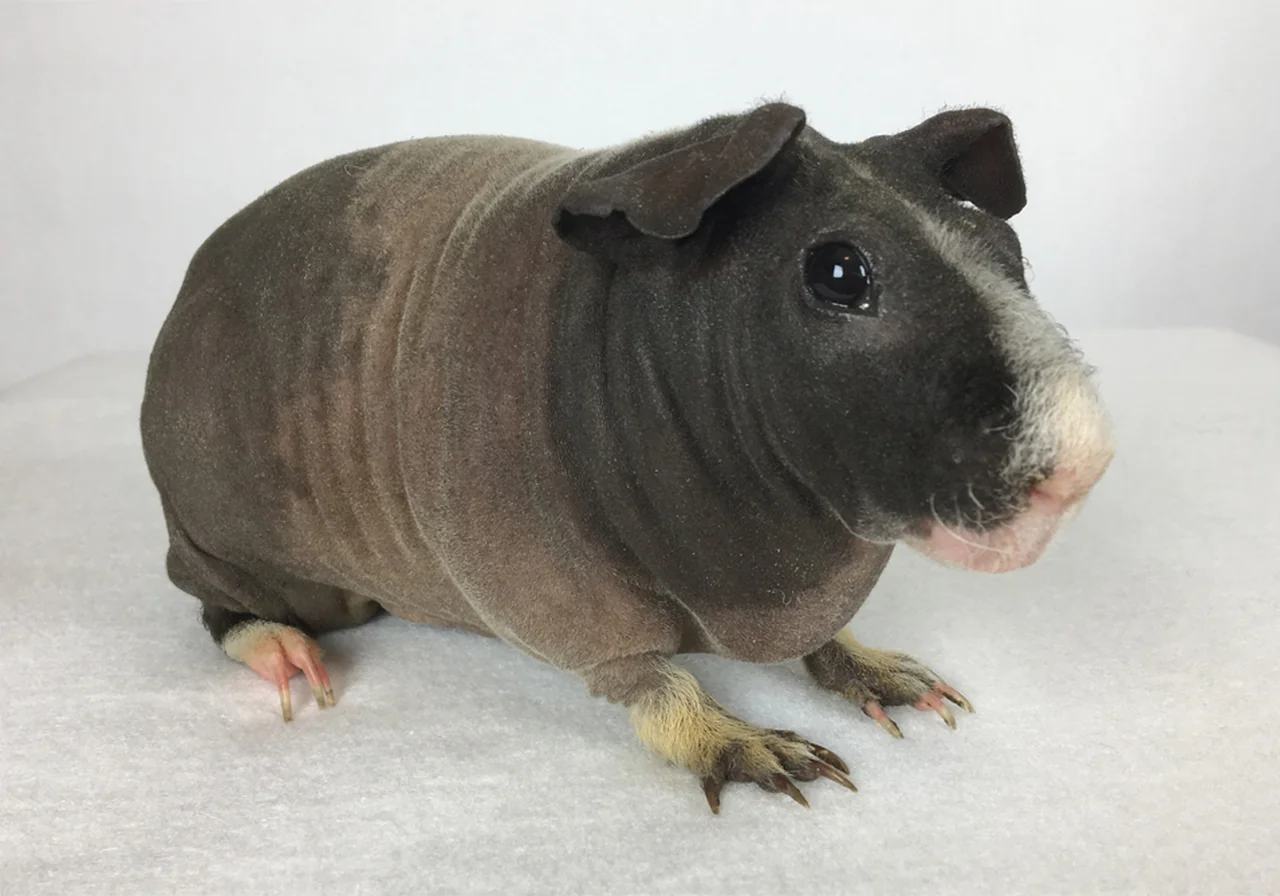
Mostly hairless with fuzzy face and feet — requires warm housing and skin care.
By WARN Research & Conservation TeamLast updated
In brief
The Skinny guinea pig is a mostly hairless cavy retaining fuzzy muzzle, feet and sometimes shoulders — developed from laboratory hairless lines entering the pet trade. Its defining trait is high thermoregulation need: warm indoor housing around 22–24 °C, soft bedding and furred companions for warmth.
What are the key facts about a Skinny?
The Skinny is a guinea pig breed from Domestic (hairless mutation): medium (0.8–1.1 kg), social, warmth-seeking, needs protection. Mostly hairless with fuzzy face and feet — requires warm housing and skin care.
| Origin | Domestic (hairless mutation) |
|---|---|
| Size | Medium (0.8–1.1 kg) |
| Adult weight | 800–1,100 g (1.8–2.4 lb); lean appearance can mask weight loss — weigh weekly |
| Lifespan | 5–7 years |
| Coat type | Largely hairless skin with fine down on face and feet; pigment varies — pink skin burns in sun. Apply lotion only if an exotics vet recommends — otherwise avoid products that clog pores. |
| Temperament | Social, warmth-seeking, needs protection |
| Best suited to | Experienced indoor keepers maintaining stable room temperature, soft fleece bedding and at least one furred companion for huddling — not outdoor hutches. |
Is a Skinny a good guinea pig for you?
A Skinny is a good guinea pig when your home matches experienced indoor keepers maintaining stable room temperature, soft fleece bedding and at least one furred companion for huddling — not outdoor hutches.. It is a social, warmth-seeking, needs protection medium (0.8–1.1 kg) breed from Domestic (hairless mutation).
Mostly hairless with fuzzy face and feet — requires warm housing and skin care. That one-line pitch is not a care plan. Factor grooming (Largely hairless skin with fine down on face and feet; pigment varies — pink skin burns in sun. Apply lotion only if an exotics vet recommends — otherwise avoid products that clog pores.), typical adult size (800–1,100 g (1.8–2.4 lb); lean appearance can mask weight loss — weigh weekly), and the health issues listed below before you pay a deposit.
Meet adults of the breed, not only puppies or kittens, and prefer rescue or health-screened homes. A Skinny that looks right in a photo can still be the wrong animal for a small flat, a full-time office job, or a household that wanted a low-energy companion.
What is a Skinny?
Mostly hairless with fuzzy face and feet — requires warm housing and skin care. Origin is Domestic (hairless mutation); coat or markings are described as Largely hairless skin with fine down on face and feet; pigment varies — pink skin burns in sun. Apply lotion only if an exotics vet recommends — otherwise avoid products that clog pores..
Kennel and registry labels describe a type. Individual Skinnys still vary, and rescue animals may be mixes.
Where does the Skinny come from?
Skinnys come from Domestic (hairless mutation). Hairless guinea pig mutations appeared in Canadian and European laboratory colonies during the late 1970s, bred for dermatology research before entering pet breeding programmes.
Skinnies differ from Baldwin cavies, which lose all hair with age — Skinnies retain fuzzy face and feet throughout life. Pet shops sometimes market Skinnies as 'hypoallergenic' or 'low maintenance' — both claims mislead. Skin requires protection from scratches, sun and cold; furred companions provide behavioural and thermal comfort. Rescue centres report Skinnies surrendered when heating costs or skin care overwhelm owners who bought on appearance alone.
How much care does a Skinny need?
Plan 5–7 years of food, vet care, grooming and time. A Skinny is medium (0.8–1.1 kg) (800–1,100 g (1.8–2.4 lb); lean appearance can mask weight loss — weigh weekly) from Domestic (hairless mutation), with coat care described as largely hairless skin with fine down on face and feet; pigment varies — pink skin burns in sun. apply lotion only if an exotics vet recommends — otherwise avoid products that clog pores..
Match daily exercise to the social, warmth-seeking, needs protection temperament rather than to Instagram.
Grooming follows the coat, not a generic clip: Largely hairless skin with fine down on face and feet; pigment varies — pink skin burns in sun. Apply lotion only if an exotics vet recommends — otherwise avoid products that clog pores.. Keep the animal lean; extra weight is a joint and heart tax, especially in a medium guinea pig.
Budget for unexpected vet bills. The health section below is why “cheap to buy” is not the same as cheap to keep.
What surprises people about the Skinny?
A few details about the breed, alongside the practical care information in this guide.
- Skinny pigs lose heat rapidly — they huddle with furred cage mates for warmth.
- They were developed from laboratory colonies before entering specialist pet breeding.
- Sunburn through windows is a real risk for pink-skinned Skinnies.
- Skin texture shows visible pores — unlike furred cavies where skin is hidden.
What health issues should you know about in a Skinny?
Health concerns to discuss with your vet, including changes to watch for and everyday care. This is general guidance, not veterinary advice — always speak to your vet.
Temperature stress
Chilling causes lethargy and appetite loss; overheating causes panting — hairless cavies have narrow thermal comfort zones.
Care: Maintain 22–24 °C indoors, avoid drafts and monitor room temperature seasonally.
Skin injuries
Scratches from nails or rough bedding become infected quickly on exposed skin.
Care: Soft bedding, regular nail trims on all pen mates and prompt vet care for open wounds.
Dental malocclusion
Hairlessness does not affect tooth growth — weight loss may be visible early on lean bodies.
Care: Weigh weekly, offer unlimited hay and schedule exotics dental checks annually.
Who should skip a Skinny?
Skip a Skinny if you are homes that cannot match a social, warmth-seeking, needs protection medium (0.8–1.1 kg) guinea pig from Domestic (hairless mutation). This Domestic (hairless mutation) guinea pig is medium (0.8–1.1 kg) and social, warmth-seeking, needs protection — the mismatch is usually lifestyle, not a missing accessory.
This page is allowed to say no. Skip if you are homes that cannot match a social, warmth-seeking, needs protection medium (0.8–1.1 kg) guinea pig from Domestic (hairless mutation).
A different guinea pig breed on this site may fit. Wanting “a Skinny” after a film or a colour photo is not a reason to ignore the skip list.
What are the hidden catches with a Skinny?
The hidden cost of a Skinny is usually not the purchase price. It is years of care, the health list on this page, and the mismatch between a social, warmth-seeking, needs protection animal and a busy home.
The impulse-buy catch
A Skinny from Domestic (hairless mutation) is often sold on looks. Coat, colour and size are not a temperament test. Meet the adult animal, ask about health screening, and walk away from pressure sales.
The temperature stress catch
Chilling causes lethargy and appetite loss; overheating causes panting — hairless cavies have narrow thermal comfort zones. Maintain 22–24 °C indoors, avoid drafts and monitor room temperature seasonally.
The skin injuries catch
Scratches from nails or rough bedding become infected quickly on exposed skin. Soft bedding, regular nail trims on all pen mates and prompt vet care for open wounds.
How does a Skinny compare with Himalayan and Texel?
A Skinny is not interchangeable with Himalayan and Texel. Compare origin, size, lifespan and temperament before you choose — those four lines prevent most regret.
| Guinea Pig fact | Skinny | Himalayan | Texel |
|---|---|---|---|
| Origin | Domestic (hairless mutation) | Domestic (colour-point mutation) | England (domestic cross) |
| Size | Medium (0.8–1.1 kg) | Medium (0.9–1.2 kg) | Medium (0.8–1.1 kg) |
| Lifespan | 5–7 years | 5–7 years | 5–7 years |
| Temperament | Social, warmth-seeking, needs protection | Calm, friendly, colour-sensitive | Gentle, needs patient grooming |
What is the verdict on the Skinny?
Choose a Skinny only if the care, skip-if and health sections still look like your life after a week of thinking. Otherwise pick a different guinea pig or wait. Rescue is usually the better first door than a waiting-list puppy or kitten.
If the match is real, budget for 5–7 years of vet care and do not skip health screening. If it is not, walking away is the kind choice — for you and for the animal.
Guinea pigs deserve proper care
Guinea pigs are social, gentle companions that need pairs, spacious enclosures and vitamin C every day. WARN publishes these guides so fewer end up in rescues after impulse purchases.