Wildlife Guide · Trinidad and Tobago & Venezuela
Guppy
Poecilia reticulata (Peters, 1859)
The beginner's tropical fish that science knows best — Least Concern in the wild, mistreated in cups.
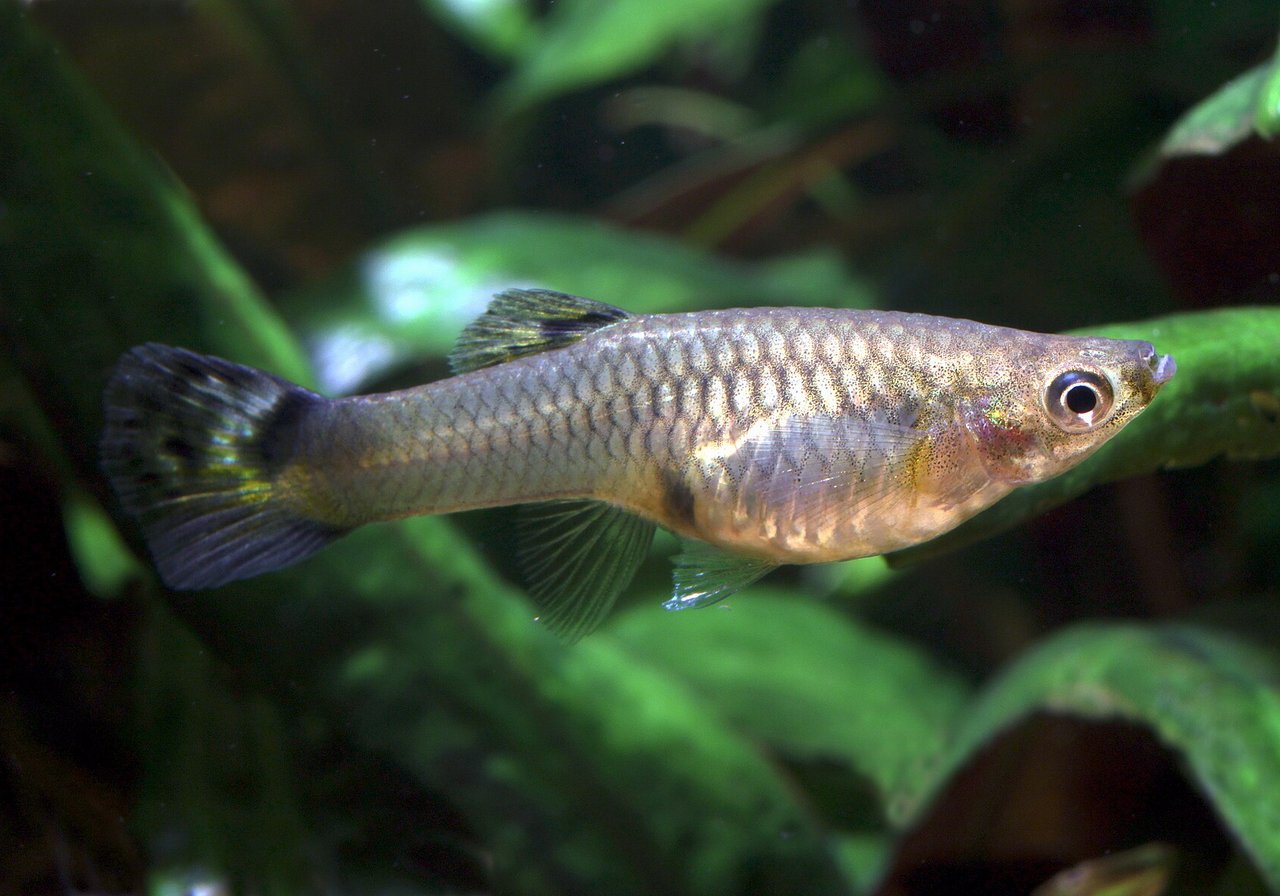
Source: Wikimedia Commons
In brief
Guppies (Poecilia reticulata) are Least Concern livebearing fish of South America — popular aquarium species needing heated filtered tanks, not overcrowded cups; males harass females without adequate cover.
Also in Animals A to Z · Animals that start with G
By WARN Research & Conservation TeamLast updated
The guppy (Poecilia reticulata) is a livebearing poeciliid fish native to north-east South America and the Caribbean, listed Least Concern by the IUCN for abundant wild populations — though local pollution and invasive mongoose predation affect some streams. Guppies revolutionised evolutionary biology through Endler's studies of colour and predation. In aquaria they are bred in countless colour strains — yet are sold as disposable fish in overcrowded cups with no heater or filtration. Wild guppies thrive in warm, hard, flowing water; pet guppies need the same fundamentals despite their 'hardy' reputation.
Least Concern
IUCN Red List status (2019 assessment)
Livebearers
Females store sperm — one mating can produce many broods
24–26 °C
Typical aquarium temperature range
Not listed
CITES — high-volume captive breeding
Figures sourced from IUCN Red List — Poecilia reticulata, OATA — tropical fish welfare, Practical Fishkeeping — guppy care .
Guppy: Quick Facts
| IUCN status | Least Concern (2019) |
|---|---|
| Native range | North-east South America and Caribbean |
| Reproduction | Livebearing — stores sperm, frequent broods |
| Sex ratio | 2–3 females per male recommended |
| Temperature | 24–26 °C typical |
| CITES | Not listed |
Scientific Classification
| Kingdom | Animalia |
|---|---|
| Phylum | Chordata |
| Class | Actinopterygii |
| Order | Cyprinodontiformes |
| Family | Poeciliidae |
| Genus | Poecilia |
| Species | Poecilia reticulata (Peters, 1859) |
Conservation Status
- IUCN Status
- Least Concern (IUCN, 2019). Widespread and abundant; local threats from pollution in some streams.
- Population
- Large and stable in native range; numerous introductions worldwide
- Trend
- Stable
- Assessed
- 2019
- CITES
- Not listed
Key Facts: Guppy
- Wild guppies are Least Concern — abundant in native streams and introductions.
- Guppies are livebearers — populations explode without population control.
- Males constantly chase females — keep two to three females per male with plant cover.
- Sold as 'hardy' but still need heated, filtered tropical tanks.
- Used in mosquito control and malaria research — ecological role beyond pets.
- Never release into wild waterways — invasive where cold tolerance allows survival.
Wild guppies and Least Concern status
Poecilia reticulata inhabits warm streams, ditches and pools from Venezuela to Trinidad — often in tea-coloured soft-acidic water with high tannin content. The IUCN lists guppies Least Concern: populations are large, widely distributed and tolerant of disturbed habitat. That resilience made them model organisms — research on sexual selection, predation and evolution uses wild Trinidadian guppies extensively.
Introduced guppies control mosquito larvae in some regions but disrupt native fish communities where they establish without predators. Least Concern status does not justify careless release from home aquaria.
Livebearing biology and population control
Female guppies store sperm from a single mating and produce broods every four to six weeks — 20 to 40 fry per drop is common. Mixed-sex tanks without planning overflow with fish, crashing water quality and increasing aggression. All-male display tanks or female-only groups avoid breeding; separating sexes early prevents unwanted litters.
Fry need hiding places — dense plants or breeding boxes — or adults eat them. Responsible keepers cull humanely or rehome through aquarium clubs rather than flushing surplus fish. Pet shops should never sell pregnant females to unprepared buyers without explaining livebearing consequences.
Aquarium setup and water quality
Despite the 'beginner fish' label, guppies are tropical — heaters maintaining 24–26 °C and filtration preventing ammonia spikes are essential. Hard, alkaline water suits most strains; sudden parameter swings cause shimmy and fungal outbreaks. Minimum tank sizes of 40 litres for a small group allow stable chemistry.
Overstocking in shop cups trains buyers to accept crowding — home tanks should provide roughly two litres per adult as a minimum guideline, with more always better. Weekly partial water changes and gravel vacuuming remove nitrate accumulation.
Male harassment and welfare ethics
Male guppies display constantly and chase females for copulation — in cramped tanks females exhaust and die from stress. Keeping two to three females per male and dense plant cover where females can escape reduces harm. All-female tanks avoid harassment entirely.
Show strains with extreme tail length swim poorly — consider shorter-tail feeder strains for welfare over appearance. Guppies feel pain and fear; their cheap price does not reduce ethical obligation to provide adequate care.
What WARN Does
WARN publishes free aquarium and freshwater habitat education worldwide. Guppies illustrate how Least Concern wild species become welfare casualties in disposable pet-trade culture — better guides protect fish in tanks and wild waterways from invasive release.
If this guide helps you understand wildlife and the pressures it faces, a gift to WARN supports habitat protection and free public education in our partner countries.
Guppy: Frequently Asked Questions
Are guppies endangered?
Do guppies need a heater?
Why are my guppies breeding so fast?
How many females per male guppy?
What do guppies eat?
Where do guppies live?
Are guppies dangerous?
How long do guppies live?
How big is a guppy?
Sources & References
Population figures, conservation status and biological facts on this page are drawn from authoritative scientific and intergovernmental sources.
Terms used on this page
Plain-English definitions, from our wildlife and conservation glossary.
Explore more animals
Discover more animals, their habitats and their conservation status in the WARN wildlife-guide library.