Hamster Breed · Domestic (Syrian colour morph)
Black Bear
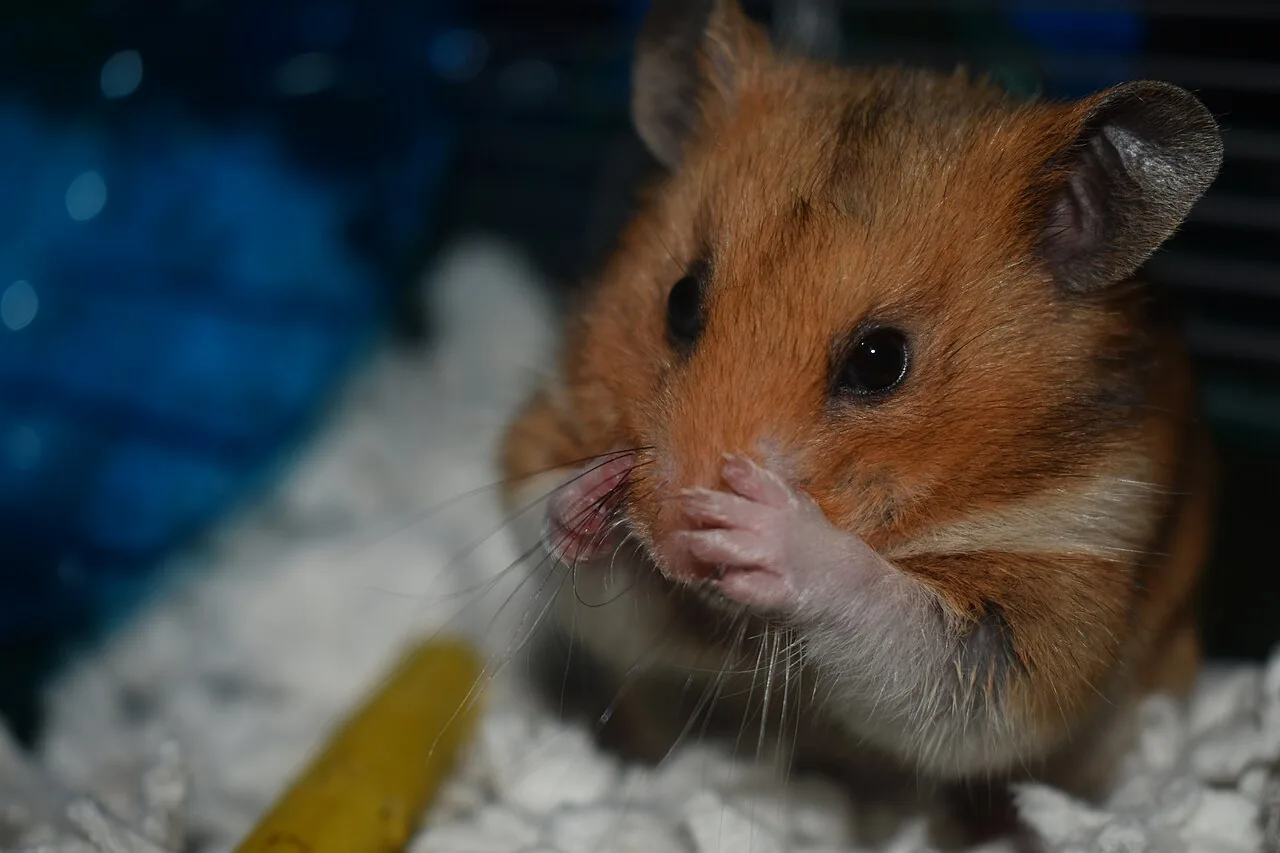
Dark-coated Syrian morph marketed as 'black bear' — care matches all Syrians.
By WARN Research & Conservation TeamLast updated
In brief
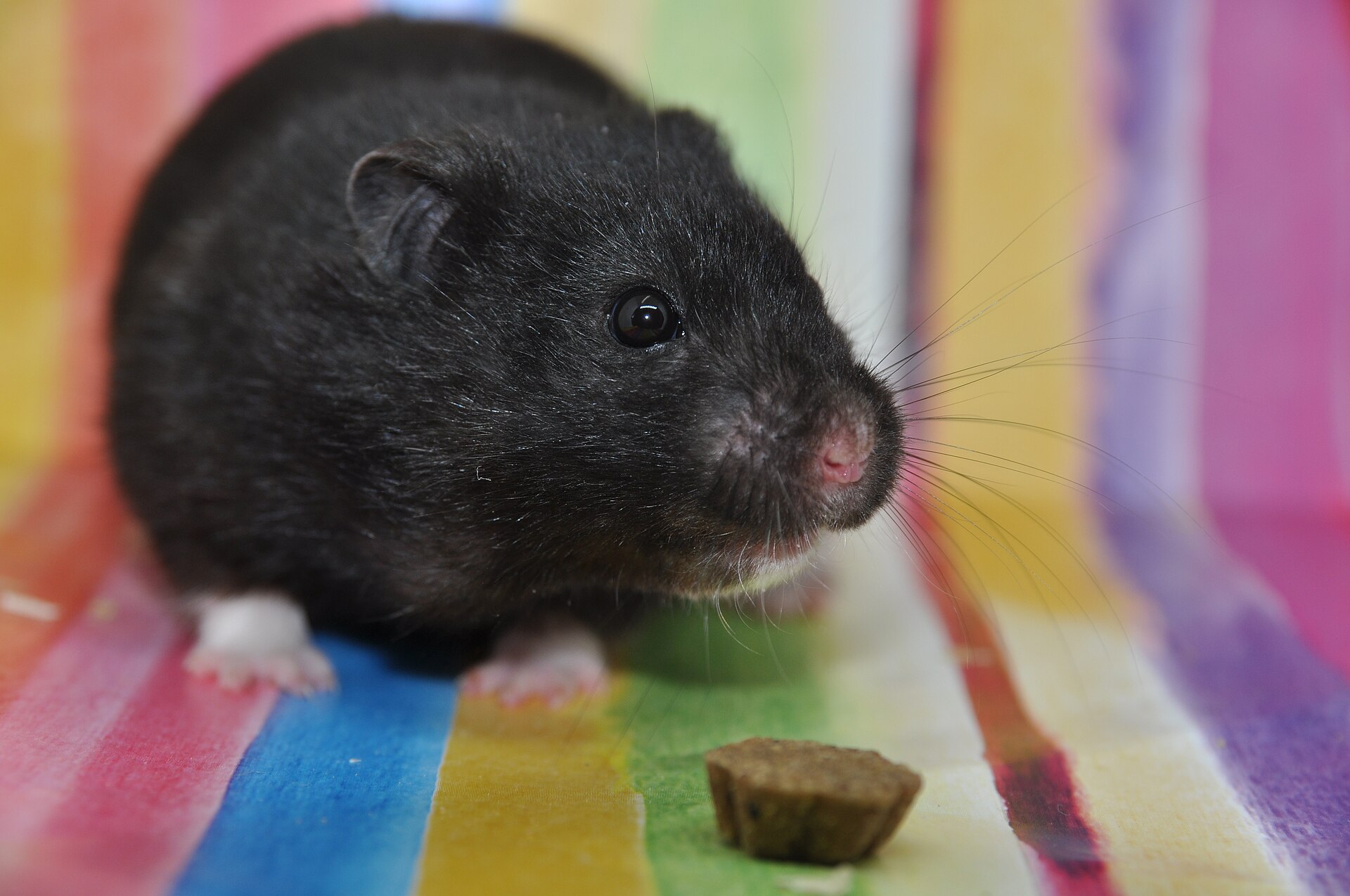
The Black bear hamster is a dark-coated Syrian colour morph — deep brown to black fur sometimes with white markings, marketed under a catchy name. Its defining trait is identical Syrian welfare: solitary adult housing, large wheels and no pairing regardless of pet-shop branding.
What are the key facts about a Black Bear?
The Black Bear is a hamster breed from Domestic (Syrian colour morph): medium (100–200 g), calm, solitary, nocturnal. Dark-coated Syrian morph marketed as 'black bear' — care matches all Syrians.
| Origin | Domestic (Syrian colour morph) |
|---|---|
| Size | Medium (100–200 g) |
| Adult weight | 100–200 g (3.5–7 oz); dark coat may show faint dorsal stripe in some lines |
| Lifespan | 1.5–3 years (species-dependent) |
| Coat & colour | Short, dense black to dark chocolate fur; occasional white paws or bibs. Satin crosses may add gloss — avoid breeding two satins together. Coat shows dandruff if bedding is dusty. |
| Temperament | Calm, solitary, nocturnal |
| Best suited to | Syrian-experienced keepers who ignore colour marketing and provide species-appropriate burrowing depth — black morphs suit the same households as golden Syrians. |
Is a Black Bear a good hamster for you?
A Black Bear is a good hamster when your home matches syrian-experienced keepers who ignore colour marketing and provide species-appropriate burrowing depth — black morphs suit the same households as golden syrians.. It is a calm, solitary, nocturnal medium (100–200 g) breed from Domestic (Syrian colour morph).
Dark-coated Syrian morph marketed as 'black bear' — care matches all Syrians. That one-line pitch is not a care plan. Factor grooming (Short, dense black to dark chocolate fur; occasional white paws or bibs. Satin crosses may add gloss — avoid breeding two satins together. Coat shows dandruff if bedding is dusty.), typical adult size (100–200 g (3.5–7 oz); dark coat may show faint dorsal stripe in some lines), and the health issues listed below before you pay a deposit.
Meet adults of the breed, not only puppies or kittens, and prefer rescue or health-screened homes. A Black Bear that looks right in a photo can still be the wrong animal for a small flat, a full-time office job, or a household that wanted a low-energy companion.
What is a Black Bear?
Dark-coated Syrian morph marketed as 'black bear' — care matches all Syrians. Origin is Domestic (Syrian colour morph); coat or markings are described as Short, dense black to dark chocolate fur; occasional white paws or bibs. Satin crosses may add gloss — avoid breeding two satins together. Coat shows dandruff if bedding is dusty..
Kennel and registry labels describe a type. Individual Black Bears still vary, and rescue animals may be mixes.
Where does the Black Bear come from?
Black Bears come from Domestic (Syrian colour morph). Black Syrian colour morphs were fixed through selective breeding from agouti stock in American pet trade lines during the late twentieth century.
'Black bear' is marketing, not a separate breed. Coat colour does not alter behaviour, lifespan or solitary requirement. Some black Syrians fade slightly with age or sun exposure — a cosmetic change only.
That origin still shows. A Black Bear is medium (100–200 g) and calm, solitary, nocturnal, typically living 1.5–3 years (species-dependent). Use the history as context for care and conservation, not as folklore to repeat without sources.
How much care does a Black Bear need?
Plan 1.5–3 years (species-dependent) of food, vet care, grooming and time. A Black Bear is medium (100–200 g) (100–200 g (3.5–7 oz); dark coat may show faint dorsal stripe in some lines) from Domestic (Syrian colour morph), with coat care described as short, dense black to dark chocolate fur; occasional white paws or bibs. satin crosses may add gloss — avoid breeding two satins together. coat shows dandruff if bedding is dusty..
Match daily exercise to the calm, solitary, nocturnal temperament rather than to Instagram.
Grooming follows the coat, not a generic clip: Short, dense black to dark chocolate fur; occasional white paws or bibs. Satin crosses may add gloss — avoid breeding two satins together. Coat shows dandruff if bedding is dusty.. Keep the animal lean; extra weight is a joint and heart tax, especially in a medium hamster.
Budget for unexpected vet bills. The health section below is why “cheap to buy” is not the same as cheap to keep.
What surprises people about the Black Bear?
A few details about the breed, alongside the practical care information in this guide.
- Black bear is a pet-trade name — genetically a black Syrian colour morph.
- Some lines show white 'bib' markings reminiscent of Asian black bears — hence marketing.
- Coat may brown slightly with age — not a health concern.
- Eye colour remains black in true black Syrians — red eyes suggest different genetics.
What health issues should you know about in a Black Bear?
Health concerns to discuss with your vet, including changes to watch for and everyday care. This is general guidance, not veterinary advice — always speak to your vet.
Wet tail
Emergency diarrhoeal disease in newly purchased Syrians of any colour.
Care: Immediate exotics veterinary treatment and warmth.
Obesity
Hidden weight gain when fed ad lib high-fat mixes.
Care: Measured feeding and daily wheel access.
Dental malocclusion
Incisor overgrowth prevents eating.
Care: Regular chews and professional trimming when needed.
Who should skip a Black Bear?
Skip a Black Bear if you are homes that cannot match a calm, solitary, nocturnal medium (100–200 g) hamster from Domestic (Syrian colour morph). This Domestic (Syrian colour morph) hamster is medium (100–200 g) and calm, solitary, nocturnal — the mismatch is usually lifestyle, not a missing accessory.
This page is allowed to say no. Skip if you are homes that cannot match a calm, solitary, nocturnal medium (100–200 g) hamster from Domestic (Syrian colour morph).
A different hamster breed on this site may fit. Wanting “a Black Bear” after a film or a colour photo is not a reason to ignore the skip list.
What are the hidden catches with a Black Bear?
The hidden cost of a Black Bear is usually not the purchase price. It is years of care, the health list on this page, and the mismatch between a calm, solitary, nocturnal animal and a busy home.
The impulse-buy catch
A Black Bear from Domestic (Syrian colour morph) is often sold on looks. Coat, colour and size are not a temperament test. Meet the adult animal, ask about health screening, and walk away from pressure sales.
The wet tail catch
Emergency diarrhoeal disease in newly purchased Syrians of any colour. Immediate exotics veterinary treatment and warmth.
The obesity catch
Hidden weight gain when fed ad lib high-fat mixes. Measured feeding and daily wheel access.
How does a Black Bear compare with Satin and Russian Dwarf?
A Black Bear is not interchangeable with Satin and Russian Dwarf. Compare origin, size, lifespan and temperament before you choose — those four lines prevent most regret.
| Hamster fact | Black Bear | Satin | Russian Dwarf |
|---|---|---|---|
| Origin | Domestic (Syrian colour morph) | Domestic (Syrian coat mutation) | Central Asia (pet-trade grouping) |
| Size | Medium (100–200 g) | Medium (100–200 g) | Small (30–45 g) |
| Lifespan | 1.5–3 years (species-dependent) | 1.5–3 years (species-dependent) | 1.5–3 years (species-dependent) |
| Temperament | Calm, solitary, nocturnal | Active, solitary, glossy-coated | Active, social in pairs, easily startled |
What is the verdict on the Black Bear?
Choose a Black Bear only if the care, skip-if and health sections still look like your life after a week of thinking. Otherwise pick a different hamster or wait. Rescue is usually the better first door than a waiting-list puppy or kitten.
If the match is real, budget for 1.5–3 years (species-dependent) of vet care and do not skip health screening. If it is not, walking away is the kind choice — for you and for the animal.
Small pets, big responsibility
Hamsters live short but full lives — Syrian hamsters need solitary housing with deep bedding and wheels sized for their backs. These guides help owners meet welfare basics.