Wildlife Guide · Kenya & Tanzania
Hippopotamus
Hippopotamus amphibius
Africa's deadliest large herbivore, a semi-aquatic giant facing habitat loss and tooth-ivory trade.
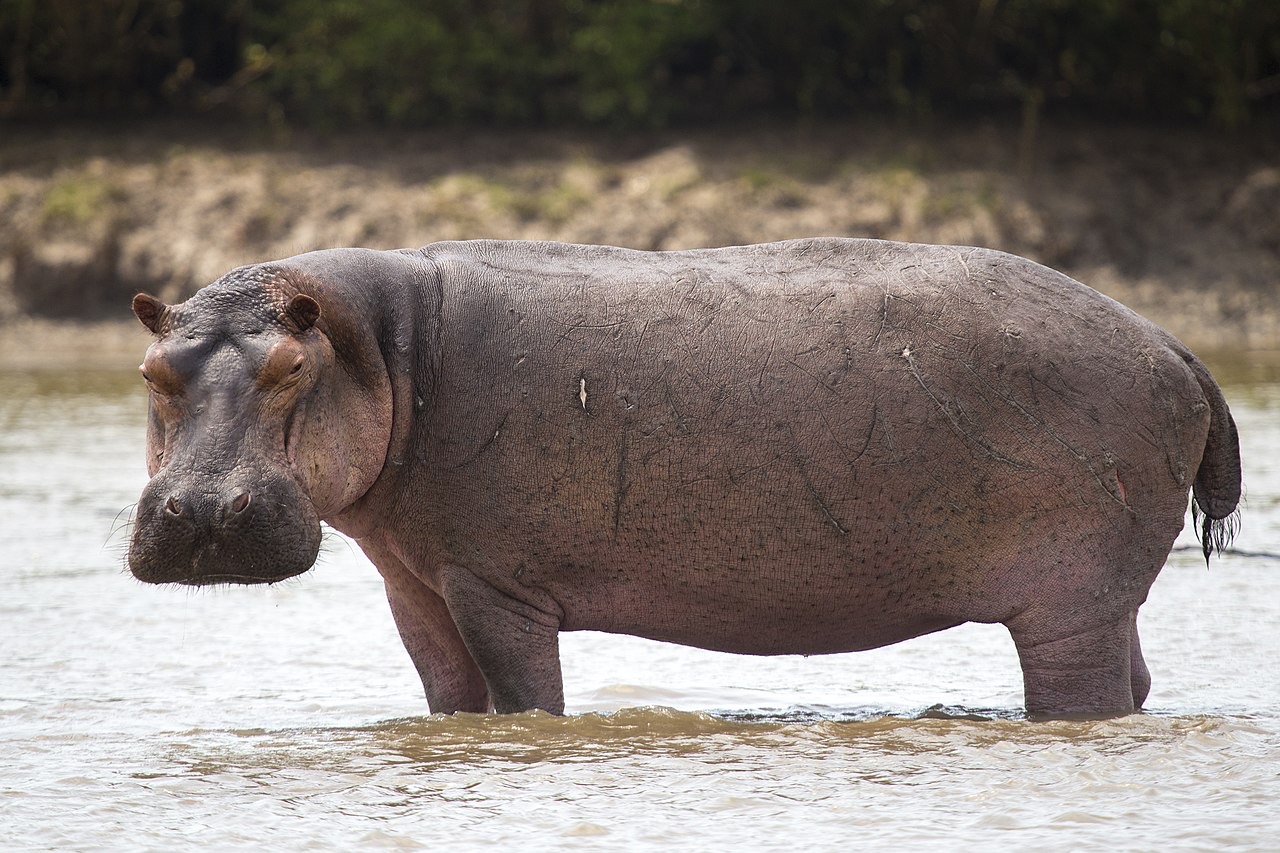
Source: Wikimedia Commons via Wikipedia “Hippopotamus”
In brief
The hippopotamus (Hippopotamus amphibius) is a large semi-aquatic African mammal listed as Vulnerable by the IUCN, with roughly 115,000-130,000 individuals remaining and a declining population driven by habitat loss and demand for its tooth ivory.
Also in Animals A to Z · Animals that start with H
How you can help
You can support the related appeal — read its purpose, recipient status and fund terms first — or give once to where it is needed most. Sharing accurate information helps too.
By WARN Research & Conservation TeamLast updated
The common hippopotamus (Hippopotamus amphibius) is a massive, barrel-shaped mammal that spends its days submerged in African rivers and lakes and emerges at night to graze on grass. Despite a placid appearance, it is widely regarded as one of the most dangerous large animals to people in Africa, fiercely defending its water and young. Listed as Vulnerable by the IUCN, the hippo is squeezed by shrinking and drying wetlands, conflict with farmers, and demand for its large canine teeth, which are traded as a form of ivory. This guide explains where hippos live, how they behave, why they matter, and what threatens their future.
115,000-130,000
Estimated wild population (IUCN)
Vulnerable
IUCN Red List status (2017)
Up to ~1,500 kg
Typical adult weight
40-50 yrs
Lifespan in the wild
Figures sourced from IUCN Red List: Hippopotamus amphibius, Wikipedia: Hippopotamus, CITES: Hippopotamus amphibius listing and other references on this page.
Hippopotamus: Quick Facts
| Lifespan | 40-50 years in the wild |
|---|---|
| Weight | Roughly 1,300-1,500 kg, large bulls heavier |
| Body length | About 2.9-5 m including tail |
| Diet | Herbivore, mainly grass |
| Gestation | About 8 months |
| Young | Usually a single calf |
| Baby name | Calf |
| Group name | Pod (also bloat or herd) |
| Top speed | Up to about 30 km/h on land (short bursts) |
| CITES | Appendix II |
Scientific Classification
| Kingdom | Animalia |
|---|---|
| Phylum | Chordata |
| Class | Mammalia |
| Order | Artiodactyla |
| Family | Hippopotamidae |
| Genus | Hippopotamus |
| Species | Hippopotamus amphibius |
Conservation Status
- IUCN Status
- Vulnerable
- Population
- Approximately 115,000-130,000 mature individuals
- Trend
- Decreasing
- Assessed
- 2017
- CITES
- Appendix II
Population trends vary by country, with some range-state populations stable or increasing while others decline; the species was assessed as having dropped by at least 30% over three generations.
Did you know?
Hippos secrete a reddish, oily fluid often called "blood sweat" that is not blood at all - it acts as a natural sunscreen and antibiotic for their bare skin.
Key Facts: Hippopotamus
- Hippos are semi-aquatic: they rest in water by day to stay cool and protect their skin, then graze grass on land at night.
- The IUCN lists the species as Vulnerable, with an estimated 115,000-130,000 individuals and an overall declining trend.
- Hippos are highly territorial in water and account for many human deaths in Africa each year, making them genuinely dangerous to approach.
- Major threats are habitat loss from wetland drainage and drought, conflict with farmers, and trade in their large canine teeth as a substitute ivory.
- They are listed on CITES Appendix II, which regulates international trade in hippos and their parts.
- A single calf is born after about an eight-month gestation, often nursed and even born in the water.
What is a hippopotamus and where does it live?
The common hippopotamus is a large, mostly hairless mammal in the family Hippopotamidae, distantly related to whales and dolphins. Adults can weigh well over a tonne, with bulls sometimes exceeding 1,500 kg. Hippos inhabit rivers, lakes, swamps and seasonal wetlands across sub-Saharan Africa, including protected areas in Kenya and Tanzania. They need permanent water deep enough to submerge in and open grassland nearby for grazing. During the day they cluster in pods that can number from a handful to more than a hundred animals, surfacing to breathe roughly every few minutes.
Behaviour: semi-aquatic life and why hippos are dangerous
Hippos spend up to sixteen hours a day in or near water, which keeps their sensitive skin from drying out and protects them from the heat. At dusk they leave the water and may walk several kilometres to graze, eating mainly grass. Bulls defend stretches of water and will charge boats, people or other animals that intrude, while cows are intensely protective of calves. Their enormous canine teeth, powerful jaws and surprising speed on land make encounters dangerous, and hippos are responsible for a significant number of human fatalities in Africa each year. They are best observed from a safe distance and never between a hippo and the water.
Conservation status and threats
The IUCN classifies the hippopotamus as Vulnerable, citing an overall population decline. The clearest pressures are loss and degradation of wetland habitat through drainage, agriculture and drought, which can leave hippos stranded or in conflict with people. Hippos are also killed for their meat and for their large canine teeth, which are carved and traded as a form of ivory; this trade is regulated under CITES Appendix II. Because populations vary widely between countries, conservation depends on protecting water catchments, maintaining wildlife corridors, and curbing illegal hunting and trade.
Common hippopotamus vs pygmy hippopotamus
| Feature | Common hippopotamus | Pygmy hippopotamus |
|---|---|---|
| Scientific name | Hippopotamus amphibius | Choeropsis liberiensis |
| IUCN status | Vulnerable | Endangered |
| Adult weight | Around 1,300-1,500 kg | Around 180-275 kg |
| Habitat | Open rivers, lakes and grassland | Forests, swamps and streams |
| Range | Sub-Saharan Africa (incl. Kenya, Tanzania) | West Africa (e.g. Liberia) |
| Social life | Lives in pods, very territorial | Mostly solitary and secretive |
What WARN Does
This guide is educational reference content created to improve global public understanding of the hippopotamus and the wetland habitats it depends on. The hippopotamus lives in Africa and falls outside the countries where the World Animal Rescue Network currently funds hands-on rescue and care work, so WARN does not run or fund hippo projects at this launch stage. We publish accurate, searchable species guides like this one to support WARN's broader mission of raising awareness for threatened wildlife worldwide and to help readers connect to the conservation themes - habitat protection and the fight against wildlife trade - that WARN does support directly in its funded regions.
Hippos depend on healthy rivers and wetlands - the same kind of habitats WARN works to protect in its funded regions. While WARN does not yet fund projects in Africa, your gift to Support Habitat Protection strengthens the wider effort to safeguard wild places and the species that rely on them.
How can I help save the hippopotamus?
Explore practical ways to support the hippopotamus, from everyday choices and sharing reliable information to reviewing a related appeal before giving.
Explore ways to support
Read the related appeal’s purpose, recipient status and fund terms. Choose an affordable gift after checking what is proposed and what has been reported.
Ease the pressures
Avoid the wildlife trade and souvenirs, never buy wild animals as pets, and choose sustainable, habitat-friendly products — the threats behind the hippopotamus's decline fall when demand does.
Spread the word
Share accurate, sourced information about the hippopotamus. Wider awareness is what turns concern into lasting protection.
Hippopotamus: Frequently Asked Questions
How can I help save the hippopotamus?
Is the hippopotamus endangered?
How many hippos are left in the world?
Are hippos dangerous to humans?
What do hippos eat?
Can hippos swim?
Why are hippos hunted?
Where do common hippopotamuses live?
How long do common hippopotamus live?
How big is a common hippopotamus?
Sources & References
Population figures, conservation status and biological facts on this page are drawn from authoritative scientific and intergovernmental sources.
Terms used on this page
Plain-English definitions, from our wildlife and conservation glossary.
Latest Hippopotamus Stories
Quick, fact-checked reads on the hippopotamus — amazing facts, key questions and the threats it faces.
Explore more animals
Discover more animals, their habitats and their conservation status in the WARN wildlife-guide library.