Wildlife Guide · Brazil
Humpback Whale
Megaptera novaeangliae
The ocean's great singer, leaping back from the brink of whaling.
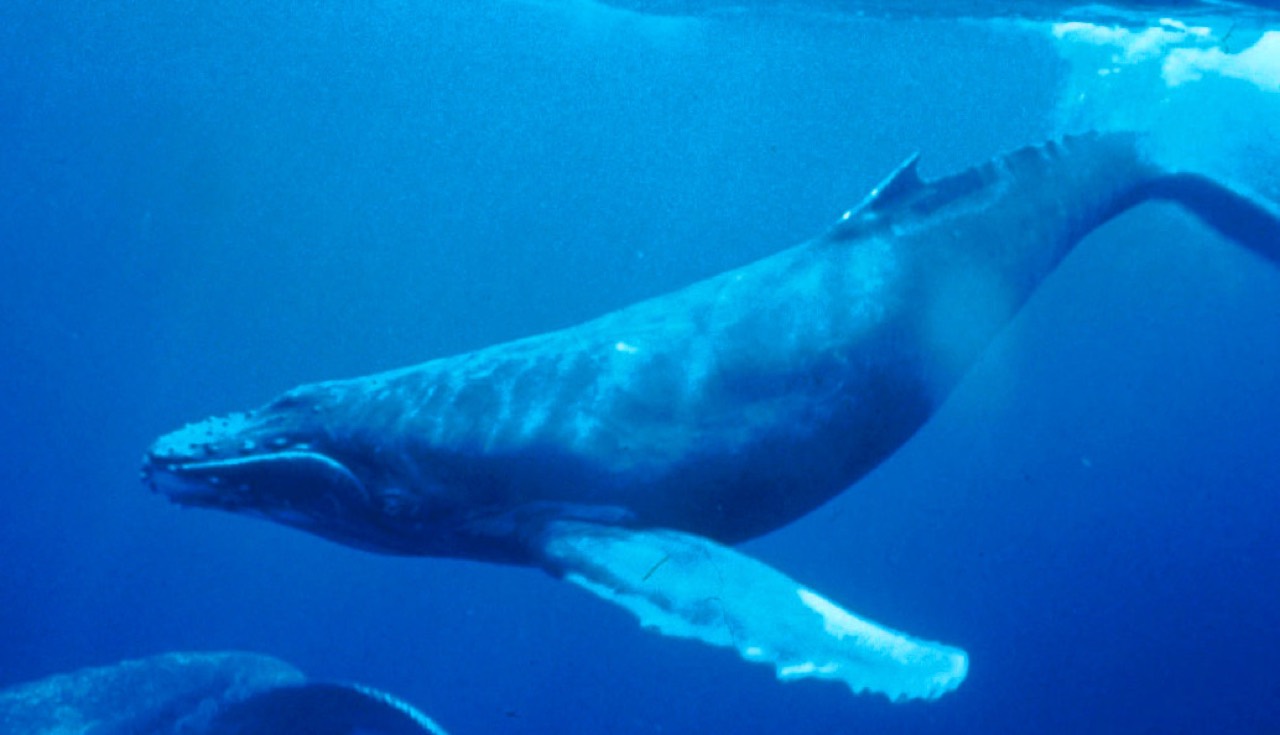
Source: Wikimedia Commons via Wikipedia “Humpback whale”
In brief
A humpback whale (Megaptera novaeangliae) is a large filter-feeding baleen whale found in oceans worldwide, known for its long pectoral fins, acrobatic breaching, and the complex songs sung by males during the breeding season.
Also in Animals A to Z · Animals that start with H
By WARN Research & Conservation TeamLast updated
The humpback whale is a large baleen whale famous for its haunting, hours-long songs, acrobatic breaches and enormous wing-like flippers. Once hunted to near-extinction, most populations are recovering strongly, and each winter thousands gather to breed in warm tropical waters such as Brazil's Abrolhos Bank. Yet entanglement in fishing gear and collisions with ships still kill humpbacks across their migratory range.
~84,000
Mature whales worldwide (IUCN, 2018)
Up to 16 m
Body length — females larger than males
~8,000 km
One-way migration, feeding to breeding grounds
~9,200
Humpbacks estimated off the Abrolhos breeding ground (2019 survey)
Figures sourced from IUCN Red List — Megaptera novaeangliae (Humpback Whale), 2018 assessment, IUCN — Humpback whale on road to recovery, reveals IUCN Red List, NOAA Fisheries — Humpback Whale species profile and other references on this page.
Humpback Whale: Quick Facts
| Lifespan | ~80–90 years |
|---|---|
| Weight | ~25–30 tonnes (up to ~40) |
| Length | ~14–16 m; females larger |
| Diet | Krill and small schooling fish (filter feeder) |
| Gestation | About 11 months |
| Young per birth | 1 calf, usually every 2–3 years |
| Top speed | Up to ~25 km/h (16 mph) in bursts |
| Baby name | Calf |
| Group name | Pod |
| CITES | Appendix I |
Scientific Classification
| Kingdom | Animalia |
|---|---|
| Phylum | Chordata |
| Class | Mammalia |
| Order | Artiodactyla (Cetacea) |
| Family | Balaenopteridae |
| Genus | Megaptera |
| Species | Megaptera novaeangliae (Borowski, 1781) |
Conservation Status
- IUCN Status
- Least Concern (global), 2018 — population increasing; several subpopulations Endangered
- Population
- ~84,000 mature individuals worldwide (IUCN, 2018)
- Trend
- Increasing
- Assessed
- 2018
- CITES
- Appendix I
The global Least Concern listing reflects strong recovery from whaling, but it masks at-risk regional groups: the IUCN still assesses subpopulations such as the Arabian Sea humpback as Endangered, and several distinct population segments are protected as endangered under national law.
Did you know?
Only male humpbacks sing — and their songs spread like hit tunes, with new versions passing from one population to another across an entire ocean.
Key Facts: Humpback Whale
- Globally the humpback whale is listed as Least Concern with an increasing population — a major conservation success after commercial whaling cut numbers by over 90%.
- Despite the healthy global picture, several regional subpopulations (including the Arabian Sea) remain Endangered, so a single status badge can be misleading.
- Only male humpbacks sing the long, structured songs, which evolve over time and spread between populations across an ocean basin.
- Brazil's Abrolhos Bank is the main breeding and calving ground for the Western South Atlantic population, hosting roughly 9,200 whales by a 2019 survey.
- Humpbacks filter-feed on krill and small schooling fish, sometimes using cooperative 'bubble-net' feeding to corral prey.
- The biggest modern threats are entanglement in fishing gear and marine debris, plus collisions with ships (vessel strikes).
Recovery success, with regional exceptions
Twentieth-century commercial whaling devastated humpback whales, reducing some populations by more than 90 percent before the International Whaling Commission's 1985 moratorium gave them protection. The recovery since has been dramatic: the IUCN reassessed the species as Least Concern in 2018, with a global population trend described as increasing and roughly 84,000 mature individuals. That headline figure hides important variation, however. The IUCN still recognises Endangered subpopulations such as the Arabian Sea humpbacks, and several distinct population segments remain protected as endangered under national law. The species as a whole is rebounding, but specific regional groups are not yet safe.
Song, breaching and behaviour
Humpbacks are among the most behaviourally striking of all whales. Males produce long, hierarchically structured songs that can last many minutes and repeat for hours, mainly on the breeding grounds; these songs change gradually through a season and can be transmitted from one population to another across vast distances. Above the surface, humpbacks are famous acrobats, hurling their roughly 25-to-30-tonne bodies clear of the water in spectacular breaches and slapping the surface with their long pectoral fins and tail flukes. When feeding, groups may blow curtains of bubbles to herd krill and small fish into dense balls before lunging through them.
Brazil's Abrolhos breeding ground
Each austral winter, humpbacks of the Western South Atlantic population migrate north from Antarctic feeding waters to breed and calve along the Brazilian coast, with the shallow Abrolhos Bank off Bahia serving as the core nursery. This aggregation was hammered by whaling but has recovered strongly: an aerial survey in 2019 estimated around 9,200 whales using the area, a large share of the total off Brazil. The bank's warm, sheltered waters make it one of the most important humpback breeding sites in the Southern Hemisphere and a focus for whale-watching and marine protection.
Threats and what rescue involves
The main hazards to humpbacks today are human-made. Whales become entangled in ropes, nets and other fishing gear, which can wound, exhaust or drown them, and they are struck by vessels along busy coastal and shipping routes. Underwater noise and pollution add further pressure. Responding involves trained disentanglement teams who carefully cut gear from live whales, networks that report strikes and strandings, measures to slow or reroute ships in whale hotspots, and gear changes that reduce entanglement risk — all underpinned by monitoring that tracks whether each population is truly recovering.
Humpback whale vs. blue whale: how to tell two great whales apart
| Feature | Humpback Whale | Blue Whale |
|---|---|---|
| Scientific name | Megaptera novaeangliae | Balaenoptera musculus |
| Typical length | ~14–16 m | ~24–30 m (largest animal ever) |
| Pectoral fins | Very long, up to ~1/3 of body | Short relative to body |
| Body shape & colour | Stocky, knobbly head; dark with white throat/flippers | Long, slender; mottled blue-grey |
| Famous behaviour | Sings; frequent breaching and fin-slapping | Loud low-frequency calls; rarely breaches |
| IUCN status (global) | Least Concern, increasing (2018) | Endangered (2018) |
What WARN Does
WARN publishes this guide for education and is developing support through assessed animal-welfare grants. A species range, source citation or photograph does not establish a recipient or funding agreement. Check /about/where-your-money-goes/#grant-register for published grant and payment records; records not yet published must not be read as zero activity. Browse /appeals/ for the purposes currently available to support.
Humpbacks are recovering, but every entangled whale and ship strike still counts. Your gift helps WARN fund the Brazilian partner teams working along the Abrolhos breeding coast to respond to strandings and keep these waters safe for the next generation of calves.
Humpback Whale: Frequently Asked Questions
How long do humpback whales live?
What do humpback whales eat?
How big do humpback whales get?
Are humpback whales dangerous to humans?
How many humpback whales are left?
Why were humpback whales endangered?
What is a baby humpback whale called?
Where do humpback whales live?
Sources & References
Population figures, conservation status and biological facts on this page are drawn from authoritative scientific and intergovernmental sources.
- IUCN Red List — Megaptera novaeangliae (Humpback Whale), 2018 assessment
- IUCN — Humpback whale on road to recovery, reveals IUCN Red List
- NOAA Fisheries — Humpback Whale species profile
- International Whaling Commission — Humpback whale
- PLOS ONE — Increasing abundance of Western South Atlantic humpback whales in their wintering grounds (Brazil)
- Marine Mammal Protected Areas Task Force — Abrolhos Bank IMMA
Terms used on this page
Plain-English definitions, from our wildlife and conservation glossary.
Latest Humpback Whale Stories
Quick, fact-checked reads on the humpback whale — amazing facts, key questions and the threats it faces.
Species
12 Amazing Facts About the Humpback Whale, the Ocean's Great Singer
From hours-long songs that only males sing to flippers longer than any other whale, here are 12 genuinely surprising facts about the humpback whale.
Read the storySpecies
How Big Is a Humpback Whale? Size, Weight and Strength Explained
Humpback whales reach 14 to 16 metres and weigh up to 30 tonnes, with the longest flippers of any whale. Here's how their size, weight and power really compare.
Read the storySpecies
Humpback Whale vs Blue Whale: 6 Key Differences and How to Tell Them Apart
Both are great whales, but the humpback and the blue whale differ in size, shape, flippers, behaviour and conservation status. Here's how to tell them apart.
Read the storyExplore more animals
Discover more animals, their habitats and their conservation status in the WARN wildlife-guide library.