Wildlife Guide · Africa & Middle East
Jackal
Canis aureus (Linnaeus, 1758)
The adaptable wild canid — from African savanna to Pakistani scrubland.
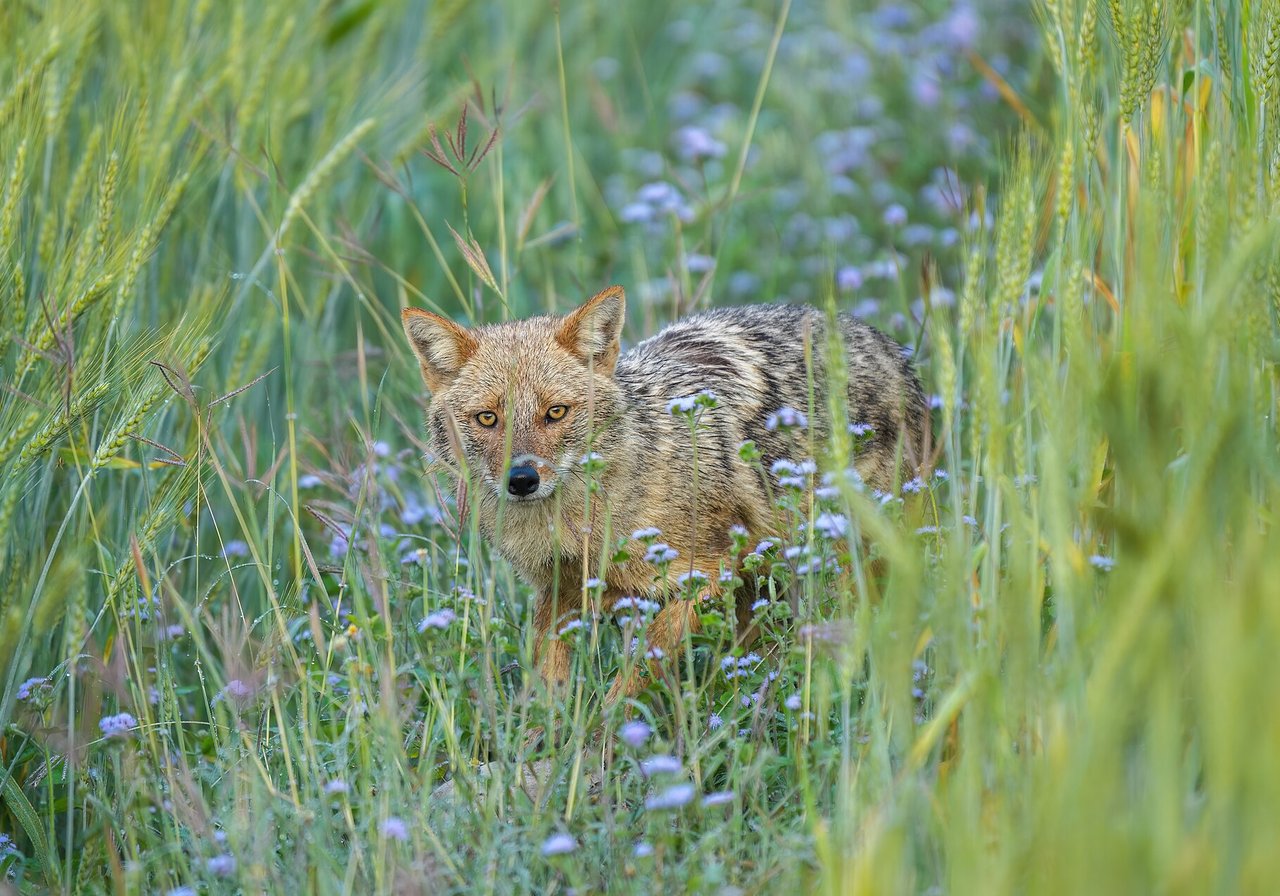
Source: Wikimedia Commons
In brief
The golden jackal (Canis aureus) is a Least Concern wild canid ranging from Africa through the Middle East to Pakistan and Nepal — an adaptable omnivore of savanna, scrub and farmland.
Also in Animals A to Z · Animals that start with J
By WARN Research & Conservation TeamLast updated
Jackals are medium-sized wild canids of Africa, Asia and south-eastern Europe. The golden jackal (Canis aureus) is the most widespread, ranging from East Africa through the Middle East and South Asia to Pakistan and Nepal. Smaller than wolves but larger than foxes, jackals are adaptable omnivores that hunt, scavenge and forage across savanna, desert edge, farmland and urban margins. Listed as Least Concern, golden jackal populations are stable and expanding in parts of Europe. In Pakistan and across South Asia, jackals persist in scrub and agricultural landscapes where human-wildlife coexistence shapes conservation outcomes.
Least Concern
IUCN Red List status (2015 assessment)
7–15 kg
Typical adult weight
3 species
Jackal species — golden, black-backed, side-striped
Not listed
CITES status
Figures sourced from IUCN Red List — Canis aureus, Encyclopaedia Britannica — jackal, BBC Wildlife — golden jackal .
Jackal: Quick Facts
| Weight | 7–15 kg |
|---|---|
| Species | Golden, black-backed and side-striped jackal |
| Diet | Omnivorous — rodents, carrion, fruit, insects |
| Range | Africa, Middle East, South Asia, south-east Europe |
| Activity | Mainly crepuscular and nocturnal |
| CITES | Not listed |
Scientific Classification
| Kingdom | Animalia |
|---|---|
| Phylum | Chordata |
| Class | Mammalia |
| Order | Carnivora |
| Family | Canidae |
| Genus | Canis |
| Species | Canis aureus (Linnaeus, 1758) |
Conservation Status
- IUCN Status
- Least Concern (IUCN, 2015) for golden jackal. Black-backed and side-striped also Least Concern.
- Population
- No global count; widespread and locally common
- Trend
- Stable to increasing — golden jackal expanding in Europe
- Assessed
- 2015
- CITES
- Not listed under CITES
Key Facts: Jackal
- Golden jackals range from East Africa through the Middle East to Pakistan and Nepal.
- Three jackal species exist: golden, black-backed and side-striped.
- Jackals are adaptable omnivores hunting small prey and scavenging carrion.
- Golden jackals are expanding northward into Europe — a range shift linked to climate change.
- In Pakistan and South Asia, jackals persist in scrub and agricultural landscapes.
- Jackals communicate through howls, yelps and scent marking like other canids.
Three jackal species
Three jackal species occupy the genus Canis alongside wolves, coyotes and domestic dogs. The golden jackal (Canis aureus) is the most widespread, with sandy to tawny fur, a bushy tail and a range spanning Africa, the Middle East, South Asia and expanding into south-eastern Europe.
The black-backed jackal (C. mesomelas) is restricted to southern and eastern Africa — savanna and coastal scrub specialist. The side-striped jackal (C. adustus) inhabits Central and West African forest edge and woodland. All three are smaller than wolves, with elongated muzzles, pointed ears and social structures ranging from pairs to small family groups.
Golden jackals weigh 7–15 kg. They resemble small wolves or large foxes but have a narrower muzzle and shorter legs than wolves. Genetic studies show golden jackals in Africa are distinct from Asian populations, with possible species-level splits under review.
Ecology and diet
Jackals are opportunistic feeders. Golden jackals hunt rodents, hares, birds, reptiles and amphibians; scavenge carrion from larger predator kills; and eat fruit, insects and human refuse. In agricultural landscapes they raid melon fields and poultry yards, drawing persecution from farmers.
Black-backed jackals are more carnivorous, hunting small antelope lambs, hares and ground-nesting birds. They follow lion and hyena kills to scavenge. Side-striped jackals are the most omnivorous, eating fruit, insects and small vertebrates in forest edge habitat.
Jackals are mainly crepuscular and nocturnal. They communicate through varied vocalisations — howls, yelps and alarm calls — and scent marking with urine and faeces. Pairs or family groups defend territories of 1–5 km² depending on habitat quality.
Range and expansion
Golden jackals historically ranged from Senegal and Tanzania through the Middle East to India, Pakistan and Nepal. In recent decades they have expanded northward into the Baltic states, Germany, Denmark and Austria — likely aided by climate warming and abundant food in agricultural landscapes.
In Pakistan, golden jackals inhabit scrub forest, riverine vegetation and agricultural margins from the Indus plains to foothill zones. They coexist with wolves, leopards and striped hyenas in some areas. Persecution from livestock predation and hunting for fur persist but populations remain resilient.
African jackals occupy complementary niches. Black-backed jackals are common in East African savanna — meerkat alarm calls often warn of approaching jackals. Side-striped jackals are less studied but persist in Central African forest mosaic habitats.
Conservation and persecution
The IUCN lists the golden jackal as Least Concern with a stable or increasing population trend. Black-backed and side-striped jackals are also Least Concern. None are listed under CITES. Jackals benefit from legal protection in some countries but are hunted or poisoned as vermin in others.
Persecution arises from poultry depredation, rabies concerns and competition with hunters for game species. In Europe, expanding golden jackal populations generate debate about management as a native versus colonising species. Science increasingly treats European golden jackals as natural range expansion rather than invasive introduction.
Maintaining prey populations, reducing indiscriminate poisoning and educating farmers about non-lethal deterrents support jackal persistence. In Pakistan and South Asia, jackals share landscapes with livestock herders — coexistence programmes that reduce retaliatory killing benefit both communities and wildlife.
What WARN Does
WARN publishes this jackal guide as free public education. Golden jackals persist across Pakistan and South Asia in landscapes where coexistence between herding communities and wildlife is central to conservation outcomes.
If this guide helps you understand wildlife and the pressures it faces, a gift to WARN supports habitat protection and free public education in our partner countries.
Jackal: Frequently Asked Questions
What is the difference between a jackal and a fox?
Where do jackals live?
Are jackals endangered?
What do jackals eat?
Do jackals attack humans?
Are jackals related to dogs?
How long do jackals live?
How big is a jackal?
Sources & References
Population figures, conservation status and biological facts on this page are drawn from authoritative scientific and intergovernmental sources.
Terms used on this page
Plain-English definitions, from our wildlife and conservation glossary.
Latest Jackal Stories
Quick, fact-checked reads on the jackal — amazing facts, key questions and the threats it faces.
Guides
Pangolin Species Explained: All Eight of the World's Most Trafficked Mammal
There are eight pangolin species — four in Africa and four in Asia. All eight are trafficked. Here is the briefing.
Read the storySpecies
Tiger vs Lion: 7 Key Differences Between the Two Biggest Cats
Tigers are bigger, stripier and solitary; lions are social and live in prides. Here's how the two largest cats really differ in size, habitat and behaviour.
Read the storySpecies
Asian vs African Elephant: 7 Key Differences
Ears, back shape, tusks and size all set Asian and African elephants apart. Here is a clear, science-backed guide to telling the world's three elephant species apart.
Read the storyExplore more animals
Discover more animals, their habitats and their conservation status in the WARN wildlife-guide library.