Wildlife Guide · Peru & Bolivia
Llama
Lama glama (Linnaeus, 1758)
The Andes' pack animal — strong, sure-footed and central to highland life for millennia.
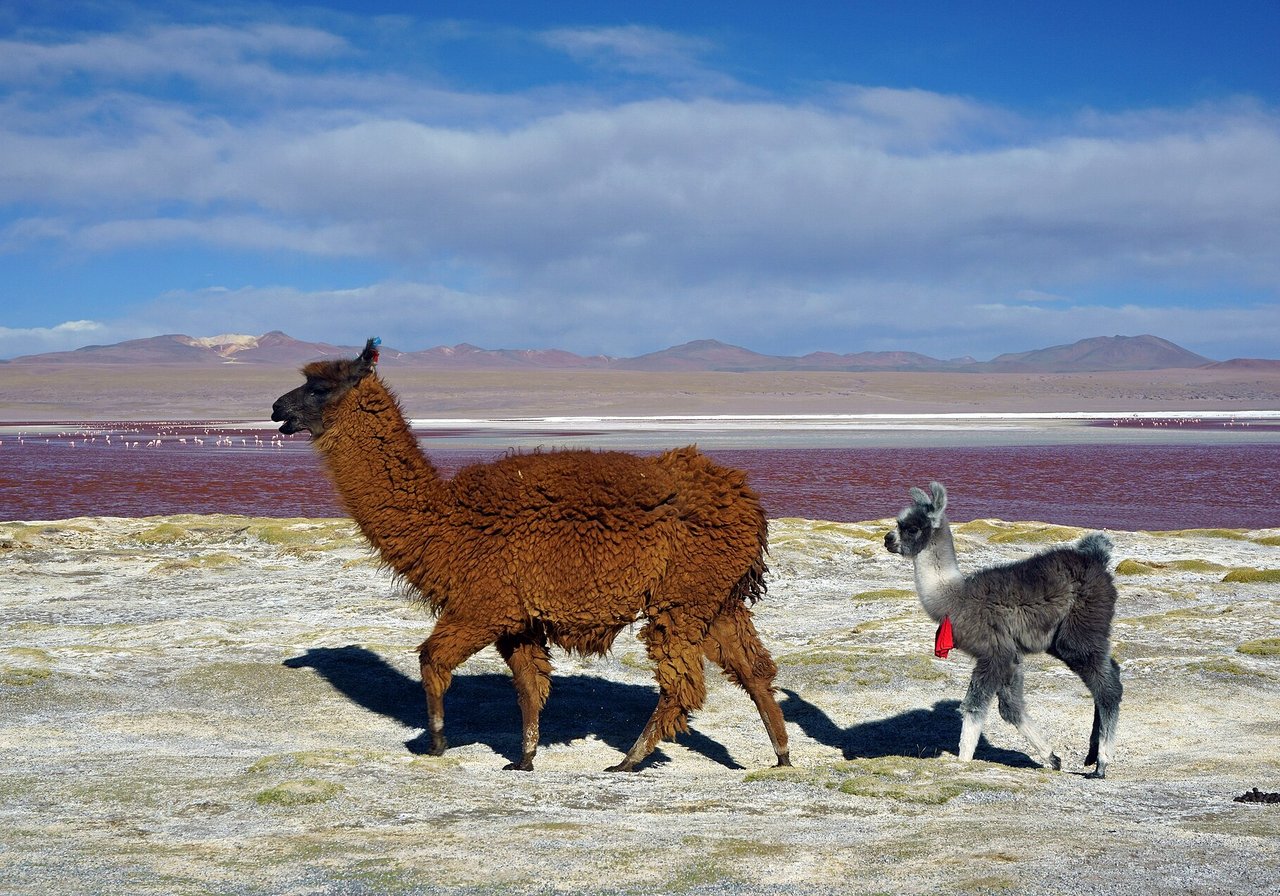
Source: Wikimedia Commons
In brief
The llama (Lama glama) is a domesticated Andean camelid bred for 5,000+ years as a pack animal and fibre source; descended from the guanaco, roughly seven million llamas support highland communities in Peru and Bolivia.
Also in Animals A to Z · Animals that start with L
By WARN Research & Conservation TeamLast updated
The llama is a domesticated South American camelid descended from the wild guanaco, bred for over 5,000 years as a pack animal, fibre source and cultural symbol of the Andean highlands. Llamas carry loads of 25–30% of their body weight across mountain trails above 4,000 m, where wheeled transport cannot reach. Roughly seven million llamas survive in Bolivia and Peru alone. They are intelligent, social herd animals with a reputation for spitting, though well-handled llamas are calm and cooperative. Like alpacas, llamas are domesticated — but their wild ancestor the guanaco faces habitat loss and hunting across Patagonia.
~7 million
Llamas in Bolivia and Peru combined
5,000+ yr
Domestication history in the Andes
130–200 kg
Typical adult weight
Appendix II
CITES listing — wild guanaco (ancestor)
Figures sourced from IUCN Red List — Lama guanicoe (guanaco), Encyclopaedia Britannica — llama, Food and Agriculture Organization — camelids .
Llama: Quick Facts
| Weight | 130–200 kg |
|---|---|
| Role | Pack animal, fibre source, guard animal |
| Load capacity | 25–30% of body weight |
| Altitude | Up to 4,000+ m in the Andes |
| Wild ancestor | Guanaco (Lama guanicoe) |
| CITES | Appendix II (wild guanaco) |
Scientific Classification
| Kingdom | Animalia |
|---|---|
| Phylum | Chordata |
| Class | Mammalia |
| Order | Artiodactyla |
| Family | Camelidae |
| Genus | Lama |
| Species | Lama glama (Linnaeus, 1758) |
Conservation Status
- IUCN Status
- Domesticated — not assessed. Wild guanaco ancestor Least Concern but declining locally.
- Population
- Roughly seven million in Bolivia and Peru
- Trend
- Stable — commercial livestock
- Assessed
- 2016 (guanaco)
- CITES
- Appendix II (wild guanaco)
Key Facts: Llama
- Llamas are domesticated camelids descended from the wild guanaco.
- They have been used as pack animals in the Andes for over 5,000 years.
- Llamas carry 25–30% of body weight across high-altitude mountain trails.
- Bolivia and Peru hold roughly seven million llamas between them.
- Llamas are intelligent, social and communicate through hums and body posture.
- Wild guanacos face habitat loss and hunting in Patagonia.
Domestication and Andean culture
Llamas were domesticated from the guanaco (Lama guanicoe) in the Andean highlands more than 5,000 years ago — before alpacas, which descend from vicuñas. Inca civilisation relied on llama caravans to transport goods along the Qhapaq Ñan road network spanning 30,000 km.
Llama fibre was woven into textiles; dung fuelled fires at altitude where wood is scarce; meat provided protein. Spanish colonisation devastated traditional herd management, but indigenous communities preserved llama husbandry. Today llamas remain essential to highland economies in Peru, Bolivia, Chile, Argentina and Ecuador.
Pack animals and fibre
Llamas are the largest Andean camelid and the primary pack animal. A healthy adult carries 25–30% of its body weight — roughly 40–60 kg — for 15–20 km daily at elevations above 4,000 m. Their soft-padded feet cause minimal trail erosion compared with horses or mules.
Llama fleece is coarser than alpaca but still valuable; annual shearing yields 2–3 kg. Guard llamas are used on farms worldwide to protect sheep from foxes and coyotes — llamas bond with sheep herds and chase off predators.
Behaviour and communication
Llamas are social herd animals that become anxious in isolation. They communicate through soft hums, alarm calls, ear position and tail posture. Spitting — regurgitated stomach contents — is directed at other llamas during hierarchy disputes, not typically at humans unless provoked. Llamas are intelligent and learn quickly; they can be trained to accept halters, loads and basic commands. They graze grasses and hay, using a three-compartment stomach efficient at processing coarse high-altitude forage.
Wild guanaco conservation
Domestic llamas are not conservation targets, but their wild ancestor the guanaco persists across Patagonia and the Andes. Guanacos are Least Concern globally but face habitat loss from ranching, fencing that blocks migration, and hunting. Roughly 600,000 guanacos remain — a fraction of historic numbers. CITES Appendix II regulates guanaco trade. Sustainable guanaco fibre harvesting in Argentina mirrors the vicuña chaku model. Llama farming reduces pressure on wild guanacos by meeting commercial demand through domestic stock.
What WARN Does
WARN publishes this llama guide as free public education. The guanaco — wild ancestor of the llama — faces habitat pressures in Patagonia that mirror the challenges facing wildlife across our partner countries.
If this guide helps you understand wildlife and the pressures it faces, a gift to WARN supports habitat protection and free public education in our partner countries.
Llama: Frequently Asked Questions
What is the difference between a llama and an alpaca?
How much weight can a llama carry?
Are llamas wild animals?
Do llamas spit?
Where do llamas live?
Are llamas dangerous?
How long do llamas live?
How big is a llama?
What do llamas eat?
Sources & References
Population figures, conservation status and biological facts on this page are drawn from authoritative scientific and intergovernmental sources.
Terms used on this page
Plain-English definitions, from our wildlife and conservation glossary.
Latest Llama Stories
Quick, fact-checked reads on the llama — amazing facts, key questions and the threats it faces.
Briefings
The Pink River Dolphin: Why the Amazon's Most Unusual Mammal Is Endangered
The pink river dolphin — the boto — is one of only a handful of freshwater dolphin species left on Earth. It lives in the rivers of Colombia and Peru, and it is now formally listed as Endangered on the IUCN Red List. A briefing on what it is, why it is in trouble, and what frontline rescue work can still do.
Read the storyBriefings
The Kinkajou: The Rainforest Mammal Most People Have Never Heard Of
The kinkajou is a small, golden-brown rainforest mammal with a prehensile tail and enormous dark eyes. It lives in the forests of Colombia and Peru. Its biggest threats are habitat loss and the exotic pet trade — and that is exactly where rescue and sanctuary work can help.
Read the storyBriefings
The Capuchin Monkey: The Tool-Using Primate at the Heart of the South American Pet Trade Problem
Capuchin monkeys are among the most intelligent primates in the Americas — and one of the most heavily trafficked. They live across the forests of Colombia and Peru, and they are a regular caseload at rescue centres dealing with the South American illegal pet trade.
Read the storyExplore more animals
Discover more animals, their habitats and their conservation status in the WARN wildlife-guide library.