Wildlife Guide · Africa & Asia
Monitor Lizard
Genus Varanus — ~80 species including Komodo dragon (V. komodoensis)
Intelligent apex lizards — from garden goannas to the Komodo dragon.
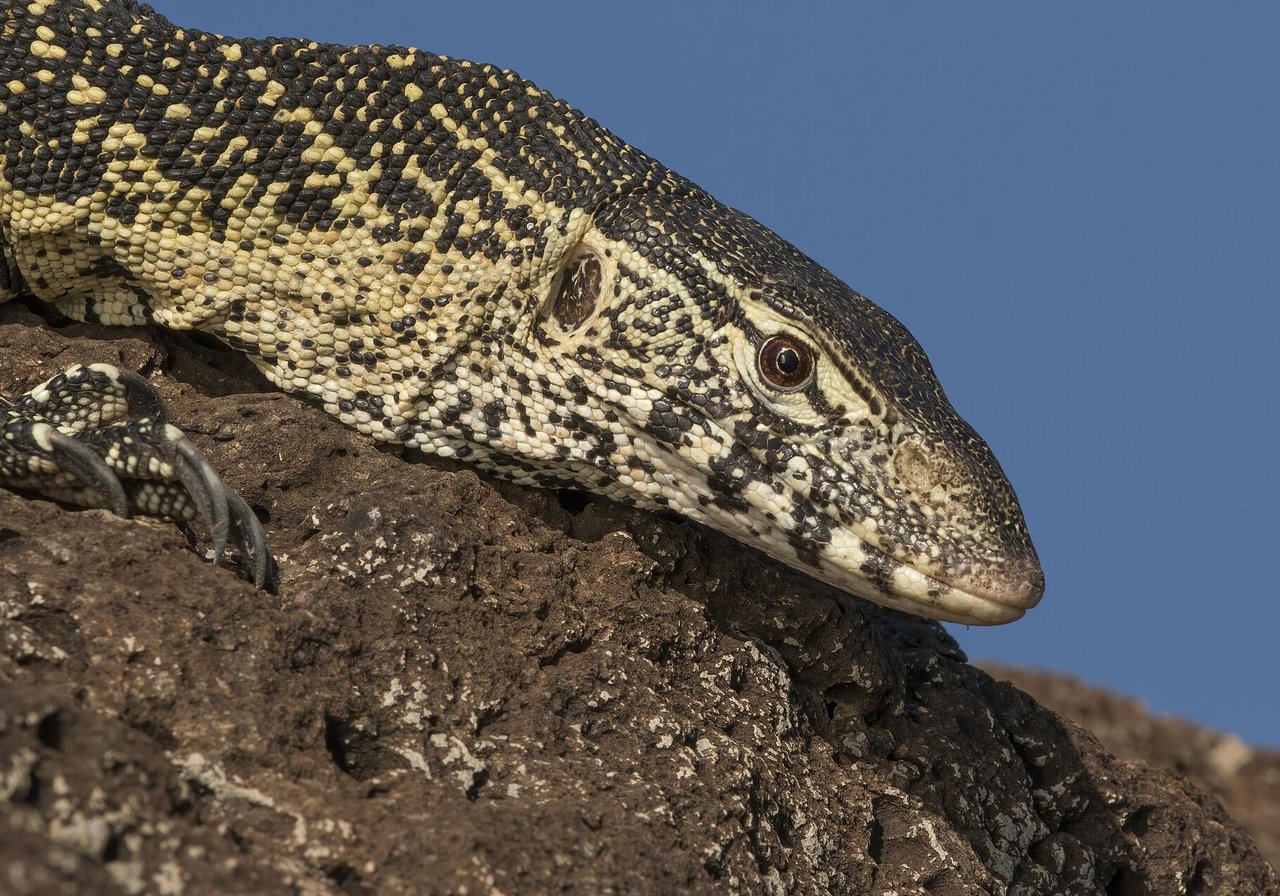
Source: Wikimedia Commons
In brief
Monitor lizards (genus Varanus) comprise ~80 species including the Komodo dragon — intelligent predatory reptiles of Africa, Asia and Australasia threatened by trade, hunting and habitat loss.
Also in Animals A to Z · Animals that start with M
By WARN Research & Conservation TeamLast updated
Monitor lizards of genus Varanus are large, active predatory reptiles found across Africa, Asia and Australasia. Roughly 80 species range from the 20-centimetre pygmy monitor to the Komodo dragon — the world's largest lizard at three metres. Monitors possess forked tongues for chemoreception, high metabolism for reptiles and notable intelligence. They control pest populations and scavenge carrion but face skin trade, bushmeat hunting and habitat loss — especially in Indonesia and Malaysia, WARN partner countries hosting Komodo dragons and clouded monitors.
80
Recognised Varanus species
3 m
Maximum Komodo dragon length
Endangered
Komodo dragon IUCN status
CITES I
Komodo dragon and many species
Figures sourced from IUCN Red List — Komodo dragon, Smithsonian National Zoo — Komodo dragon, Encyclopaedia Britannica — monitor lizard and other references on this page.
Monitor Lizard: Quick Facts
| Genus | Varanus (~80 species) |
|---|---|
| Largest | Komodo dragon — up to ~3 m |
| Komodo IUCN | Endangered |
| Range | Africa, Asia, Australasia |
| Diet | Carnivorous — active hunter and scavenger |
| Trade | Skins and pets — CITES regulated |
Scientific Classification
| Kingdom | Animalia |
|---|---|
| Phylum | Chordata |
| Class | Reptilia |
| Order | Squamata |
| Family | Varanidae |
| Genus | Varanus (~80 species) |
Conservation Status
- IUCN Status
- Komodo dragon Endangered. Bengal and clouded monitors declining from trade. Many Australian goannas Least Concern.
- Population
- Komodo dragon ~1,380 mature individuals; most species unquantified
- Trend
- Decreasing for Komodo dragon and heavily traded Asian species
- Assessed
- 2021 (Komodo dragon); varies by species
- CITES
- Komodo dragon Appendix I; many species Appendix II
Indonesia hosts the highest monitor diversity and greatest conservation urgency.
Key Facts: Monitor Lizard
- Komodo dragons are monitors — venomous bite and bacterial saliva both contribute to prey incapacitation.
- Indonesia hosts more monitor species than any country, including the Endangered Komodo dragon.
- Clouded monitor and Bengal monitor skins enter illegal leather trade in South-East Asia.
- Monitors are among the most intelligent reptiles — capable learners in captivity.
- Bengal monitor occurs in Pakistan — a WARN partner — often persecuted despite legal protection.
- Invasive black-throated monitors threaten native wildlife where released outside range.
Varanid biology and the Komodo dragon
Monitor lizards belong to family Varanidae, the sole living genus Varanus. Long necks, powerful limbs and muscular tails suit active hunting over ambush. Forked tongues sample air and ground, delivering scent to Jacobson's organ.
Komodo dragon Varanus komodoensis inhabits Indonesian islands Komodo, Rinca and Flores — Endangered with roughly 1,380 mature individuals. They hunt deer, pigs and water buffalo, using serrated teeth, venom glands and septic bite components.
Smaller monitors — savannah, ackie, Nile — fill niches from desert to mangrove. High aerobic capacity supports sustained pursuit unusual among reptiles.
Intelligence, behaviour and ecology
Studies show monitors can count, solve puzzles and recognise keepers — cognitive capacity exceeding most lizards. They forage widely, climbing trees when juvenile and digging burrows for refuge.
Diet includes insects, crabs, eggs, birds, mammals and carrion. Large monitors raid nests and enter human settlements seeking food waste — creating conflict when poultry is taken.
Reproduction is oviparous; Komodo dragons exhibit parthenogenesis in rare cases. Females guard nests in some species.
Trade, persecution and conservation
Monitor skins supply leather for bags and shoes — clouded monitor and Nile monitor harvested legally and illegally across Asia and Africa. CITES lists Komodo dragon and many species on Appendix I or II.
Bushmeat consumption and traditional medicine demand affect Asian monitors. Bengal monitor Varanus bengalensis is protected in India and Pakistan yet still killed from fear or trade.
Komodo National Park tourism generates revenue supporting dragon protection; proposed development and climate impacts on prey remain concerns. Habitat loss from mining and palm expansion threatens Indonesian monitors broadly.
Monitor lizards and people
Komodo dragon tourism is strictly guided — attacks on humans are rare but serious when dragons lose fear. Smaller monitors bite when cornered; wounds need antiseptic care.
Never buy monitor leather of unknown origin or keep protected species without permits. Pakistan's Bengal monitor benefits ecosystems by consuming rodents and carrion — persecution reduces this service.
WARN readers in Indonesia and Malaysia encounter monitors in forests and markets; reporting illegal trade supports enforcement alongside habitat appeals.
What WARN Does
WARN supports habitat protection and anti-trafficking education in Indonesia and Malaysia — global centres of monitor diversity including the Komodo dragon. Free guides explain why apex reptiles need forests, not leather supply chains.
If this guide helps you understand wildlife and the pressures it faces, a gift to WARN supports habitat protection and free public education in our partner countries.
Monitor Lizard: Frequently Asked Questions
How many monitor lizard species are there?
Is the Komodo dragon a monitor lizard?
Are Komodo dragons endangered?
Are monitor lizards venomous?
What do monitor lizards eat?
Where do monitor lizards live?
Are monitor lizards dangerous?
How long do monitor lizards live?
How big is a monitor lizard?
Sources & References
Population figures, conservation status and biological facts on this page are drawn from authoritative scientific and intergovernmental sources.
Terms used on this page
Plain-English definitions, from our wildlife and conservation glossary.
Latest Monitor Lizard Stories
Quick, fact-checked reads on the monitor lizard — amazing facts, key questions and the threats it faces.
Species
Slow Loris: Why the Internet's Favourite Pet Is a Conservation Disaster
The slow loris looks like a cartoon character — and that has nearly destroyed the species. Here is the truth behind the viral videos.
Read the storySpecies
The Snow Leopard: Why the Ghost of the Mountains Is Still Vulnerable
The snow leopard is one of the most elusive big cats on earth, with an estimated 4,000-6,500 individuals across twelve range states — including Pakistan, where WARN is preparing to operate. This briefing explains why the species was downlisted from Endangered to Vulnerable in 2017 and why that is not the success story it sounds like.
Read the storyGuides
Sun Bear vs Moon Bear: The Two Most Trafficked Asian Bears
The sun bear and the Asiatic black bear (moon bear) are the two most commonly trafficked bears in Asia — for the pet trade, for traditional medicine and for bear-bile farming. Here is how to tell them apart.
Read the storyExplore more animals
Discover more animals, their habitats and their conservation status in the WARN wildlife-guide library.