Monkey Species · Central China (Sichuan, Gansu, Shaanxi, Hubei)
Golden Snub-Nosed Monkey
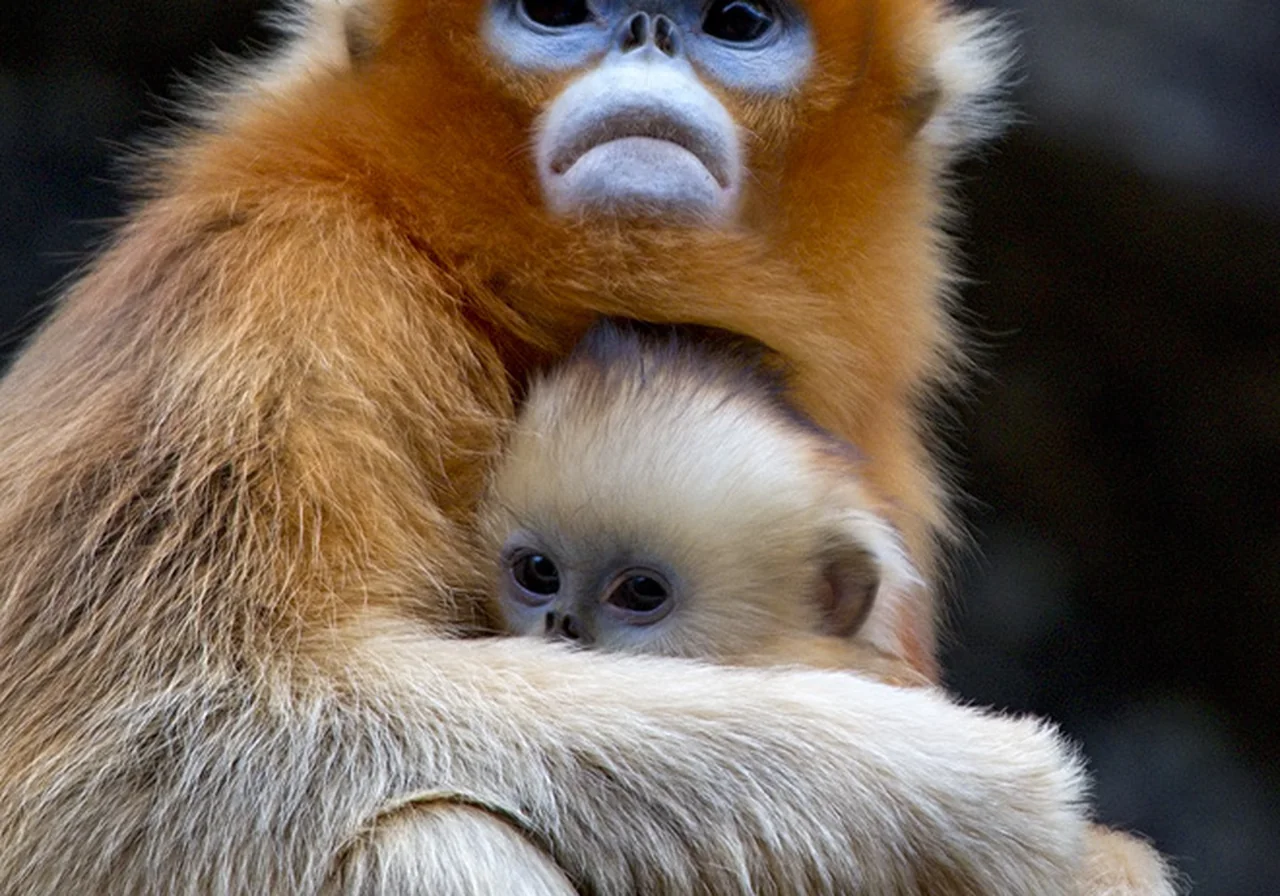
Blue-faced golden fur and an upturned nose — China's iconic montane monkey.
By WARN Research & Conservation TeamLast updated
In brief
The Golden Snub-Nosed Monkey is an Endangered colobine of China's mountain forests — golden fur, pale blue face and an upturned nose adapted to freezing winters. Its defining trait is enormous social bands of up to 200 individuals that split into smaller foraging units by day; all Rhinopithecus species are CITES Appendix I protected.
What are the key facts about a Golden Snub-Nosed Monkey?
The Golden Snub-Nosed Monkey is a monkey species from Central China (Sichuan, Gansu, Shaanxi, Hubei): large (males ~15–20 kg; females ~9–10 kg), cold-hardy, highly social. Blue-faced golden fur and an upturned nose — China's iconic montane monkey.
| Origin | Central China (Sichuan, Gansu, Shaanxi, Hubei) |
|---|---|
| Size | Large (males ~15–20 kg; females ~9–10 kg) |
| Typical weight | 6–17 kg (13–37 lb); males heavier with larger canines and brighter facial skin in breeding season |
| Lifespan | Around 20–25 years (wild) |
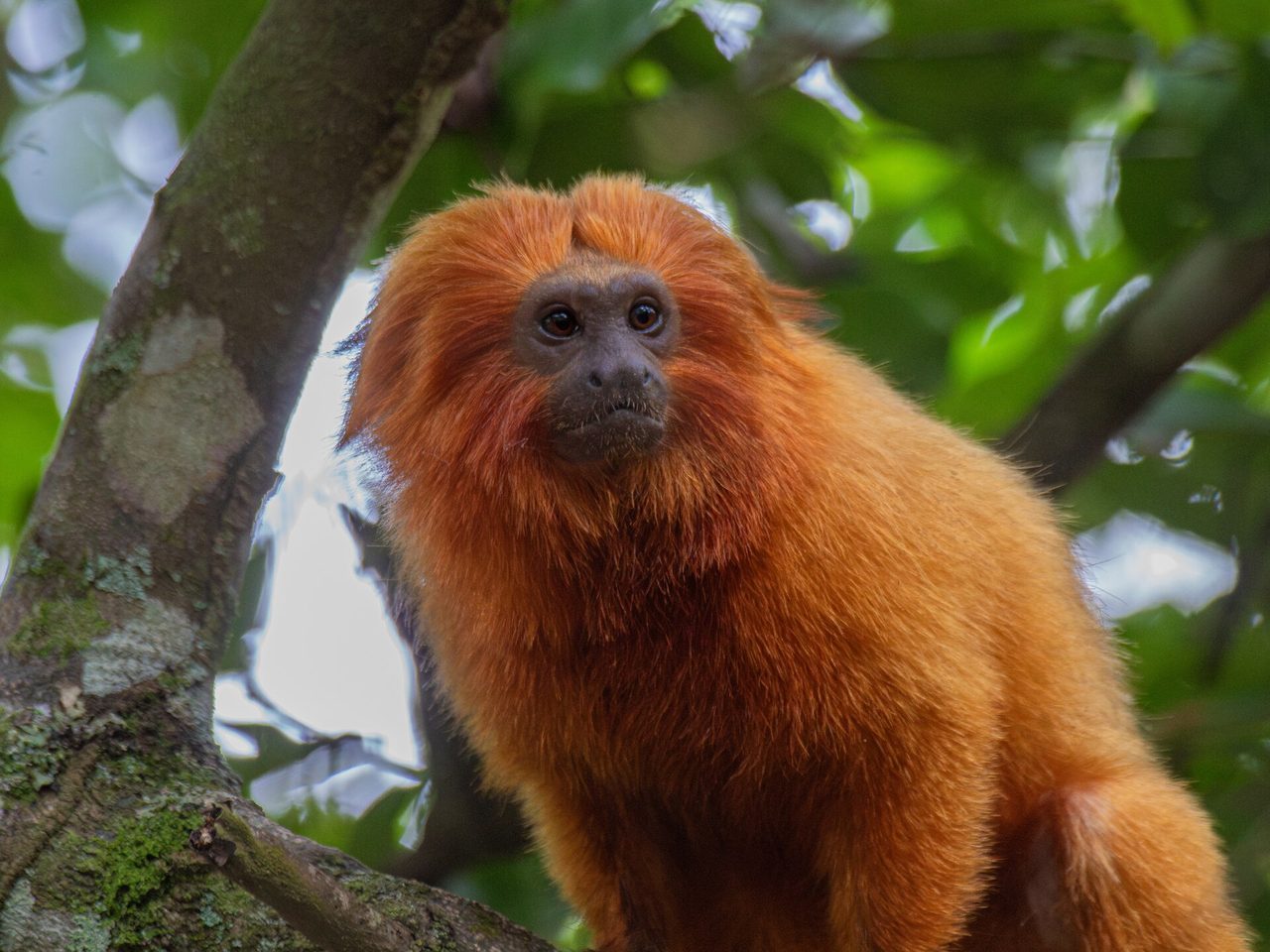
| Coat & markings | Long, dense golden pelage covers the body; face bare with blue-grey skin that reddens in males during rut. Thick fur insulates against sub-zero montane winters. Tail roughly equal to body length, used for balance on steep branches — not prehensile. |
| Temperament | Cold-hardy, highly social |
| Conservation note | Golden snub-nosed monkeys must never be kept as pets — they are Endangered, CITES Appendix I listed and need large social groups in connected temperate forest above 1,500 m in central China. Tourism must keep distance; feeding or posing with monkeys spreads disease and disrupts natural foraging. Support Chinese reserve connectivity and anti-trafficking enforcement rather than any private acquisition. |
Should you keep a Golden Snub-Nosed Monkey as a pet?
No. A Golden Snub-Nosed Monkey is a wild monkey from Central China (Sichuan, Gansu, Shaanxi, Hubei), not a companion animal. Private keeping usually means an infant taken from a troop, a lifetime of unmet social needs, and often a legal offence.
People search this page because the Golden Snub-Nosed Monkey looks small, clever or “manageable” in photos. That is the trap. Wild primates need a troop, a range, and a diet that is not human leftovers. The Golden Snub-Nosed Monkey is from Central China (Sichuan, Gansu, Shaanxi, Hubei); its conservation note on this page is golden snub-nosed monkeys must never be kept as pets — they are endangered, cites appendix i listed and need large social groups in connected temperate forest above 1,500 m in central china. tourism must keep distance; feeding or posing with monkeys spreads disease and disrupts natural foraging. support chinese reserve connectivity and anti-trafficking enforcement rather than any private acquisition..
If you met a Golden Snub-Nosed Monkey in a selfie setting or a roadside stall, walk away and do not pay. Paying creates the next capture. Read this as a species briefing, then use the wildlife guide and the appeals linked at the bottom if you want to help the wild population.
What is a Golden Snub-Nosed Monkey?
Blue-faced golden fur and an upturned nose — China's iconic montane monkey. Origin is Central China (Sichuan, Gansu, Shaanxi, Hubei); coat or markings are described as Long, dense golden pelage covers the body; face bare with blue-grey skin that reddens in males during rut. Thick fur insulates against sub-zero montane winters. Tail roughly equal to body length, used for balance on steep branches — not prehensile..
Treat “species” here as a library label for a wild species or distinct form, not as a kennel-club product.
Where does the Golden Snub-Nosed Monkey come from?
Golden Snub-Nosed Monkeys come from Central China (Sichuan, Gansu, Shaanxi, Hubei). Golden snub-nosed monkeys — Rhinopithecus roxellana — evolved in the colobine lineage alongside langurs and proboscis monkeys, but alone among primates occupy snowy montane forest in Sichuan, Gansu, Shaanxi and Hubei.
Their short nose and heavy coat are cold-climate adaptations rare in simians. IUCN estimates roughly 15,000 mature individuals with a decreasing trend as logging, roads and dams fragment forest. China established reserves such as Shennongjia where rangers monitor bands, yet meta-population links between reserves remain incomplete. Four sibling snub-nosed species — black, grey, Tonkin and Myanmar — are even rarer, making R. roxellana the best-studied but still imperilled flagship of the genus.
What does a Golden Snub-Nosed Monkey actually need?
A wild Golden Snub-Nosed Monkey needs the habitat and social system of Central China (Sichuan, Gansu, Shaanxi, Hubei), not a spare room. Size (Large (males ~15–20 kg; females ~9–10 kg)) and a cold-hardy, highly social life history are why private keeping fails.
In the wild that means connected habitat, a diet the species evolved with, and distance from the pet and selfie trades. Captive “care sheets” for wild monkeys are how trafficking gets laundered as husbandry.
If you already work in accredited rescue, follow specialist protocols and licensing. Everyone else: do not acquire a Golden Snub-Nosed Monkey. Support habitat and anti-trafficking work instead.
What surprises people about the Golden Snub-Nosed Monkey?
A few details about the breed, alongside the practical care information in this guide.
- Golden snub-nosed monkey bands may contain 200 individuals — among the largest primate societies.
- They eat lichens and bark in winter when fresh leaves are buried under snow.
- Chorus calls echo across misty valleys so separated subgroups reunite at dusk.
- They are not related to Rwanda's golden monkey — that is Cercopithecus kandti, an African species.
What health issues should you know about in a Golden Snub-Nosed Monkey?
Health concerns to discuss with your vet, including changes to watch for and everyday care. This is general guidance, not veterinary advice — always speak to your vet.
Habitat loss (wild)
Logging, agriculture, hydropower and roads fragment montane forest into patches too small for bands of 50–200 monkeys to persist.
Care: Support reserve expansion and forest corridor planting linking Shennongjia, Zhouzhi and adjacent protected areas in central China.
Forest fragmentation
Isolated bands lose genetic exchange and face local extinction when fruiting trees or lichen hosts are cleared on one side of a road or valley.
Care: Fund overpass canopy bridges and enforce setbacks for new infrastructure through known monkey ranges.
Pet trade / disturbance (wild)
Illegal capture for private collections and tourist feeding habituate monkeys, spread tuberculosis and measles, and disrupt natural foraging.
Care: Report trafficking to authorities; choose ecotourism operators that maintain distance and never feed wild primates.
Who should skip a Golden Snub-Nosed Monkey?
Skip a Golden Snub-Nosed Monkey if you are anyone hoping to keep a Golden Snub-Nosed Monkey as a pet or photo prop. This Central China (Sichuan, Gansu, Shaanxi, Hubei) monkey is large (males ~15–20 kg; females ~9–10 kg) and cold-hardy, highly social — the mismatch is usually lifestyle, not a missing accessory.
This page is allowed to say no. Skip if you are anyone hoping to keep a Golden Snub-Nosed Monkey as a pet or photo prop. Skip if you are anyone who will pay for a wild-caught or roadside animal. Skip if you are tourists looking for handling or selfies.
A different monkey species on this site may fit. Wanting “a Golden Snub-Nosed Monkey” after a film or a colour photo is not a reason to ignore the skip list.
What are the hidden catches with a Golden Snub-Nosed Monkey?
The hidden cost of a Golden Snub-Nosed Monkey is usually not the purchase price. It is years of care, the health list on this page, and the mismatch between a cold-hardy, highly social animal and a busy home.
The pet-trade catch
Cute infant Golden Snub-Nosed Monkeys in ads were usually taken from wild families. The adult you cannot house is then dumped, euthanised, or passed on. Do not create that demand.
The tourism catch
Paying to hold, ride, or selfie with a Golden Snub-Nosed Monkey funds the next capture or a stressed ambassador animal. Distance and accredited viewing are the ethical default.
The habitat loss (wild) catch
Logging, agriculture, hydropower and roads fragment montane forest into patches too small for bands of 50–200 monkeys to persist. Support reserve expansion and forest corridor planting linking Shennongjia, Zhouzhi and adjacent protected areas in central China.
The forest fragmentation catch
Isolated bands lose genetic exchange and face local extinction when fruiting trees or lichen hosts are cleared on one side of a road or valley. Fund overpass canopy bridges and enforce setbacks for new infrastructure through known monkey ranges.
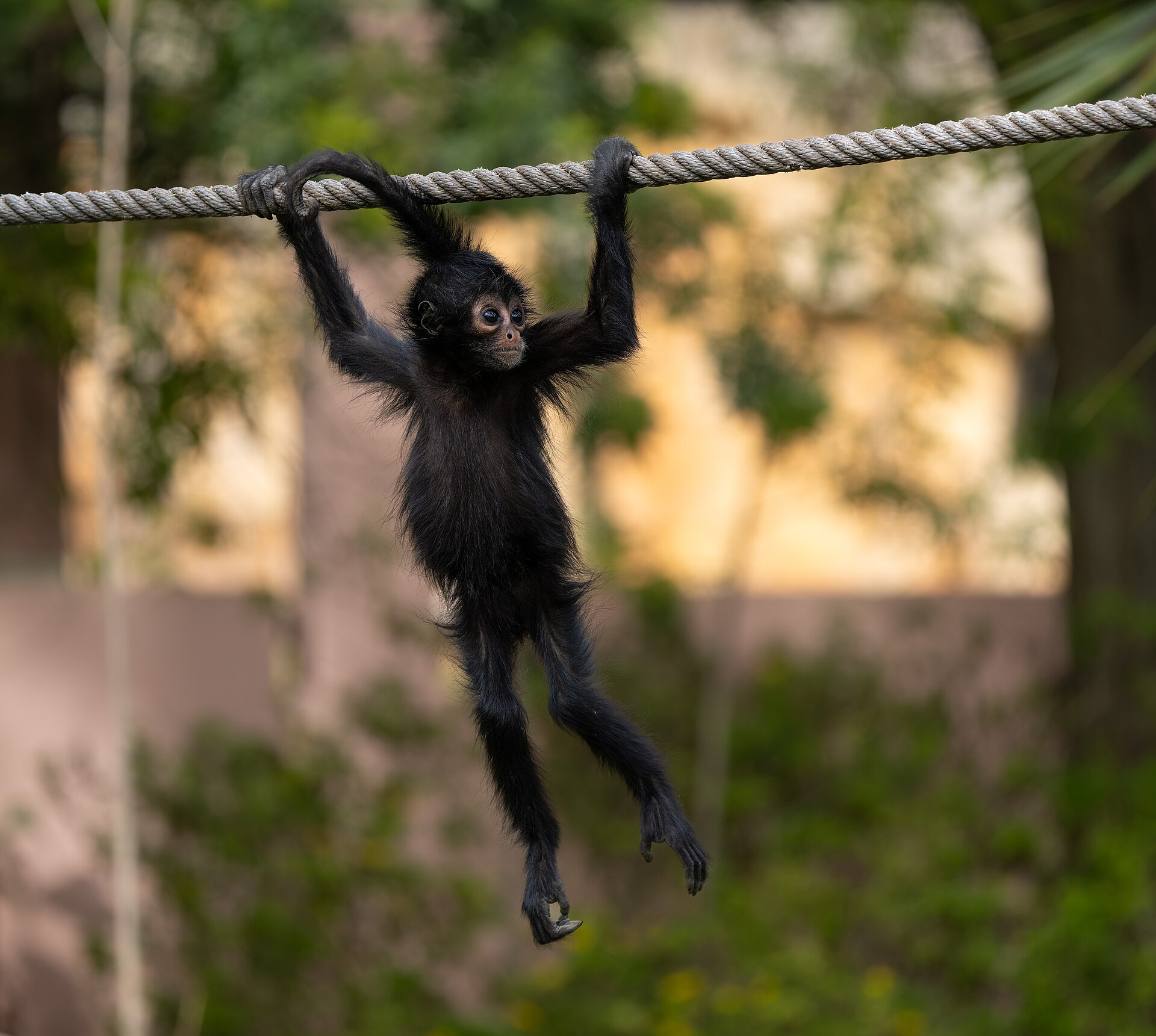
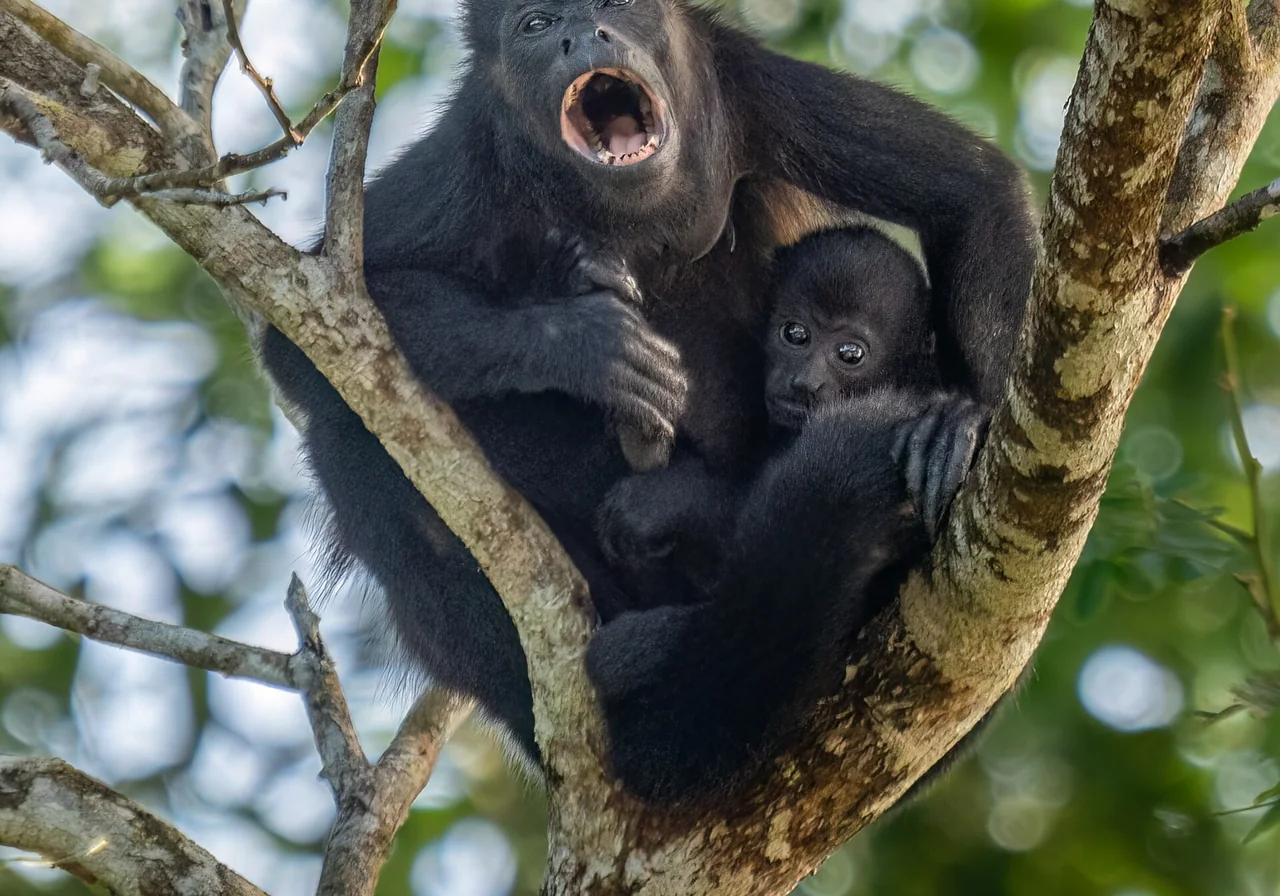
How does a Golden Snub-Nosed Monkey compare with Spider Monkey and Howler Monkey?
A Golden Snub-Nosed Monkey is not interchangeable with Spider Monkey and Howler Monkey. Compare origin, size, lifespan and temperament before you choose — those four lines prevent most regret.
| Monkey fact | Golden Snub-Nosed Monkey | Spider Monkey | Howler Monkey |
|---|---|---|---|
| Origin | Central China (Sichuan, Gansu, Shaanxi, Hubei) | Southern Mexico to Brazil (Neotropical forests) | Central & South America |
| Size | Large (males ~15–20 kg; females ~9–10 kg) | Medium (6–9 kg) | Medium (4–10 kg) |
| Lifespan | Around 20–25 years (wild) | 20–27 years (wild); up to ~40 in captivity | 15–20 years (wild); over 20 in captivity |
| Temperament | Cold-hardy, highly social | Acrobatic, frugivorous, far-ranging | Loud, leaf-eating, slow-moving |
What is the verdict on the Golden Snub-Nosed Monkey?
A Golden Snub-Nosed Monkey is a wild monkey to understand and protect, not a pet to acquire. If you came here to buy one, the verdict is no. If you came here to learn, use the species guide next.
Help looks like habitat, enforcement and refusing the trade — not a cage in a spare room. WARN is a CIC, not a charity; donate only if you want to fund partner work in our network countries, and do not expect Gift Aid.
Monkeys belong in the wild
Monkeys are intelligent, social primates — not pets. The illegal pet trade and habitat loss threaten species from marmosets to macaques. WARN funds anti-trafficking and habitat work for primates in our partner countries.