Wildlife Guide · Indonesia & Malaysia
Orangutan
Pongo pygmaeus / Pongo abelii / Pongo tapanuliensis
The only great ape of Asia — disappearing faster than we can save them.
In brief
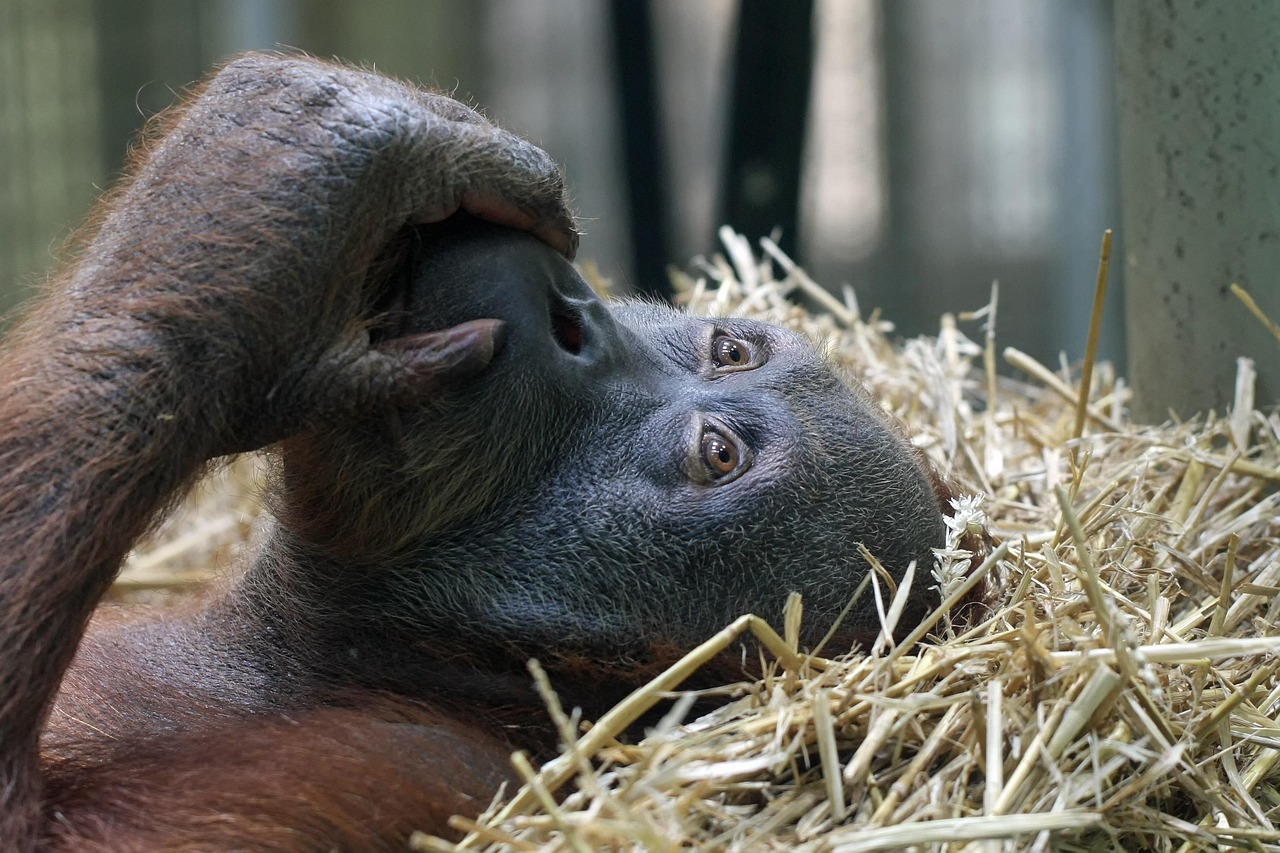
Orangutans are Critically Endangered great apes found in Borneo and Sumatra; all three species face extinction due to habitat destruction from palm oil plantations and the illegal pet trade.
~800
Tapanuli orangutans — rarest great ape on earth
~13,000
Sumatran orangutans remaining
8 yrs
Between births — populations recover slowly
80%
Habitat lost in the past 20 years
Key Facts: Orangutan
- Three species: Bornean (Pongo pygmaeus), Sumatran (Pongo abelii), and Tapanuli (Pongo tapanuliensis) — all Critically Endangered.
- The Tapanuli orangutan, discovered as a separate species in 2017, numbers only around 800 individuals, making it the rarest great ape on Earth.
- Females give birth approximately once every 7–9 years — one of the slowest reproductive rates of any mammal.
- Palm oil cultivation has destroyed around 80% of suitable orangutan habitat in the past two decades.
- Orphaned infants found clinging to killed mothers are sold into the illegal pet trade or rescued and taken to rehabilitation centres.
- Full rehabilitation from orphan to soft release takes 5–10 years and requires specialised forest school training.
Why Are Orangutans Endangered?
The principal driver of orangutan decline is habitat loss. Lowland rainforest — where orangutans feed, nest, and raise young — is cleared for palm oil, pulpwood, and mining concessions at a pace that far outstrips population recovery. A female orangutan produces only four or five offspring in her lifetime. When a forest block is cleared and she is killed, a local population can be functionally destroyed within one generation. Hunting, snaring, and the illegal pet trade compound the pressure. Infants are captured live when mothers are killed — they are sold as status pets or reach rescue centres in severe distress.
What Does Orangutan Rehabilitation Involve?
Rehabilitation is a multi-year process. Orphaned infants need round-the-clock medical care, then surrogate mother figures who teach the basics of forest life. Forest school — structured climbing, foraging, and nest-building sessions — must happen daily for years. Before any release attempt, juveniles undergo a pre-release island phase to test their skills in a semi-wild environment. After soft release into a protected forest, rangers monitor individuals for up to two years. The entire process costs thousands of pounds per animal and requires purpose-built facilities that are consistently oversubscribed.
The Palm Oil Connection
Palm oil is in roughly half of all supermarket products — from biscuits to shampoo. The global demand for cheap vegetable oil has driven the conversion of millions of hectares of Bornean and Sumatran rainforest into monoculture plantations. While certified sustainable palm oil schemes exist, enforcement is patchy and deforestation continues. Consumer awareness — and pressure on supply chains — is one lever. Expanding the rescue and sanctuary infrastructure to absorb displaced animals is another. WARN focuses on the second.
What WARN Does
WARN partners with vetted rehabilitation centres in Indonesia and Malaysia to fund expanded nursery capacity, forest school programmes, and post-release monitoring. We also support sanctuary land acquisition to provide permanent homes for orangutans who cannot be released.
Orangutan: Frequently Asked Questions
How many orangutans are left in the wild?
Why are orangutans called the "gardeners of the forest"?
Can all rescued orangutans be returned to the wild?
What is the Tapanuli orangutan?
Does buying sustainable palm oil help orangutans?
Latest Orangutan Stories
Explore More Species
Every animal in our network faces a crisis. Learn about the others.
View all wildlife guides