Wildlife Guide · Vietnam & Indonesia
Pangolin
Manis spp. / Smutsia spp. / Phataginus spp.
The world's most trafficked mammal — a million taken in the last decade alone.
In brief
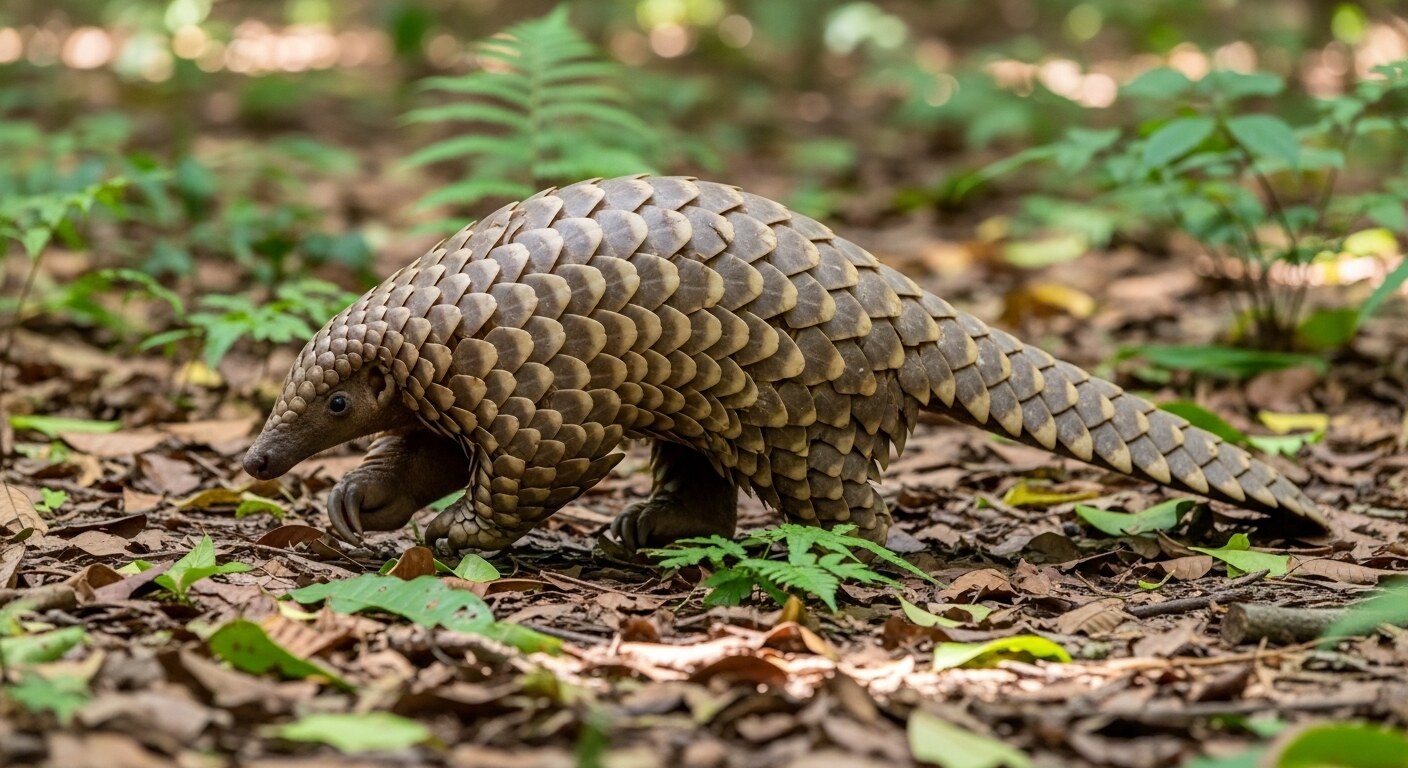
Pangolins are the world's most trafficked mammals; all eight species are threatened by the illegal trade in their scales, which are used in traditional medicine across Asia.
1M+
Pangolins poached in the last decade
8
Species — all listed as threatened
100kg
Of scales seized in a single bust — 300+ animals
0
Pangolins successfully bred in captivity for release
Key Facts: Pangolin
- Eight species exist — four in Asia (Indian, Philippine, Sunda, Chinese) and four in Africa (ground, giant ground, tree, long-tailed).
- Chinese and Sunda pangolins are Critically Endangered; all others are Endangered or Vulnerable.
- Pangolin scales are made of keratin — the same material as human fingernails — yet are sold for hundreds of dollars per kilogram in traditional medicine markets.
- When threatened, pangolins curl into a tight ball — an effective defence against predators but useless against human poachers who simply pick them up.
- No pangolin has ever been successfully bred in captivity at scale and released back into the wild — making wild population protection critical.
- Vietnam and China are the primary demand markets; Africa has become the main source as Asian populations collapse.
Why Are Pangolin Scales So Valuable?
Pangolin scales are composed entirely of keratin and have no proven medicinal properties. Despite this, they command enormous prices in traditional Chinese and Vietnamese medicine, where they are believed to treat conditions ranging from skin disorders to lactation difficulties. The scales are typically dried, roasted, and ground into powder. Demand has been fuelled by rising middle-class incomes in China and Vietnam, which have made luxury wildlife products — including pangolin meat at high-end restaurants — aspirational goods. International pressure and consumer campaigns have begun to shift attitudes, but enforcement remains inconsistent.
The Shift to African Pangolins
As Asian pangolin populations collapsed, criminal networks pivoted to Africa. Ground pangolins in East and Southern Africa, and tree pangolins in West and Central Africa, are now being poached at industrial scale and shipped to Asia. Kenya, Tanzania, and Nigeria appear regularly in major seizure records. The pangolin trade from Africa to Asia typically involves multiple transshipment points, refrigerated containers, and falsified customs documentation.
Can Rescued Pangolins Survive?
Pangolins are notoriously difficult to keep alive in captivity. They are specialist feeders — largely dependent on specific ant and termite species — and are highly stressed by human contact and unnatural environments. Rehabilitation is possible when animals are in good condition and held in semi-wild enclosures with access to natural forage, but the success rate is low compared to other mammals. Prevention — stopping poaching before it happens — is the most effective intervention. WARN therefore focuses on anti-poaching patrol support, community engagement, and improving seizure response.
What WARN Does
WARN supports anti-poaching patrol operations and ranger training in Kenya and Tanzania, and works with seizure response teams in Vietnam and Indonesia to improve the care of confiscated animals and build the evidentiary record for prosecutions.
Pangolin: Frequently Asked Questions
What are pangolin scales made of?
How many pangolins are left in the wild?
Why are pangolins so hard to save in captivity?
Is the pangolin trade legal?
What can I do to help pangolins?
Latest Pangolin Stories

Explore More Species
Every animal in our network faces a crisis. Learn about the others.
View all wildlife guides