Wildlife Guide · Brazil & Colombia
Piranha
Pygocentrus nattereri (and relatives in subfamily Serrasalminae)
South America's most misunderstood fish — not the mindless killer of legend, but a vital cog in the Amazon's aquatic machine
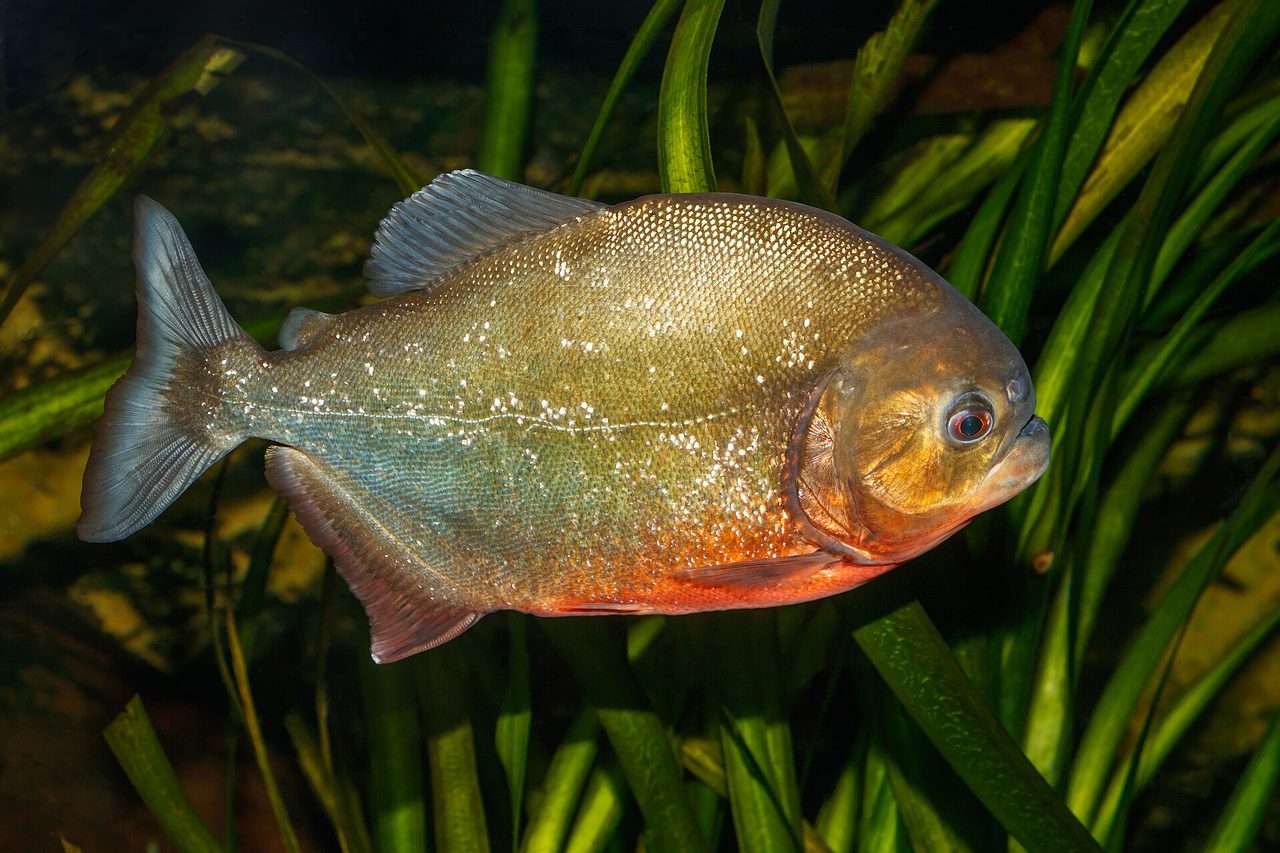
Photo: H. Zell / Wikimedia Commons (CC BY-SA 3.0)
In brief
The piranha is a freshwater fish native to South American river systems, most abundant in the Amazon basin, where it serves as both predator and scavenger; the red-bellied piranha (Pygocentrus nattereri) is rated Least Concern by the IUCN but faces growing pressure from deforestation, dam construction, and mercury pollution across its range.
Also in Animals A to Z · Animals that start with P
By WARN Research & Conservation TeamLast updated
Few animals carry a more distorted reputation than the piranha. Immortalised in horror films and sensational travel writing — most notoriously by Theodore Roosevelt after his 1914 Amazon expedition — piranhas are widely imagined as frenzied, unstoppable predators capable of reducing a cow to a skeleton in seconds. The reality is far more nuanced and, frankly, more fascinating. Of the roughly 30 to 60 recognised piranha species across South America's great river basins, the red-bellied piranha (Pygocentrus nattereri) is the most studied and the most feared, yet research consistently shows it schools primarily for self-defence, subsists heavily on seeds and fin-fragments, and plays an irreplaceable ecological role as scavenger and nutrient recycler in the Amazon, Orinoco, Paraguay–Paraná, and São Francisco river systems.
~60
Piranha species recognised
30 cm
Typical adult body length
Up to 25 years
Maximum wild lifespan
84 N
Peak recorded bite force (P. nattereri)
Figures sourced from IUCN Red List — Pygocentrus nattereri (assessed December 2020), FishBase — Pygocentrus nattereri, Animal Diversity Web — Pygocentrus nattereri and other references on this page.
Piranha: Quick Facts
| Adult length | 25–35 cm (up to 50 cm) |
|---|---|
| Adult weight | Up to 3.9 kg |
| Lifespan | Up to 25 years (wild) |
| Diet | Omnivore — fish, seeds, fruit, insects, carrion |
| Clutch size | 4,000–6,000 eggs per spawn |
| Water temperature | 24–28 °C optimal |
| Schooling size | Commonly 20+ individuals |
| Native range | Amazon, Orinoco, Paraguay–Paraná, São Francisco basins |
Scientific Classification
| Kingdom | Animalia |
|---|---|
| Phylum | Chordata |
| Class | Actinopterygii |
| Order | Characiformes |
| Family | Serrasalmidae |
| Subfamily | Serrasalminae |
| Genus | Pygocentrus (and Serrasalmus, Pristobrycon) |
| Species | P. nattereri (red-bellied piranha) |
Conservation Status
- IUCN Status
- Least Concern
- Population
- Not formally estimated; red-bellied piranha is locally abundant across Amazon and Orinoco basins
- Trend
- Stable overall, but subject to localised declines due to habitat degradation
- Assessed
- 2020
- CITES
- Not listed
IUCN assessment for Pygocentrus nattereri conducted December 2020. No CITES appendix listing for any piranha species as of 2026.
Did you know?
Unlike sharks, which replace teeth individually throughout their lives, piranhas shed and regrow their teeth in quarter-jaw blocks — losing all the teeth in one quadrant at once and replacing them as a complete unit, ensuring they never go long without a full set of razor-sharp blades.
Key Facts: Piranha
- Piranhas school primarily as a defence against their own predators — caimans, river dolphins, and fish-eating birds — not to hunt in cooperative packs.
- The red-bellied piranha (Pygocentrus nattereri) is rated Least Concern by the IUCN (assessed December 2020) and is not listed on any CITES appendix.
- Documented fatal attacks on humans are exceedingly rare; of 711 reported incidents, over 82% were classified as mild, single-bite defensive responses.
- Piranhas are ecological omnivores: fruits, seeds, insects, fin-clips, and carrion all feature in their diet, making them important seed dispersers and nutrient recyclers.
- Deforestation, large hydroelectric dams, agricultural runoff, and illegal gold mining (which deposits mercury into river systems) are the principal long-term threats to piranha habitat.
- Amazon fish including carnivorous piranhas can bioaccumulate mercury at concentrations exceeding Brazil's legal limits for human consumption, posing risks to riverside communities.
What is a piranha and how is it classified?
Piranhas are freshwater ray-finned fish belonging to the subfamily Serrasalminae within the family Serrasalmidae, order Characiformes — the same broad group that includes tetras and characins. The genus Pygocentrus contains the three species most associated with the "dangerous piranha" label: P. nattereri (red-bellied piranha), P. piraya (San Francisco piranha), and P. cariba (black-spot piranha). Serrasalmus and Pristobrycon add dozens of further species, many of which are largely herbivorous or piscivorous rather than the generalised omnivores of popular imagination. The total number of recognised piranha species is debated — estimates range from around 30 to more than 60, depending on taxonomic authority — reflecting the group's explosive evolutionary diversification across South American waterways. What unites them is a distinctive body plan: laterally compressed, deep-bodied, and equipped with a single row of interlocking, blade-like teeth in each jaw. Unlike sharks, which replace teeth individually throughout life, piranhas shed and replace teeth in quarter-jaw blocks, maintaining a continuous cutting edge. The lower jaw is heavily muscled and slightly protruding, giving the fish its characteristic blunt-snouted profile.
Where do piranhas live and what habitats do they prefer?
Piranhas are native exclusively to South America, with the red-bellied piranha occupying the broadest range of all piranha species. Its territory spans the Amazon basin in Brazil, Bolivia, Colombia, Ecuador, and Peru; the Orinoco system in Venezuela and Colombia; the Guiana river systems; and the Paraguay–Paraná drainage extending into Argentina and Paraguay. Brazil and Colombia contain Amazonian and Orinocan freshwater habitats. Their inclusion in this guide does not establish a WARN-funded conservation programme.
Piranhas are habitat generalists within tropical fresh water. They thrive in fast-flowing river channels, flooded varzea forests during the wet season, shallow oxbow lakes, and murky blackwater tributaries. Water temperature between 24 °C and 28 °C is optimal. Seasonal flooding is ecologically critical: when the Amazon expands to cover millions of hectares of rainforest between December and May, piranhas move into inundated woodland to feed on fallen fruits and invertebrates, performing an underappreciated role as seed dispersers. As waters recede in the dry season, fish become concentrated in shrinking pools, food competition intensifies, and piranhas — stressed and crowded — become genuinely more reactive, which accounts for the higher incidence of defensive bites reported during low-water months.
What do piranhas eat, and are they really dangerous to humans?
The piranha's diet is far more varied than Hollywood suggests. Studies of stomach contents from wild-caught red-bellied piranhas reveal fish flesh, fin fragments nipped from living prey, insects, crustaceans, aquatic invertebrates, seeds, and ripe fruits. At certain times of year, plant material dominates the diet. This broad omnivory means piranhas function simultaneously as apex micropredators, scavengers, and seed dispersers — a combination that makes them disproportionately important for ecosystem function.
The piranha's teeth are phenomenally efficient tools. Adult P. nattereri produce bite forces exceeding 84 newtons, and the interlocking enamel blades slice rather than crush, allowing rapid processing of tough prey. Even so, the animals direct this weaponry at humans only under specific conditions. A 2025 peer-reviewed study published in a Brazilian medical journal reviewed 711 reported piranha–human incidents: more than 82% were classified as mild, involving a single defensive bite — typically to a finger or toe — associated with a male fish guarding its nest. Documented human fatalities attributed solely to piranha attack are essentially absent from the scientific record; most fatal drowning incidents in piranha-inhabited waters appear to involve scavenging on individuals already deceased.
Piranhas are themselves hunted by caimans, giant otters, river dolphins, and large wading birds. Their schooling behaviour, once interpreted as cooperative predatory strategy, is now understood by researchers primarily as an anti-predator response: individuals in larger shoals recover baseline physiological stress markers faster after a simulated predator encounter than those in small groups.
What are the main threats to piranhas and their Amazon habitat?
Despite the red-bellied piranha's Least Concern IUCN status, the Amazon basin that sustains it is under severe and accelerating pressure. The primary threats operate at the ecosystem level rather than targeting piranhas directly, but their cumulative impact on freshwater fish communities is profound.
Deforestation drives siltation, raises water temperatures, and destroys the riparian and flooded forest habitats that piranhas rely on for shelter and food during the wet season. Agricultural conversion — particularly for soy cultivation and cattle ranching — is the dominant driver of Amazon deforestation. Hydroelectric dam construction compounds these effects: large dams fragment river corridors, block the seasonal flood pulses that trigger piranha spawning, and reduce downstream delivery of sediments and nutrients by as much as 64%, according to modelling of six proposed Andean dam projects. This nutrient impoverishment ripples up the food web, reducing the fish prey populations that piranhas depend on.
Illegal gold mining (garimpo) releases elemental mercury into river systems, where it methylates and bioaccumulates through aquatic food chains. A 2026 study found that carnivorous fish in the Amazon — including piranhas — contained mercury concentrations exceeding Brazil's legal limits for human consumption, threatening both the fish community and the riverine communities who rely on them as a protein source. Overfishing exerts additional pressure, though piranhas are more often caught as bycatch than as targeted species. Together, these threats create a slowly deteriorating baseline that even abundant, resilient species such as P. nattereri cannot indefinitely absorb.
How do piranhas reproduce and raise their young?
Red-bellied piranhas typically spawn during the South American wet season, when rising floodwaters signal optimal conditions. Courtship involves males and females circling one another in an extended display before the male excavates a shallow, bowl-shaped nest in sandy or silty substrate. The female deposits between 4,000 and 6,000 eggs into this prepared pit, which the male fertilises externally before taking up guard duty. Egg incubation lasts approximately two to three days under warm Amazonian water temperatures, and the larvae become free-swimming within a week of hatching.
Parental care is notably more active in piranhas than in many teleost fish: the male guards the nest aggressively against intruders — including wading humans — which is the most common trigger for defensive bites documented in the scientific literature. Once the fry disperse, they adopt a schooling lifestyle from the outset, finding safety in numbers against the diverse array of piscivores that target juvenile piranhas.
Growth is relatively rapid; red-bellied piranhas reach sexual maturity within their first year in warm, food-rich conditions. Adults commonly reach 25 to 35 centimetres in length and up to 3.9 kilograms in weight, though specimens approaching 50 centimetres have been recorded. Maximum lifespan in the wild is estimated at up to 25 years, though average survival is considerably shorter given predation and environmental pressures. In well-maintained captive settings, individuals routinely live 15 to 20 years.
What WARN Does
WARN runs active rescue and conservation programmes in Brazil and Colombia — two countries at the heart of the piranha's Amazonian and Orinocan range. While WARN's focus in these countries centres on terrestrial and semi-aquatic wildlife rescue rather than piranha-specific projects, the health of the Amazon's freshwater ecosystems is inseparable from the welfare of all wildlife living in and around them. Education about species like the piranha — demystifying their true role and highlighting the real threats to their habitat — is a cornerstone of how informed public support translates into protection for the broader Amazon biome.
Healthy piranha populations are a barometer of healthy Amazonian rivers. When mercury from illegal mining or sediment from deforestation degrades those waters, the entire freshwater food web — from the smallest invertebrate to the largest river dolphin — suffers. Supporting WARN's work in Brazil and Colombia helps protect the river ecosystems that species like the piranha, and the communities who depend on them, call home.
Piranha: Frequently Asked Questions
Can piranhas really skeletonise a human or large animal in minutes?
How many species of piranha exist?
Are piranhas endangered?
Why do piranhas school together?
What do red-bellied piranhas eat?
Where do red-bellied piranhas live?
Are red-bellied piranhas dangerous?
How long do red-bellied piranhas live?
How big is a red-bellied piranha?
Sources & References
Population figures, conservation status and biological facts on this page are drawn from authoritative scientific and intergovernmental sources.
- IUCN Red List — Pygocentrus nattereri (assessed December 2020)
- FishBase — Pygocentrus nattereri
- Animal Diversity Web — Pygocentrus nattereri
- Smithsonian Magazine — 14 Fun Facts About Piranhas
- PMC — Safety in numbers? Shoaling behaviour of the Amazonian red-bellied piranha (Biology Letters)
- PMC — Media Information Compared to Scientific Studies Regarding Piranha Attacks in Brazil (2025)
- PMC — Amazonian freshwater habitats experiencing environmental and socioeconomic threats affecting subsistence fisheries
- Nature Scientific Reports — Mega-Bites: Extreme jaw forces of living and extinct piranhas
- PMC — The potential impact of new Andean dams on Amazon fluvial ecosystems
- WWF — Amazon Threats
Terms used on this page
Plain-English definitions, from our wildlife and conservation glossary.
Latest Piranha Stories
Quick, fact-checked reads on the piranha — amazing facts, key questions and the threats it faces.
Briefings
The Pink River Dolphin: Why the Amazon's Most Unusual Mammal Is Endangered
The pink river dolphin — the boto — is one of only a handful of freshwater dolphin species left on Earth. It lives in the rivers of Colombia and Peru, and it is now formally listed as Endangered on the IUCN Red List. A briefing on what it is, why it is in trouble, and what frontline rescue work can still do.
Read the storyBriefings
The Kinkajou: The Rainforest Mammal Most People Have Never Heard Of
The kinkajou is a small, golden-brown rainforest mammal with a prehensile tail and enormous dark eyes. It lives in the forests of Colombia and Peru. Its biggest threats are habitat loss and the exotic pet trade — and that is exactly where rescue and sanctuary work can help.
Read the storyBriefings
The Capuchin Monkey: The Tool-Using Primate at the Heart of the South American Pet Trade Problem
Capuchin monkeys are among the most intelligent primates in the Americas — and one of the most heavily trafficked. They live across the forests of Colombia and Peru, and they are a regular caseload at rescue centres dealing with the South American illegal pet trade.
Read the storyExplore more animals
Discover more animals, their habitats and their conservation status in the WARN wildlife-guide library.