Wildlife Guide · Africa & Asia
Python
Family Pythonidae — ~40 species native to Africa, Asia and Australia
Non-venomous constrictors of three continents — powerful, slow and heavily traded.
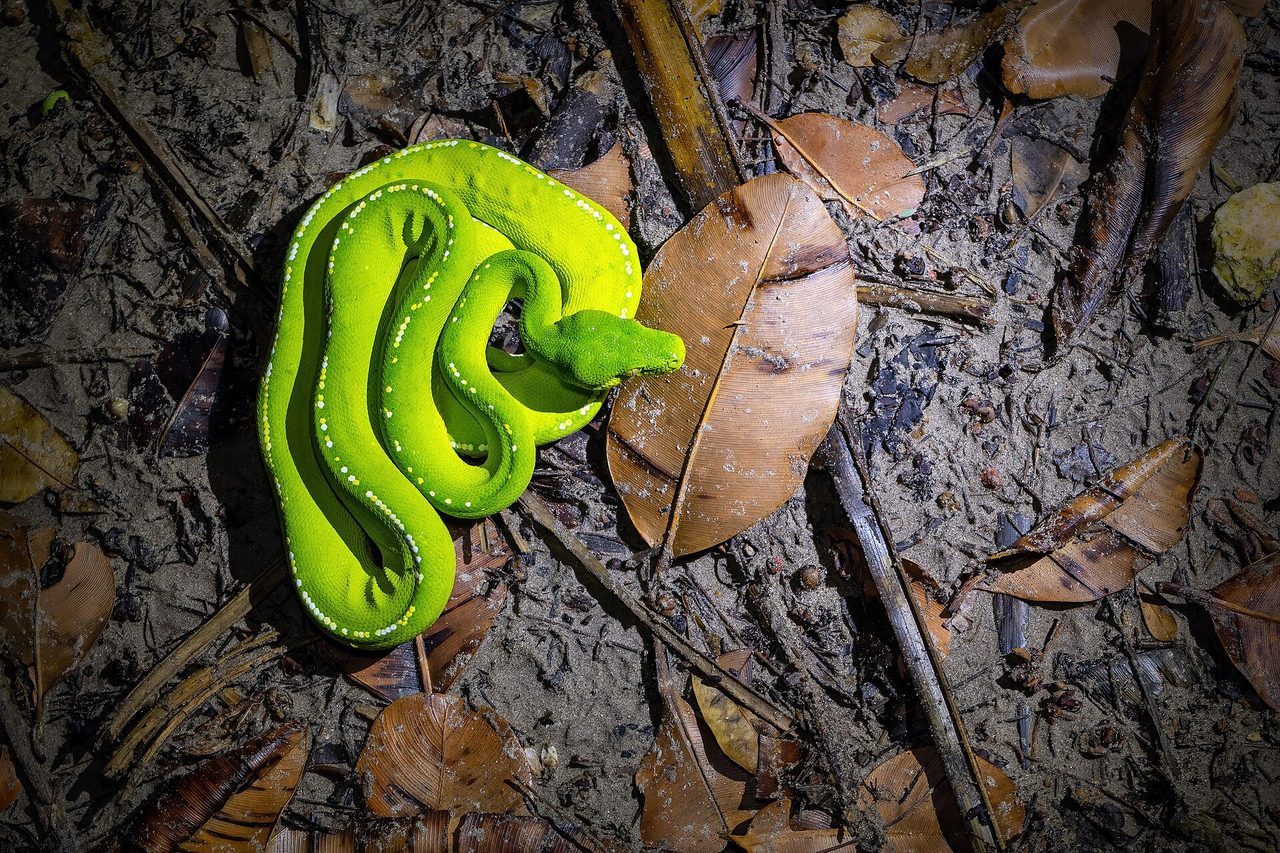
Photo: JJ Harrison / Wikimedia Commons (CC BY-SA 3.0)
In brief
Pythons are egg-laying constrictors (family Pythonidae) with ~40 species in Africa, Asia and Australia — non-venomous snakes threatened by skin trade, exotic pet demand and habitat loss.
Also in Animals A to Z · Animals that start with P
By WARN Research & Conservation TeamLast updated
Pythons are non-venomous constrictors of the family Pythonidae, found in Africa, Asia and Australia but not the Americas — where boas fill a similar niche. Roughly 40 species range from the tiny anthill python to the reticulated python, among the longest snakes on Earth. Pythons kill by constriction, lay eggs — unlike most boas — and often possess heat-sensing pits along the lips. Skin trade, pet demand and habitat loss threaten species from Burmese pythons in Myanmar to ball pythons in West Africa.
40
Recognised python species
6 m+
Maximum length (reticulated python)
CITES I/II
Trade regulated by species
Varies
IUCN status from Least Concern to Endangered
Figures sourced from IUCN Red List — reticulated python, Smithsonian National Zoo — python, Encyclopaedia Britannica — python snake and other references on this page.
Python: Quick Facts
| Family | Pythonidae (~40 species) |
|---|---|
| Range | Africa, Asia, Australia |
| Venom | None — constrictor |
| Reproduction | Oviparous — lays eggs |
| Longest | Reticulated python — 6 m+ |
| Trade | Skins, pets — CITES regulated |
Scientific Classification
| Kingdom | Animalia |
|---|---|
| Phylum | Chordata |
| Class | Reptilia |
| Order | Squamata |
| Family | Pythonidae |
Conservation Status
- IUCN Status
- Varies by species. Reticulated python Least Concern but heavily traded; some populations Endangered locally.
- Population
- Unknown for most species; reticulated python widely distributed but declining regionally
- Trend
- Decreasing where harvest and habitat loss combine
- Assessed
- Varies by species
- CITES
- Appendix I or II depending on species and population
Invasive Burmese pythons in Florida are a separate conservation crisis from native range protection.
Key Facts: Python
- Pythons are not found wild in the Americas — boa constrictors occupy that ecological role.
- Reticulated and Burmese pythons rank among the world's longest and heaviest snakes.
- Ball pythons dominate the legal pet trade; wild capture still supplies laundered animals.
- Invasive Burmese pythons devastate native mammals in the Florida Everglades.
- Python skins supply the luxury leather industry — ranching and wild harvest both occur.
- Heat pits along jaws detect warm-blooded prey in darkness.
Python biology and constricting hunt
Pythons ambush or stalk prey, strike with speed and coil around victims. Constriction stops blood flow to the brain and heart — prey loses consciousness within seconds. Jaws unhinge to swallow animals larger than the head.
Females of many species brood eggs, shivering muscles to raise clutch temperature. Hatchlings are independent immediately. Growth rates depend on food availability; captives often exceed wild size.
Heat-sensitive labial pits appear in pythons as in pit vipers — convergent evolution for nocturnal hunting. Reticulated python colour patterns camouflage among forest leaf litter.
Major species and ranges
The reticulated python Python reticulatus ranges across South-East Asia — Indonesia and Malaysia are WARN partner regions with significant populations. Burmese python Python bivittatus inhabits mainland South-East Asia and was introduced to Florida via the pet trade.
Ball python Python regius from West Africa is the most traded pet snake globally, with millions exported historically — now heavily captive-bred but wild laundering persists. African rock pythons reach southern Africa.
Australian pythons — carpet, scrub, olive — fill diverse niches from desert to rainforest, generally less impacted by international trade than Asian giants.
Trade, invasion and conservation
Python skin exports supply European fashion houses; CITES permits aim to limit wild offtake. Burmese python leather from Vietnam and Thailand is ranching-dominated; reticulated python harvest remains contentious.
Florida's Everglades invasion demonstrates release risk: Burmese pythons consume deer, raccoons and birds, collapsing native mammal populations. Eradication efforts use detector dogs, radio tracking and public reporting.
IUCN status varies: reticulated python Least Concern but heavily exploited; some subspecies Endangered. Habitat conversion in Indonesia and Malaysia removes primary forest pythons require.
Pythons and people
Pythons rarely kill humans — reticulated and African rock pythons account for occasional fatalities where large snakes encounter children or sleeping adults. Respect and secure housing prevent tragedies.
Pet keepers must research adult size: Burmese and reticulated pythons exceed five metres and are unsuitable for most households. Ball pythons remain manageable but need proper heat gradients and veterinary care.
Readers should reject wild-caught pets, support habitat protection in South-East Asia and never release unwanted snakes into non-native ecosystems.
What WARN Does
WARN educates readers in Indonesia and Malaysia — major python range countries — about wildlife trade, habitat protection and responsible reptile stewardship. Free guides support informed choices in partner nations from Pakistan to Brazil.
If this guide helps you understand wildlife and the pressures it faces, a gift to WARN supports habitat protection and free public education in our partner countries.
Python: Frequently Asked Questions
How many python species are there?
What is the largest python?
Are pythons venomous?
Are Burmese pythons invasive?
What do pythons eat?
Where do pythons live?
Are pythons dangerous?
How long do pythons live?
How big is a python?
Sources & References
Population figures, conservation status and biological facts on this page are drawn from authoritative scientific and intergovernmental sources.
Terms used on this page
Plain-English definitions, from our wildlife and conservation glossary.
Latest Python Stories
Quick, fact-checked reads on the python — amazing facts, key questions and the threats it faces.
Species
Slow Loris: Why the Internet's Favourite Pet Is a Conservation Disaster
The slow loris looks like a cartoon character — and that has nearly destroyed the species. Here is the truth behind the viral videos.
Read the storySpecies
The Snow Leopard: Why the Ghost of the Mountains Is Still Vulnerable
The snow leopard is one of the most elusive big cats on earth, with an estimated 4,000-6,500 individuals across twelve range states — including Pakistan, where WARN is preparing to operate. This briefing explains why the species was downlisted from Endangered to Vulnerable in 2017 and why that is not the success story it sounds like.
Read the storyGuides
Sun Bear vs Moon Bear: The Two Most Trafficked Asian Bears
The sun bear and the Asiatic black bear (moon bear) are the two most commonly trafficked bears in Asia — for the pet trade, for traditional medicine and for bear-bile farming. Here is how to tell them apart.
Read the storyExplore more animals
Discover more animals, their habitats and their conservation status in the WARN wildlife-guide library.