Wildlife Guide · Nepal & India
Red Panda
Ailurus fulgens (F. Cuvier, 1825)
The 'firefox' of the Himalayas — a bamboo specialist on the edge of survival.
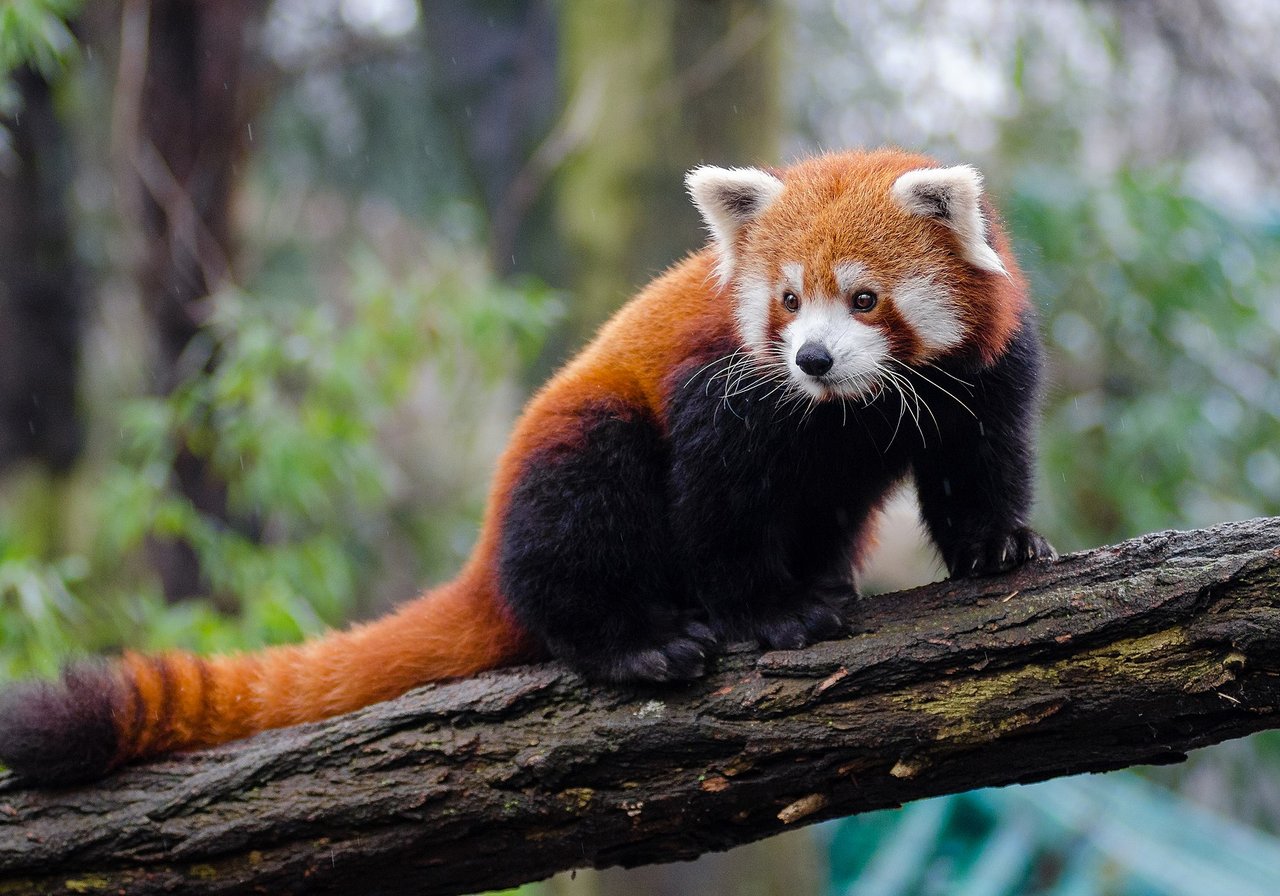
Source: Wikimedia Commons
In brief
The red panda (Ailurus fulgens) is an Endangered Himalayan forest mammal unrelated to giant pandas — a bamboo-eating specialist threatened by deforestation, poaching and road deaths across Nepal, India, Bhutan, China and Myanmar.
Also in Animals A to Z · Animals that start with R
How you can help
You can support the related appeal — read its purpose, recipient status and fund terms first — or give once to where it is needed most. Sharing accurate information helps too.
By WARN Research & Conservation TeamLast updated
The red panda is a small arboreal mammal native to temperate forests of the eastern Himalayas and south-western China. Despite its name, it is not closely related to giant pandas; it occupies its own family, Ailuridae. Russet fur, a bushy ringed tail and white facial markings make it instantly recognisable. Red pandas feed mainly on bamboo but also eat fruit, eggs and small animals. Listed as Endangered on the IUCN Red List, the species faces habitat fragmentation, poaching for fur and pets, and mortality on roads.
Endangered
IUCN Red List status (2015 assessment)
<10,000
Mature individuals estimated globally
~50 cm
Body length excluding tail
CITES I
International commercial trade prohibited
Figures sourced from IUCN Red List — red panda, Smithsonian National Zoo — red panda, Encyclopaedia Britannica — red panda and other references on this page.
Red Panda: Quick Facts
| IUCN status | Endangered |
|---|---|
| Population | Fewer than 10,000 mature individuals |
| Diet | Mainly bamboo; also fruit and small prey |
| Habitat | Montane temperate forest with bamboo |
| CITES | Appendix I |
| Active | Crepuscular — most active dawn and dusk |
Scientific Classification
| Kingdom | Animalia |
|---|---|
| Phylum | Chordata |
| Class | Mammalia |
| Order | Carnivora |
| Family | Ailuridae |
| Species | Ailurus fulgens |
Conservation Status
- IUCN Status
- Endangered on the IUCN Red List due to habitat loss, poaching and population fragmentation across the eastern Himalayas and south-western China.
- Population
- Fewer than 10,000 mature individuals; possibly 2,500–10,000
- Trend
- Decreasing
- Assessed
- 2015
- CITES
- Appendix I — international commercial trade prohibited
Accurate censuses are difficult because red pandas are shy, arboreal and occupy rugged terrain.
Key Facts: Red Panda
- Red pandas are not bears or true pandas — they belong to the family Ailuridae, a distinct evolutionary lineage.
- Bamboo forms most of the diet, yet red pandas have a carnivore digestive system and must eat constantly.
- Habitat loss and fragmentation from logging, agriculture and roads are the primary threats.
- The illegal pet and fur trade still removes animals from the wild despite CITES Appendix I protection.
- Red pandas are solitary and largely nocturnal, spending most of their time in trees.
- Community forestry and wildlife corridors in Nepal and China are central to recovery plans.
What is a red panda — and why is it not a 'small panda'?
The red panda was described to Western science in 1825, decades before the giant panda. Its scientific name Ailurus means 'cat' and 'tail', reflecting early confusion about its affinities. Molecular studies now place it in Carnivora as the sole living member of Ailuridae, with raccoons and weasels as distant relatives. Giant pandas belong to Ursidae — the two 'pandas' share a bamboo diet through convergent evolution, not shared ancestry.
Two subspecies are recognised: A. f. fulgens of the Himalayas and A. f. styani of China. Both inhabit cool, moist montane forests with dense bamboo understory at elevations roughly 2,200 to 4,800 metres. A thick coat and bushy tail wrapped over the nose conserve heat in snow; large paws and semi-retractile claws aid climbing.
Red pandas communicate with whistles, squeaks and scent marking. They are shy and difficult to census, which contributes to uncertainty in population estimates.
Diet, behaviour and daily life
Bamboo leaves and shoots provide most calories, but red pandas — like giant pandas — derive limited energy from plant cell walls. They must spend much of the day feeding and have a modified wrist bone that acts as a thumb for grasping stems. They also consume berries, mushrooms, insects, eggs and small birds when available.
Activity peaks at dawn and dusk. Individuals maintain overlapping home ranges marked with anal gland secretions and urine. Except during breeding season, adults usually forage alone. Females build tree or rock crevice dens and typically bear one to four young in summer; kits remain in the nest for roughly three months before venturing out.
In zoos red pandas breed readily, supporting insurance populations and research. Reintroduction remains experimental because released animals need secure, connected forest with adequate bamboo.
Threats and conservation
The IUCN assessed the red panda as Endangered in 2015, estimating fewer than 10,000 mature individuals with a continuing decline. Forest clearing for timber, fuelwood and agriculture fragments populations into isolated patches too small for long-term genetic health.
Poaching for fur — used in traditional hats and garments — and live capture for the pet trade persist despite legal bans. Domestic dogs transmit diseases and kill red pandas; roads bisecting forests cause vehicle strikes. Climate change may shift bamboo distribution upslope, further squeezing habitat.
Conservation action includes anti-poaching patrols, community-managed buffer forests, ecotourism that funds guardianship and cross-border cooperation between Nepal, India and China. CITES Appendix I prohibits international commercial trade. Protected areas such as Singalila and Langtang anchor key populations when connectivity is maintained.
Red pandas and people
Red pandas feature in folklore across the Himalayas — the name 'firefox' inspired a popular browser logo. They are flagship species for Eastern Himalayan conservation: protecting their forest benefits clouded leopards, takins and hundreds of plant species.
Tourism must follow strict distance rules; flash photography and crowding stress breeding animals. Sustainable livelihood programmes reduce pressure on forests for slash-and-burn agriculture.
Readers can support red pandas indirectly by backing habitat protection appeals and avoiding products linked to illegal wildlife trade. The species will not recover in cages alone — it needs continuous, bamboo-rich forest spanning national boundaries.
What WARN Does
WARN supports habitat protection and anti-trafficking education in partner countries including Pakistan and Indonesia, where forest conservation principles parallel Himalayan red panda work. This guide is free public education — explaining why Endangered species need connected habitat, not social-media pets.
If this guide helps you understand wildlife and the pressures it faces, a gift to WARN supports habitat protection and free public education in our partner countries.
How can I help save the red panda?
Explore practical ways to support the red panda, from everyday choices and sharing reliable information to reviewing a related appeal before giving.
Explore ways to support
Read the related appeal’s purpose, recipient status and fund terms. Choose an affordable gift after checking what is proposed and what has been reported.
Ease the pressures
Avoid the wildlife trade and souvenirs, never buy wild animals as pets, and choose sustainable, habitat-friendly products — the threats behind the red panda's decline fall when demand does.
Spread the word
Share accurate, sourced information about the red panda. Wider awareness is what turns concern into lasting protection.
Red Panda: Frequently Asked Questions
How can I help save the red panda?
Is the red panda related to the giant panda?
Why is the red panda Endangered?
What do red pandas eat?
Where do red pandas live?
Can red pandas be pets?
How big is a red panda?
Are red pandas dangerous?
How long do red pandas live?
Sources & References
Population figures, conservation status and biological facts on this page are drawn from authoritative scientific and intergovernmental sources.
Terms used on this page
Plain-English definitions, from our wildlife and conservation glossary.
Latest Red Panda Stories
Quick, fact-checked reads on the red panda — amazing facts, key questions and the threats it faces.
Species
Giant Panda vs Red Panda: Why They Share a Name but Not a Family
One is a bear, the other is in a family of its own. What the two pandas share, where they differ, and which was named first.
Read the storySpecies
12 Amazing Facts About Red Pandas (A Family of Exactly One)
The only living member of its family, a false thumb evolved twice over, and a tail used as a Himalayan blanket. Twelve facts.
Read the storyExplore more animals
Discover more animals, their habitats and their conservation status in the WARN wildlife-guide library.