Wildlife Guide · Pacific coasts of Americas & Australia
Sea Lion
Family Otariidae — ~16 species of eared seals (sea lions and fur seals)
Agile eared seals of rocky coasts — vocal, social and quick on land.
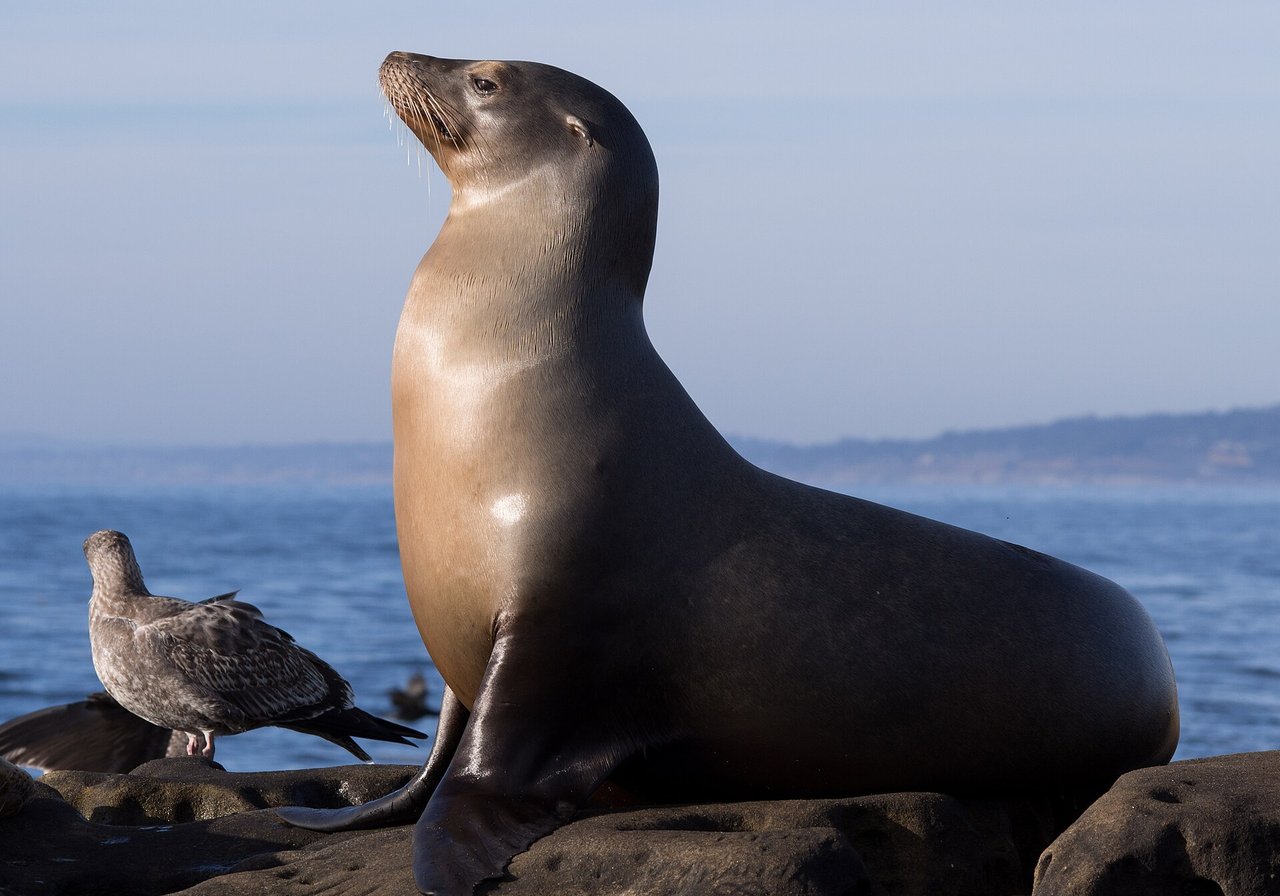
Source: Wikimedia Commons
In brief
Sea lions are eared seals (family Otariidae) with visible ear flaps and land agility — about 16 species on Pacific and southern coasts whose IUCN status ranges from Least Concern to Endangered.
Also in Animals A to Z · Animals that start with S
By WARN Research & Conservation TeamLast updated
Sea lions are eared seals of the family Otariidae, distinguished from true seals by external ear flaps and hind flippers that rotate forward for walking on land. Roughly 16 otariid species include California and Steller sea lions, Australian sea lions and the Galápagos sea lion. They are vocal, colonial breeders gathering on beaches and jetties. Fisheries conflict, entanglement, climate-linked prey shifts and historical culling affect regional populations, while some species remain abundant.
16
Eared seal species (sea lions and fur seals)
350 kg
Large male Steller sea lion mass
Endangered
Australian and Galápagos sea lions
CITES II
Several species regulated in trade
Figures sourced from IUCN Red List — Australian sea lion, Smithsonian Ocean — sea lion, Encyclopaedia Britannica — sea lion and other references on this page.
Sea Lion: Quick Facts
| Family | Otariidae (~16 species) |
|---|---|
| Ear flaps | Present — unlike true seals |
| Land movement | Walks on rotatable hind flippers |
| Endangered examples | Australian and Galápagos sea lions |
| Largest | Steller sea lion — males to ~350 kg |
| Colonial | Breeds in dense rookeries |
Scientific Classification
| Kingdom | Animalia |
|---|---|
| Phylum | Chordata |
| Class | Mammalia |
| Order | Carnivora |
| Family | Otariidae (eared seals) |
Conservation Status
- IUCN Status
- Varies: California sea lion Least Concern; Australian sea lion Endangered; Galápagos sea lion Endangered.
- Population
- Australian ~6,500–12,000; California ~250,000; Galápagos ~20,000–50,000
- Trend
- Decreasing for Australian and Galápagos; stable or increasing for California
- Assessed
- Varies by species
- CITES
- Several species on CITES Appendix II
Bycatch in pot fisheries is a leading threat to Australian sea lion.
Key Facts: Sea Lion
- Sea lions can walk on all fours using rotatable hind flippers; true seals cannot.
- California sea lions are common and adaptable; Australian sea lion is Endangered.
- Males are much larger than females and defend breeding territories on land.
- Entanglement in fishing gear and marine debris injures flippers and necks.
- Domoic acid from harmful algal blooms causes mass strandings and seizures.
- Galápagos sea lions are endemic and vulnerable to tourism disturbance and El Niño events.
What is a sea lion?
Otariids — fur seals and sea lions — share retractable penises, external ears and the ability to bring hind flippers under the body. In water they swim with foreflipper propulsion; on land they appear far more mobile than phocid true seals.
California sea lions range from Alaska to Mexico, famously hauling out on piers in San Francisco. Steller sea lions — the largest otariid — breed from California to Japan. Southern hemisphere species include New Zealand, Australian and South American sea lions.
Fur seals overlap anatomically but retain thicker underfur harvested historically in commercial sealing. Taxonomic boundaries between fur seals and sea lions are not always sharp.
Breeding colonies and behaviour
Breeding males arrive first at rookeries, establishing territories through vocal displays and fighting. Females birth one pup annually after delayed implantation in some species. Pups nurse for months, forming crèches while mothers forage at sea.
Sea lions are opportunistic feeders on fish, squid and octopus. Some populations follow fishing vessels or exploit salmon runs, creating conflict with aquaculture where nets must exclude raiding animals.
Vocal repertoires include barks, roars and bleats recognisable to human listeners — California sea lions are classic 'circus seal' performers, though training cannot erase wild behavioural needs.
Threats and conservation
Australian sea lion is Endangered with fewer than 12,000 individuals and declining — bycatch in lobster pots is a major killer. Galápagos sea lion is Endangered, hit by El Niño starvation and disease. Steller sea lions in western Alaska were listed Endangered before partial recovery.
Entanglement in monofilament and packing straps causes slow starvation as animals grow. Shooting by fishermen still occurs illegally where sea lions take catch.
Marine protected areas, bycatch reduction in pot fisheries, disentanglement teams and tourism distance rules support recovery. CITES lists several otariids on Appendix II.
Sea lions and people
Sea lions are ecotourism staples from the Galápagos to Kaikoura. Guidelines require minimum approach distances during breeding season when disturbance causes pup separation and trampling.
Rescue centres treat domoic acid poisoning, gunshot wounds and malnutrition. Rehabilitation success depends on age and duration of human habituation.
Understanding the difference between abundant California sea lions and Endangered Australian sea lions prevents false reassurance — regional context matters in marine conservation.
What WARN Does
WARN provides free marine mammal education to readers in Brazil, Colombia, Indonesia and Malaysia — nations where fisheries overlap with coastal wildlife. Sea lion guides explain eared seal biology and why healthy fish stocks and clean oceans matter globally.
If this guide helps you understand wildlife and the pressures it faces, a gift to WARN supports habitat protection and free public education in our partner countries.
Sea Lion: Frequently Asked Questions
What is the difference between a sea lion and a seal?
Are sea lions endangered?
Can sea lions be trained?
What do sea lions eat?
Sources & References
Population figures, conservation status and biological facts on this page are drawn from authoritative scientific and intergovernmental sources.
Terms used on this page
Plain-English definitions, from our wildlife and conservation glossary.
Latest Sea Lion Stories
Quick, fact-checked reads on the sea lion — amazing facts, key questions and the threats it faces.
Species
Why Are Dugongs Disappearing — and What's Being Done to Save Them?
Dugongs are vanishing from waters where they once thrived, declared functionally extinct in China and critically endangered in East Africa. Here's why — and the work that offers hope.
Read the storySpecies
12 Amazing Facts About Koalas (They Are Not Bears, and They Have Fingerprints)
Fingerprints indistinguishable from ours, 20 hours of sleep a day, and a diet that would poison most animals. Twelve koala facts.
Read the storySpecies
12 Amazing Facts About Kangaroos (They Cannot Walk Backwards)
Tendons that work like springs, a tail used as a fifth leg, and the ability to pause a pregnancy. Twelve verified kangaroo facts.
Read the storyExplore more animals
Discover more animals, their habitats and their conservation status in the WARN wildlife-guide library.