Wildlife Guide · Arctic & North Atlantic
Seal
Family Phocidae — ~19 species of true (earless) seals worldwide
Streamlined mammals of ice and ocean — adapted for deep dives and harsh shores.
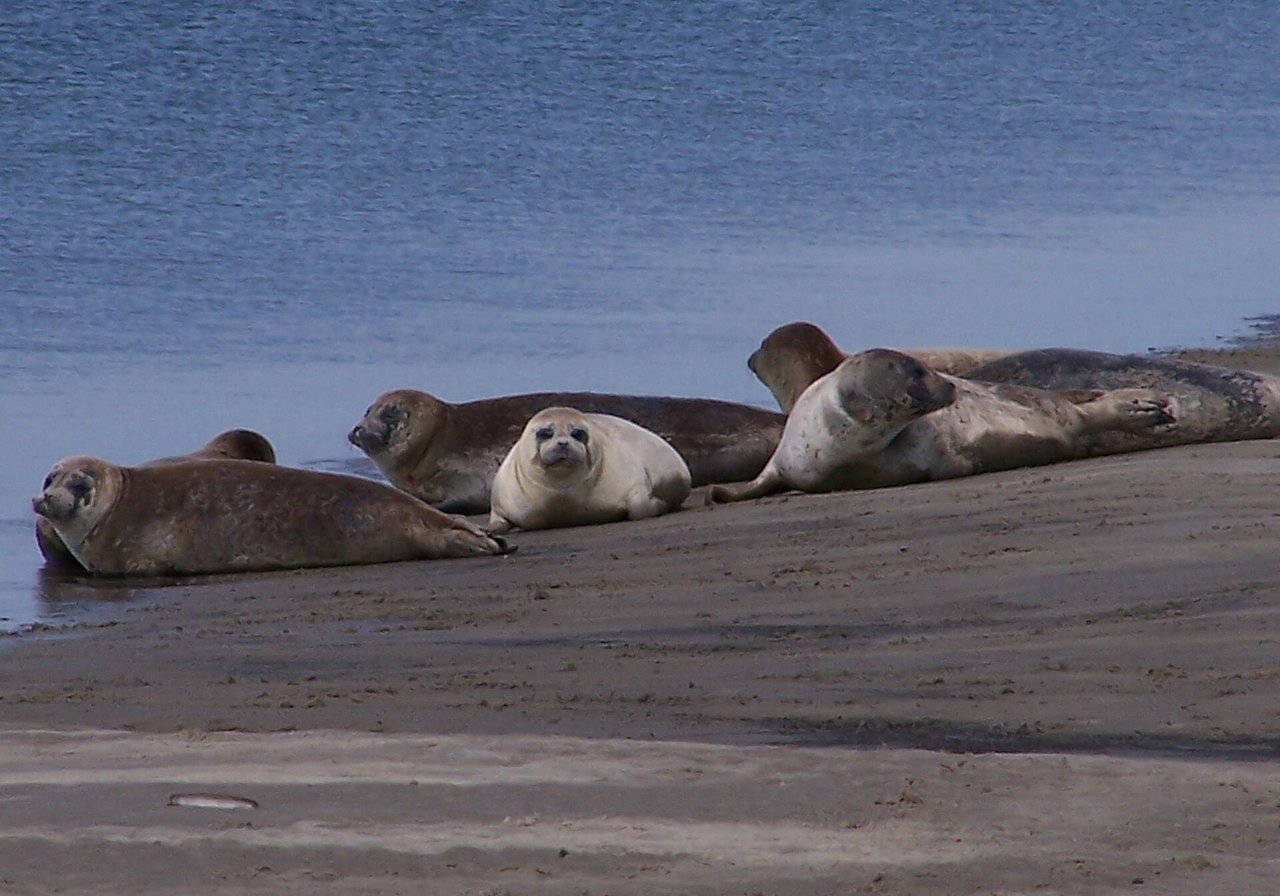
Source: Wikimedia Commons
In brief
Seals are earless marine mammals (family Phocidae) with about 19 species worldwide — expert divers of polar and temperate seas whose conservation status ranges from abundant to Endangered depending on species and region.
Also in Animals A to Z · Animals that start with S
By WARN Research & Conservation TeamLast updated
Seals are marine mammals of the family Phocidae, often called true or earless seals to distinguish them from eared seals such as sea lions. With roughly 19 species, they range from the Arctic ringed seal to the Antarctic leopard seal and the harbour seals familiar on temperate coastlines. Seals have fusiform bodies, flipper-propelled swimming and the ability to dive for extended periods on a single breath. They are central to polar food webs and commercial histories of hunting, yet many populations now face climate change, fisheries conflict and pollution.
19
Recognised true seal species
2+ hrs
Maximum dive duration (elephant seal)
CITES
Several species on Appendix II
Varies
IUCN status from Least Concern to Endangered
Figures sourced from IUCN Red List — Mediterranean monk seal, Smithsonian Ocean — seals, Encyclopaedia Britannica — seal mammal and other references on this page.
Seal: Quick Facts
| Group | True seals (earless seals) |
|---|---|
| Species count | ~19 living phocid species |
| Distinguishing trait | No external ear flaps |
| Deep diver | Northern elephant seal — 1,500+ m |
| Endangered examples | Mediterranean and Hawaiian monk seals |
| Common coastal species | Harbour seal and grey seal |
Scientific Classification
| Kingdom | Animalia |
|---|---|
| Phylum | Chordata |
| Class | Mammalia |
| Order | Carnivora |
| Family | Phocidae (true seals) |
Conservation Status
- IUCN Status
- No single IUCN category applies. Harbour and grey seals are Least Concern; Mediterranean monk seal is Endangered; Hawaiian monk seal is Endangered; several polar species are Near Threatened or data-deficient.
- Population
- Varies widely — grey seal roughly 400,000+ globally; Mediterranean monk seal fewer than 700; Hawaiian monk seal about 1,500
- Trend
- Increasing for several recovered species; decreasing for ice-dependent and monk seals
- Assessed
- Varies by species (IUCN Red List ongoing)
- CITES
- Several species on CITES Appendix II; trade in products regulated
Climate change impacts on sea ice are a growing concern for Arctic and Antarctic breeding seals.
Key Facts: Seal
- True seals (phocids) lack external ear flaps and move awkwardly on land by wriggling; sea lions have visible ears and walk on rotated flippers.
- Elephant seals are the deepest-diving seals, reaching depths beyond 1,500 metres and holding breath for over two hours.
- Historic commercial sealing devastated many populations; most have partially recovered under protection, but some remain depleted.
- Climate change reduces sea ice used by ringed, harp and crabeater seals for breeding and moulting.
- Seals compete with fisheries for prey and can become entangled in nets — management requires balanced, science-based policies.
- Harbour and grey seals are the species most often seen on European and North American coasts.
What is a seal — and how is it different from a sea lion?
Seals belong to the mammalian order Carnivora, suborder Caniformia, alongside dogs, bears and walruses. The family Phocidae — true seals — includes harbour, grey, elephant, leopard, harp and monk seals among others. They are distinct from Otariidae (sea lions and fur seals), which have external ear flaps and can rotate hind flippers beneath the body to walk on land.
True seals have short fore flippers and propel themselves by undulating the trunk and hind flippers in water. On land or ice they hump forward, which makes them slower and more vulnerable to predators such as polar bears and killer whales. Their physiology is tuned for diving: flexible ribs collapse under pressure, blood stores oxygen in muscle myoglobin, and heart rate slows during dives to conserve oxygen.
Seals inhabit coasts and pack ice from the tropics (monk seals) to both poles. Some species are migratory, travelling thousands of kilometres between feeding and breeding sites. Pupping strategies vary: harbour seals often bear young on rocky shores, while ringed seals give birth in snow lairs on sea ice.
Diving, feeding and life history
Seal diets are dominated by fish and squid; leopard seals also take penguins and other seals. Foraging trips can last days at sea, with GPS tracking showing individuals commuting tens of kilometres from haul-out sites. Deep-diving elephant seals feed in oceanic zones where they capture lanternfish and squid at depths impractical for most predators.
Breeding biology varies widely. Many temperate species breed annually with single pups; some polygynous species such as elephant seals gather in dense colonies where dominant males guard harems. Pups are born with thick blubber or lanugo and nurse for days to weeks before weaning. Survival depends on prey availability, ice conditions and freedom from disturbance at haul-out sites.
Seals molt annually, coming ashore or onto ice to replace hair and skin. During molt they are less insulated and more sensitive to disturbance. Coastal development, tourism and vessel traffic that flush seals from resting sites can increase stress and pup mortality.
Threats and conservation
Commercial sealing in the eighteenth and nineteenth centuries reduced many populations drastically. Legal protections, harvest bans and international agreements helped species such as the grey seal and northern elephant seal recover to hundreds of thousands or millions. Not all species shared that trajectory: the Mediterranean monk seal is Endangered with fewer than 700 individuals, and the Hawaiian monk seal remains Endangered despite intensive management.
Modern threats include climate-driven loss of sea ice, reduced snow cover for ringed seal pupping lairs, entanglement in fishing gear, oil spills and bioaccumulation of pollutants in blubber. Seals are also shot in conflicts with aquaculture and fisheries when perceived as competitors for salmon or cod.
Conservation responses include marine protected areas, bycatch reduction, ice-dependent species monitoring and captive rehabilitation for injured animals. CITES lists several seal species on Appendix II, regulating international trade in parts and products.
Seals and people
Coastal communities have long relied on seals for meat, oil and skins; Indigenous subsistence harvest continues in some Arctic regions under regulated quotas. In much of the world, seals are now valued for ecotourism — boat trips to colonies generate income when conducted with distance rules that prevent stress and pup abandonment.
Public attitudes vary: seals are beloved wildlife icons in some countries and viewed as pests where they compete with anglers. Science supports non-lethal deterrence and fishery management rather than culling whenever possible. Rehab centres treat orphaned or entangled seals, though release success depends on age and health at stranding.
Understanding seal biology helps policymakers balance ocean use with recovery goals. Readers concerned about marine mammals can support clean oceans, responsible seafood choices and policies that protect breeding beaches and ice-dependent habitats.
What WARN Does
WARN's partner countries include coastal and archipelagic nations where marine habitat protection overlaps with broader conservation education. This seal guide is free public outreach — helping readers understand ocean mammals, climate pressures on ice-breeding species and why healthy seas matter from Pakistan's shores to Brazil's Atlantic coast.
If this guide helps you understand wildlife and the pressures it faces, a gift to WARN supports habitat protection and free public education in our partner countries.
Seal: Frequently Asked Questions
How many seal species are there?
What is the difference between a seal and a sea lion?
How long can seals hold their breath?
Are seals endangered?
Where do seals live?
What do seals eat?
Are seals dangerous?
How long do seals live?
How big is a seal?
Sources & References
Population figures, conservation status and biological facts on this page are drawn from authoritative scientific and intergovernmental sources.
Terms used on this page
Plain-English definitions, from our wildlife and conservation glossary.
Latest Seal Stories
Quick, fact-checked reads on the seal — amazing facts, key questions and the threats it faces.
Species
12 Amazing Facts About Penguins (And Why None of Them Live at the North Pole)
Solid bones, a gland that removes salt, and a species that fasts for two months on the ice. Twelve verified penguin facts.
Read the storySpecies
Penguin vs Puffin: Opposite Ends of the Earth, and Only One Can Fly
Both are black-and-white diving seabirds. One lives in the far south and cannot fly; the other lives in the far north and can.
Read the storySpecies
12 Amazing Facts About Polar Bears (Their Fur Isn't White and Their Skin Is Black)
Transparent hollow hairs, black skin, a nose that works over 30 km, and a species classified as a marine mammal. Twelve facts.
Read the storyExplore more animals
Discover more animals, their habitats and their conservation status in the WARN wildlife-guide library.