Wildlife Guide · Europe & Asia
Shrew
Soricidae
The tiny, fast-burning insect hunter that is not a rodent.
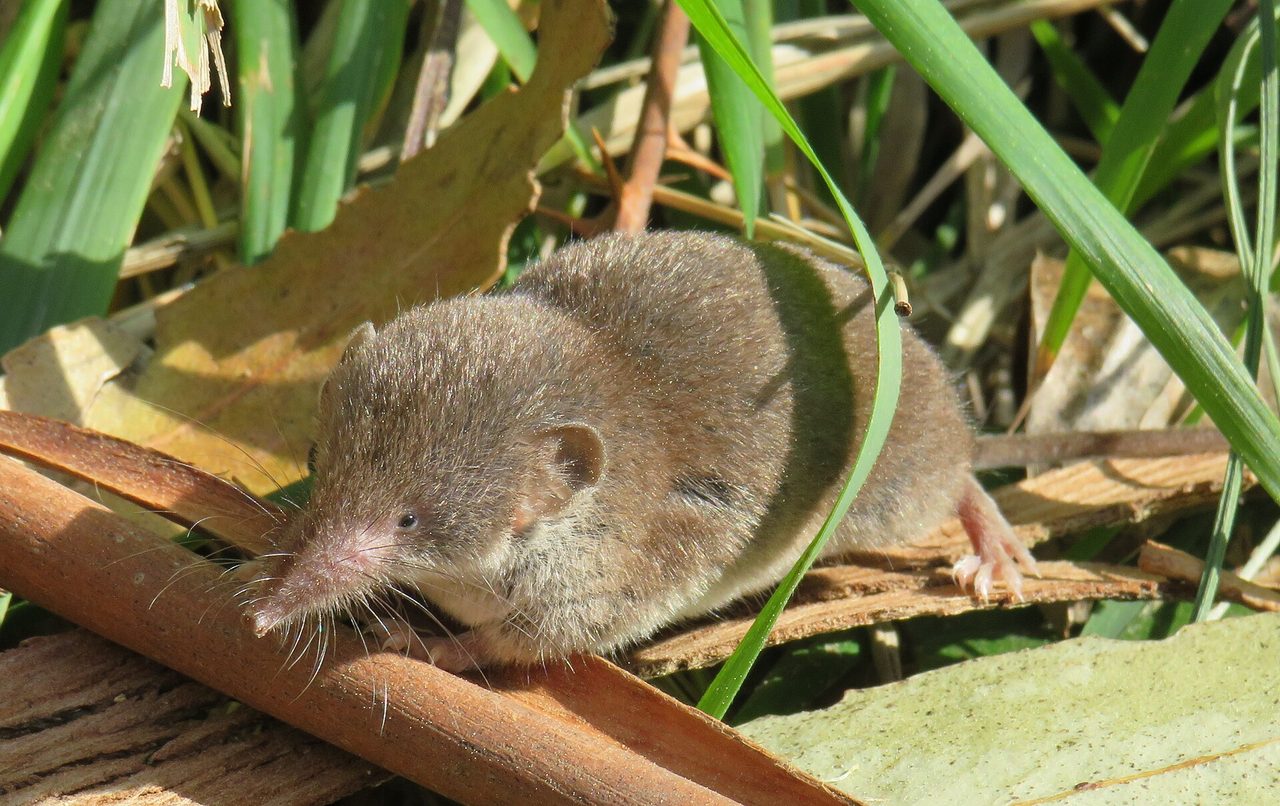
Photo: Balles2601 / Wikimedia Commons (CC BY-SA 4.0)
In brief
A shrew is a small insect-eating mammal of the family Soricidae, with a long pointed snout, tiny eyes and velvety fur. Though mouse-like, shrews are not rodents but relatives of moles and hedgehogs, and are known for their extremely high metabolism and near-constant feeding.
Also in Animals A to Z · Animals that start with S
By WARN Research & Conservation TeamLast updated
Shrews are small, mouse-sized mammals of the family Soricidae, with long pointed snouts, tiny eyes, velvety fur and a famously frantic appetite. Despite their rodent-like look, they are not rodents at all: they belong to the order Eulipotyphla and are far closer relatives of moles and hedgehogs. With around 385 known species, Soricidae is one of the most species-rich mammal families on Earth, found across Europe, Asia, Africa, North America and the northern fringe of South America. Most are insectivores with extraordinarily high metabolisms, forced to eat almost without pause. A few species even produce venomous saliva, making shrews among the very few venomous mammals.
~385
known species in family Soricidae
1.8 g
weight of the Etruscan shrew, smallest land mammal
up to 2x
body weight eaten in food per day
12-30
months typical lifespan
Figures sourced from Shrew - Wikipedia, Etruscan shrew - Wikipedia, Shrew - Encyclopaedia Britannica and other references on this page.
Shrew: Quick Facts
| Common name | Shrew |
|---|---|
| Family | Soricidae |
| Order | Eulipotyphla (not Rodentia) |
| Number of species | Around 385 |
| Diet | Mainly insects and other invertebrates |
| Size | From ~3.5 cm (Etruscan shrew) to ~15 cm |
| Weight | From ~1.8 g; varies widely by species |
| Lifespan | Typically 12-30 months |
| Distribution | Almost worldwide; absent from Australia and most of South America |
| Notable trait | Some species have venomous saliva |
Scientific Classification
| Kingdom | Animalia |
|---|---|
| Phylum | Chordata |
| Class | Mammalia |
| Order | Eulipotyphla |
| Family | Soricidae |
| Species | ~385 known species |
Conservation Status
- IUCN Status
- Conservation status varies by species. As one of the largest mammal families (~385 species), shrews span the full range of risk: the great majority are assessed by the IUCN as Least Concern and remain widespread and common, but a number of range-restricted island and montane species are threatened, and a few are listed in higher-risk categories. There is no single status for the family as a whole.
- Population
- Not estimated for the family; most widespread species are common and abundant within their ranges.
- Trend
- Stable for most species; declining for some habitat-restricted species.
- Assessed
- Assessed per species on the IUCN Red List; dates vary.
- CITES
- Not generally listed on CITES (no family-wide listing).
Local declines are linked to habitat loss, pesticide use that reduces insect prey, and predation pressure, including from domestic cats.
Key Facts: Shrew
- Shrews are not rodents; they belong to the order Eulipotyphla alongside moles and hedgehogs.
- With around 385 species, Soricidae is one of the most diverse of all mammal families.
- Their metabolism is so high that they must eat almost constantly and can starve within hours.
- The Etruscan shrew, at about 1.8 grams, is the smallest known land mammal on Earth.
- A handful of shrew species have venomous saliva, a rare trait among mammals.
- Cats and other predators often kill shrews but rarely eat them, deterred by scent glands.
Are shrews rodents?
No. Although shrews are roughly mouse-sized and superficially resemble mice, they are not rodents and are only distantly related to them. Shrews belong to the order Eulipotyphla, a group of small insect-eating mammals that also includes moles, hedgehogs and the moles' close cousins. Rodents, by contrast, belong to the order Rodentia and include mice, rats, voles and squirrels. The easiest way to tell a shrew from a mouse is the head: shrews have a long, mobile, pointed snout that extends well beyond the mouth, very small eyes and small ears often hidden in fur. Their teeth are another giveaway. Rodents have a single pair of large, ever-growing, chisel-like incisors used for gnawing, whereas shrews have many small, sharp, spike-like teeth suited to seizing insects and other invertebrates. Many shrew species also have teeth tipped with iron-rich reddish pigment. Behaviourally, shrews are hunters rather than gnawers, spending their lives searching leaf litter and soil for prey rather than chewing seeds and nuts. So while the resemblance is real, the relationship is not.
Why do shrews eat so much?
Shrews have one of the highest metabolic rates of any mammal, a consequence of their tiny bodies. Small animals lose heat rapidly because they have a large surface area relative to their volume, so a shrew must burn fuel at a furious pace simply to stay warm. To keep that internal furnace stoked, shrews eat almost continuously, day and night, in short bursts of activity separated by brief rests. In captivity some shrews consume between half and twice their own body weight in food every day. Their diet is dominated by invertebrates such as insects, larvae, earthworms, spiders, woodlice and snails, though some take small amounts of seeds or carrion. This relentless appetite has a stark consequence: many shrews can starve to death within a matter of hours if they cannot find food, and they rarely survive long without eating. Their hearts beat extraordinarily fast and they remain active through much of winter rather than hibernating, because stopping to sleep deeply would risk running out of energy entirely. Constant feeding, in short, is not greed but survival.
Are shrews venomous, and can they hurt people?
A small number of shrew species are genuinely venomous, which is remarkable because venom is rare among mammals. The venom is delivered through grooves in the teeth via the saliva, and is used to subdue prey rather than for defence. In the American short-tailed shrew, the venom is potent enough that, in laboratory studies, the quantity from a single animal has been measured as sufficient to kill many small rodents by injection. The venom helps shrews tackle prey larger than themselves and, in some species, may even allow them to paralyse and store live invertebrates for later. For humans, shrews pose very little danger. They are tiny, secretive and not aggressive towards people, and a bite from a venomous species would at most cause local pain and swelling rather than serious harm. Far from being a threat, shrews are valuable allies in gardens and farmland, where their voracious appetite for insects, slugs and other invertebrates helps keep populations of garden pests in check throughout the year.
Why do cats kill shrews but not eat them?
Cat owners often find a dead shrew left as an uneaten 'gift' on the doorstep, and the reason lies in the shrew's chemistry. Shrews possess scent glands, particularly on their flanks, that produce a strong, musky, distasteful odour. Cats are highly motivated to hunt small moving animals by instinct, so they readily catch and kill shrews, but the unpleasant smell and taste usually stop them from actually eating the catch. The result is a steady supply of intact shrew bodies delivered by domestic cats but left untouched. This behaviour is so consistent that cat predation is a recognised pressure on local shrew populations in some areas. Beyond cats, shrews fall prey to owls and other birds of prey, which have a poorer sense of smell and are far less deterred by the scent, making them among the shrew's most important natural predators. The same defensive odour that frustrates a cat does little to protect a shrew from a hunting owl swooping silently overhead at night.
Shrew vs mouse: how to tell them apart
| Feature | Shrew | Mouse |
|---|---|---|
| Group | Eulipotyphla (insectivore) | Rodentia (rodent) |
| Snout | Long, pointed, mobile | Shorter, blunter |
| Eyes | Very small | Larger, prominent |
| Teeth | Many small spike-like teeth, often red-tipped | Large gnawing front incisors |
| Diet | Mainly insects and invertebrates | Mainly seeds, grains and plants |
| Smell | Strong musky odour from scent glands | Mild musky odour |
What WARN Does
World Animal Rescue Network does not run field projects dedicated specifically to shrews, which are widespread and mostly secure, and most live well outside the countries where WARN's partners work partner countries. This guide is part of WARN's free educational work, which aims to make accurate, well-sourced wildlife information freely available to everyone. The threats that touch shrews most, chiefly habitat loss, pesticide use and the decline of insect prey, are the same pressures bearing down on many of the animals WARN does directly protect.
If our free wildlife guides help you see small creatures like the shrew a little more clearly, a small gift helps us keep this knowledge open to all and support the animals in our care.
Shrew: Frequently Asked Questions
Is a shrew a mouse or a rodent?
What is the smallest shrew, and the smallest mammal?
Do shrews eat all the time?
Are shrews dangerous or venomous?
Why does my cat bring me dead shrews but not eat them?
How long do shrews live?
What do shrews eat?
Where do shrews live?
How big is a shrew?
Sources & References
Population figures, conservation status and biological facts on this page are drawn from authoritative scientific and intergovernmental sources.
Latest Shrew Stories
Quick, fact-checked reads on the shrew — amazing facts, key questions and the threats it faces.
Species
Slow Loris: Why the Internet's Favourite Pet Is a Conservation Disaster
The slow loris looks like a cartoon character — and that has nearly destroyed the species. Here is the truth behind the viral videos.
Read the storySpecies
The Snow Leopard: Why the Ghost of the Mountains Is Still Vulnerable
The snow leopard is one of the most elusive big cats on earth, with an estimated 4,000-6,500 individuals across twelve range states — including Pakistan, where WARN is preparing to operate. This briefing explains why the species was downlisted from Endangered to Vulnerable in 2017 and why that is not the success story it sounds like.
Read the storyGuides
Sun Bear vs Moon Bear: The Two Most Trafficked Asian Bears
The sun bear and the Asiatic black bear (moon bear) are the two most commonly trafficked bears in Asia — for the pet trade, for traditional medicine and for bear-bile farming. Here is how to tell them apart.
Read the storyExplore more animals
Discover more animals, their habitats and their conservation status in the WARN wildlife-guide library.