Animal Comparison
Shrew vs Mouse
Shrews are long-nosed insectivores, not rodents; mice are rodents with gnawing incisors. Snout shape and teeth separate them despite similar size.
By WARN Research & Conservation TeamLast updated
In brief — Shrew vs Mouse
Long pointed snout and insectivore teeth means shrew; blunt face and gnawing rodent incisors means mouse.
Shrews are small insectivorous mammals with long pointed snouts, tiny eyes and continuous high-energy hunting of invertebrates. Mice are rodents with blunt faces, gnawing incisors and a diet that often includes seeds and plant matter. They can look similar at a dash across a path, but shrews are not rodents and are not mice.
See the difference
Images are shown at different scales. Read each caption for the species, source and context.
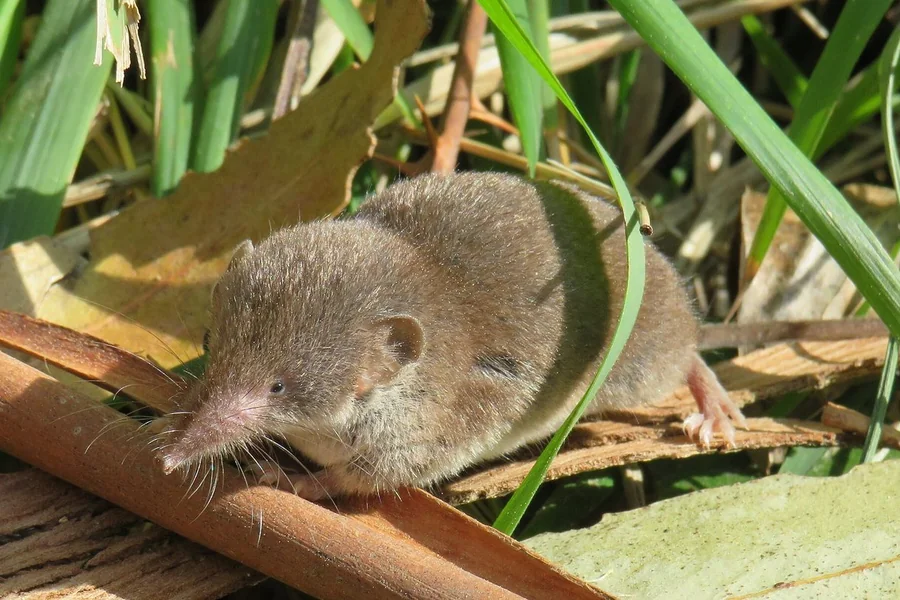
Shrew — pointed snout, insectivore
AI-generated educational wildlife portrait — World Animal Rescue Network
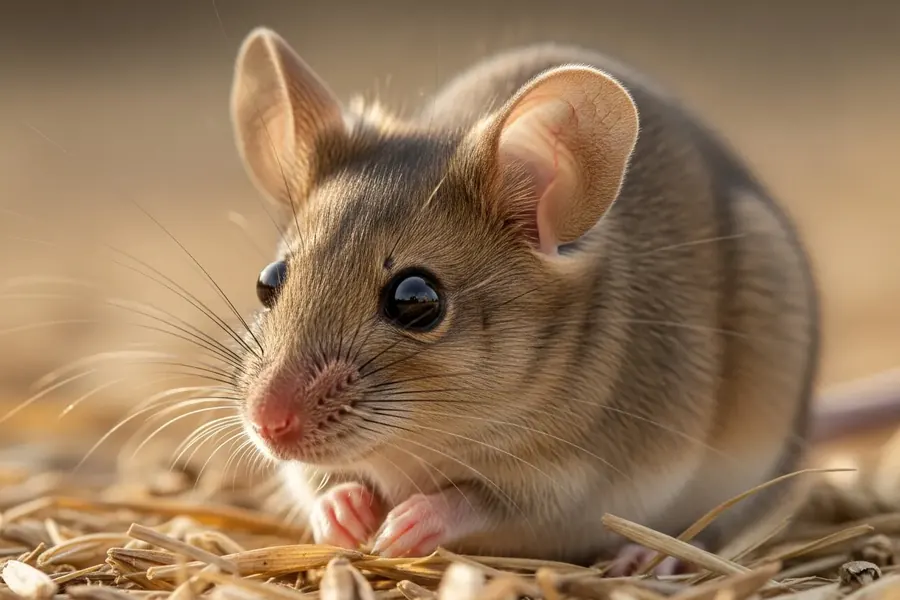
Mouse — blunter snout, rodent
AI-generated educational wildlife portrait — World Animal Rescue Network
Shrew vs Mouse: At a Glance
| Feature | Shrew | Mouse |
|---|---|---|
| Group | Insectivore (shrew family) | Rodent |
| Snout | Long, pointed | Shorter, blunter |
| Teeth | Insectivore cusps; some mildly venomous saliva in a few species | Gnawing incisors |
| Eyes | Very small | Larger, more obvious |
| Ears | Often hidden in fur | Often visible |
| Diet | Invertebrates, some small prey | Seeds, plants, varied omnivory |
| Metabolism | Very high; frequent feeding | High but different ecology |
| Tail | Often shorter relative feel by species | Often longer, tapering |
| Pest role indoors | Less classic pantry pest | Common indoor rodent pest |
| Are shrews rodents? | No | Mice are rodents |
Size and physical differences
Many common shrews and house/wood mice overlap around a few centimetres of head-body length; snout shape beats weight guesses for ID.
Shrew versus mouse is a correction page for a very common garden mistake. Both are small, brownish, quick and likely to appear under logs or in sheds. Mice (Muridae and related everyday forms) are rodents: paired ever-growing incisors, omnivorous to granivorous habits, and familiar pest ecology in buildings. Shrews (Soricidae) are insectivores — or more broadly eulipotyphlans in modern classifications — with pointed snouts and spiky teeth suited to invertebrate prey.
The snout is the billboard. If the nose is elongated into a mobile cone and the eyes look bead-tiny, think shrew. If the face is shorter and the animal pauses to nibble seeds, think mouse. Shrews need to eat often because of high metabolic rates; that biology is nothing like a mouse caching grain.
This comparison sticks to marks you can use without laboratory gear: size, shape, behaviour and the words people actually type into a search box. Scientific names are given where they prevent a regional mix-up. Where a popular belief is wrong, the correction leads; where two animals are simply different, the decisive field mark leads. Ranges and masses are given as working bands from standard natural-history references, not as courtroom measurements for every individual.
Correction first: shrews are not rodents
Rodents are defined by that gnawing incisor pair and associated jaw musculature. Shrews do not share that design. Grouping them as “a kind of mouse” teaches the wrong family tree and the wrong control logic. If advice starts from rodent bait assumptions, it already missed the animal. Start from snout and teeth, not from “small and brown.” Use more than one mark before you decide — single-trait IDs fail on juveniles, regional forms and poor light. In practice, people meet these animals in brief glances. Slow down long enough to check the two or three marks in the table above before accepting the first common name that comes to mind. Mislabeling spreads through photos and social posts faster than corrections do, which is why a short, checkable comparison page earns its keep. When experts disagree on subspecies or English names, the underlying biology — diet, body plan, reproductive cycle — remains the stable part of the answer.
Face shape in the field
A shrew’s muzzle extends forward; whiskers fan from a pointed tip; eyes are minute. A mouse has a more compact face with prominent eyes and, usually, visible pinnae. Colour overlaps completely — both can be grey-brown — so face geometry is the reliable cue when the animal pauses for a second under a leaf. Geography matters: the same English names attach to different species on different continents, and range often settles an argument faster than colour. In practice, people meet these animals in brief glances. Slow down long enough to check the two or three marks in the table above before accepting the first common name that comes to mind. Mislabeling spreads through photos and social posts faster than corrections do, which is why a short, checkable comparison page earns its keep. When experts disagree on subspecies or English names, the underlying biology — diet, body plan, reproductive cycle — remains the stable part of the answer.
Diet and energy
Shrews hunt invertebrates almost constantly relative to their size and can starve quickly if food is scarce. Mice exploit seeds, human stores and varied plant foods and cache when they can. Finding seed husks points toward rodents; finding a shrew under a log points toward a predator of tiny prey in the litter. Behaviour at the moment of observation — feeding, escape, nesting — is evidence, not a personality story about the whole species. In practice, people meet these animals in brief glances. Slow down long enough to check the two or three marks in the table above before accepting the first common name that comes to mind. Mislabeling spreads through photos and social posts faster than corrections do, which is why a short, checkable comparison page earns its keep. When experts disagree on subspecies or English names, the underlying biology — diet, body plan, reproductive cycle — remains the stable part of the answer.
Venom lore and bites
A few shrew species produce toxic saliva used on prey; that fact sometimes inflates fear. Bites to people are uncommon and not the main story of shrew ecology. Mice raise different public-health conversations tied to droppings and indoor infestation. Keep medical claims modest and species-specific; this page does not invent clinical numbers. Conservation status is assessed taxon by taxon; a group label like 'wasp' or 'antelope' is not an IUCN status. In practice, people meet these animals in brief glances. Slow down long enough to check the two or three marks in the table above before accepting the first common name that comes to mind. Mislabeling spreads through photos and social posts faster than corrections do, which is why a short, checkable comparison page earns its keep. When experts disagree on subspecies or English names, the underlying biology — diet, body plan, reproductive cycle — remains the stable part of the answer.
Sounds and movement
Shrews often move with frantic, buzzing activity through litter. Mice scurry and climb with familiar rodent agility, including vertical exploration in buildings. Droppings differ in shape and context too, but face and teeth remain cleaner teaching marks than pellet quizzes for beginners. If you are managing conflict with people or pets, identify first, then choose a proportionate response; misidentification wastes effort and can harm the wrong animal. In practice, people meet these animals in brief glances. Slow down long enough to check the two or three marks in the table above before accepting the first common name that comes to mind. Mislabeling spreads through photos and social posts faster than corrections do, which is why a short, checkable comparison page earns its keep. When experts disagree on subspecies or English names, the underlying biology — diet, body plan, reproductive cycle — remains the stable part of the answer.
Did you know?
Calling a shrew a mouse is like calling a bat a bird — similar size class, wrong evolutionary address.
Shrew vs Mouse: FAQs
Is a shrew a mouse?
Are shrews rodents?
How can I tell a shrew from a mouse?
Do shrews eat cheese?
Which is bigger?
Why do shrews seem so restless?
Help protect animals
Learning about animals can help more people understand their needs. WARN raises funds for eligible animal-welfare organisations. Read the relevant appeal’s purpose, recipient status and fund terms, or share this free guide to raise awareness.