Wildlife Guide · Colombia & Peru
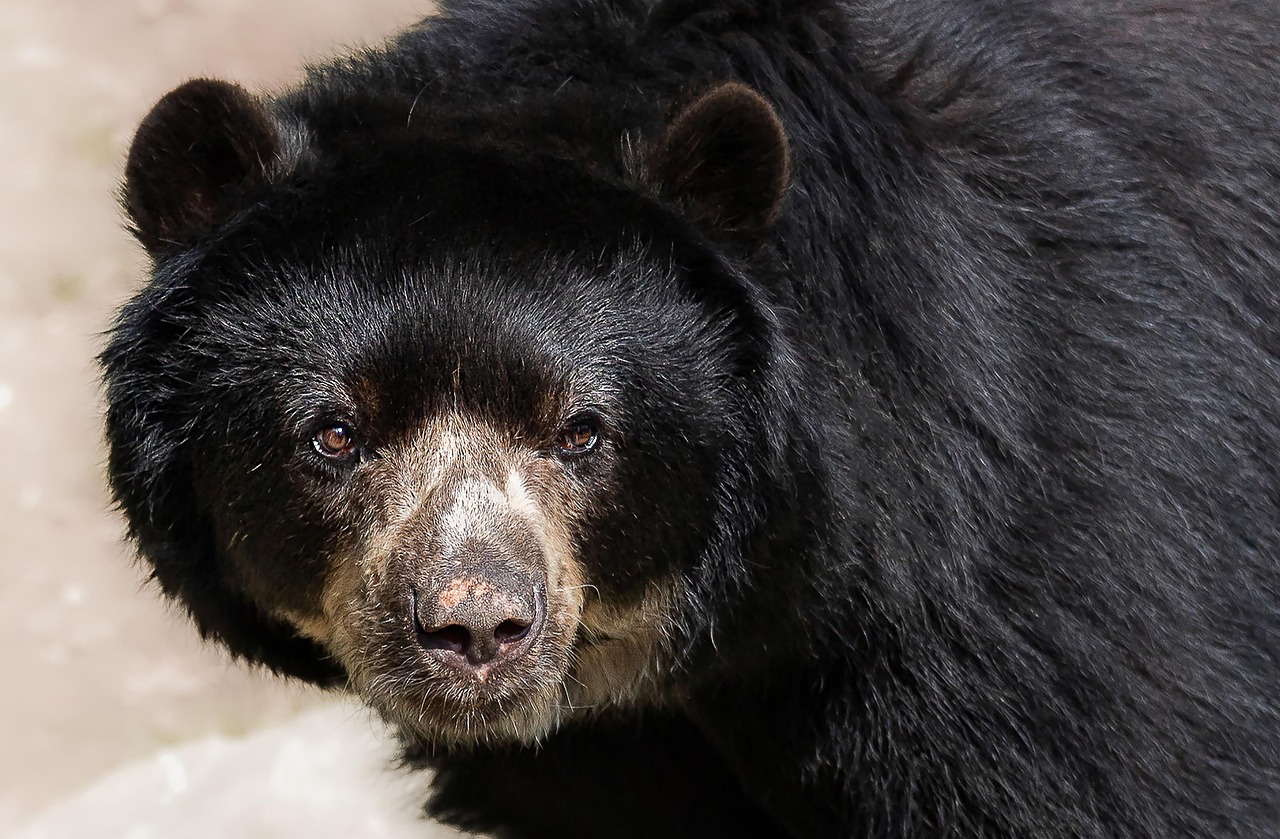
Spectacled Bear
Tremarctos ornatus
South America's only bear — losing its cloud forest to coca, cattle, and roads.
In brief
The spectacled bear is South America's only bear species and the last surviving short-faced bear; it is threatened by deforestation, conflict with farmers, and the illegal wildlife trade.
~18,000
Estimated wild population
30%
Population decline projected by 2050
600km
Home range of a single adult male
1
Bear species in all of South America
Key Facts: Spectacled Bear
- Spectacled bears are the sole surviving members of the short-faced bear subfamily (Tremarctinae), a lineage that once included the giant short-faced bear.
- They are found across the Andean mountain chain from Venezuela to Bolivia, primarily in cloud forest between 1,000–2,700 metres elevation.
- They are the largest land carnivores in South America, though their diet is around 95% plant-based — fruits, bromeliads, palm hearts, and orchid bulbs.
- Adult males range over territories of up to 600 square kilometres — making them extremely sensitive to habitat fragmentation.
- They are killed by farmers protecting crops and livestock, though actual predation of livestock by spectacled bears is rare.
- Cubs are occasionally captured and sold as exotic pets after their mothers are killed.
The Cloud Forest Under Pressure
Andean cloud forest — the primary habitat of the spectacled bear — is among the most biodiverse and most threatened ecosystems on earth. In Colombia and Peru, illegal coca cultivation has penetrated previously intact cloud forest, bringing with it road construction, deforestation, and human settlement. Cattle ranching continues to push upslope as lowland pasture becomes degraded. Mining concessions in Andean foothills displace communities upward, increasing pressure on higher-altitude forest. The spectacled bear requires large intact territories — fragmentation of cloud forest into patches is as damaging as outright loss.
Conflict With Farmers
Spectacled bears occasionally raid crops — maize and sugarcane in particular — and are sometimes blamed for livestock losses that may actually be caused by pumas or other predators. Retaliatory killing is the most common cause of direct human-bear mortality. Farmers set snares and shoot bears that enter agricultural land, often without distinguishing between actual and alleged crop raiders. WARN supports conflict mitigation programmes that combine compensation schemes for verified livestock losses with non-lethal deterrents and community engagement in bear-range communities.
Spectacled Bears in Myth and Reality
The spectacled bear is the real-life inspiration for Paddington Bear — the fictional character's creator, Michael Bond, based Paddington on this Andean species. The bear holds significant cultural importance in indigenous Andean traditions, where it appears in art, ceremony, and cosmology as a forest spirit. Despite this cultural significance, legal protections in range countries are inconsistently enforced and wildlife crime data are poorly collected. WARN works with local partner organisations who combine community relationship-building with practical conservation work.
What WARN Does
WARN partners with rescue and rehabilitation centres in Colombia and Peru to fund care for confiscated bears and supports conflict mitigation programmes in farming communities on the edge of bear habitat.
Spectacled Bear: Frequently Asked Questions
Is the spectacled bear the inspiration for Paddington Bear?
What does a spectacled bear eat?
How many spectacled bears are left?
Do spectacled bears really attack livestock?
Where can spectacled bears be seen in the wild?
Latest Spectacled Bear Stories
Explore More Species
Every animal in our network faces a crisis. Learn about the others.
View all wildlife guides