Wildlife Guide · Colombia & Peru
Spectacled Bear
Tremarctos ornatus (F. Cuvier, 1825)
South America's only bear — losing its cloud forest to coca, cattle, and roads.
In brief
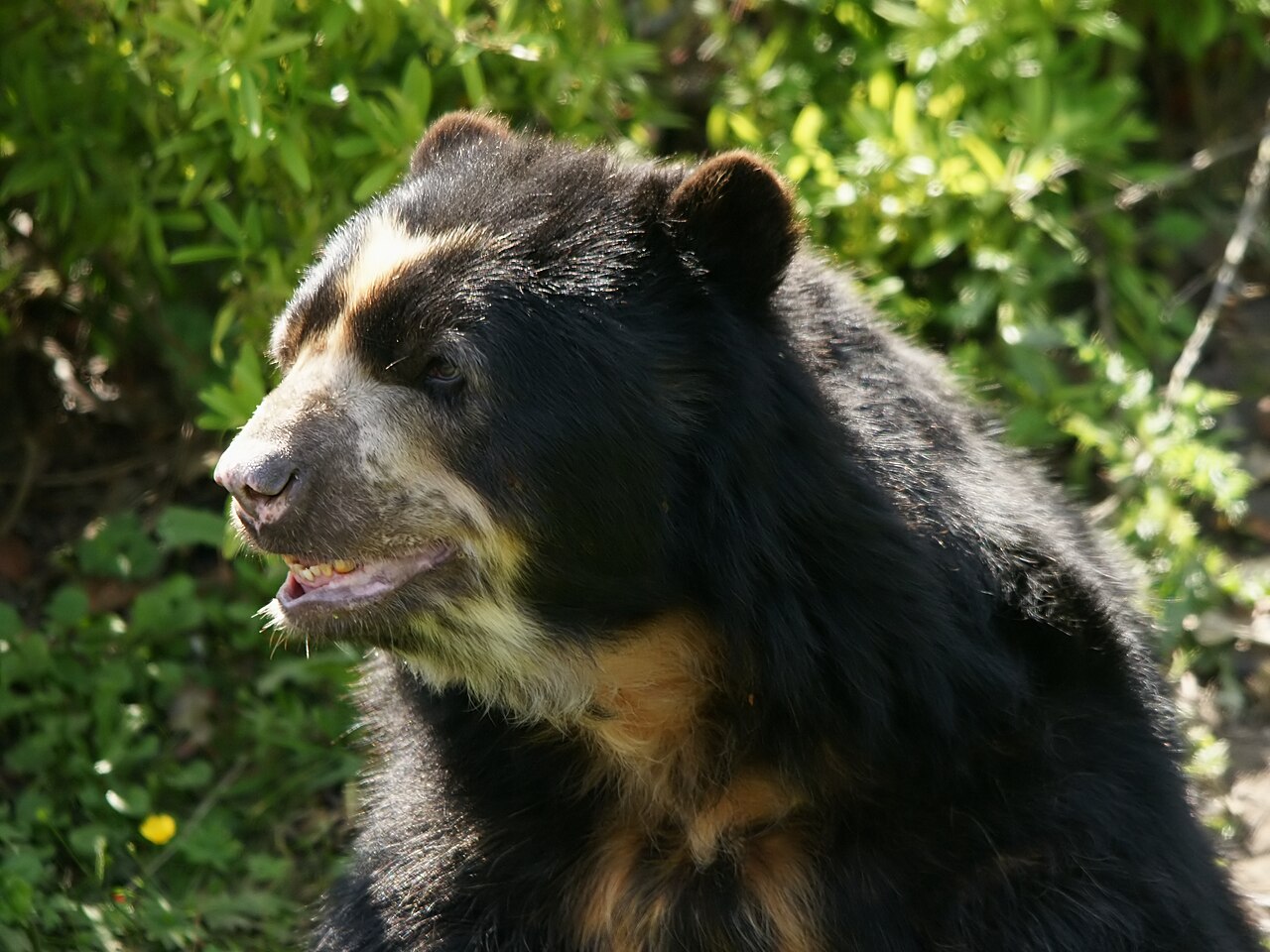
The spectacled bear is South America's only bear species and the last surviving short-faced bear; the IUCN lists it as Vulnerable, threatened by deforestation, conflict with farmers, and the illegal wildlife trade.
Also in Animals A to Z · Animals that start with S
How you can help
You can support the related appeal — read its purpose, recipient status and fund terms first — or give once to where it is needed most. Sharing accurate information helps too.
By WARN Research & Conservation TeamLast updated
The spectacled bear — also called the Andean bear and named for the pale, spectacle-like markings around its eyes — is the only bear species native to South America and the last surviving member of the short-faced bear subfamily (Tremarctinae). It inhabits Andean cloud forests from Venezuela to Bolivia, a habitat under intense pressure from agricultural expansion, conflict crop cultivation, and infrastructure development.
~2,500–10,000
Mature individuals (IUCN estimate)
>30%
Decline projected over three generations
~23–61 km²
Home range of an adult male
1
Bear species native to South America
Figures sourced from IUCN Red List — Tremarctos ornatus (2017), Animal Diversity Web — Tremarctos ornatus, International Association for Bear Research and Management — Andean bear and other references on this page.
Spectacled Bear: Quick Facts
| Lifespan | ~20–25 years wild; record 36 yrs 8 mo in captivity |
|---|---|
| Weight | Males ~100–200 kg; females ~35–82 kg |
| Shoulder height | ~60–90 cm |
| Head-body length | ~1.2–2.0 m |
| Diet | Largely herbivorous (~90–95% plant matter) |
| Gestation | ~5.5–8.5 months, with delayed implantation |
| Young per birth | 1–3 cubs (commonly 2) |
| Age at maturity | ~4–7 years |
| Group / baby name | Largely solitary; young are called cubs |
| CITES | Appendix I |
Scientific Classification
| Kingdom | Animalia |
|---|---|
| Phylum | Chordata |
| Class | Mammalia |
| Order | Carnivora |
| Family | Ursidae |
| Subfamily | Tremarctinae (short-faced bears) |
| Genus | Tremarctos |
| Species | Tremarctos ornatus (F. Cuvier, 1825) |
Conservation Status
- IUCN Status
- Vulnerable
- Population
- ~2,500–10,000 mature individuals (IUCN); ~18,000 total is a widely cited popular figure
- Trend
- Decreasing
- Assessed
- 2017
- CITES
- Appendix I
Listed Vulnerable under criteria A4cd, projecting a reduction of more than 30% over three generations driven by habitat loss and fragmentation.
Did you know?
Every spectacled bear's facial markings are unique — the pale rings and patches around the eyes and muzzle differ from bear to bear like a fingerprint, letting researchers tell individuals apart from camera-trap photos.
Key Facts: Spectacled Bear
- Spectacled bears are the sole surviving members of the short-faced bear subfamily (Tremarctinae), a lineage that once included the extinct giant short-faced bear.
- They are found across the Andean mountain chain from Venezuela to Bolivia, primarily in cloud forest, with a typical core band around 1,000–2,700 metres elevation.
- They are the largest land member of the order Carnivora in South America, though their diet is roughly 90–95% plant-based — fruits, bromeliads, palm hearts, and orchid bulbs.
- Adult males use home ranges on the order of ~23–61 km² depending on region and season — making them sensitive to habitat fragmentation, not the 600 km² sometimes claimed.
- They are killed by farmers protecting crops and livestock, though actual predation of livestock by spectacled bears is rare and often over-attributed to them.
- Cubs are sometimes orphaned and seized from the illegal pet trade after their mothers are killed, ending up in confiscation and rescue centres.
The Cloud Forest Under Pressure
Andean cloud forest — the primary habitat of the spectacled bear — is among the most biodiverse and most threatened ecosystems on earth. In Colombia and Peru, illegal coca cultivation has penetrated previously intact cloud forest, bringing with it road construction, deforestation, and human settlement. Cattle ranching continues to push upslope as lowland pasture becomes degraded. Mining and oil concessions in the Andean foothills displace communities upward, increasing pressure on higher-altitude forest. The spectacled bear needs large, connected territories, so fragmentation of cloud forest into isolated patches is as damaging as outright loss. The IUCN identifies habitat loss and fragmentation as the leading driver of the species' decline.
Conflict With Farmers
Spectacled bears occasionally raid crops — maize and sugarcane in particular — and are sometimes blamed for livestock losses that may actually be caused by pumas or feral dogs. Retaliatory killing is the most common cause of direct human-bear mortality. Farmers set snares and shoot bears that enter agricultural land, often without distinguishing between genuine and alleged crop raiders. WARN supports conflict-mitigation programmes that combine compensation for verified livestock losses with non-lethal deterrents and community engagement in bear-range communities.
Spectacled Bears in Myth and Reality
The spectacled bear is the species behind Paddington Bear's Peruvian origins. Author Michael Bond's character actually grew from a toy bear he bought near Paddington Station in 1956; the 'Darkest Peru' backstory and the spectacled-bear association came later, after it was pointed out that there are no bears native to Africa. The bear also holds deep cultural importance in indigenous Andean traditions, appearing in art, ceremony, and cosmology as a forest spirit. Despite this significance, legal protections in range countries are inconsistently enforced and wildlife-crime data are poorly collected. WARN works with local partner organisations that combine community relationship-building with practical conservation work.
Spectacled bear vs brown bear
| Attribute | Spectacled bear | Brown bear |
|---|---|---|
| Scientific name | Tremarctos ornatus | Ursus arctos |
| Subfamily | Tremarctinae (short-faced bears) | Ursinae |
| Range | Andes of South America | North America, Europe, Asia |
| Male weight | ~100–200 kg | ~130–600+ kg (varies by region) |
| Diet | ~90–95% plant matter | Omnivorous; more animal protein |
| IUCN status | Vulnerable | Least Concern (globally) |
| Notable trait | Only South American bear; last short-faced bear | Widespread; includes grizzly populations |
What WARN Does
WARN partners with rescue and rehabilitation centres in Colombia and Peru to fund care for confiscated and orphaned bears, and supports conflict-mitigation programmes in farming communities on the edge of bear habitat.
When a mother spectacled bear is shot over a crop dispute, it is often her cub that survives — orphaned, sometimes seized from the illegal pet trade, and unable to fend for itself. Your gift helps WARN fund partner rescue and rehabilitation centres in Colombia and Peru that care for these confiscated and orphaned Andean bears, and the community conflict-mitigation work that prevents the next orphan.
How can I help save the spectacled bear?
Explore practical ways to support the spectacled bear, from everyday choices and sharing reliable information to reviewing a related appeal before giving.
Explore ways to support
Read the related appeal’s purpose, recipient status and fund terms. Choose an affordable gift after checking what is proposed and what has been reported.
Ease the pressures
Avoid the wildlife trade and souvenirs, never buy wild animals as pets, and choose sustainable, habitat-friendly products — the threats behind the spectacled bear's decline fall when demand does.
Spread the word
Share accurate, sourced information about the spectacled bear. Wider awareness is what turns concern into lasting protection.
Spectacled Bear: Frequently Asked Questions
How can I help save the spectacled bear?
Is the spectacled bear the inspiration for Paddington Bear?
What does a spectacled bear eat?
How many spectacled bears are left?
How big is a spectacled bear?
How long do spectacled bears live?
Is the spectacled bear the same as the Andean bear?
Do spectacled bears really attack livestock?
Where do spectacled bears live?
Are spectacled bears dangerous?
Sources & References
Population figures, conservation status and biological facts on this page are drawn from authoritative scientific and intergovernmental sources.
Terms used on this page
Plain-English definitions, from our wildlife and conservation glossary.
Latest Spectacled Bear Stories
Quick, fact-checked reads on the spectacled bear — amazing facts, key questions and the threats it faces.
Species
12 Amazing Facts About the Spectacled Bear, South America's Only Bear
From its Paddington connection to its fingerprint-like face markings, here are 12 true, sourced facts about the spectacled bear — the last of the short-faced bears.
Read the storySpecies
Spectacled Bear vs Brown Bear: Key Differences Explained
How does the Andean spectacled bear compare to the brown bear? Size, diet, range, family tree and conservation status — the real differences, side by side.
Read the storySpecies
What Do Spectacled Bears Eat? Inside the Diet of a Plant-Loving Bear
Spectacled bears belong to the order Carnivora, yet they live almost entirely on plants. Here's what Andean bears actually eat — and why their skulls are built for it.
Read the storyExplore more animals
Discover more animals, their habitats and their conservation status in the WARN wildlife-guide library.